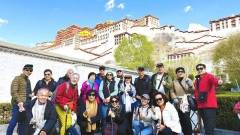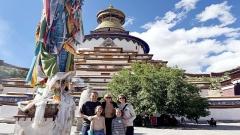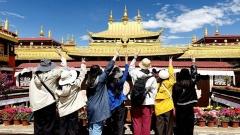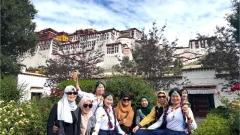

For many first-time visitors, Lhasa is defined by a short list of iconic images: the Potala Palace rising above the city, pilgrims circling the Barkhor, prayer flags fluttering against a high-altitude sky. These landmarks are undeniably powerful—but they tell only part of the story.
Beneath the surface of these celebrated sites lies another Lhasa:
a city shaped not only by devotion, but by debate;
not only by ritual, but by reflection;
not only by monumental architecture, but by quiet, enduring places of thought and practice.
To truly understand Lhasa is to step away from the main pilgrimage routes and into its lesser-known temples, memorial halls, and monastic corners—spaces where Tibetan intellectual history, diverse Buddhist traditions, and everyday spiritual life continue to unfold.
This journey is not about seeing more, but about understanding better.
The Gendun Chopel Memorial: The Most Radical Mind in Modern Tibetan History
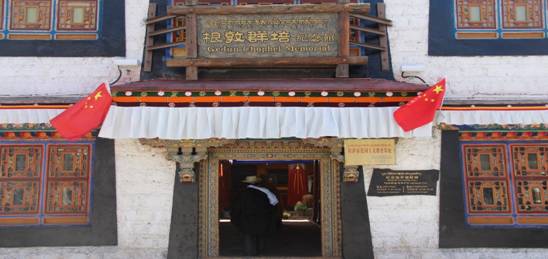
Among all the places in Lhasa, few challenge conventional narratives as powerfully as the Gendun Chopel Memorial.
Gendun Chopel (1903–1951) was one of the most influential—and controversial—Tibetan intellectuals of the modern era. A monk, scholar, traveler, translator, and reformist thinker, he moved fluidly between Buddhist philosophy, secular history, and global perspectives at a time when Tibetan society was largely inward-looking.
The memorial is modest in scale but immense in significance. Through manuscripts, photographs, and carefully curated historical material, it reveals a Tibet rarely discussed in popular travel narratives: a Tibet engaged in self-questioning, reform, and intellectual exchange.
For culturally curious travelers, this space offers something rare in Tibet—a direct encounter with Tibetan modern thought, rather than religious symbolism alone.
Gama Xia Monastery: A Quiet Lineage Beyond the Mainstream
Unlike the grand Gelugpa monasteries that dominate most itineraries, Gama Xia Monastery represents a quieter but equally important strand of Tibetan Buddhism, closely connected to the Kagyu tradition.
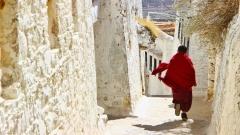
Small, understated, and largely untouched by mass tourism, the monastery functions as a genuine living space for practice rather than performance. There are no crowds, no souvenir stalls—only monks following daily rhythms of study and meditation.
Its value lies not in spectacle, but in perspective. Gama Xia reminds visitors that Tibetan Buddhism has never been monolithic. Lhasa has long been a meeting point of different lineages, each contributing to the city’s spiritual depth.
Ra-Sé Tsankhang Temple: Spiritual Life Embedded in the City
Hidden within the old neighborhoods of Lhasa, Ra-Sé Tsankhang Temple is not a destination most visitors actively seek—but it is one many locals quietly rely upon.
Rather than serving pilgrims from afar, this temple functions as a community guardian space. Residents visit before important life events, during personal uncertainty, or simply as part of daily routine. Its presence is woven into the city’s lived experience.
For travelers, this offers a rare opportunity to observe Tibetan Buddhism as it exists in everyday urban life—not as ceremony, but as continuity.
The Maitreya Hall: Buddhism and the Philosophy of Time
Dedicated to Maitreya, the Buddha of the Future, the Maitreya Hall carries a philosophical weight distinct from most Tibetan temples.
While many religious spaces focus on present devotion or historical enlightenment, Maitreya represents what has not yet arrived. Worship here is oriented toward patience, moral accumulation, and long-term consequence.
This future-facing dimension reveals an often-overlooked aspect of Tibetan spirituality: its deep engagement with time, continuity, and ethical responsibility beyond one lifetime.
For thoughtful travelers, the hall becomes less a sightseeing stop and more a contemplative space.
Mu-ru Nyingba Monastery: The Living Roots of Tibetan Buddhism
As one of the most significant Nyingma monasteries in central Lhasa, Mu-ru Nyingba offers a window into the earliest foundations of Tibetan Buddhism.
The Nyingma school, known for its emphasis on ancient texts, tantric practices, and direct transmission, predates the institutional structures many visitors associate with Tibetan monastic life.
The monastery’s compact layout, distinctive iconography, and historic murals preserve an older spiritual aesthetic—one less concerned with hierarchy, more focused on lineage and practice.
This is not merely a historical site, but a living reminder of Tibet’s spiritual origins.
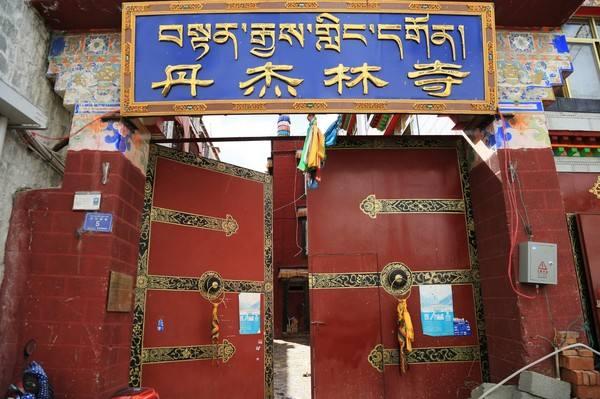
Danjielin Monastery: Where Time Moves Slowly
Perhaps the most understated of all, Danjielin Monastery is a place defined by continuity rather than prominence.
Removed from major tourist routes, it remains deeply embedded in local religious life. Elder monks conduct rituals much as they have for decades, seasonal ceremonies follow ancient calendars, and the architecture bears the gentle marks of time.
There is little here that demands attention—and that is precisely its power.
For visitors seeking authenticity rather than spectacle, Danjielin offers something increasingly rare: unfiltered spiritual normalcy.
Why These Places Matter
Including these sites in a Lhasa itinerary transforms the journey in meaningful ways:
-
From iconic landmarks to intellectual and spiritual context
-
From singular narratives to plural traditions
-
From visual consumption to cultural understanding
They invite travelers to engage with Lhasa not as a symbol, but as a living city shaped by debate, devotion, and diversity.
The Real Lhasa Reveals Itself Quietly
Lhasa does not reveal its deepest layers easily.
They are not announced by grand staircases or panoramic viewpoints.
They exist in small temples, in memorial halls, in neighborhoods where faith continues without an audience.
For those willing to slow down, to listen rather than collect, Lhasa offers something far richer than photographs:
a sense of continuity, humility, and intellectual depth that few places in the world still preserve.
And that is where its true power lies.