
Tibet has a reputation for being one of the more mysterious and tightly regulated travel destinations on Earth, and for good reason. Unlike most other regions of China, you cannot simply book a flight to Lhasa and show up. There are specific permits, specific procedures, and a handful of circumstances under which travel to the plateau is either restricted or strongly discouraged. If you are dreaming of standing before the Potala Palace or gazing up at Mount Everest from the Tibetan side, this guide walks through exactly who can visit Tibet, who faces restrictions, and what every traveler needs to know before planning a trip in 2027.
Yes, All Travelers Can Visit Tibet, But a Permit Is Required
As Tibet continues to open itself up to international visitors, the encouraging news is that travel to the region is now available to virtually everyone. However, the process looks quite different from visiting other parts of China. You will not be hopping on a random flight to Lhasa without first securing the right documentation.
Under the current policy set by the Tibet Tourism Bureau, foreign nationals are required to visit Tibet as part of a pre-booked, guided tour arranged through a licensed local travel agency such as TibetYulong Travel. A qualified agency will assist in securing your Tibet Travel Permit, a document that is absolutely essential for legally boarding a flight or scenic train into Lhasa, the capital of the Tibet Autonomous Region.
How the Tibet Travel Permit process generally works
Getting your permit sorted typically follows a straightforward three-step sequence.
Step one involves applying for a Chinese Tourist Visa, commonly known as the L Visa, directly through the Chinese consulate or embassy in your home country. This part of the process is handled entirely on your end.
Step two requires sending clear photographs of your passport information page and your completed Chinese Visa page to your chosen travel agency, ideally at least 20 days before your planned departure for Lhasa. This gives the agency enough lead time to process your Tibet Travel Permit application properly.
Step three involves picking up your finished Tibet Travel Permit, which is typically delivered to you in one of the major Tibet-entry cities such as Beijing, Shanghai, Guangzhou, Chengdu, Chongqing, or Xi’an. Once the permit is in hand, you can board your flight or train to Lhasa with everything in order.
Upon arrival in Lhasa, a knowledgeable local guide will accompany you throughout your journey, helping ensure your safety, navigating the dramatic Himalayan terrain alongside you, and offering insight into Tibet’s rich cultural and religious traditions along the way.
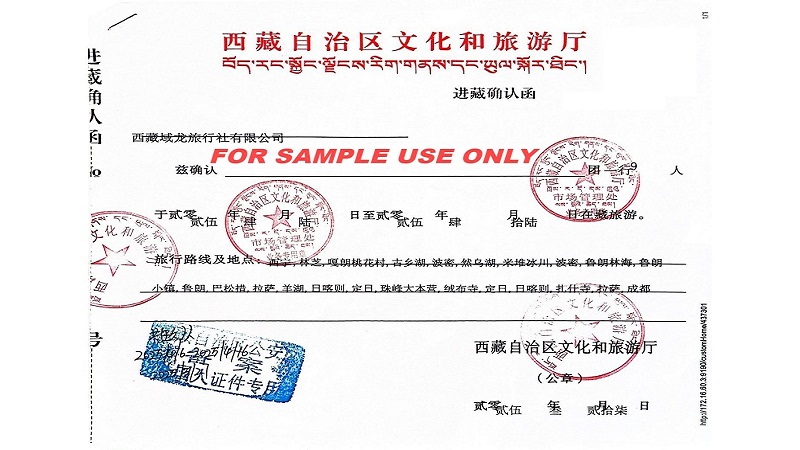
TibetYulong – Tibet Travel Permit
Health Conditions That May Prevent Travel to Tibet
While the vast majority of travelers adapt to Tibet’s high altitude and thinner air within a few days of arriving in Lhasa, certain groups genuinely face a much harder time adjusting. If you fall into one of the following categories, it is generally wise to either postpone your trip until you feel ready, or have a thorough conversation with your doctor beforehand.
People with heart or blood pressure issues. If you regularly experience a fast or irregular heartbeat, tightness in your chest, or struggle with high blood pressure or other cardiac concerns, Tibet’s high altitude could genuinely put your safety at risk. With less oxygen available in the air, your heart is forced to work considerably harder, which can leave you feeling dizzy, anxious, or persistently exhausted.
People with lung problems. Travelers dealing with asthma, chronic coughing, or frequent shortness of breath during seasonal transitions should approach a Tibet trip with real caution. The thinner air found throughout the region can make breathing noticeably more difficult, potentially leaving you feeling breathless or tight-chested in a way that undermines the entire travel experience.
People with severe anemia. Anyone dealing with moderate to severe anemia, a condition marked by a shortage of red blood cells needed to carry oxygen, and who frequently feels weak, tired, or lightheaded as a result, should ideally wait until they have recovered before attempting a Tibet trip. Anemia already compromises your body’s ability to transport oxygen efficiently, and pairing that with Tibet’s naturally low-oxygen environment can intensify feelings of dizziness and fatigue considerably.
Pregnant women. Pregnancy already places extra oxygen demands on both mother and baby. Add in Tibet’s significant altitude, the long travel distances often required for day tours beyond Lhasa, and the irregular meal and sleep schedules that frequently come with travel, and the physical strain can become genuinely difficult to manage. Some remote areas also have only limited access to medical assistance. For these reasons, it is generally considered safest to wait until after pregnancy before planning a Tibet journey.
People currently sick with a cold or fever. If you are already feeling under the weather, Tibet’s dry, oxygen-thin air has the potential to make your existing symptoms considerably worse. In more serious cases, this combination can even contribute to high-altitude pulmonary edema, a severe condition involving fluid buildup in the lungs caused by insufficient oxygen. It is far better to wait until you have fully recovered before setting out on your trip.
People recovering from major surgery. The body needs adequate time to heal properly following any major surgical procedure. The combination of long travel days and Tibet’s thinner air can meaningfully slow that recovery process and leave you feeling considerably worse than expected. As a general guideline, it is wise to wait at least six months following major surgery before planning a Tibet adventure.
Restrictions for Journalists and Diplomats
If you happen to hold a journalist credential or a diplomatic passport, your visit to Tibet will be treated quite differently from a standard tourist trip. Rather than being processed as ordinary tourism, your journey will be officially classified as an official visit.
Because of this distinct classification, a regular private travel agency is simply not equipped to provide the government-coordinated escort services, official liaison with local authorities, and specific security protocols that journalists and diplomats require during their time in the region.
Application process for foreign journalists
Foreign journalists wishing to visit Tibet must apply in advance directly through the Tibet Autonomous Region’s Foreign Affairs Office to obtain their Tibet Travel Permit. Once approved, journalists are required to follow the specific itinerary arranged by that office and are not permitted to travel independently while in the region.
Application process for foreign diplomats
Foreign diplomats need to submit their application through the Chinese embassy in their home country, directing it to the Tibet Autonomous Region’s Foreign Affairs Office, at least 15 days prior to their planned travel dates. The application must include the diplomat’s name, official title, identification number, planned travel dates, the specific purpose of the visit, a proposed itinerary, and an estimate of expenses. Once the application receives approval, the Foreign Affairs Office takes over coordination of the itinerary and reception arrangements, and diplomats are typically accompanied by government staff throughout their stay.
Can Seniors and Children Visit Tibet?
Absolutely, yes. Both senior travelers and young children are welcome to visit Tibet, and there is no official age limit attached to obtaining a Tibet Travel Permit. As long as a traveler is in reasonably good health and free of pre-existing medical conditions that would put them at risk, there is generally no barrier to making the trip.
For travelers over the age of 70, a pre-trip medical check-up is strongly recommended before finalizing any Tibet plans. Seniors dealing with serious heart conditions, chronic respiratory problems, or uncontrolled high blood pressure should seriously consider postponing their journey until these conditions are better managed.
For those over 80 who are otherwise free of significant health issues, traveling alongside family members or working closely with experienced travel consultants to design a customized itinerary with a private guide can provide valuable extra care and attention throughout the trip.
It is also worth building in plenty of time to acclimatize before pushing on to higher elevations. A common approach involves flying first into Lhasa, which sits at roughly 3,650 meters, or Nyingchi, at around 3,000 meters, and then spending a couple of days simply adjusting to the altitude before continuing further. Booking hotels equipped with oxygen supplies, or following a relaxed, personalized itinerary with a gentler pace, can make a meaningful difference for older travelers.
For families planning to bring young children along, it is generally recommended that children be at least 4 years old before attempting a Tibet trip, in order to ensure a reasonably comfortable experience for everyone involved.
The reasoning behind this guideline comes down to the fact that children younger than 4 often struggle to adjust to the dramatic temperature swings found across the Tibetan Plateau, and may also have real difficulty articulating exactly how they are feeling, whether the discomfort stems from altitude sickness or something else entirely.
Parents preparing younger children for the trip might find it helpful to read picture books together or watch documentaries that introduce the idea that Tibet sits at a very high elevation with less available oxygen. Explaining in advance that they will need to move slowly once they arrive, and avoid running or jumping around in ways that could trigger acute mountain sickness, can help set the right expectations.
Working with knowledgeable travel consultants to book hotels offering child-friendly amenities, such as complimentary oxygen supplies, extra beds, high chairs, children’s toiletries, play areas, and kid-friendly meal options, can also smooth out the family travel experience considerably.
Based on extensive experience guiding families, building a personalized itinerary tailored specifically for households with small children tends to produce a far more relaxed and genuinely immersive journey overall. Families might enjoy a peaceful stroll through Lhasa’s serene Zongjiao Lukang Park, take gentle walks around local monasteries, visit a Tibetan family living in the countryside near Lhasa, help care for livestock such as yaks and sheep, or take part in a hands-on cooking class learning to make traditional Tibetan momo dumplings. This kind of pacing allows the entire family to explore Tibet comfortably while still enjoying a genuinely enriching cultural experience.
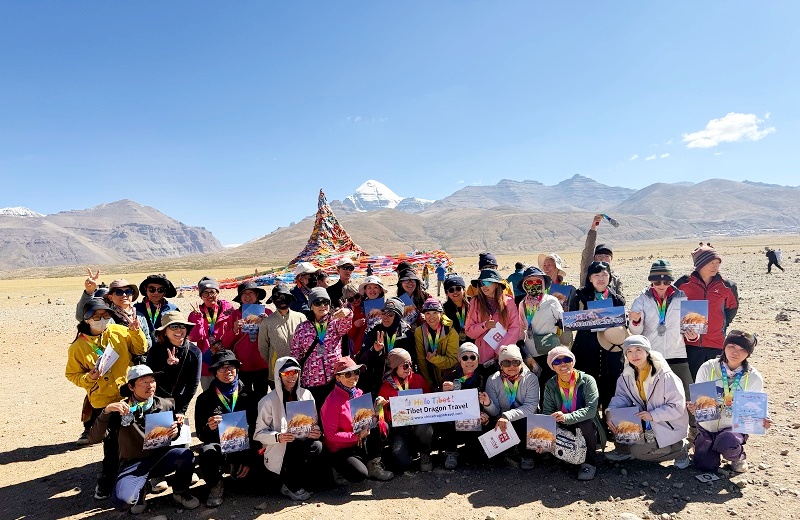
Tibetan Tourists
Can You Visit Tibet Independently with Chinese Friends or Family?
No, even when traveling alongside Chinese friends or family members, foreign nationals are still not permitted to visit the Tibet Autonomous Region entirely on their own. International travelers must book a guided Tibet tour through a licensed local travel agency and secure a valid Tibet Travel Permit in order to enter the region legally, exactly as mandated by the Tibet Tourism Bureau.
That said, travelers wishing to experience Tibet alongside Chinese companions generally have two solid options for making this work.
Booking a private Tibet tour together. You and your Chinese friends or family members can book a fully private Tibet tour as a group, accompanied throughout by an experienced local Tibetan guide for all sightseeing activities.
Joining a small group tour. Alternatively, travelers who enjoy meeting like-minded people from around the world are warmly welcome to join a budget-friendly small group Tibet tour together with their Chinese companions.
These small group tours typically cap participation at around 12 travelers, with fixed departure dates offered every month, allowing everyone to share the costs of transportation, accommodation, meals, and guided services among the group. Travelers also get to enjoy the unique experience of exploring Tibet alongside a knowledgeable local guide, all within a friendly, genuinely international group setting.
Can You Visit Tibet Without a Pre-Booked Tour?
No, independent travel into the Tibet Autonomous Region without a pre-arranged guided tour through a licensed local agency simply is not permitted under current policy.
This restriction exists because, under the Tibet Tourism Bureau’s official travel policy, every foreign national must rely on a licensed Tibet travel agency to handle their Tibet Travel Permit application before they are legally allowed to board a flight or train heading to Lhasa.
The recommended approach is to begin by working with experienced travel consultants to identify your ideal Tibet itinerary, and to finalize your tour booking at least 30 days in advance, since you will need to independently secure your Chinese Tourist Visa through the consulate or embassy in your home country first.
Beyond that, processing the Tibet Travel Permit itself generally takes around 15 working days, after which your finished permit is typically delivered within 2 to 3 days to one of the major Tibet-entry cities, including Beijing, Shanghai, Guangzhou, Chengdu, Xi’an, or Chongqing, allowing you to board your onward flight or train to Lhasa.
One useful insider tip worth noting: travelers coming from countries on China’s visa-free list in 2027 can have their Tibet Travel Permit application handled directly, considerably simplifying and speeding up the overall booking process.
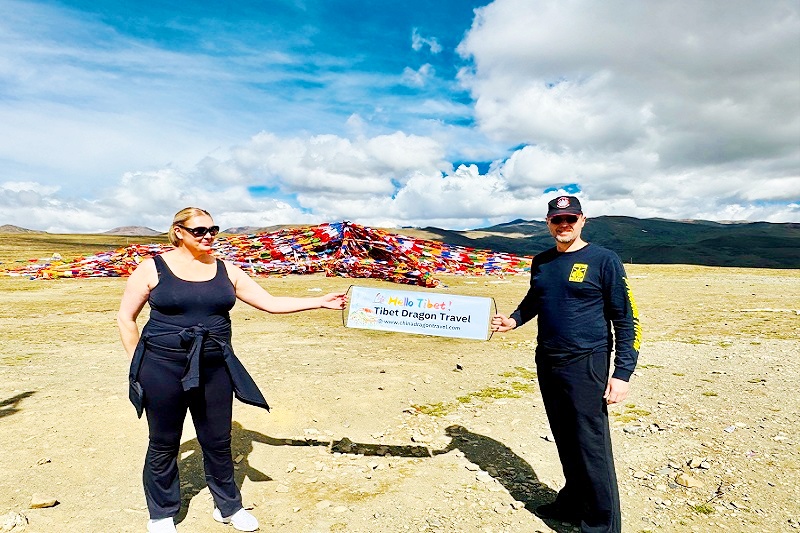
Tibetan Tourists
Frequently Asked Questions About Who Cannot Travel to Tibet
Who is generally restricted from visiting Tibet?
Travel to Tibet remains broadly open to most travelers, though certain restrictions do apply. Individuals who are severely ill, or who live with conditions such as asthma, heart disease, high blood pressure, or other significant chronic illnesses, may not be able to travel safely given Tibet’s demanding high-altitude environment. Separately, diplomats, journalists, and government officials cannot travel using a standard tourist visa through an ordinary travel agency, and must instead apply through the Tibet Autonomous Region’s Foreign Affairs Office.
Can I travel to Tibet while dealing with a cold?
It is best to postpone your trip if you are currently fighting off a cold or fever. Tibet’s high altitude, often exceeding 4,000 meters, combined with its notably thin air, can worsen even a fairly mild cold, potentially leading to serious complications such as high-altitude pulmonary edema, a condition involving dangerous fluid buildup in the lungs. Resting and fully recovering before your trip is the safer path, and checking with a doctor beforehand is a sensible precaution if you have any doubts.
Do foreign travelers need a special permit to visit Tibet?
Yes, international travelers are required to obtain a Tibet Travel Permit before entering the region. This involves booking a guided tour through a licensed local Tibet travel agency, which handles the permit application process while also arranging guided services, accommodation, transportation, meals, and other essential logistics needed for a safe and smooth trip.
Is it possible to visit Tibet without a guide?
No, foreign travelers are required to be accompanied by a local Tibetan guide throughout their time in the region, and fully independent travel is not an option here. This distinctive policy helps ensure that journeys across the vast, towering Tibetan Plateau remain both safe and genuinely enjoyable, particularly given language barriers and the often unfamiliar Buddhist traditions and local customs travelers encounter. Traveling alongside an experienced Tibetan guide also tends to deepen visitors’ understanding of Tibetan Buddhism considerably, while making for a smoother, more memorable adventure overall.
Are there specific restrictions for pregnant travelers?
While no official government restriction exists, the overwhelming majority of doctors and travel agencies strongly advise against traveling to Tibet during pregnancy, primarily because the region’s low oxygen levels can place real stress on both mother and baby. Medical facilities in more remote areas also remain fairly basic, and visiting Tibetan monasteries frequently involves climbing steep staircases, enduring long drives, and dealing with irregular meal schedules, all of which can introduce added risk during pregnancy. Postponing travel or consulting a doctor beforehand is generally the wisest course of action.
Can travelers with a history of altitude sickness still visit Tibet?
Yes, they certainly can. Having previously experienced altitude sickness on a past trip does not automatically mean it will happen again, since every individual journey unfolds differently. One practical strategy involves flying first into Nyingchi, sitting at around 3,000 meters, spending a couple of days there sightseeing while gradually acclimatizing, and then traveling onward to Lhasa and Shigatse, two of Tibet’s most culturally significant destinations. The real key to a safe Tibet journey lies in allowing sufficient time to acclimatize and gaining altitude gradually rather than rushing. With an experienced local guide, ready access to oxygen supplies, and support from a professional team, travelers can explore Tibet with genuine peace of mind.
Are there meaningful age restrictions for visiting Tibet?
There are no strict, formally enforced age restrictions for visiting Tibet, though the ability to handle high altitude conditions can become a genuine concern for both very young children and elderly travelers. Generally speaking, traveling to Tibet is not recommended for children under the age of 4, since they often struggle to communicate how they are feeling and tend to be more sensitive to the thin air and dramatic temperature shifts found across the plateau. On the other end of the spectrum, visiting Tibet remains generally safe for elderly travelers who are free of significant pre-existing health conditions, though anyone over 70 should ideally undergo a medical check-up and consult their doctor for personalized advice beforehand.
Can travelers with disabilities visit Tibet?
Yes, absolutely. Many modern tour vehicles used throughout the region are equipped to accommodate folding wheelchairs. That said, visiting Tibetan monasteries frequently involves navigating steep staircases and uneven terrain, which can present genuine physical challenges. Even so, a customized Tibet itinerary can be designed around an individual traveler’s specific pace and physical needs. Having access to two private local Tibetan guides can make navigating these challenges considerably easier, paired with comfortable accommodations and whatever additional support is required throughout the journey.
Planning Your Own Tibet Journey With Confidence
Tibet’s distinct entry requirements, health considerations, and special rules for certain professions might initially seem daunting, but in practice, the vast majority of travelers find the process to be manageable and well worth the effort once they understand exactly what is required. From securing the right permits to choosing the ideal time to travel and preparing properly for the altitude, careful planning makes all the difference between a stressful ordeal and a genuinely unforgettable journey across one of the most remarkable landscapes on the planet.
Working with an experienced local partner such as TibetYulong Travel can help simplify nearly every step of this process, from handling your Tibet Travel Permit application to designing a personalized itinerary that accounts for your age, health considerations, and travel companions. With the right guidance and a bit of advance preparation, nearly anyone, regardless of age or background, can experience the breathtaking landscapes, ancient monasteries, and rich cultural traditions that make Tibet such an extraordinary place to visit.