
Travel through Tibet long enough, and you will start noticing the same handful of images appearing again and again: an intricate knot carved into a temple doorway, a string of colorful flags rippling across a mountain pass, a white scarf draped gently around the neck of a traveler. These are not random decorations. They are some of the most enduring symbols in Tibetan culture, and many of them carry a shared meaning connected to peace, harmony, and goodwill. Understanding what these symbols represent can transform the way you experience the Tibetan Plateau, turning ordinary sightseeing into a deeper encounter with the spiritual values that have shaped this region for centuries.
The Endless Knot: Tibet’s Most Recognized Symbol of Peace
Among all the symbols connected to peace found throughout Tibet, the Endless Knot stands out as perhaps the most widely recognized. It belongs to the eight auspicious symbols of Tibetan Buddhism and remains one of the most enduring visual motifs found throughout Tibetan culture.
Visually, the Endless Knot consists of a single continuous line that has no clear beginning and no clear end. This unbroken structure is far from accidental. Within Tibetan Buddhism, the design is understood to represent harmony, balance, and the interconnected nature of all living beings. The underlying belief is straightforward yet profound: lasting peace can only emerge when people live in balance with one another, recognizing how deeply their lives are intertwined. Because this message resonates so strongly with broader ideas about peace, the Endless Knot has come to be regarded as one of Tibet’s most important visual representations of that concept, appearing regularly in everyday decoration as well as in sacred religious objects.
Travelers exploring Tibet’s monasteries and temples will likely spot this symbol almost immediately. It frequently appears within elaborate murals, decorative carvings, ceremonial objects used in prayer, and the intricate thangka paintings that hang throughout religious sites. Its constant presence across these settings speaks to just how central this single image is to both the spiritual and artistic identity of Tibetan Buddhism.
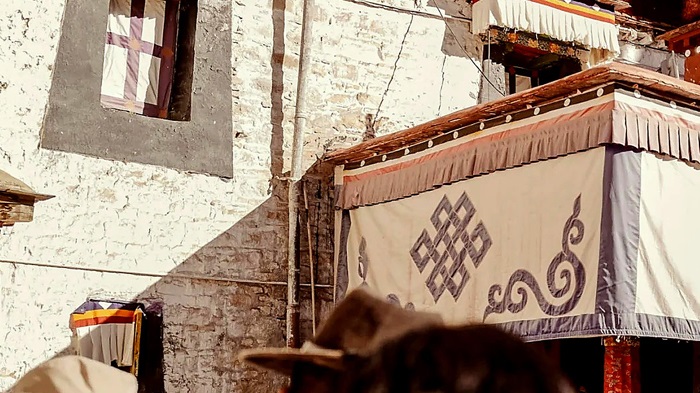
The Endless Knot
The Lotus Flower: Tibet’s Symbol of Inner Peace
The Lotus Flower is another of the eight auspicious symbols within Tibetan Buddhism, and it holds a place of deep respect throughout the region. What makes the lotus such a compelling symbol is the story embedded in its biology: the flower begins its life rooted in murky, muddy water, yet somehow rises above that environment to bloom into something strikingly pure and beautiful. This natural transformation has become a powerful metaphor for the journey from hardship toward inner peace, and by extension, a widely embraced symbol of spiritual awakening.
The connection between the lotus and peace runs deeper than simple aesthetics. The flower represents the capacity to overcome genuine difficulty and to grow stronger through life’s inevitable challenges, rather than being defeated by them. Within Tibetan Buddhist thought, the lotus serves as a reminder that qualities like compassion and inner peace are not reserved for those who have lived easy, untroubled lives. Quite the opposite: these qualities often emerge most powerfully from people who have weathered genuine struggle. For many travelers visiting Tibet today, the lotus has taken on a more personal resonance as well, symbolizing themes of personal growth, resilience, and the kind of inner balance that can be cultivated even amid life’s harder moments.
The graceful silhouette of the lotus remains one of the most enduring images in Tibetan art, and travelers will find it depicted constantly throughout monasteries and sacred sites across the plateau. Look for lotus motifs woven into monastery murals, featured prominently in thangka paintings, shaped into the base of Buddhist statues, and incorporated into countless religious decorations found in temples throughout Tibet.
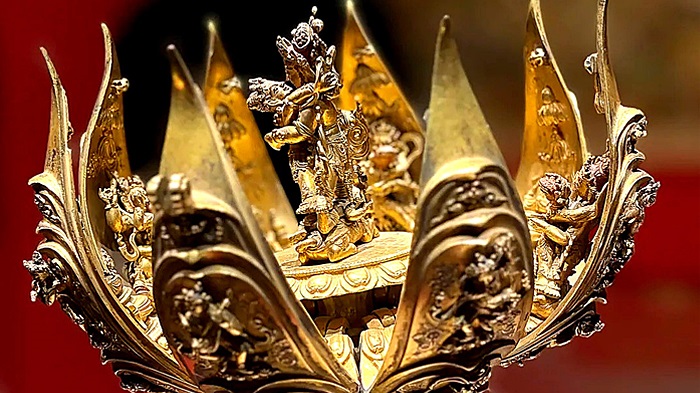
The Lotus Flower
Prayer Flags: Tibet’s Colorful Message of Peace
Few images are as instantly associated with Tibet as the sight of prayer flags fluttering across a mountain pass. These vibrant strings of fabric can be found scattered throughout the entire Tibetan Plateau, and within Tibetan culture, they carry a very specific spiritual function: prayer flags are believed to spread good wishes for peace, harmony, and auspiciousness outward through the movement of the wind itself.
Traditional prayer flags always appear in a set sequence of five colors, and each color corresponds to a specific element found in nature.
Blue represents the open sky above. White stands in for clouds drifting across that sky. Red symbolizes the element of fire. Green corresponds to water. Yellow represents the earth beneath everything else.
The connection between prayer flags and the concept of peace stems from the belief that these flags actively spread blessings, compassion, and goodwill to all living beings within their reach. As wind passes through the fabric, that movement is thought to physically carry these blessings outward across the landscape, gradually promoting greater harmony and peace among everyone the wind eventually touches.
Travelers will encounter prayer flags virtually everywhere across Tibet, but certain locations feature them especially prominently, including pilgrimage routes, high mountain passes, the shores of sacred lakes, and the areas surrounding monasteries. One particularly memorable place to see them is along the kora circuit around Mount Kailash, where countless prayer flags accumulate along the pilgrimage path. The bright, layered colors combined with their deep spiritual significance make prayer flags one of the single most distinctive and photogenic elements of Tibet’s entire cultural landscape.
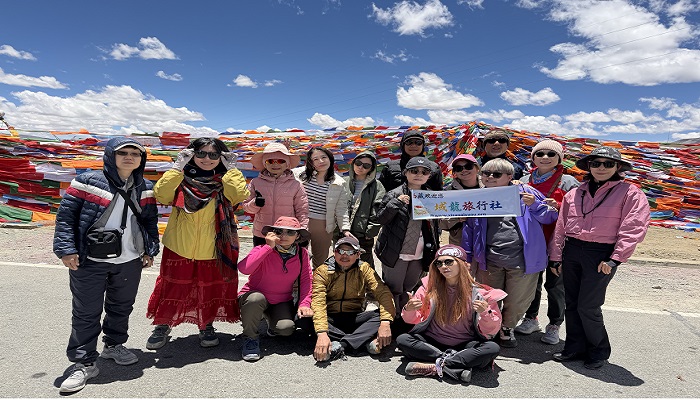
Tibetan Tourists and Prayer Flags
Hada: Tibet’s Symbol of Peace, Blessings, and Hospitality
A Hada, sometimes also written as Khata, refers to a traditional Tibetan ceremonial scarf. These scarves are typically white in color, a shade closely tied to ideas of purity, sincerity, and peace within Tibetan culture. Unlike many of the other symbols discussed here, which appear primarily within religious art and decoration, the Hada occupies a slightly different role: it functions as a genuine, lived part of Tibetan social etiquette rather than purely a decorative or artistic motif.
In Tibet, the act of presenting someone with a Hada carries real social weight. It serves as a meaningful gesture of respect, friendship, welcome, and heartfelt good wishes directed toward another person. Because of this personal, interpersonal dimension, the Hada is often considered one of the most intimate among Tibet’s various symbols of peace, since it is physically given from one person to another as a direct expression of goodwill rather than simply displayed or observed. For travelers visiting the region, actually receiving a Hada offers a uniquely personal way to experience Tibetan hospitality firsthand, rather than simply observing it from a distance.
Hadas commonly appear during welcoming ceremonies held for visitors and honored guests, throughout various religious ceremonies, during traditional Tibetan festivals, and along pilgrimage journeys undertaken by devout practitioners. For visitors fortunate enough to be presented with one, receiving a Hada represents a genuinely meaningful way to experience the hospitality, respect, and goodwill that Tibetan communities extend to outsiders. This simple white scarf often ends up serving as a warm, tangible introduction to the broader peaceful spirit that runs throughout Tibetan culture.
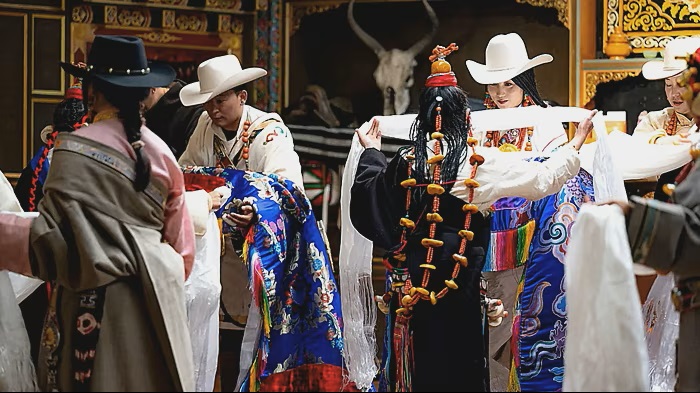
Hada
The Buddhist Swastika: Tibet’s Ancient Symbol of Peace and Harmony
The Buddhist Swastika ranks among the oldest sacred symbols found anywhere in Tibet, and it has carried associations with peace within Tibetan Buddhism for an extraordinarily long time. It is important for international travelers to understand that this ancient symbol, sometimes called the “sauwastika” in its left-facing Buddhist form, bears no relationship whatsoever to the unrelated symbol later co-opted by twentieth-century European fascist movements; its origins and meaning in Tibetan Buddhism long predate that entirely separate and unrelated usage by many centuries.
Within its proper Buddhist and Tibetan context, the symbol represents concepts of eternity, auspiciousness, and balance, all of which are believed to bring greater stability and overall well-being into a person’s life. Because of these deep-rooted meanings, the Buddhist Swastika has remained an enduring symbol of peace and harmony throughout Tibet across many centuries of continuous use.
For travelers, taking the time to understand the genuine history behind the Buddhist Swastika helps clarify why this particular symbol continues to hold such an important place in Tibet today. It appears regularly within monasteries, woven into religious artwork, and preserved at numerous cultural heritage sites throughout the region. Its continued, unbroken presence throughout daily Tibetan life reflects just how deeply Buddhist values centered on peace and harmony remain embedded in the rhythms of everyday existence on the plateau.
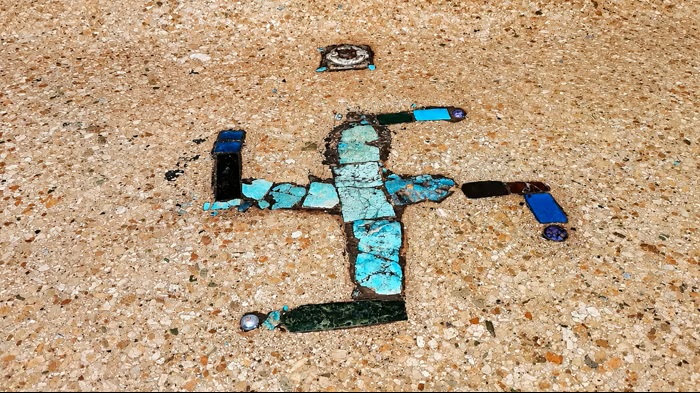
The Buddhist Swastika
Why Peace Holds Such a Central Place in Tibetan Culture
Peace occupies an unusually central position within Tibetan culture precisely because the concept is woven so tightly into both daily life and deeply held spiritual beliefs. Within Tibet, peace is rarely treated as a passive, abstract ideal. Instead, it is understood as an active way of living, one shaped continuously by both the surrounding natural environment and centuries of religious tradition.
One major reason for this emphasis traces back to the powerful influence of Tibetan Buddhism throughout the region. Buddhist teachings consistently emphasize compassion, nonviolence, and mindfulness, actively encouraging practitioners to cultivate genuine inner peace as the essential foundation for living a meaningful life. These core values naturally extend outward as well, shaping the way people interact with one another and engage with the broader world around them.
The harsh natural environment of the Tibetan Plateau has also played a significant role in shaping these cultural values over time. Life at such extreme altitude has traditionally demanded a great deal of cooperation, resilience, and mutual support among neighboring communities simply to survive and thrive. Under these challenging conditions, maintaining harmony and balance becomes far more than a nice philosophical ideal; it becomes genuinely essential for both physical survival and meaningful social connection.
Given these deep cultural foundations, it makes sense that so many distinct Tibetan symbols circle back to themes connected with peace, reinforcing their importance as a core part of both religious expression and broader cultural identity across the region. Travelers genuinely curious about experiencing these symbols firsthand, in their proper cultural context, will find that a well-organized Tibet cultural tour offers convenient and meaningful access to exactly this kind of experience.

Where to See Tibetan Symbols of Peace During Your Trip
One of the most effective ways to truly understand Tibetan symbols of peace is to encounter them directly within their original cultural and religious settings, rather than simply reading about them beforehand. Throughout Tibet, these symbols consistently appear in locations that play an active, ongoing role in local spiritual and cultural life, not merely as historical relics on display.
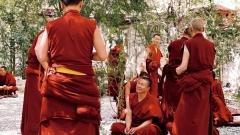
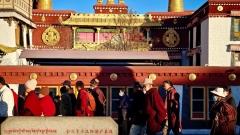
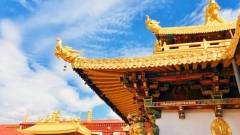
Tibetan monasteries and temples remain among the most reliable places to encounter these symbols in abundance. Sites such as Jokhang Temple and Sera Monastery feature richly detailed religious artwork, decorative motifs, and sacred ceremonial objects that vividly reflect Tibetan beliefs surrounding peace, harmony, and compassion. Joining a guided monastery tour offers a particularly meaningful way to experience these symbols properly contextualized within their original religious setting.
Pilgrimage routes, particularly the various kora circuits found throughout the region, present excellent opportunities to observe these symbols in active use. Along well-known paths such as the Barkhor kora in Lhasa, the demanding Mount Kailash kora, and numerous other pilgrimage routes scattered across the plateau, travelers can observe prayer flags, decorative Tibetan Buddhist motifs, and devotional objects that collectively represent peace, harmony, and compassion in continuous practice.
For travelers seeking deeper historical and cultural context behind these symbols, Tibetan museums and dedicated cultural exhibitions offer genuinely valuable background information. The Tibet Museum, the Potala Palace, and Norbulingka all feature extensive murals, detailed thangka paintings, and carefully preserved artifacts that showcase these symbols within their broader historical framework.
Tibetan festivals and religious ceremonies provide perhaps the most lively and immersive way to experience these symbols directly. During major events such as Tibetan New Year celebrations and the significant Saga Dawa Festival, symbols of peace become actively incorporated into sacred objects, ceremonial decorations, and freshly created religious artwork, giving travelers a genuine opportunity to witness how these symbols truly come alive within real ceremonial contexts. Participating in a festival-focused tour offers a particularly immersive way to witness exactly how these symbols continue to function within contemporary Tibetan life.
Frequently Asked Questions About Tibetan Symbols for Peace
Is there one official Tibetan symbol for peace?
There is no single, officially designated Tibetan symbol that represents peace exclusively. Instead, several distinct Tibetan cultural and Buddhist symbols are closely associated with the concept, including the Endless Knot, the Lotus Flower, Prayer Flags, the Hada, and the Buddhist Swastika.
Which Tibetan symbol carries the strongest connection to peace?
The Endless Knot is generally considered the symbol most closely tied to the concept of peace within Tibetan tradition, since it directly represents both harmony and the interconnected nature of all living beings. It captures, in a single visual form, the broader idea that lasting peace ultimately comes from living in genuine harmony with others around you.
Where can travelers see these symbols of peace throughout Tibet?
Travelers can encounter Tibetan symbols of peace within monasteries, temples, along pilgrimage routes, at various sacred sites, and inside dedicated Tibetan museums. These symbols appear most frequently within murals, prayer flags, detailed thangka paintings, and other religious objects encountered throughout these settings.
Can visitors purchase Tibetan peace symbols as souvenirs?
Yes, travelers can find a wide range of souvenirs featuring these symbols, including prayer flags, items decorated with Endless Knot designs, Hada scarves, thangka paintings, and smaller religious ornaments. When purchasing these items, it is worth seeking out reputable local shops and treating any genuinely sacred items with appropriate care and respect.
Are these Tibetan symbols for peace strictly religious in nature?
Not entirely. While the majority of these symbols trace their origins back to Tibetan Buddhism, many of them have also become genuinely woven into everyday cultural life beyond strictly religious contexts. The Hada offers a clear example of this crossover, since it is frequently presented during ordinary occasions when welcoming guests, making it an important part of broader Tibetan social customs connected to peace and hospitality, separate from any specific religious ceremony.
How should travelers respectfully interact with these symbols?
Visitors can interact respectfully with these symbols of peace by following a few straightforward guidelines, particularly while visiting monasteries and other sacred locations. It is best to avoid stepping on prayer flags wherever they appear. Travelers should also refrain from touching religious objects or sacred artwork featuring these symbols without first receiving permission to do so. Following local customs and any posted photography rules at religious sites remains essential as well. Finally, observing how local Tibetan people themselves handle sacred objects and items connected to these symbols, and following their example accordingly, offers one of the most reliable ways to ensure respectful behavior throughout your visit.
By approaching these symbols with genuine care and respect, travelers can forge a much deeper connection with the traditions and cultural practices they represent, transforming a simple sightseeing trip into something considerably more meaningful.
Bringing These Symbols Into Your Own Tibet Journey
The symbols explored throughout this guide are far more than decorative motifs scattered across temple walls and mountain passes. Each one carries centuries of accumulated meaning, reflecting how deeply the concept of peace has shaped Tibetan spiritual life, social customs, and artistic traditions over an extraordinarily long span of time. Recognizing the Endless Knot on a monastery doorway, understanding the symbolism behind a fluttering string of prayer flags, or appreciating the genuine warmth behind being offered a Hada scarf can add an entirely new layer of meaning to any journey across the Tibetan Plateau.
For travelers hoping to experience these symbols firsthand within their proper cultural setting, working with an experienced local operator such as TibetYulong Travel can make a meaningful difference. A knowledgeable local team can help design an itinerary that weaves together monasteries, pilgrimage routes, museums, and seasonal festivals, ensuring that your journey through Tibet becomes not just a tour of dramatic landscapes, but a genuine encounter with the peaceful spirit that continues to define this remarkable corner of the world.