

When planning a trip to Southwest China, Chengdu and Chongqing are often mentioned together—but the experiences they offer are strikingly different. While Chengdu is known for its relaxed pace and cultural depth, Chongqing stands out with its dramatic urban landscape and dynamic city energy. For international travelers, understanding how these two cities differ in transportation, accommodation, cuisine, and attractions can make a significant difference in shaping a smooth and satisfying itinerary.
First Impressions: Chengdu’s Laid-Back Charm vs Chongqing’s Vertical Cityscape
The temperament of a city can often be felt upon arrival.
Characteristics of Chengdu:
- The city has a flat and open terrain, with green trees lining the streets
- Teahouses are spread all over the city, and citizens often drink tea and chat here
- The pace of life is relatively slow, with an emphasis on daily enjoyment
- Suitable for arranging a relatively relaxed tour itinerary
Characteristics of Chongqing:
- The city is built against mountains with a rugged terrain
- Light rail lines run through buildings and overpasses are stacked layer upon layer
- There are errors in walking navigation, and the actual walking distance is often longer than the map display
- Local residents are familiar with the terrain and provide clear direction guidance
In general, travelers who prefer a slow pace and humanistic atmosphere are more suitable for Chengdu, while those interested in three-dimensional urban landscapes and exploration experiences are more suitable for Chongqing.
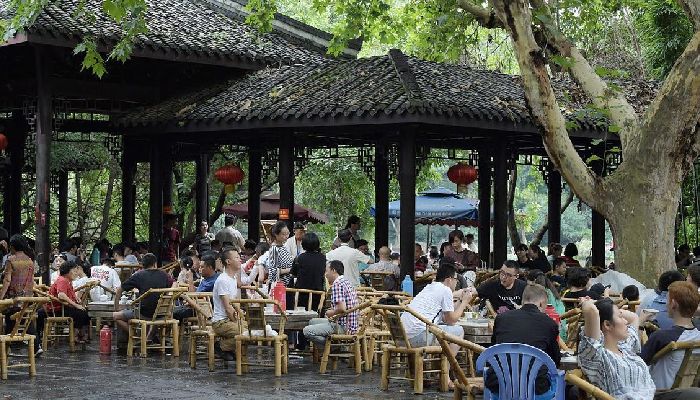
Heming Teahouse in Renmin Park, Chengdu
Flights to Chengdu or Chongqing: Routes, Connectivity, and What to Expect
For travelers from overseas, the air travel options to reach the two cities are the primary consideration.
Air routes to Chengdu:
- Chengdu has two aviation hubs, Chengdu Shuangliu International Airport and Chengdu Tianfu International Airport
- The flight from Hong Kong to Chengdu takes about 2 hours and 50 minutes, operated by Cathay Pacific, Hong Kong Airlines, Air China, Sichuan Airlines and other airlines
- Direct flights to Chengdu are available from major Asian cities such as Singapore, Kuala Lumpur, Bangkok, Tokyo and Seoul
- For European routes, Chengdu Tianfu Airport has opened direct flights to Frankfurt, London, Milan, Paris and Brussels
Air routes to Chongqing:
- Chongqing Jiangbei International Airport is an important aviation hub in southwest China
- The flight from Hong Kong to Chongqing takes about 2 hours and 35 minutes, operated by Cathay Pacific, Air China and other airlines
- Chongqing has opened direct flights to international cities such as Dubai, Budapest, Seoul, Tokyo, Singapore and Kuala Lumpur
Ticket purchase suggestions:
Travelers planning to visit both cities can consider buying multi-destination air tickets. Airlines such as Air China provide the Chengdu-Chongqing Free Transfer Service. Passengers arriving in Chengdu or Chongqing by flights of the airline can change to depart from another city for free, only needing to make up the fare difference.
Getting Between Chengdu and Chongqing: High-Speed Rail and Transport Options
Chengdu and Chongqing are about 300 kilometers apart, with convenient transportation between the two places.
High-speed rail travel:
- Departing from Chengdu East Railway Station or Chengdu South Railway Station to Chongqing West Railway Station, Chongqing North Railway Station or Shapingba Railway Station, the fastest journey takes about 1 hour and 15 minutes
- More than 150 high-speed rail trains run between the two cities every day, with one train departing every 10 minutes during peak hours
- The second-class seat fare is about 100-170 CNY, and the first-class seat fare is about 260 CNY
Other means of transportation:
- Self-driving: the journey takes about 3.5 hours via the Chengdu-Chongqing Expressway or Chengdu-Anshun-Chongqing Expressway, suitable for travelers planning to visit along the way
- Intercity bus: the journey takes about 4.5 to 6 hours with a lower fare but a longer time
- Aviation: there are no direct flights between Chengdu and Chongqing, and transfers via other cities are required, which is not recommended
First-time travelers to the two places are advised to take the high-speed rail first, which has a high on-time rate and a comfortable riding experience.
Where to Stay: Best Areas in Chengdu vs Chongqing
Accommodation choices directly affect the travel experience, and the accommodation areas of the two cities have their own characteristics.
Accommodation areas in Chengdu:
- Around Chunxi Road, Taikoo Li and Wide and Narrow Alleys: convenient transportation, a wealth of catering and shopping options, and most attractions within walking distance
- Around Renmin Park: relatively quiet environment, where you can experience the living atmosphere of old Chengdu
- Chengdu has a flat urban terrain, and most hotels are located along the metro lines, with convenient travel
- Homestays renovated from Sichuan western-style folk houses around Wide and Narrow Alleys allow you to experience traditional courtyard accommodation
Accommodation areas in Chongqing:
- Around Jiefangbei, Hongyadong and Chaotianmen: good night view, but large passenger flow around
- Nanbin Road and Danzi Stone area: you can watch the night view of Yuzhong Peninsula across the river with a relatively quiet environment
- It is recommended to check guest reviews before booking a hotel to confirm whether the hotel location is convenient for arriving with luggage
- River view rooms on Nanbin Road can take night view photos of Hongyadong in the room, avoiding crowds on the bridge
Booking suggestions:
Room rates on weekdays are usually lower than those on weekends. March to April and October to November are periods with relatively high cost performance for travel, and hotel prices usually have a discount of 20% to 50%.
Food Differences: Chengdu’s Balanced Flavors vs Chongqing’s Bold Spice
Both Chengdu and Chongqing are famous for spicy food, but the flavors of the two places have their own focuses.
Culinary characteristics of Chengdu:
- Sichuan cuisine emphasizes “a hundred dishes with a hundred flavors”, with various flavors such as numbness, sweetness, sourness and saltiness in addition to spiciness
- Most hot pot bases use clear oil, and some restaurants add Eagle Tea or chrysanthemum water to adjust the taste
- Recommended dishes: chuanchuan xiang (skewered hot pot), boboji (spicy chicken skewers), dandan noodles, sweet noodles with chili oil, vermicelli with pork large intestines, rabbit head
- A rich variety of snacks, from egg cake to night market barbecue
- Travelers who do not like spicy food can also find non-spicy dishes
Culinary characteristics of Chongqing:
- Hot pot uses butter base with a rich aroma, and tripe and duck intestines are common shabu-shabu ingredients
- The nine-square grid hot pot is a traditional way of eating, with different temperatures in each grid, suitable for blanching different ingredients
- Chongqing small noodles are a daily breakfast, with noodles with peas and minced meat and noodles in red oil being more popular
- Recommended dishes: nine-square grid hot pot, Chongqing small noodles, hot and sour vermicelli, roasted pig brain, spicy chicken
Summary of flavor differences:
- The spiciness in Chengdu is relatively mild and easy to accept for travelers who do not eat spicy food often
- The spiciness in Chongqing is more direct with a prominent numbing and spicy taste, and local people usually match it with iced beer
- Chengdu is suitable for slow and careful eating, while Chongqing is suitable for quick blanching
What to See: Cultural Chengdu vs Scenic Chongqing
The styles of the attractions in the two cities are highly consistent with their urban temperaments.
Main attractions in Chengdu:
- Chengdu Research Base of Giant Panda Breeding: the best place to watch giant pandas, which are relatively active around 7:30 in the morning
- Wuhou Shrine: a memorial to the Three Kingdoms culture, with the red wall lined path as a characteristic landscape
- Du Fu Thatched Cottage: the former residence of the Tang Dynasty poet Du Fu, with a quiet environment
- Wide and Narrow Alleys: a microcosm of old Chengdu blocks, with both tourism and catering functions
- Dujiangyan Irrigation System: an ancient water conservancy project that is still in use today
- Mount Qingcheng: a famous Taoist mountain, with many Taoist temples in the front mountain and beautiful natural scenery in the back mountain
Main attractions in Chongqing:
- Hongyadong: famous for its night view, with Qiansimen Bridge and the opposite bank of the river as the best shooting locations
- Yangtze River Cableway: overlook the confluence of the two rivers from the air, it is recommended to go before 9 a.m.
- Jiefangbei Monument: the city landmark, with a commercial center around
- Ciqikou Ancient Town: a traditional dock style, with a large passenger flow on the main street and relatively quiet branch roads
- Liziba Light Rail Station: a landscape of light rail running through a building, with a good viewing angle at the No.2 exit viewing platform
- Wulong Three Natural Bridges: a karst landform landscape, suitable for lovers of natural scenery
Comparison of attraction characteristics:
- Attractions in Chengdu are mainly humanistic and historical, suitable for in-depth visits
- Attractions in Chongqing are mainly urban landscapes and natural wonders with a strong visual impact
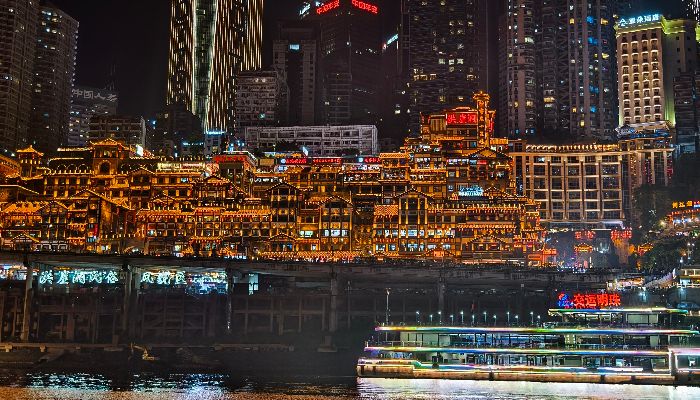
Night View of Hongyadong, Chongqing
Travel Pace: Relaxed Chengdu vs Fast-Paced Chongqing
The tour rhythms of the two cities are different, and travelers can arrange them according to their own preferences.
Travel rhythm characteristics of Chengdu:
- You can drink tea at Heming Teahouse in Renmin Park in the morning
- Choose a local restaurant for lunch at noon
- Visit museums or Wide and Narrow Alleys in the afternoon
- Watch Sichuan Opera face-changing performances in the evening
- The daily schedule should not be too full, and a relatively relaxed state can be maintained
Travel rhythm characteristics of Chongqing:
- Suitable for visiting indoor venues or walking on mountain city trails during the day
- The city is active at night, with Nanbin Road night view, Jiefangbei late-night snacks and Jiujie Bar Street as common destinations
- Some attractions require walking up and down ramps and steps, so it is recommended to wear comfortable flat shoes
Suggestions for travel seasons:
- The climate in Chengdu is pleasant in spring and autumn, suitable for outdoor activities
- The temperature in Chongqing is relatively high in summer, and the indoor air-conditioned environment is more comfortable
- The temperature in both cities is not too low in winter, but Chengdu has high humidity and Chongqing has strong wind by the river, so it is recommended to bring a windproof coat
Chengdu VS Chongqing – How to Make a Choice
Based on the above comparison, travelers can make choices according to their own preferences.
- Travelers who prefer a quiet atmosphere, a slow pace of life and are interested in giant pandas and ancient Shu culture are more suitable for Chengdu
- Travelers who prefer exploration experiences, are curious about three-dimensional cities and night view landscapes, and love strong hot pot flavors are more suitable for Chongqing
- Travelers with ample time can visit the two cities in a series. Taking the high-speed rail from Chengdu to Chongqing takes just over an hour at the fastest.
Chengdu or Chongqing: Choosing a Travel Rhythm, Not Just a Destination
Traveling to Chengdu often feels like stepping into a slower timeline. Days can unfold gently—sipping tea in a traditional teahouse, wandering through historic alleys, and absorbing the subtle rhythms of local life. The city invites you to pause, observe, and experience rather than rush. Chongqing, in contrast, delivers a more intense and immersive urban adventure. Its layered skyline, steep streets, and glowing night views create a sense of movement and discovery that keeps you constantly engaged.
In the end, choosing between Chengdu and Chongqing isn’t simply about picking a place—it’s about deciding how you want to experience your journey. Whether you lean toward calm exploration or energetic discovery, both cities offer something distinctive. And if your schedule allows, combining the two can create a richer, more balanced travel experience across Southwest China.