
As the world’s highest peak, Mount Everest (Qomolangma) attracts countless adventurers and travelers from around the globe with its grandeur and magnificence. However, the most unpredictable and safety-critical factor of this sacred mountain is undoubtedly Everest temperature. Its drastic fluctuations and extremely low values not only shape the unique plateau ecosystem but also directly determine the quality of the travel experience and the success of summit attempts. Whether you plan to visit the Everest Base Camp for a close-up pilgrimage or embark on a higher-altitude adventure, understanding the laws of temperature changes in advance is an indispensable preparation for this journey.
Core Patterns of Everest Temperature: Dual Influences of Altitude and Latitude
The primary characteristic of Everest temperature is the significant decrease as altitude increases. Scientific data shows that for every 100-meter increase in altitude, the temperature drops by approximately 0.65°C. With a summit altitude of 8848.86 meters, this means the temperature at Everest’s peak is more than 50°C lower than that at sea level at the same latitude. Even if the sea level experiences a high temperature of 40°C, the peak may still be in severe cold of minus ten degrees Celsius. This extreme low temperature, combined with the low air pressure and strong radiation brought by high altitude, forms the unique climatic environment known as the Third Pole of the World.
In addition to altitude, seasonal wind directions are another key factor affecting Everest temperature. From mid-November to mid-February each year, the northwestern cold current sweeps across the mountainous area. During this period, the average temperature at the peak ranges from -40°C to -50°C, with an extreme low of -61.3°C. Exposing skin for just a few seconds can lead to frostbite. In the warm season from July to August, the average nighttime temperature at the peak is about -17°C, and it rises slightly during the day but remains below freezing. For ordinary travelers, the temperature at the Everest Base Camp (5200 meters above sea level) is more relevant, with equally drastic changes and a diurnal temperature range often exceeding 20°C.
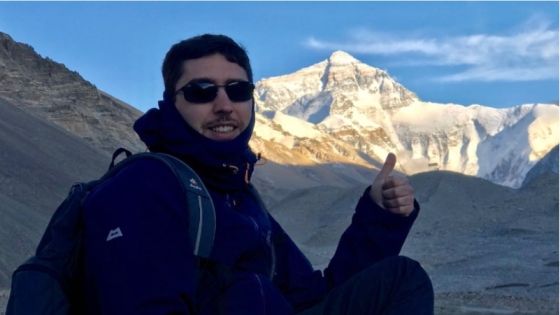
Mount Everest (Qomolangma)
Seasonal Temperature Characteristics: Choose the Right Time to Explore Everest
Everest temperature varies greatly across seasons, directly affecting travel safety and viewing experience. Choosing the right time to depart is crucial.
Spring (Early March to Late May): As a transition period from the windy season to the rainy season, spring is one of the best travel seasons for Everest. During this time, wind force in the mountainous area gradually weakens, and temperature rises steadily. The daytime temperature at the Everest Base Camp can reach 7°C to 12°C, which is relatively comfortable when the sun is shining, but the nighttime temperature still drops to -5°C to -10°C. With little precipitation and stable weather, this season not only allows for a clear view of Everest’s full appearance but also provides an excellent opportunity to photograph the snow-capped mountains and starry sky, making it suitable for most foreign travelers.
Summer (Early June to Late August): Summer is the rainy season for Everest. The strong southeast monsoon brings frequent rainfall, and Everest is often covered by dense clouds, reducing the chance of seeing the main peak. However, in terms of temperature, this is the warmest season of the year, with the maximum daytime temperature at the Base Camp reaching 23°C, and light warm clothing is sufficient. It should be noted that rainfall is mostly concentrated at night, and the mountain weather is changeable. A sudden drop in temperature may occur in the afternoon, so windproof and warm equipment is still necessary.
Autumn (Early September to Late October): The transition period from the rainy season to the windy season, autumn is another golden travel period for Everest. Precipitation decreases sharply, the sky is clear, and the majestic posture of Everest can be fully appreciated. In terms of temperature, the daytime temperature at the Base Camp remains a comfortable 17°C to 19°C, while the nighttime temperature drops to 0°C to -10°C. Although the diurnal temperature range is large, the wind force is small and the climate is stable. During this season, Everest presents rich color layers, with a striking contrast between the snow-capped mountains and the blue sky, making it the first choice for photographers.
Winter (Mid-November to Late February): Everest temperature drops to the lowest of the year in winter. The daytime temperature at the Base Camp is only 3°C to 5°C, and it can plummet to below -15°C at night. The peak even experiences extreme low temperatures of -60°C. The wind speed in the mountainous area is extremely high during this period, with a maximum of 90 meters per second, and the harsh weather poses a great challenge to travelers’ safety. However, the advantage is that there are few clouds in winter, so the chance of seeing Everest’s full appearance is relatively higher, making it suitable for adventurous travelers with rich plateau experience and sufficient equipment.
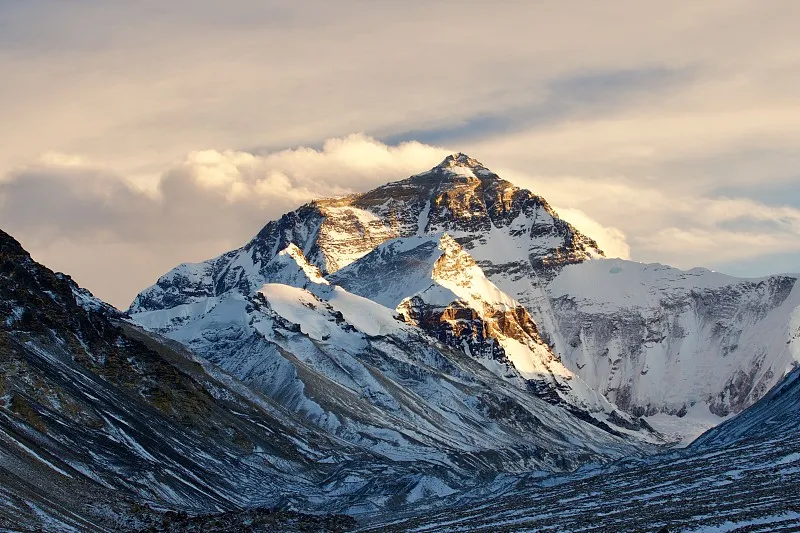
Mount Everest
Temperature Adaptation and Gear Guide: Practical Tips for Coping with Extreme Cold
Facing the drastic changes and extreme low temperatures of Everest temperature, scientific equipment preparation and physical adaptation methods are the core of ensuring a safe and comfortable journey. Whether you are going to the Everest Base Camp or higher altitude areas, you need to follow the principle of layered dressing and key protection.
In terms of clothing and equipment, a three-layer dressing system consisting of a sweat-wicking inner layer, a warm middle layer, and a protective outer layer should be established. For the inner layer, it is recommended to choose sweat-wicking and quick-drying underwear, and avoid cotton underwear which becomes damp and cold after absorbing sweat—this is crucial in an environment with large diurnal temperature differences. The middle layer can be a fleece jacket or a lightweight down jacket depending on the temperature, which effectively retains body heat. In autumn or spring, adjusting the middle layer clothing can flexibly cope with the day-night temperature difference. The outer layer must be a waterproof and windproof hardshell jacket and pants to resist strong winds and sudden snowfall in the mountains. When traveling in winter, an additional thick down jacket is needed to keep the core body parts warm.
In addition to clothing, anti-freezing protection for the extremities cannot be ignored. In the low-temperature environment of Everest, parts such as hands, feet, and ears are most prone to frostbite. It is necessary to equip with warm waterproof gloves, thick woolen socks, high-top hiking boots, and ear-covering thick hats. At the same time, the plateau has strong ultraviolet radiation, so UV-protective sunglasses must be worn even in low-temperature weather to prevent snow glare from damaging the eyes.
In terms of physical adaptation, strenuous exercise should be avoided after arriving in high-altitude areas to give the body enough time to adapt to the low air pressure and low-temperature environment. You can drink warm water in moderation to replenish moisture, avoid drinking alcohol and overeating to reduce the body’s burden. If mild altitude sickness is accompanied by cold discomfort, you can put on warm clothes in time, rest and adjust indoors, and seek help from local camp staff if necessary.
High-Altitude Adventure: Safety Guidelines in Extreme Temperatures
For adventurers planning to challenge areas above 6000 meters, Everest temperature has a more fatal impact, and strict safety awareness must be established. In the Death Zone above 7500 meters, the annual average temperature is below -19°C, reaching -27.1°C in the coldest February and only -10.4°C in the warmest August. Combined with the hypoxic environment, the human body’s tolerance limit is greatly reduced.
Such adventurers need to pay close attention to professional weather forecasts in advance and choose to depart during the spring window period when the temperature is relatively stable. In terms of equipment, in addition to conventional warm clothing, professional mountaineering mats, anti-freezing sleeping bags (suitable for temperatures below -40°C) and thermometers are required to monitor the ambient temperature in real time. During the march, the stay time must be strictly controlled to avoid prolonged exposure to low-temperature and strong-wind environments. It is necessary to move the limbs at regular intervals to promote blood circulation and prevent frostbite and freezing.
In addition, sudden changes in Everest temperature are often accompanied by severe weather. Adventurers need to learn to identify weather change signals, such as rapid cloud accumulation and sudden increase in wind force. Once abnormalities are found, they must evacuate to a safe camp in a timely manner. Do not take risks based on subjective judgment. In the face of extreme natural environments, awe and prudence are always the top priorities.
Temperature and Scenery: Encounter the Most Beautiful Everest at the Right Temperature
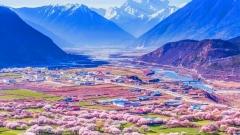
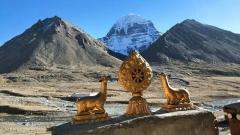
Everest temperature is not only related to safety but also closely linked to the viewing experience. When the temperature rises in spring, the vegetation at the foot of the mountain begins to revive, and the snow-capped mountains and green meadows complement each other. The morning sun shines on the top of Everest, forming a unique golden summit landscape. In autumn, with comfortable temperatures and high air transparency, the outline of Everest is clear and three-dimensional when viewed from a distance, and even the glacial textures on the mountain are clearly visible. In winter, the extremely low temperature causes snow to accumulate in the mountains, covering Everest with a layer of pure white snow, making it look like a silver giant, cold but uniquely vast and magnificent.