
For tourists planning to travel to Lhasa and hoping to gain an in-depth understanding of its religious culture, combining the trip with Monlam Chenmo, an annual grand event, is a highly valuable arrangement. To ensure a smooth and rewarding visit, thorough and specific pre-trip preparation is crucial. This article aims to offer a guide focusing on practical operational information, covering aspects such as confirming exact dates, understanding core activities, abiding by behavioral etiquette, and preparing necessary items. By reading this article, you can systematically grasp the key information required for visiting Monlam Chenmo, allowing you to focus more on experiencing this unique religious and cultural scene.
Confirm the Exact Time & Core Areas of Monlam Chenmo
A successful visit starts with accurate grasp of basic information.
Obtain and Verify the Festival Dates
- Calendar Basis: Monlam Chenmo is held annually from late June to early July of the Tibetan calendar.
- Gregorian Calendar Equivalent: This period usually corresponds to late July to early August of the Gregorian calendar, with the event lasting about two weeks. Note that there are slight annual differences in the conversion between the Tibetan and Gregorian calendars.
- Recommended Action: To avoid date errors, it is advisable to verify the exact schedule of the year through reliable local information channels one to two months before formulating the itinerary. Consulting professional agencies specializing in Tibetan cultural travel products (such as China Dragon Travel) is an effective way to obtain accurate information.
Clarify Key Venues
- Core Venue – Jokhang Temple: All the most important group scripture chanting, rituals, and some scripture debate activities are held inside Jokhang Temple and its main gate square.
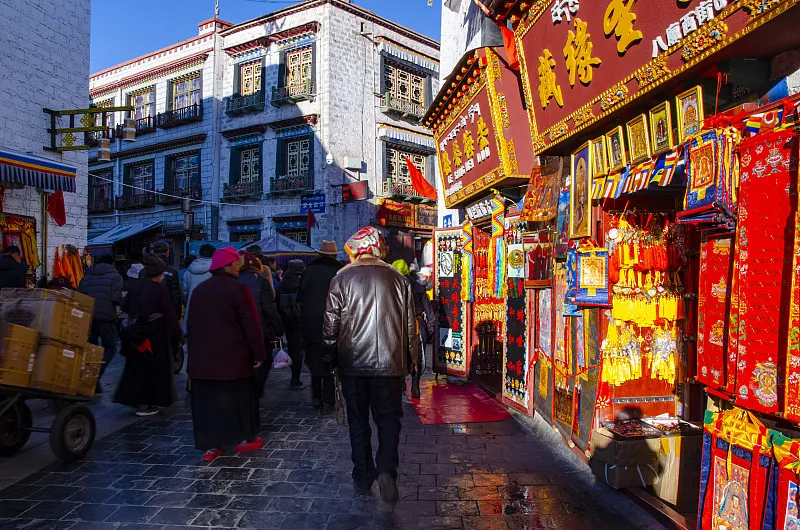
- Pilgrim Activity Area – Barkhor Street: This kora path surrounding Jokhang Temple sees a significant increase in foot traffic during the festival, serving as the main space to experience the daily pilgrimage atmosphere.
- Related Venue – Drepung Monastery: It should be noted that the grand “Thangka Unveiling” ceremony is part of the Shoton Festival following Monlam Chenmo, held at Drepung Monastery. If you wish to experience it together, you need to separately plan the itinerary and transportation to Drepung Monastery.
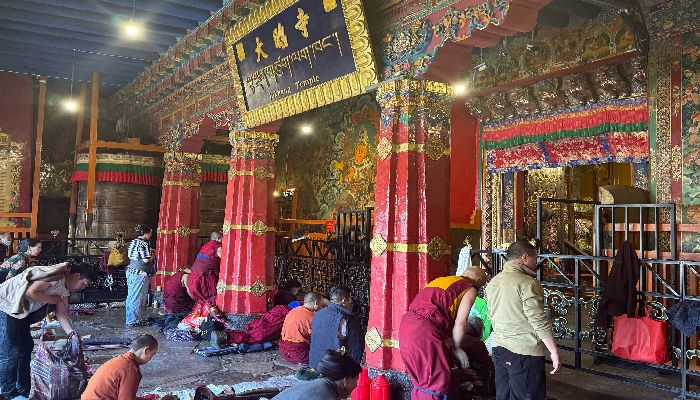
Monlam Chenmo Scene at Jokhang Temple
Key Activities During Monlam Chenmo
Understanding the observable activities helps you allocate time and energy rationally.
Observe Monk Scripture Debates
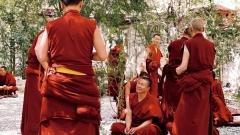
Scripture debate is the most distinctive daily academic activity during the festival. Every afternoon, monks conduct group Buddhist debates at fixed venues.
- Observation Points: Even if you do not understand the language, you can observe their logical question-and-answer format, standardized hand-clapping gestures when asking questions, and rigorous debate atmosphere – this is an intuitive window to understand the Tibetan Buddhist study and practice tradition.
- Observation Suggestions: Please choose a position that does not interfere with the activity and watch quietly. It is recommended to stay for about 30 minutes to 1 hour. Maintain absolute silence throughout and do not use flash photography.
Experience Group Scripture Chanting Rituals
Large-scale group scripture chanting is often held inside and outside Jokhang Temple.
- Experience Method: Being in the square, the deep and resonant chanting creates a powerful sense of immersion, an experience beyond vision.
- Behavioral Norms: During this period, please remain completely quiet, avoid talking, and move gently.
Pay Attention to Important Ritual Schedules
More grand rituals are usually held on the first day, the last day, and several religious anniversaries in the middle of the festival.
- Closing Procession: The “Welcoming the Future Buddha” procession around Barkhor Street on the last day of the festival is the grandest public event.
- Participation Tips: If you plan to watch this ritual, arrive at Barkhor Street at least 1-2 hours in advance and wait along the procession route. Temporary management is usually implemented on the street that day; please follow the guidance of on-site staff.
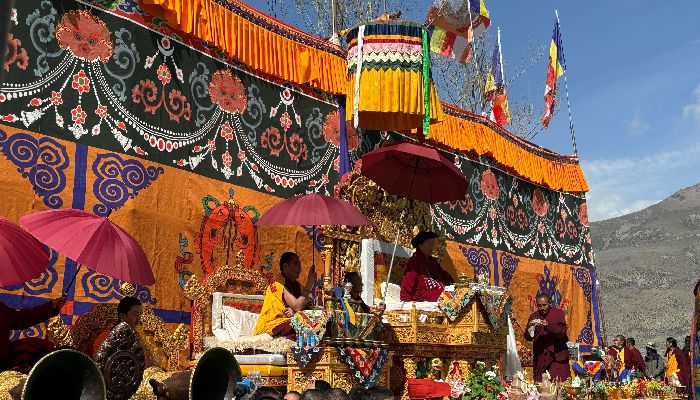
Lhasa Religious Festival Parade
Necessary Preparations & Behavioral Norms for Visiting Monlam Chenmo
Adequate preparation and appropriate behavior are the foundation of a smooth visit.
Dress Code and Behavioral Etiquette
- Clothing Requirements: Please wear appropriate and conservative clothing. Lower garments should be long pants or skirts below the knees; upper garments must have sleeves. When entering any hall interior, you must remove your hat.
- Behavioral Norms: Do not directly point at Buddha statues, sacred objects, or monks with your fingers; instead, use a palms-up gesture to indicate. Avoid stepping on the threshold when entering or exiting temple gatesPhotography
- Notes: First check if photography is allowed at the venue; restrictions are usually stricter inside halls. If you wish to take photos of monks or pilgrims, first obtain their explicit consent through friendly communication. Flash photography is strictly prohibited.
Personal Item Preparation List
- Sun Protection and Comfort Gear: Plateau ultraviolet rays are intense; please prepare sunscreen, a sun hat, and sunglasses. It is recommended to wear shoes with good support suitable for long periods of standing and walking.
- Energy and Hydration Supplies: Carry a water bottle to replenish fluids at any time. You can prepare a small amount of high-energy snacks to eat in non-core ritual areas.
- Document and Valuable Storage: Carry valid identification documents for inspection. It is advisable to keep valuables and cash in a hidden anti-theft pouch or inner pocket of your clothes; carry backpacks in front of your body.
Safety and Health Precautions
- Crowd Management: In crowded areas, keep an eye on accompanying personnel and take good care of personal belongings. Follow the direction of the crowd and do not push against it.
- Altitude Sickness Prevention: Activity levels may be high during the festival. Ensure adequate rest upon arrival and avoid strenuous exercise. It is recommended to prepare common medications; if severe discomfort occurs, immediately stop activities and seek medical assistance.
Travel Itinerary Suggestions for Visiting Monlam Chenmo
A reasonable itinerary can enhance the visiting experience.
Reference Itinerary
It is recommended to allocate the visit over 2 to 3 days to avoid excessive fatigue.
- Day 1 (Preliminary Familiarization): In the afternoon, you can first observe the scripture debate activities, then experience the overall atmosphere in the Barkhor Street area to familiarize yourself with the surroundings.
- Day 2 (In-Depth Visit): Arrange a visit to Jokhang Temple in the morning (note that tickets need to be booked in advance), and choose to observe scripture chanting or debates again in the afternoon.
- Day 3 (Focused Participation): If it coincides with a major ritual day, focus the entire day on participating in the ritual and be sure to arrive at the venue well in advance.
Suggestions for Optimizing the Visiting Experience
For first-time visitors, obtaining information about Monlam Chenmo’s specific schedule, exact ritual start times, and best observation spots may be challenging. If you hope to plan this visit more efficiently and worry-free, ensuring you do not miss important sessions, you may consider seeking professional service support. Relevant travel service agencies can provide the latest schedule information, appropriate observation suggestions, and assist with logistics such as transportation and accommodation bookings. For example, you can consult agencies with relevant operational experience like China Dragon Travel to obtain more targeted itinerary planning assistance.
Adequate Preparation for a Smooth Visit to Monlam Chenmo
The significance of visiting Monlam Chenmo lies in the on-site observation and experience of a profound cultural practice. The prerequisite for this is thorough and practical pre-trip preparation. What this guide compiles are a series of specific steps, from verifying dates and understanding activities to abiding by etiquette and preparing items. After completing your planning and preparations based on this information, you will be more calm on-site, able to focus on observing, feeling, and understanding, thereby gaining a more fulfilling and in-depth experience. The clarity and calmness brought by adequate preparation will be an important gain from your cultural journey.