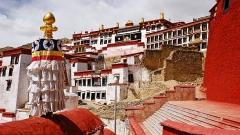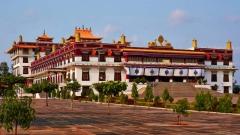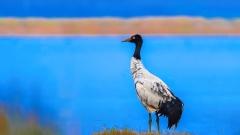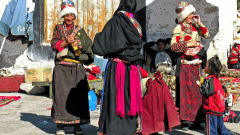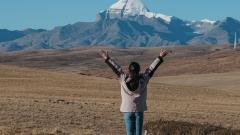

For travelers planning to visit Tibet, “Where is Central Tibet?” is one of the core questions before planning a trip. Unlike the secret realm of Nyingchi in eastern Tibet and the wilderness of Ngari in western Tibet, the central region is a gathering place of the essence of Tibet’s cultural and natural landscapes, and also the first choice for most first-time visitors. There are not only sacred sites of Tibetan Buddhism here, but also vast grasslands and clear lakes, carrying Tibet’s richest cultural heritage and most classic scenery. Next, we will elaborate on the question “Where is Central Tibet?” from the aspects of regional definition, core attractions, and itinerary planning, paving the way for your Tibet trip.
Clear Definition: Where is Central Tibet? Core Areas and Geographical Scope
To accurately answer “Where is Central Tibet?”, it is first necessary to clarify its geographical and administrative scope. From a geographical perspective, Central Tibet mainly revolves around the middle reaches of the Yarlung Zangbo River, starting from the Lhasa urban area in the east, extending to the western border of Shigatse City in the west, reaching the Yarlung Zangbo River Valley in Shannan City in the south, and north to the area south of Siling Co in Nagqu City. This area has relatively flat terrain, with an altitude mostly between 3,600 meters and 4,500 meters. Different from the extreme landforms in other parts of Tibet, it is the most densely populated area in Tibet with the most complete infrastructure.
From an administrative perspective, Central Tibet covers Lhasa City, Shigatse City, Shannan City, and parts of southern Nagqu City. This is the political, economic, and cultural center of Tibet, and also the most developed area of Tibetan Buddhist culture. For travelers, understanding this scope is crucial because most classic tourist routes are concentrated in this area. Whether it is pilgrimaging to sacred sites or enjoying natural scenery, you can find core experiences here.
| Region | Core Identity | Distance from Lhasa | Recommended Travel Days |
| Lhasa | Core Hub of Central Tibet | 0 km | 2-3 days |
| Shigatse | Cultural Sacred Site + Gateway to Mount Everest | 280 km | 2-3 days |
| Shannan | Birthplace of Tibetan Civilization | 100 km | 1-2 days |
| Southern Nagqu | Plateau Grassland Landscape Belt | 320 km | 1 day |
Core Hub: Lhasa – The Core Gateway to Central Tibet
When we answer “Where is Central Tibet?”, Lhasa is undoubtedly the core coordinate. As the capital of the Tibet Autonomous Region, Lhasa is not only the geographical center of Central Tibet, but also the primary gateway for travelers to enter Tibet. It gathers the most famous cultural attractions in Tibet and is also the best place to experience Tibetan life. Moreover, it is the ideal starting point for the trip after answering “Where is Central Tibet?”.
The Core Status of Lhasa in Central Tibet
Lhasa is located in the middle reaches of the Lhasa River, a tributary of the Yarlung Zangbo River, in the core area of Central Tibet. It is about 320 km northeast of Nagqu, 280 km southwest of Shigatse, and 100 km south of Shannan. It is a transportation hub connecting various core attractions in Central Tibet. Whether you fly directly to Lhasa Gonggar International Airport or take the train to Lhasa Station, you can take this place as the center to radiate to surrounding tourist attractions. This is why Lhasa has become the primary destination after answering “Where is Central Tibet?”.
Recommended Must-Visit Attractions in Lhasa
The Potala Palace is a landmark building in Lhasa and one of the most representative attractions in Central Tibet. This ancient palace complex, the highest in the world, is built on the Red Hill, covering an area of about 360,000 square meters. It houses countless precious cultural relics and Buddha statues and is a sacred site of the Gelug Sect of Tibetan Buddhism. For travelers, visiting the Potala Palace is not only to appreciate architectural art, but also to feel the profound connotation of Tibetan culture.
Jokhang Temple is located in the center of Lhasa’s old town, echoing the Potala Palace in the distance. The temple enshrines the 12-year-old Sakyamuni statue, one of the most sacred Buddha statues in Tibet. Barkhor Street surrounding Jokhang Temple is the best place to experience Tibetan urban life. Here, you can see pilgrims everywhere and stalls selling Tibetan characteristic commodities, full of a strong religious atmosphere and life flavor.
Warm Reminder: Visiting Jokhang Temple requires advance reservation. Short pants and skirts are prohibited in Barkhor Street. It is recommended to carry your ID card for inspection.
Westward Extension: Shigatse – The Cultural Sacred Site of Central Tibet
To answer the question “Where is Central Tibet?”, we cannot ignore the existence of Shigatse. As the second largest city in Tibet, Shigatse is located on the western edge of Central Tibet, at the confluence of the Yarlung Zangbo River and the Nyangqu River. It is another core area of culture and religion in Central Tibet. There are not only Tashilhunpo Monastery, the highest temple in the world, but also magnificent Himalayan scenery here, making it an indispensable important node in the Central Tibet itinerary.
The Regional Value of Shigatse in Central Tibet
Shigatse is 280 km east of Lhasa and can be reached along National Highway 318. It is an important outpost extending westward in Central Tibet. This area has flat terrain, and the Nyangqu River Valley is rich in highland barley, making it one of Tibet’s major grain-producing areas, also known as the Jiangnan of Tibet.
At the same time, Shigatse is close to the northern foot of the Himalayas. Starting from here, you can go to Everest Base Camp to admire the magnificent scenery of the world’s highest peak. This also makes Shigatse a representative area where natural and cultural landscapes in Central Tibet are perfectly integrated.
Recommended Must-Visit Attractions in Shigatse
Tashilhunpo Monastery is the core attraction of Shigatse and one of the six major monasteries of the Gelug Sect of Tibetan Buddhism. The monastery enshrines many huge bronze Buddhas, the most famous of which is the 26.2-meter-high Maitreya Buddha bronze statue, the largest sitting bronze Buddha statue in the world. The monastery buildings are built against the mountain, magnificent, and together with the Potala Palace and Jokhang Temple, form the core framework of Tibetan Buddhist culture in Central Tibet.
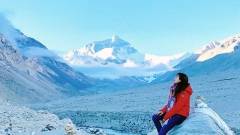
Everest Base Camp is located in Tingri County, Shigatse City, and is one of the best places to admire Mount Everest. It takes about 4 hours by car from Shigatse urban area, and you can enjoy various landforms such as plateau grasslands, glaciers, and snow-capped mountains along the way. At Everest Base Camp, travelers can get close to the majestic figure of Mount Everest. If the weather conditions are good, you can also see the magnificent scene of the snow-capped mountains turning golden red at sunset.
- Best Viewing Time: April-May and September-October, when the weather is clear and the full view of Mount Everest can be clearly seen
- Necessary Items: Sunscreen, sunglasses, windproof jacket, oxygen tank. The altitude is high and the temperature is low, so keep warm.
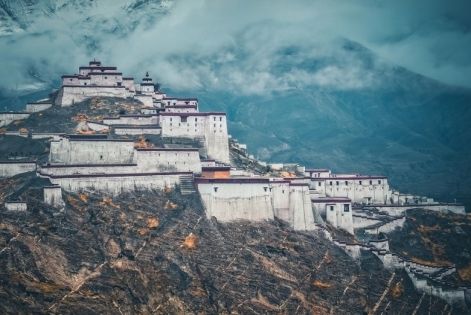
Jiangzi Fortress in Shigatse, Tibet
Southern Exploration: Shannan – The Birthplace of Tibetan Civilization in Central Tibet
When we delve into the question “Where is Central Tibet?”, the Shannan region is another important area that cannot be ignored. Shannan is located in the southern part of Central Tibet, on the south bank of the middle reaches of the Yarlung Zangbo River, bordering Nyingchi in the east, Lhasa in the north, and Shigatse in the west. It is the birthplace of Tibetan civilization. There are not only the earliest temple, the earliest farmland in Tibet, but also magnificent Yarlung Zangbo Grand Canyon scenery here, making it an important window to understand the early Tibetan civilization.
The Civilizational Significance of Shannan in Central Tibet
The Shannan region is the cradle of the Tibetan people. It is said that the first farmland, the first temple, and the first dynasty in Tibet were all born here. The Yarlung Zangbo River Valley here has flat terrain and fertile land, which is the core area for early human settlement in Tibet and also provides an important natural foundation for the birth and development of Tibetan civilization. For travelers, exploring Shannan is not only to answer the geographical question of “Where is Central Tibet?”, but also a spiritual journey to deeply understand the roots of Tibetan culture.
Recommended Must-Visit Attractions in Shannan
Samye Monastery is the first temple in Tibet, located in Zhanang County, Shannan region. It was built in the 8th century AD under the auspices of Trisong Detsen, the Tibetan king. The monastery architecture integrates Tibetan, Han, and Indian architectural styles, with a unique layout and magnificent momentum. The monastery houses a large number of cultural relics such as murals and sculptures, and is an important site for studying early Tibetan Buddhist culture and architectural art.
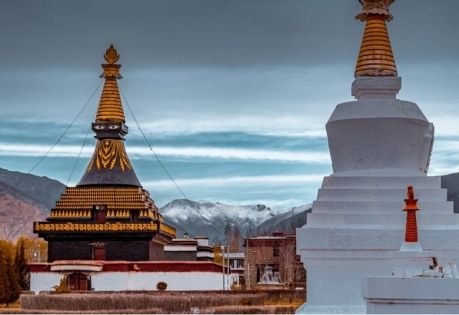
Samye Monastery
Yamdrok Lake is one of the three holy lakes in Tibet, located in Nagarze County, Shannan region, about 100 km from Lhasa. The lake is shaped like a coral branch, so it is also known as Yamdrok Yumtso. The water of Yamdrok Lake is crystal clear, and its color shows different shades of blue with changes in light and shadow. It is surrounded by snow-capped mountains and grasslands, with picturesque scenery. At the viewing platform by the lake, travelers can overlook the magnificent scenery of the entire lake, which is one of the most representative natural attractions in Central Tibet.
Attraction Notes: There are many viewing platforms along Yamdrok Lake. It is recommended to choose Gangbala Pass Viewing Platform for the most open view; do not litter by the lake to protect the environment of the holy lake.
Itinerary Planning Guide: Practical Suggestions for Traveling in Central Tibet
After understanding where Central Tibet is and the core attractions, reasonable itinerary planning is crucial. The attractions in Central Tibet are relatively concentrated and the transportation is convenient, making it suitable for arranging a 5-8 day trip. The following are practical itinerary planning suggestions for travelers to help you better travel in Central Tibet.
Classic Itinerary Reference (5 Days and 4 Nights)
- Day 1: Arrive in Lhasa, rest to adapt to the plateau environment, and stroll around Barkhor Street in the evening
- Day 2: Tour Lhasa urban area: Potala Palace, Jokhang Temple
- Day 3: Lhasa – Yamdrok Lake – Shannan, visit Samye Monastery, and stay in Shannan
- Day 4: Shannan – Lhasa – Shigatse, enjoy the scenery of the Yarlung Zangbo River along the way, and stay in Shigatse
- Day 5: Tour Shigatse urban area: Tashilhunpo Monastery, return to Lhasa
The 7 Largest Major Cities in Tibet
Transportation Options
Transportation in Central Tibet is mainly by highway, with Lhasa as the core transportation hub. Starting from Lhasa, you can choose to drive by yourself, charter a car, or take a long-distance bus to Shigatse, Shannan and other regions. Self-driving and chartering a car offer a high degree of freedom, allowing you to stop and view the scenery at any time according to your interests, which is suitable for travelers with relatively abundant time; long-distance buses are affordable and have many schedules, suitable for travelers with limited budgets. In addition, Lhasa Gonggar International Airport is the largest airport in Tibet, with many domestic routes opened, facilitating travelers to quickly reach Central Tibet.
Accommodation Suggestions
Accommodation resources in Central Tibet are mainly concentrated in urban areas such as Lhasa and Shigatse. Lhasa has the richest accommodation options, ranging from high-end hotels to affordable youth hostels. It is recommended to choose accommodation near the old town for easy access to attractions such as the Potala Palace and Jokhang Temple. Accommodation resources in Shigatse and Shannan are relatively simple, but they can also meet the basic needs of travelers. You can choose accommodation in urban areas or near attractions according to your itinerary.
Altitude Sickness Prevention and Precautions
Central Tibet has a high altitude, and travelers are prone to altitude sickness when they first arrive. It is recommended to rest for 1-2 days after arriving in Lhasa to adapt to the plateau environment before traveling to other areas. Keep warm on the way to avoid colds, drink plenty of water, and reduce strenuous exercise. You can prepare some anti-altitude sickness drugs in advance, such as Rhodiola rosea, but it should be noted that drugs can only play an auxiliary role, and the key is to do a good job in adaptation. In addition, Tibet is an area with strong religious beliefs. When visiting temples, travelers should abide by local religious customs and respect the beliefs of pilgrims.
| Category of Precautions | Detailed Explanation |
| Religious Customs | Take off your hat and keep quiet when visiting temples; do not touch Buddha statues or scriptures; turn the prayer wheels clockwise. |
| Environmental Protection | The plateau ecology is fragile; do not step on grasslands or litter at will; do not take photos of pilgrims without permission. |
| Food Safety | Avoid eating cold food on an empty stomach; eat more local mild staple foods such as highland barley cakes and butter tea. |
| Emergency Handling | If severe altitude sickness occurs, such as persistent headache or difficulty breathing, contact local hospitals or scenic spot staff in time. |
Central Tibet: A Gathering Place of the Essence of Tibet
Returning to the original question “Where is Central Tibet?”, it is not difficult for us to find that Central Tibet is not only a geographical concept, but also a tourist core area full of cultural charm and natural scenery. From the holy temples in Lhasa, to the majestic Mount Everest in Shigatse, and then to the roots of civilization in Shannan, every inch of land here carries Tibet’s unique charm. For travelers, entering Central Tibet can not only allow you to admire the magnificent plateau scenery, but also deeply understand the profound heritage of Tibetan Buddhist culture and experience the unique charm of Tibetan life. Whether you are visiting Tibet for the first time or exploring Tibetan scenery again, Central Tibet is worth savoring carefully. It is hoped that the introduction in this article can help you clearly answer the question “Where is Central Tibet?” and provide practical references for your trip to Central Tibet, allowing you to gain an unforgettable journey on this sacred land.