
The grandeur and sacredness of the snowy plateau are the yearning of countless travelers. The Xining-Shigatse train route is the magical link connecting this yearning. It links Qinghai’s blue lakes with Tibet’s holy snow-capped mountains, making the journey no longer a tiring rush but an immersive scenery feast. Compared with self-driving fatigue and flight haste, train travel lets you leisurely enjoy the gradual scenery change and adapt to plateau altitude, laying a perfect foundation for this secret journey. The following Xining-Shigatse train guide covers core information like schedules, transfers, scenery and tips, helping you easily start this soul-stirring plateau journey.
Basic Travel Guide for Xining to Shigatse Train: The First Step to Worry-Free Planning
The core of traveling by train from Xining to Shigatse is to clarify basic information and reasonably plan transfers and train schedules. The following sections elaborate on key dimensions such as itinerary transfers, train schedules and ticket prices, and ticketing skills, sorting out a clear and practical guide for you to quickly complete pre-travel preparations and start a smooth plateau journey.
Itinerary Transfer Instructions
- Core Premise of Travel: To start the train journey from Xining to Shigatse, you need to first clarify basic travel information to ensure a smooth itinerary.
- Necessity of Transfer: Currently, there is no direct train; transfers via Lhasa are required.
- Advantages of Transfer: It allows flexible adjustment of the itinerary rhythm, and you can also take a short rest in Lhasa to better adapt to the plateau environment.
- Itinerary Segments and Train Protection: The whole journey is divided into the Xining-Lhasa section and the Lhasa-Shigatse section; both sections are operated by professional plateau trains equipped with complete oxygen supply systems and medical security facilities to escort passengers’ safe travel.
Train Schedule and Ticket Price Details
- Trains on the Xining-Lhasa Section: As the core section of the Qinghai-Tibet Railway, there are multiple daily trains available, with popular trains including Z6801, Z9821, Z6811, etc.
- Detailed Information of Train Z6801: Departs from Xining Station at 12:50 and arrives at Lhasa Station at 10:21 the next day, with a total travel time of 21 hours and 31 minutes; stops at important stations such as Golmud and Nagqu along the way; hard seat ticket price is 530 yuan, and hard sleeper lower berth is 815 yuan.
- Trains on the Lhasa-Shigatse Section: High-frequency trains are available for convenient travel, with the popular train being C885.
- Detailed Information of Train C885: Departs from Lhasa Station at 08:20 and arrives at Shigatse Station at 10:42, with a total travel time of only 2 hours and 22 minutes; second-class seat ticket price is 64 yuan, and first-class seat is 103 yuan.
- Other Optional Trains: There are also trains such as C941 and C923, with departure times covering multiple periods from morning to afternoon, allowing passengers to flexibly match connecting trains according to their own itineraries.
Practical Ticketing Guide
- Ticketing Channels: All tickets for the entire Xining-Shigatse train journey can be purchased through the 12306 official website, APP, or offline railway station windows.
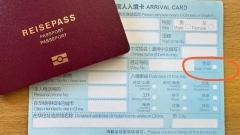
- Special Document Requirements: To travel to Shigatse, you need to apply for a Tibet Entry Permit in advance; foreign passengers need to present the Tibet Entry Permit and valid documents such as passports when purchasing tickets. It is recommended to assist in handling relevant procedures through formal travel agencies to avoid affecting travel.
- Ticketing Tips for Peak Season: During the tourist peak season (June-September), ticket demand is strong. It is recommended to purchase tickets 15-30 days in advance to ensure a smooth itinerary.
- Seat Selection Suggestions: For the long-distance section (Xining to Lhasa), it is recommended to choose a hard sleeper to better rest and relieve travel fatigue; for the short-distance section (Lhasa to Shigatse), a second-class seat is sufficient, which is convenient and economical.
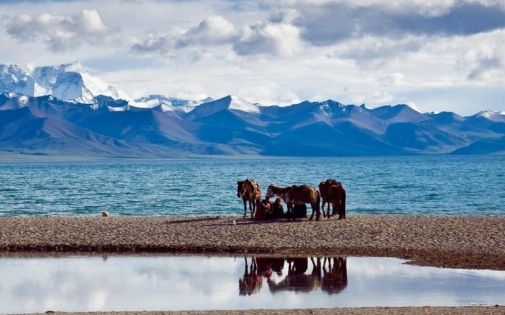
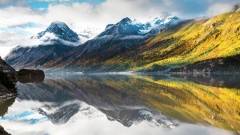
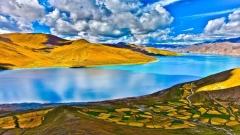
Duoqing Lake in Shigatse
A Feast of Scenery Along the Xining to Shigatse Train
This train journey is a mobile exhibition of plateau scenery. From the blue of Qinghai Lake to the vastness of the Northern Tibet Grassland, from towering snow-capped mountains to holy lakes, the scenery gradually unfolds with the altitude. Every frame outside the window is full of shock, allowing you to immersively feel the grandeur and sacredness of the Qinghai-Tibet land in the comfortable carriage and fully appreciate the unique natural charm of the plateau.
Overview of Itinerary Scenery
Core Charm of the Journey: The charm of the train journey from Xining to Shigatse lies not only in the joy of reaching the destination but also in the constantly changing scenery along the way.
Starting Point of Scenery Transition: Departing from Xining, the train travels through the river valley plains of the Huangshui River Basin, with green trees lining both sides and scattered farmland, fully showing the gentle vitality of eastern Qinghai.
Basic Tone of Journey Scenery: As the train travels westward, the altitude gradually rises, and the scenery constantly changes, starting a thousand-mile plateau scenery feast.
Xining to Lhasa Section: Essence Scenery of the Qinghai-Tibet Railway
Core Positioning: This section can be called the essence of the Qinghai-Tibet Railway, gathering classic natural scenery of the plateau.
Qinghai Lake Scenery: Shortly after the train departs from Xining, it approaches Qinghai Lake, China’s largest inland lake. The blue lake water connects with the sky, the grassland by the lake spreads like a green carpet, and cattle and sheep are scattered everywhere. Every May, flocks of migratory birds inhabit here, forming a vivid natural picture.
Scenery Around Guanjiao Mountain Tunnel: Passing through the Guanjiao Mountain Tunnel at an altitude of 3690 meters (once the highest point of the Xining-Golmud section of the Qinghai-Tibet Railway), the vegetation gradually becomes sparse after exiting the tunnel, and the vast and boundless Gobi scenery comes into view, which is shocking.
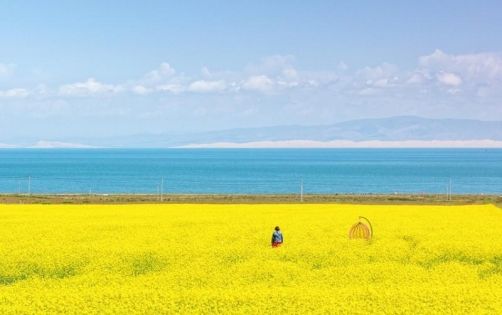
Qinghai Lake
Golmud to Lhasa Section: Core Secret Scenery of the “Sky Road”
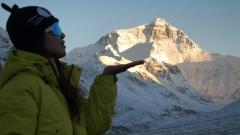
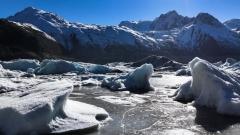
Section Characteristics: Truly entering the core area of the “Sky Road”, the scenery is mainly composed of towering snow-capped mountains, glacial streams, and plateau holy lakes.
Key Scenery Along the Way: The train passes through stations such as Yuzhu Peak, Budongquan, Chumar River, and Tuotuo River successively. You can see towering snow-capped mountains standing in the clouds, streams formed by glacial meltwater winding in the Gobi, and occasionally encounter rare plateau animals such as Tibetan antelopes and Tibetan wild asses.
Must-See Highlight – Cuona Lake: The lake water is as blue as a gem, and prayer flags flutter by the lake. The train travels along the lake for several kilometers, allowing you to fully appreciate the tranquility and sacredness of the plateau holy lake.
Nagqu Northern Tibet Grassland Scenery: When arriving at Nagqu Station, the窗外 is the vast Northern Tibet Grassland, with flocks of yaks foraging, distant snow-capped mountains shining brightly in the sun, and Tibetan yurts scattered everywhere, fully showing the unique charm of the Northern Tibet Plateau.
Lhasa to Shigatse Section: Tibetan Cultural Scenery
Section Tone: The scenery has a stronger Tibetan cultural charm, with natural scenery and folk customs deeply integrated.
River Valley Village Scenery: The train travels along the tributaries of the Yarlung Zangbo River, with continuous highland barley fields and Tibetan villages reflecting each other on both sides. The red-walled and white-roofed dwellings and green fields form a harmonious picture.
Characteristics of Niseri Mountain: In Tibetan, it means “Auspicious Sumeru Mountain”. The mountain is jagged with steep slopes. On the winding mountain paths, devout pilgrims can be seen walking from time to time, fully showing the profound heritage of Tibetan culture.
Scenery Near the Destination: As the train gradually approaches Shigatse, the scenery along the Nianchu River becomes more beautiful. The fertile river valley plains with abundant water and grass reflect the distant snow-capped mountains, indicating that the scenery feast has reached a perfect end.
Plateau Travel Tips for Xining to Shigatse Train
The particularity of plateau travel requires full preparation before departure. The altitude of the journey from Xining to Shigatse gradually rises, from Xining at 2260 meters to Shigatse at 3836 meters. Coping with altitude sickness, clothing and equipment, and cultural etiquette are all top priorities. The following practical tips cover precautions for all links of the itinerary, helping you avoid risks, travel comfortably, and fully enjoy the plateau journey.
Tips for Coping with Altitude Sickness
- Core Importance: Coping with altitude sickness is the top priority for safe travel on the Xining-Shigatse train journey.
- Advance Prevention: It is recommended to start taking anti-altitude sickness drugs 1-2 weeks before departure. Specific medication should be prescribed by a doctor.
- Precautions During the Journey: Although the train is equipped with an oxygen supply system, it is still necessary to avoid strenuous exercise, maintain slow walking and uniform breathing to reduce oxygen consumption; drink plenty of warm water to replenish moisture, and avoid drinking alcohol, smoking, and overeating to reduce physical burden.
- Symptom Coping Methods: Mild symptoms such as headache, dizziness, and shortness of breath are normal adaptation reactions, and rest can relieve them; if symptoms continue to worsen, you need to promptly inform the train crew to seek medical help.
- Suggestions After Arrival: On the first day, focus on rest and adjustment, and avoid going to high-altitude scenic spots immediately.
Tips for Clothing and Item Preparation
- Clothing Preparation Principle: Follow the principle of “multi-layered and easy to add or remove” to adapt to the large temperature difference between day and night on the plateau.
- Core Clothing List: Even in summer, there may be rain and snow along the Xining-Shigatse train route. It is necessary to carry warm clothing such as fleece jackets,冲锋 jackets, and warm pants.
- Sunscreen Preparation: The plateau has strong ultraviolet rays. It is necessary to equip with sun hats, sunglasses, sunscreen (SPF50+), lip balm, etc., to avoid sunburn on the skin and lips.
- Other Essential Items: You can carry snacks such as chocolate and beef jerky to supplement energy during the journey; prepare common medicines such as cold medicine, gastrointestinal medicine, and painkillers to deal with sudden discomfort.
Cultural Etiquette and Travel Norms
- Respect for Religious Culture: Tibet has a profound religious belief and unique folk customs. When passing through religious places such as monasteries, prayer flags, and mani piles, you need to show respect, follow local customs, not randomly touch or step on religious items, and not randomly take photos of pilgrims’ worship scenes.
- Train Travel Norms: Abide by train travel regulations, take good care of the carriage environment, and respect the rest needs of other passengers.
- Document and Policy Preparation: Understand the travel policies of Tibet in advance, and prepare relevant documents such as ID cards and Tibet Entry Permits to ensure smooth inspection.
Frequently Asked Questions (FAQs) for Xining to Shigatse Train Travel
Q: How long does the entire train journey from Xining to Shigatse take?
A: The entire journey requires a transfer via Lhasa, with a total duration of about 24-30 hours, depending on the connection of connecting trains; among them, the Xining-Lhasa section takes about 21-22 hours, and the Lhasa-Shigatse section takes about 2-3 hours.
Q: Is there a direct train from Xining to Shigatse?
A: Currently, there is no direct train. Transfers via Lhasa are required. Transfers allow flexible adjustment of the itinerary rhythm, and you can also take a rest in Lhasa to adapt to the plateau environment.
Q: Do I need to re-enter the station during the transfer?
A: Yes. After arriving at Lhasa Station from the Xining-Lhasa section, you need to exit the station and re-enter to transfer to the Lhasa-Shigatse train. It is recommended to reserve more than 1.5 hours for the transfer to avoid rushing.
Q: Will altitude sickness be severe when taking the train to Shigatse?
A: The altitude of the train journey gradually rises, and the body has an adaptation process. Compared with direct flights to the plateau, altitude sickness will be milder; it is recommended to take anti-altitude sickness drugs as prescribed by a doctor 1-2 weeks in advance, avoid strenuous exercise during the journey, and drink plenty of warm water.
Q: After arriving in Shigatse, how to get from the railway station to the urban scenic spots?
A: Shigatse Railway Station is close to the urban area. You can take buses such as No. 1 and No. 2 to directly reach core scenic spots such as Tashilhunpo Monastery, or choose taxis or online car-hailing services. The journey takes about 10-15 minutes, and the cost is affordable.