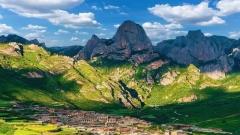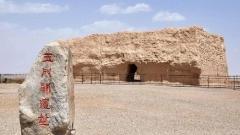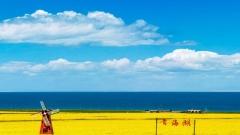

In the vast expanse of Northwest China, there is a route revered by travelers as a “must-do in a lifetime.” It forms a perfect geographical loop, stitching together the sacred purity of Qinghai with the historical weight of Gansu. This is the Qinghai-Gansu Loop (often called the Great Northwest Loop). More than just a road, it is a time capsule through geography and civilization.
Why is it called the “Qinghai-Gansu Loop”?
The name is as intuitive as it is poetic, reflecting a unique aesthetic of space and time:
-
“Qing” and “Gan”: A Tale of Two Provinces The route spans Qinghai and Gansu provinces. Usually starting and ending in Xining (Qinghai’s capital), it traverses the Qaidam Basin, crosses into the Hexi Corridor in Gansu, and returns over the Qilian Mountains.
-
“Great”: The Scale of Space and Scenery Covering approximately 2,600 to 2,800 kilometers, “Great” refers to more than just the mileage. It represents a massive altitudinal span—from 2,000 to over 4,000 meters—and a transition from lush oases to absolute wilderness.
-
“Loop”: The Art of No Return The route is a perfect circle. This closed-loop structure means travelers never have to backtrack. Every day presents a radically different landscape outside the window, maintaining a constant sense of fresh discovery.
Geographical Features: 10,000 Kilometers Condensed
The most captivating aspect of this loop is its density: it condenses nearly one-third of China’s distinct landscape types into a single journey.
-
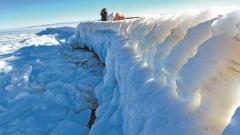
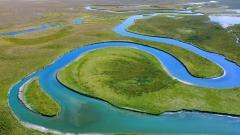
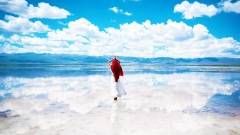
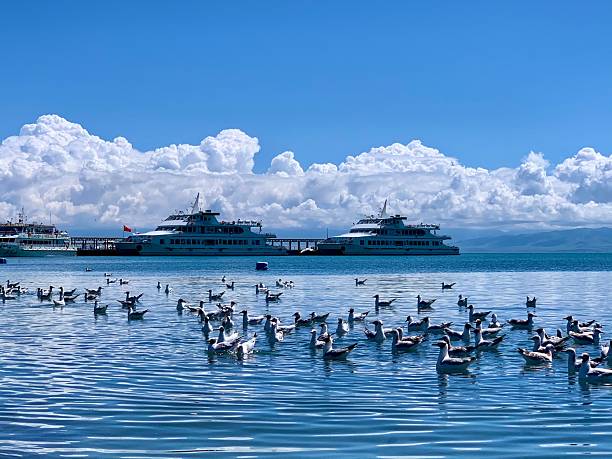
Salt Lakes & High-Altitude Waters: From the deep sapphire of Qinghai Lake (China’s largest inland saltwater lake) to the crystalline “Mirror of the Sky” at Chaka Salt Lake, and the jewel-toned Dachaidan Emerald Lake. Here, water and salt interact under arid skies to create surreal purity.
-
Deserts & Gobi Plains: Entering Gansu, the scenery shifts from alpine meadows to “The Great Desert.” The rolling dunes of the Kumtag Desert and the edges of the Taklamakan showcase the raw power of the void.
-
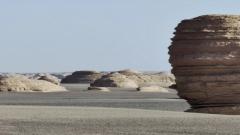
Danxia & Yardang Formations: The Zhangye Danxia displays an explosion of colors oxidized over millions of years, while the Water Yardang is a rare phenomenon where wind-eroded rock formations emerge from blue lakewater.
-
Alpine Grasslands: Beneath the Qilian Mountains, endless pastures dotted with yaks bring a soft, green vitality to the otherwise arid Northwest.
Culture & History: Echoes of the Silk Road
Beyond the visual spectacle, the loop is a “Historical Corridor” that connects the dots of ancient human achievement.
-
The Throat of the Silk Road: The Gansu section essentially retraces the Hexi Corridor, the vital artery of the ancient Silk Road. Names like Zhangye, Jiayuguan, and Dunhuang carry over 2,000 years of cultural exchange between East and West.
-
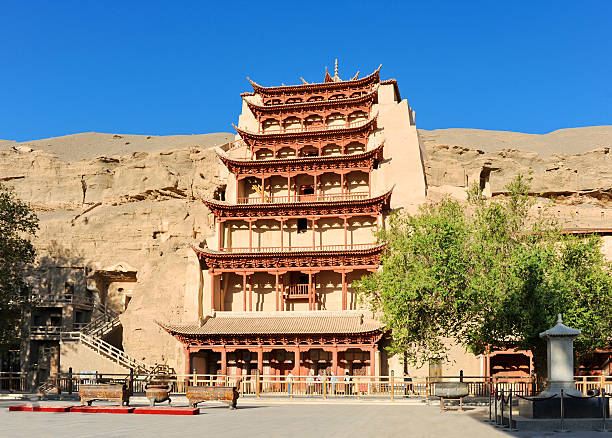
The Faith of Mogao Caves: Dunhuang’s Mogao Caves are not just art galleries; they are testaments of faith. The loop leads travelers into quiet grottoes to witness millennium-old murals that tell the story of the rise and fall of Silk Road empires.
-
A Cultural Crossroads: This region is home to Tibetans, Huis, Mongols, and Tus. From the butter sculptures of Ta’er Monastery to the call to prayer from local mosques, the peaceful coexistence of diverse ethnicities is the most soulful part of the journey.
Why is this Route Irreplaceable?
The Qinghai-Gansu Loop has become a classic because it fulfills a traveler’s deepest desires:
-
High Visual Saturation: With a new terrain every day, your eyes never tire of the scenery.
-
Unmatched Efficiency: In 7 to 8 days, you experience the absolute core of Northwest China’s natural and cultural essence.
-
Historical Depth: It is not just a “photo op”; it is a profound review of China’s history and geography in real-time.
The Northwest is a Poem Written on the Earth
The Qinghai-Gansu Loop is a gift from nature and history. It is not just a driving route; it is a baptism of the spirit. Amidst the vastness, you may feel small, yet your heart will feel fuller than ever.
When you set foot on this loop, you will understand: some landscapes truly require thousands of kilometers of travel to feel—because there, the wind has a voice, and the sands have memories.
Traveler’s Note: The best time to visit the loop is from May to October. Due to the high altitude and the permit-required nature of many historical sites, we recommend understanding the elevation changes and booking site entries well in advance for a seamless exploration.