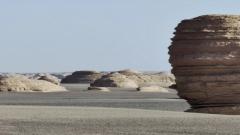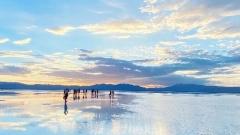

Is Dunhuang in February worth visiting? This is one of the most common questions travelers ask when planning a trip to northwest China. Compared to the busy summer season, February in Dunhuang feels much quieter and more open. The desert landscapes are less crowded, the pace is slower, and on rare snowy days, the scenery becomes even more unique. While Dunhuang weather in February is colder and comes with noticeable temperature differences, understanding these conditions in advance makes it much easier to plan a comfortable and enjoyable trip.
Core Climate Characteristics of Dunhuang in February
To craft a smooth and enjoyable February itinerary for Dunhuang, you must first understand the region’s core winter climate traits. This knowledge lets you prepare thoroughly, avoid travel risks, and make the most of every moment in this desert oasis.
Temperature & Dramatic Diurnal Swings
February in Dunhuang marks the transitional period between deep winter and early spring, with consistently cold overall temperatures. Average daily high temperatures hover between 5°C and 8°C, while average overnight lows plummet to between -10°C and -6°C. During extreme cold snaps, temperatures can even drop below -15°C. The most defining feature of Dunhuang’s February weather is its massive diurnal temperature swing, often exceeding 15°C in a single day. You’ll enjoy mild, sun-warmed conditions during the daytime, but temperatures drop rapidly as soon as the sun sets—a detail many first-time visitors overlook, and one that can quickly ruin a trip if you’re unprepared.
Precipitation & Snowfall
Nestled deep in China’s inland arid region, Dunhuang sees extremely low annual rainfall, and February is no exception. The total average monthly precipitation is less than 2mm, with virtually no sustained rainy days. That said, light snowfall is an occasional treat in February. Most snow events are light flurries, and accumulation rarely lasts long—usually melting completely within 1 to 2 days under bright sunshine. When it does snow, however, it creates Dunhuang’s most breathtaking winter scenery: snow-dusted desert dunes paired with ancient grottoes, a stunning, otherworldly view you simply cannot see in any other season.
Wind & Dust Conditions
Many travelers worry about frequent sandstorms in Dunhuang during February, but in reality, dust weather is far less common this month than in the spring months of March to May. That said, Dunhuang is still quite windy in February, with prevailing northwest winds averaging 3 to 4 on the Beaufort scale, and occasional gusts exceeding 5 levels. Strong winds will significantly lower the feels-like temperature outdoors, and wind speeds in the desert are almost always stronger than in the urban area of Dunhuang—this is a critical point to keep in mind when planning your daily excursions.
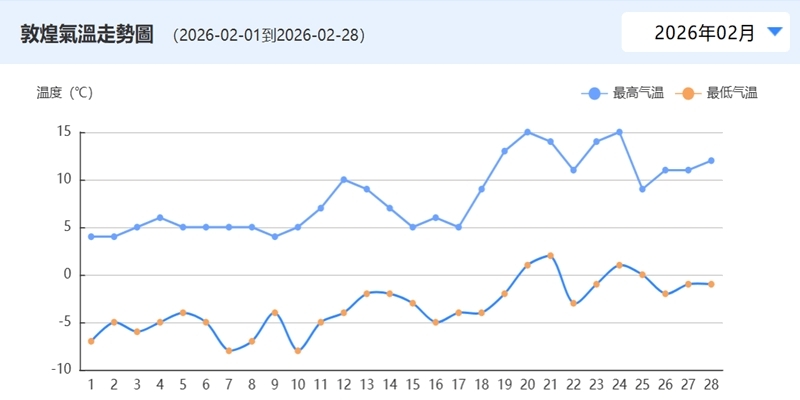
Dunhuang Temperature Trend in February
Top Attractions & Travel Tips for Dunhuang in February
Many travelers assume winter is a bad time to visit Dunhuang, but once you understand the patterns of February’s weather, you’ll find it’s the perfect off-peak season to explore this Silk Road gem. You’ll enjoy discounted ticket prices, far fewer crowds for an immersive cultural experience, and access to exclusive winter scenery that most visitors never get to see.
Mogao Caves
As Dunhuang’s crown jewel attraction, February is one of the best times to visit the Mogao Caves. While February weather is frigid outdoors, the enclosed cave interiors have a stable, mild temperature that won’t impact your visit at all. In the off-season, not only are ticket prices significantly lower (starting at just 140 RMB, compared to 238 RMB in peak season), but you also gain access to more special caves that are closed to the public during the busy summer months. With far fewer tourists, you won’t have to wait in long lines, and you can take your time admiring the ancient murals and painted sculptures up close in complete quiet, for an unparalleled cultural experience. One key note: the shuttle bus between the digital exhibition center and the grottoes takes around 15 minutes, and the bus cabins have no heating. Be sure to keep your thick winter coat on for the ride to avoid catching a chill.
Mingsha Sand Dunes & Crescent Moon Spring
This is the attraction where Dunhuang’s February weather delivers the most magical surprises. If you’re lucky enough to catch a snowfall, the silver-white desert dunes paired with the vivid emerald waters of the Crescent Moon Spring create a once-in-a-lifetime breathtaking view. With almost no other tourists in February, you’ll have the entire desert virtually to yourself, no more fighting crowds for the perfect photo.
Given February’s weather patterns, the best time to visit the dunes is between 10 am and 4 pm. This window has the warmest temperatures, brightest sunshine, and lightest winds, for the most comfortable experience. If you want to watch the sunrise or sunset, you must prepare for extreme cold. The 30 minutes before sunrise and after sunset are the coldest times of the day, with much stronger winds in the desert. Bring plenty of hand warmers, thick gloves, and an ear-flap hat to prevent frostbite. An added bonus: the desert sand is much firmer in February, making climbing the dunes far easier than in the summer, when you sink with every step.
Yumen Pass & Yardang National Geopark (Devil’s City)
Both of these iconic sites lie deep in the Gobi Desert, roughly 180 kilometers west of Dunhuang’s urban area, with a one-way drive time of around 2.5 hours. Given February’s weather conditions, extra preparation is non-negotiable for this excursion. Wind speeds in the remote Gobi are far higher than in the city, with a feels-like temperature 5°C to 8°C lower than downtown Dunhuang. There are very few service stations along the route, so before you depart, double-check your warm clothing, bring plenty of hot water and high-calorie snacks, and ensure your vehicle is in perfect working order to avoid emergencies.
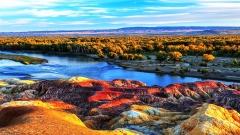
In February, Yardang Devil’s City is almost completely empty of visitors. The black Gobi pavement and bizarre, wind-sculpted Yardang landforms take on an even more dramatic, desolate grandeur in the winter sunlight, perfectly capturing the raw, epic feel of the ancient Silk Road—an absolute must for photography enthusiasts. One critical tip: sunset comes much earlier in winter at the Yardang site, around 6 pm. Plan your itinerary carefully to avoid driving on the remote Gobi highway after dark, which carries significant safety risks.
Urban Dunhuang & Nearby Attractions
Dunhuang’s famous Shazhou Night Market remains open in February, though its hours are shorter than in peak season, with most stalls closing around 10 pm. If you want to explore the market and sample local delicacies, head over early. The market is entirely outdoors, so keep your thick coat on to stay warm while you eat and browse. For colder mornings and evenings, Dunhuang Museum, Leiyin Temple, and other indoor urban attractions are perfect options. They let you escape the harsh wind and cold outside while diving deep into Dunhuang’s rich history and Silk Road culture.
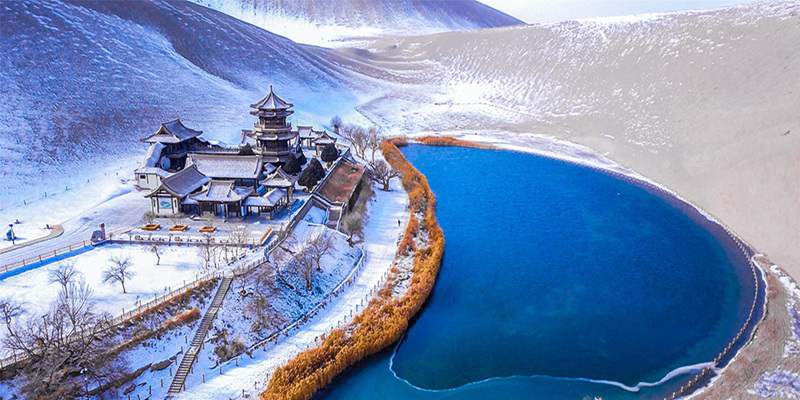
Mingsha Sand Dunes & Crescent Moon Spring
Practical Travel Hacks for Dunhuang in February
To ensure your February trip to Dunhuang is smooth and stress-free, beyond packing and itinerary planning, you need to prepare for these key details tailored to the region’s winter weather.
Transportation Tips
While occasional snowfall occurs in Dunhuang in February, snow removal in the urban area is prompt and efficient, so road conditions are almost always fine for driving. However, the Gobi highways leading to outlying attractions may have patches of snow and ice. If you’re self-driving, use tires with reliable anti-slip performance, check the weather forecast and road conditions before every trip, and never drive alone on unmarked, unpaved back roads. If you prefer not to drive, book a licensed private car or carpool service with an experienced local driver. Local drivers know the road conditions and weather patterns intimately, making your trip far safer and more convenient. Flights and high-speed rail services to Dunhuang are rarely disrupted in February, except during extreme wind or heavy snow events. Always check the real-time status of your flight or train before departure to avoid delays to your itinerary.
Accommodation & Daily Life Tips
Despite the frigid February weather outside, virtually all hotels and guesthouses in Dunhuang’s urban area have robust central heating, with indoor temperatures consistently staying above 20°C—you won’t have to worry about being cold indoors at all. That said, the powerful heating in northwest China, combined with the region’s naturally arid climate, makes indoor humidity extremely low. Most travelers will experience dry mouth, chapped lips, and irritated skin without proper preparation. Leave a bowl of water in your hotel room overnight, or bring a portable humidifier, to ease the dry indoor air.
Skincare & Health Advice
The dryness of Dunhuang’s February weather is far more intense than most travelers expect, and combined with the constant cold wind, it can easily irritate your skin and respiratory system. For skincare, pack a highly moisturizing face cream, body lotion, and lip balm, plus a broad-spectrum sunscreen. Many travelers skip sunscreen in winter, but the sun in Dunhuang is still intense in February, and UV reflection off the snow can make exposure even stronger than in summer—proper sun protection is non-negotiable to avoid sunburn.
For respiratory health, the dry air can easily cause a sore throat. Always keep a thermos of hot water with you, and pack throat lozenges to ease irritation. The dramatic temperature swings between day and night also make it easy to catch a cold. Bring a basic first-aid kit with cold medicine, fever reducers, and stomach medicine, so you’re prepared if you feel unwell and can’t find a pharmacy quickly.
Ultimate Packing & Layering Guide
Given Dunhuang’s February weather—cold temperatures, high winds, and massive diurnal temperature swings—the core rule for dressing is layering, windproofing, and flexible adjustability. Start with a moisture-wicking, thermal base layer to keep you warm and dry. For the mid-layer, add a lightweight, heat-retaining down vest or fleece jacket. Your outer layer should be a windproof, waterproof, knee-length thick down parka to block the cold and wind.
For accessories, you’ll need a fleece-lined hat with ear flaps, windproof touchscreen gloves, a thick thermal neck gaiter, and high-top, anti-slip, fleece-lined winter boots. Adjust your layers as needed throughout the day as temperatures rise and fall, to stay comfortable no matter the conditions.
Bonus Pro Tips
Hand warmers are an absolute game-changer for Dunhuang’s February weather. Stock up on plenty—you can stick them not just on your body for extra warmth, but also on the back of your phone or camera. Cold temperatures drain electronic device batteries extremely quickly, and can even cause unexpected shutdowns; a hand warmer will keep your gear running smoothly throughout the day. Also, note that most attractions in Dunhuang have shorter opening hours in February than in peak season. Always check the official opening times before you visit to avoid a wasted trip.
Why Dunhuang in February Feels Different
Dunhuang weather in February may not seem ideal at first glance. It is cold, sometimes windy, and noticeably dry. But these same conditions are also what make the experience feel different from peak travel seasons. With fewer visitors around, you have more space to explore, more time to slow down, and a better chance to connect with the place itself.
Inside the caves, you can take your time without feeling rushed. Out in the desert, the silence feels deeper, and the landscape appears even more expansive. The contrast between sunny daytime warmth and cold evenings adds another layer to the journey, making each moment feel more distinct.
As long as you prepare properly for the weather, the trip becomes less about dealing with the cold and more about appreciating a quieter side of Dunhuang. For travelers who prefer a more relaxed and less crowded experience, February can actually be one of the most rewarding times to visit.