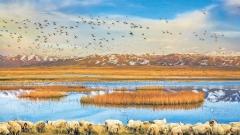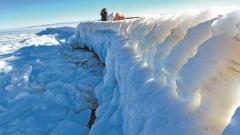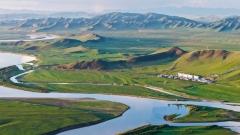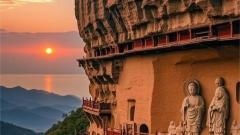

Dunhuang is often imagined as a summer destination filled with desert heat and camel caravans, but February offers a completely different perspective. During this time, the city slows down, crowds disappear, and the vast desert landscapes feel more open and undisturbed. Snow occasionally settles on the dunes, and historical sites like the Mogao Caves become calmer and more immersive. With the right preparation, traveling to Dunhuang in February can be both comfortable and deeply rewarding, especially for those who prefer a quieter and more reflective journey.
Preparations for Dunhuang in February
Travel Documents: Bring a valid passport and corresponding visa with validity remaining well after your trip ends. Original documents are required for hotel check-in and attraction ticket purchase. It is recommended to prepare paper and digital copies separately to avoid travel disruptions due to loss.
Clothing: Dunhuang has extreme temperature differences in February: 5–10°C in the daytime and dropping to -5 to -8°C at night, with strong winds across the Gobi. Dress in warm, windproof layers: thermal inner wear, a sweater or fleece jacket, and a heavy windproof down coat. Wear lined warm trousers and non-slip warm boots, plus a scarf, hat and gloves to protect your head, neck and hands from frostbite.
Moisturizing & Sun Protection: The local climate is extremely dry. High-moisture facial cream, lip balm, hand cream and hydrating face masks are essential to relieve discomfort. Ultraviolet rays over the Gobi are strong even in winter; bring SPF50+ sunscreen, UV-protective sunglasses and a sun visor to avoid sunburn.
Daily Essentials: Bring a thermos for hot water, heat patches for extra warmth outdoors, and common medicines for cold, stomachache and motion sickness. Also prepare a power bank, sand-proof cover for cameras and electronic devices, and a small amount of cash for small shops.
Attraction Guide for Dunhuang in February
Mogao Grottoes
A UNESCO World Heritage Site and a national 5A-level tourist attraction, the Mogao Grottoes are located on the eastern cliff of Mingsha Mountain, 25 km southeast of Dunhuang city. First excavated in the second year of the Jianyuan reign of the Former Qin dynasty, they were expanded through the Northern Dynasties, Sui, Tang, Five Dynasties, Western Xia, Yuan and other dynasties. Today there are 735 caves, 45,000 square meters of murals and 2,415 painted clay sculptures, making it the world’s largest and most abundant treasure trove of Buddhist art. The Nine-Story Tower and the Library Cave are of great historical and artistic significance.
- February Highlights: The off-season brings far fewer crowds, allowing unhurried appreciation of mural details. After snowfall, the red walls contrast beautifully with white snow. The soft winter light warms the colors of the murals; special caves are much easier to book, and guide services are more attentive.
- Tickets & Opening Hours: Off-season ticket at 100 RMB per person, including two digital theater films, a tour of 10 regular caves and official guided service. Open 9:00–17:30. Real-name booking must be made 1–3 days in advance via the official platform, with entry upon valid passport.
- Visitor Rules: No photography, videography, touching of murals or sculptures, or use of flashlights inside the caves. Visitors must follow the official guide at all times and may not wander off. The Digital Exhibition Center is separate from the caves; shuttle buses are provided between the two sites.
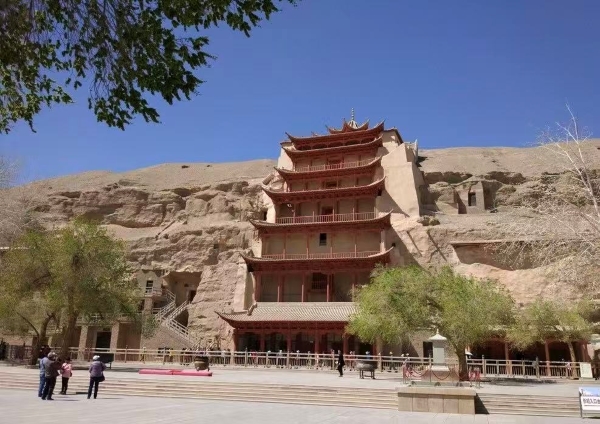
Mogao Grottoes
Mingsha Mountain & Crescent Spring
A national 5A-level tourist attraction located 5 km south of Dunhuang city, famous worldwide for the unique landform of “coexisting desert and spring”. Mingsha Mountain is named for the sound made by wind blowing sand; Crescent Spring, shaped like a crescent moon and surrounded by sand hills, has never dried up in millennia, earning it the reputation of “the Number One Spring in the Desert”. It is the iconic natural landscape of Dunhuang.
- February Highlights: Snow often mixes with golden sand, creating stunning scenery. Parts of Crescent Spring freeze thinly, showing a peaceful winter beauty. The sunset light is soft in the evening, and the desert starry sky is clearly visible at night.
- Tickets & Opening Hours: Off-season ticket at 55 RMB per person; re-entry allowed within 3 days after facial recognition. Open 6:00–20:30. Camel ride costs 100 RMB per person.
- Visitor Rules: Climb the sand hills and ride camels only in designated areas. Do not cross fences to approach the spring. Mobile signals are weak in the inner desert; do not venture into unstaffed areas.
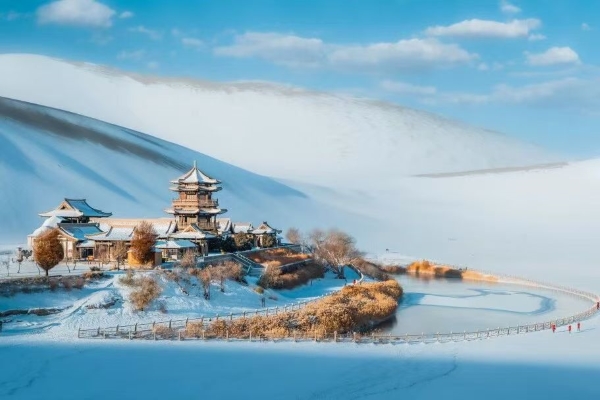
Mingsha Mountain & Crescent Spring
Western Thousand Buddha Caves
Known as the sister caves of the Mogao Grottoes, they are carved into cliffs along the Dang River, southwest of Dunhuang. First built in the Northern Wei dynasty, some caves predate the Mogao Grottoes. With 16 existing caves, the murals and sculptures are simple and rugged, of high artistic value, and receive far fewer visitors.
- February Highlights: Near-private touring experience with very few tourists. Guides can explain the history and art of murals in detail. Occasional snow along the Dang River forms a quiet winter scene with the cliffside caves.
- Tickets & Opening Hours: Ticket at 30 RMB per person including professional guide service. Open 9:00–17:00. No direct public transport; recommended to visit by chartered car.
- Visitor Rules: No photography or touching of cultural relics inside the caves. Follow the guide and maintain order. Some cave steps are steep; watch your step.
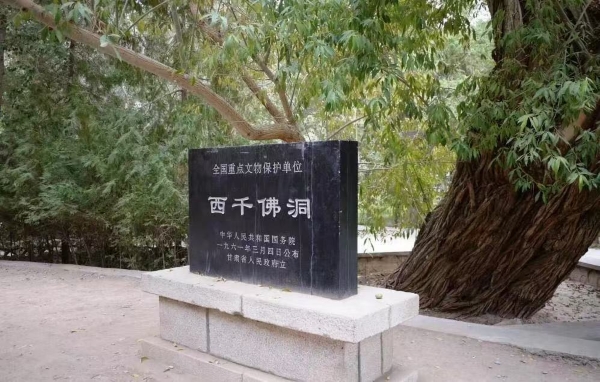
Western Thousand Buddha Caves
Yangguan Pass Site
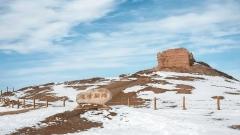
A crucial pass on the southern route of the ancient Silk Road in the Han Dynasty, serving as the gateway from central China to the Western Regions. Made famous by the poem “If you go west of Yangguan Pass, you’ll find no old friends”, it preserves ruins including the Dundun Mountain Beacon, Antique Beach and Yangguan Ancient City, fully displaying the frontier defense system and Silk Road transport style of the Han Dynasty.
- February Highlights: Thin snow covers the Gobi, making the ruins look more desolate and magnificent. No waiting for the pass permit experience, allowing immersive ancient frontier customs. Quiet and uncrowded, ideal for deep historical experience.
- Tickets & Opening Hours: Ticket at 50 RMB including shuttle bus. Open 8:30–18:00; entry stops half an hour before sunset.
- Visitor Rules: Do not climb beacons or ancient city ruins. Shuttle buses run on fixed routes with no random stops. Secure loose items such as hats and scarves against strong Gobi winds.
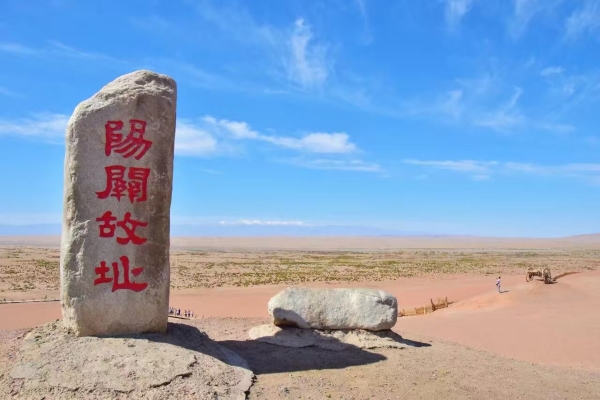
Yangguan Pass Site
Yumen Pass & Han Dynasty Great Wall Ruins
Also known as the Small Square City, Yumen Pass was a key pass on the northern Silk Road in the Han Dynasty, a hub for trade and cultural exchange between China and the Western Regions. The Han Dynasty Great Wall, built of rammed earth, reeds and tamarisk, still retains clear walls after two thousand years, making it one of the best-preserved Han Great Wall ruins in China.
- February Highlights: Open Gobi views with scattered snow highlight the ruins’ lines, perfect for photography. No crowds, offering peaceful immersion in the lonely frontier mood of “Spring wind never reaches Yumen Pass”.
- Tickets & Opening Hours: Ticket at 40 RMB for combined entry to Yumen Pass and the Han Great Wall. Open 8:30–18:00. No public transport; visit by chartered or shared car.
- Visitor Rules: Do not climb the pass or wall, or dig soil around the ruins. The open Gobi offers no shelter; stay protected from wind and cold.
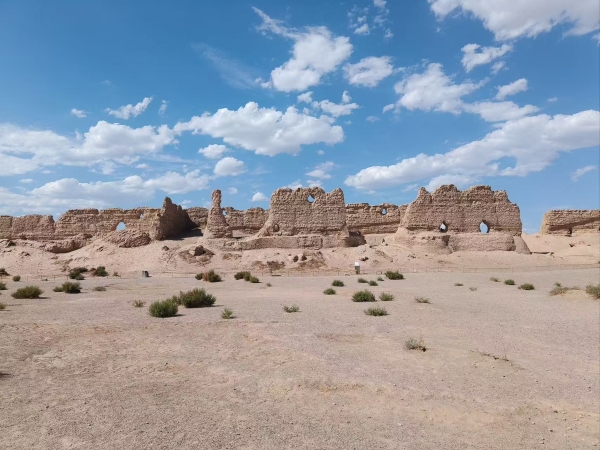
Yumen Pass
Transportation in Dunhuang in February
Arriving in Dunhuang
You may reach Dunhuang by air or train. Dunhuang Mogao International Airport is about 13 km from downtown; there is no airport bus service, so taking a taxi to the city costs around 40 RMB, taking about 20 minutes. Dunhuang Railway Station is about 5 km from downtown; a taxi costs about 15 RMB, or you may take Bus No.1 or No.3 for 1–2 RMB directly to the city center.
Inner-City Transportation Downtown
Dunhuang is compact, with taxis and buses as main transport options. Taxis start at 8 RMB; a ride to Mingsha Mountain & Crescent Spring costs about 10 RMB, and to the Mogao Grottoes Digital Exhibition Center about 25 RMB. Bus routes cover major scenic spots: Bus No.3 to Mingsha Mountain, Bus No.12 to Mogao Grottoes, both 2 RMB per ride, offering great value.
Western Route Transportation
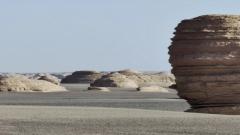
Attractions on the western route, including Yangguan Pass, Yumen Pass and Yardang Devil City, are widely scattered with no direct public transport. Chartered or shared cars are recommended. A 5-seater sedan costs about 600 RMB per day in the off-season; shared rides cost about 140 RMB per person, including door-to-door transfers. Drivers arrange schedules for efficiency and convenience.
Accommodation in Dunhuang in February
Downtown Accommodation (Top Choice)
Downtown accommodation is the first choice for most travelers, mainly around Shazhou Night Market, Yangguan Middle Road and near the bus station. The area enjoys convenient transport to Mogao Grottoes, Mingsha Mountain and other key spots. Dining is another advantage: Shazhou Night Market offers local specialties within walking distance. Hotels and homestays are diverse, from budget chains to stylish inns, priced 120–300 RMB per night. All places provide heating in winter, ensuring cozy indoor temperatures. Suitable for families, couples and most convenience-focused travelers.
Desert View Accommodation (Experiential)
For a deep desert experience, choose desert homestays or camps near Mingsha Mountain, priced 180–400 RMB per night. The highlight is the scenery: sand hills at the window and a vast starry sky at night, with the Milky Way visible on clear days. Some camps host bonfires, hot pot and outdoor movies. Note that most are 5–15 km south of downtown, requiring taxis for trips to the city; nearby shops and restaurants are limited. Prepare snacks and water in advance, or book with pickup service. Ideal for photographers, couples and unique-experience seekers.
Budget Accommodation (Economical Option)
For solo travelers or backpackers on a budget, youth hostels offer great value. Several well-rated hostels in downtown charge 50–90 RMB per bed per night. Most have shared facilities such as a kitchen, laundry room and reading corner, with relaxed common spaces to meet fellow travelers. Some arrange carpooling and desert hiking. Though dormitory-style, beds often have blackout curtains, power sockets and nightlights for basic privacy. Low winter occupancy means quieter and more spacious stays. Suitable for solo travelers, students and budget-conscious young visitors.
Local Cuisine in Dunhuang in February
Local Specialties: Dunhuang food features Northwest Chinese flavors, perfect for warming up in winter. Donkey Meat Yellow Noodles are chewy, about 30 RMB per bowl; Braised Lamb with Flatbread is tender and rich, small portion 68 RMB; Lamb Hezhi is a classic local breakfast, 25 RMB per bowl; Apricot Skin Drink is sweet and sour, 5 RMB per cup; Scrambled Eggs with Desert Onions are fresh and fragrant, about 30 RMB per dish.
Dining Budget: Shazhou Night Market gathers various snacks, costing 50–80 RMB per person for a variety of treats. At local restaurants, a full meal costs 60–100 RMB per person with generous portions. Dishes tend to be salty and spicy; you may request adjustments in advance.
Travel Tips for Dunhuang in February
- February in Dunhuang has huge temperature differences; wear windproof and warm clothing, and carry heat patches and hot water outdoors.
- No photography or touching of cultural relics is allowed in grotto sites. Please abide by heritage protection rules and travel civilly.
- Mobile signals are weak in some Gobi areas on the western route. Do not leave the group; use only licensed car services.
- The climate is extremely dry; maintain full-body moisturizing throughout the trip. Ultraviolet rays remain strong in winter, so sun protection is still necessary.
- Keep passports and valuable documents safe. Protect cameras, phones and other electronics from sand damage.
- Do not litter in scenic areas or the Gobi. Protect the natural environment and historical sites, and maintain order.
Why February Might Be the Best Time to Experience Dunhuang Differently
Traveling to Dunhuang in February is less about checking off attractions and more about experiencing the place at your own pace. Without the pressure of crowds, you have the freedom to slow down—spend more time inside the caves, wait for the sunset over the desert, or simply take in the silence of the Gobi landscape.
Of course, winter travel comes with its own challenges, from cold temperatures to logistical planning. But these are manageable with a bit of preparation, and in return, you get a version of Dunhuang that feels more personal and less commercial.
For travelers who value atmosphere over crowds and depth over speed, February offers a side of Dunhuang that many never get to see—and that’s exactly what makes it worth considering.