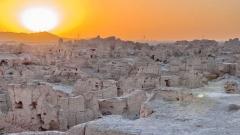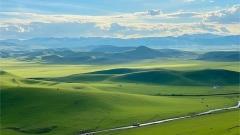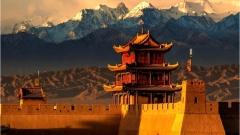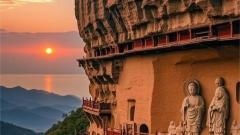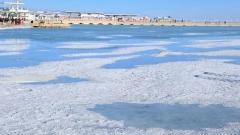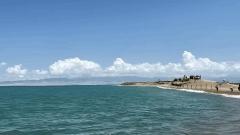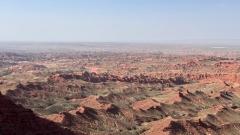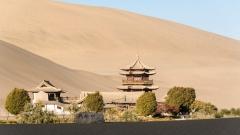

April marks the transition from winter to spring in Dunhuang, bringing milder temperatures and clear skies. It is a time when the desert landscape becomes more accessible, with comfortable daytime conditions and fewer crowds compared to peak season. However, noticeable temperature differences between day and night and the dry climate still play an important role in shaping the travel experience.
Overall Weather Overview & Climatic Causes in Dunhuang April
To truly understand Dunhuang’s weather in April, it’s essential to explore its climatic roots. Dunhuang features a temperate continental arid climate, far from the ocean with scarce moist air currents reaching it, resulting in minimal precipitation and dry weather all year round. April falls in the transition period between winter and spring, with distinct transitional weather characteristics, making it one of the best months for a visit throughout the year.
In general, the core features of Dunhuang’s April weather can be summarized as: a steady yet unstable rise in temperatures, an extreme temperature difference between day and night, dry air with little rainfall, abundant sunshine, moderate winds, and occasional sand and dust weather. These features interact to form Dunhuang’s unique weather environment in April, which are key points for travelers to consider when planning their trips. Below, we analyze each core meteorological indicator one by one and provide practical corresponding suggestions.
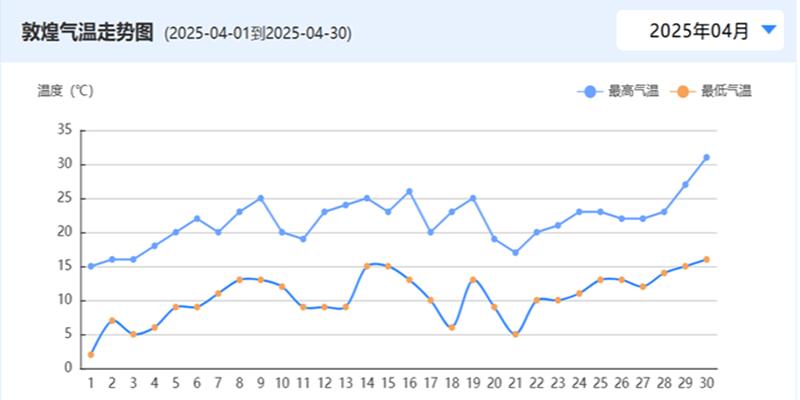
Temperature Trend Chart of Dunhuang in April
Core Weather Features of Dunhuang in April
Extreme Day-Night Temperature Difference: Layered Dressing is a Must
A key and easily overlooked feature of Dunhuang’s April weather is its drastic day-night temperature difference. Meteorological data shows the average high reaches 19.7°C, while the average low is only 9.4°C—a gap of over 10°C. Midday temperatures can exceed 25°C on clear days, but drop below 5°C in the early morning and evening, creating the “short sleeves at noon, heavy coat morning and night” phenomenon. This stems from the desert terrain’s low heat capacity: rapid temperature rise during the day under strong solar radiation, and quick heat dissipation at night without sunlight.
Travelers must adopt layered dressing. For daytime, choose long-sleeve T-shirts, thin sweaters or light jackets with casual pants/long skirts to shield from sunshine and adapt to mild temperatures. Add warm outerwear (e.g., down jackets, fleece hiking jackets) for early mornings, nights or high-altitude spots to avoid colds. A lightweight scarf/shawl is also recommended for warmth and sand/wind protection. Note: April may see cold snaps (5-8°C temperature drops), so check the real-time weather forecast before your trip.
Dry Air with Little Rain & Intense Sunshine: Comprehensive Protection is Required
Besides the day-night temperature difference, another prominent feature of Dunhuang’s April weather is dry air with scarce rainfall and abundant sunshine, both of which directly affect travelers’ comfort and require thorough protection.
In terms of dryness, the average humidity in Dunhuang in April is only 18%, one of the lowest levels of the year, with extremely dry air. For travelers who live in humid areas for a long time, this may cause skin dryness, chapped lips, sore throat and other discomforts, so advance protection is a must. To cope with the dry weather, pack various moisturizing products such as moisturizer, lip balm and hydrating facial masks. Drink plenty of warm water every day, avoid excessive spicy and greasy food to reduce bodily water loss. In addition, travelers with respiratory diseases such as rhinitis and asthma are advised to bring relevant medicines for protection.
In terms of sunshine, Dunhuang enjoys an extremely long sunshine duration in April, with an average of more than 13 hours of sunshine per day. The strong sunlight brings a high UV index of 5 to 6, placing Dunhuang in a strong ultraviolet radiation zone. Without proper sun protection, sunburn and tanning are highly likely. Never skimp on sun protection: bring a high-factor sunscreen with SPF50+ and PA+++ or above, apply it evenly on exposed areas such as the face, neck and arms before going out, and reapply every 2 to 3 hours. At the same time, equip yourself with sun protection gear such as a wide-brimmed sun hat, sunglasses and sun sleeves. Especially in open desert and Gobi scenic spots like Mingsha Mountain and Yadan National Geopark, where there is no shelter, ultraviolet radiation is even stronger—full sun protection measures are a must.
Scarce Precipitation & Occasional Sand and Dust: Flexible Itinerary Adjustment
April precipitation in Dunhuang barely affects travel, but occasional sand and dust requires flexible itinerary planning. With only 2mm of average monthly precipitation and 3.2 rainy days, most rains are short light showers with minimal impact. Note that rain brings sharp temperature drops and strong winds—dress warmly and wear non-slip shoes for desert visits to avoid slipping on wet ground.
Surrounded by deserts, Dunhuang often has sand and dust in April due to loose soil and moderate winds. Mild sand and dust only requires a sand-proof mask; moderate to severe cases reduce visibility, so avoid outdoor spots like Mingsha Mountain and switch to indoor ones like Mogao Caves.
Check weather apps for sand and dust warnings beforehand. If it occurs, wear sand-proof gear outdoors and clean exposed skin/change clothes after returning to the hotel to reduce irritation.
Planning Dunhuang’s Core Scenic Spot Itinerary Based on April Weather
After understanding the core weather features of Dunhuang in April, planning the time for visiting scenic spots according to the weather can make the trip smoother and more comfortable. Dunhuang’s core scenic spots mainly include the Mogao Caves, Mingsha Mountain and Crescent Spring, Yadan National Geopark, Yumen Pass and Yangguan Pass. Different scenic spots have different adaptability to the weather, so separate planning combined with Dunhuang’s April weather features is needed to get a better travel experience.
Mogao Caves: Weather-Resistant, Better Experience with Off-Peak Visits
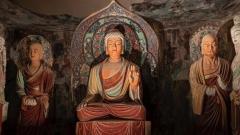
As the iconic scenic spot of Dunhuang, the Mogao Caves is a must-visit for travelers. Its indoor landscapes are not affected by the weather and can be visited normally in sunny, rainy or sand and dust weather, and the April weather conditions make the travel experience even better. A shuttle bus is required to reach the Mogao Caves scenic area, and the mild daytime temperature in April ensures a comfortable ride without being too cold or hot. In addition, April is the end of the off-season for tourism in Dunhuang, with relatively few visitors—no long queues, allowing you to appreciate the murals and sculptures more leisurely.
It is recommended to visit the Mogao Caves between 9 a.m. and 11 a.m., when the sunlight is soft and the temperature is moderate. After the visit, you can continue to visit nearby scenic spots during the high midday temperature. It should be noted that photography is prohibited in the Mogao Caves, so travelers must abide by the scenic area regulations. Meanwhile, the air inside the scenic area is quite dry, so it is recommended to bring a small bottle of warm water to hydrate in time.
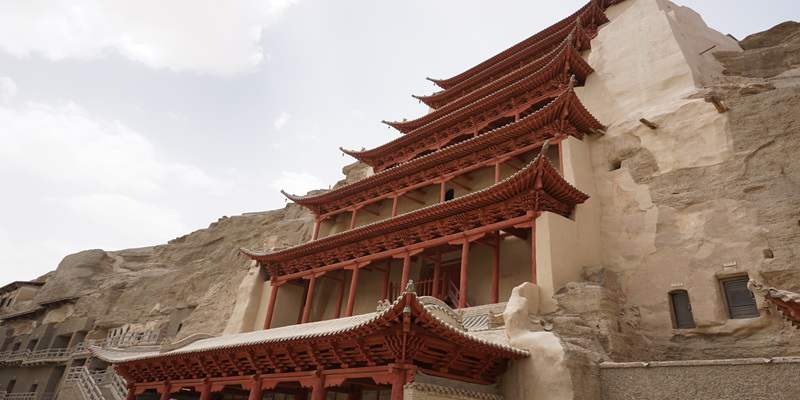
Mogao Caves
Mingsha Mountain and Crescent Spring: Avoid Strong Sunshine, Best Visited in the Evening
Mingsha Mountain and Crescent Spring are the most representative desert scenic spots in Dunhuang and are greatly affected by Dunhuang’s April weather. In April, the sand in Mingsha Mountain is soft and the temperature is comfortable, free from the scorching summer heat, making it the best time to climb the sand dunes and ride camels.
It is recommended to go to Mingsha Mountain after 4 p.m., when the sunlight is no longer strong and the temperature gradually drops, avoiding the strong ultraviolet radiation at noon. At the same time, in the evening, the setting sun sprinkles on the sand dunes, painting them golden—a perfect time to take stunning photos and admire the wonder of Crescent Spring coexisting with the desert. It should be noted that the temperature difference between day and night in Mingsha Mountain is large in April, and the temperature drops rapidly after evening. Travelers must bring a thick coat to avoid catching a cold. In addition, winds are relatively strong in the desert with occasional sand and dust, so it is recommended to wear a sand-proof mask and sunglasses, and comfortable non-slip shoes to prevent sand from getting into the shoes.
Yadan National Geopark: Wind and Sun Protection, Avoid Sand and Dust Weather
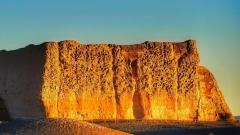
Located deep in the Gobi, Yadan National Geopark has an open terrain and relatively strong winds, making it significantly affected by Dunhuang’s April weather. In April, the temperature of Yadan National Geopark is comfortable, free from the scorching summer heat, making it a good time for a visit, but wind and sun protection are essential.
It is recommended to visit before 10 a.m. or after 5 p.m., when the sunlight is soft and the wind is relatively mild, allowing you to better appreciate the magnificence of the wind-eroded landforms. If sand and dust weather occurs, the visit is not recommended, as sand and dust will reduce visibility, making it difficult to enjoy the unique scenery of the Yadan landforms and may cause sand and dust blow to travelers. When going to Yadan National Geopark, it is recommended to bring your own food and water, as the supporting facilities in the scenic area are scarce, and the dry air requires timely hydration and energy supplementation.
Yumen Pass and Yangguan Pass: Visit in Warm Periods, Full Protection is a Must
Yumen Pass and Yangguan Pass are important relics on the ancient Silk Road, located in the Gobi with no shelter around, greatly affected by Dunhuang’s April weather. In April, the temperature of Yumen Pass and Yangguan Pass is comfortable with moderate winds, suitable for travelers to pay homage to the ancient relics and experience the desolation and grandeur of the famous line “No spring breeze crosses the Yumen Pass”.
It is recommended to visit between 10 a.m. and 3 p.m., when the temperature is higher and the wind is relatively mild, avoiding the cold during the visit. At the same time, full sun and wind protection measures are needed: wear a sun hat, sunglasses and sand-proof mask, and long-sleeve clothes to avoid sunburn by ultraviolet rays or sand and dust blow by the wind.
Additional Tips for Dining and Travel in Dunhuang in April
In addition to coping with the weather and planning scenic spot visits, there are some small details to pay attention to in dining and daily travel when visiting Dunhuang in April. Preparing for these details combined with the characteristics of Dunhuang’s April weather can make the trip more comfortable.
Dining Suggestions: Light and Moisturizing Food, Focus on Hydration
Considering the dry weather in Dunhuang in April, travelers are advised to eat more light and moisturizing food such as vegetables, fruits, soups and porridges, and avoid excessive spicy, greasy and dry food to prevent aggravating bodily dryness symptoms. The local apricot peel water is an excellent choice—sweet and sour, it can promote the secretion of saliva and quench thirst, supplementing water. Paired with local delicacies such as roasted meat and donkey meat with yellow noodles, it can cut the greasiness and moisten the throat. In addition, Dunhuang’s camel milk and yogurt are also suitable for travelers, which can supplement nutrition and moisten the dryness to quench thirst.
Additional Travel Tips: Pay Attention to Details for a Worry-Free Trip
First, pay attention to the time difference and arrange time reasonably. Located in the northwest of China, Dunhuang has a slight time difference in day and night with most parts of inland China and foreign countries. In April, the sunrise time in Dunhuang is about 6:30 a.m. and the sunset time is about 7:30 p.m.. Travelers can arrange their itinerary reasonably according to the sunrise and sunset time to avoid wasting time.
Second, choose regular transportation to ensure travel safety. The scenic spots in Dunhuang are far apart—for example, the distance between the Mogao Caves and Yadan National Geopark is more than 100 kilometers. When traveling to the scenic spots, it is recommended to choose regular transportation such as chartered cars, carpooling or buses, and avoid unlicensed taxis to ensure travel safety.
Third, respect local customs and protect the scenic area environment. Dunhuang is a multi-ethnic inhabited area. During the visit, travelers should respect the local religious beliefs and living habits, do not take photos randomly, do not litter, and protect the scenic area environment.
A Perfect Balance for Exploring Dunhuang in April
Traveling to Dunhuang in April offers a sense of balance that is hard to find in other seasons. The weather allows for relaxed exploration during the day, while cooler evenings create a calm and reflective atmosphere. It is an ideal time for those who want to enjoy both the natural scenery and the historical depth of the Silk Road without the intensity of peak season.
For a smoother experience, thoughtful planning can make a real difference. China Dragon Travel understands seasonal conditions and helps design flexible travel arrangements, allowing visitors to explore Dunhuang comfortably while making the most of their time.