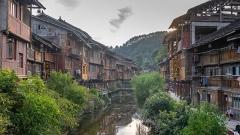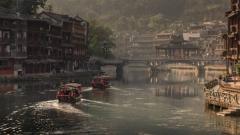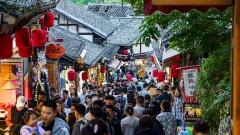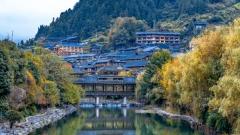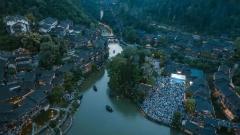

Qingyan Ancient Town, nestled in southern Huaxi District of Guiyang, lies merely 29 km from the urban area. As Guizhou’s first AAAAA-level ancient town, it boasts 600 years of Ming and Qing military heritage, seamlessly merging the grandeur of a strategic fortress with the gentleness of Jiangnan water towns. No excessive commercial hustle here—only authentic Qianzhong local charm. From its scholar-honoring cultural roots to mouthwatering specialty foods, every corner invites visitors to slow down and explore. A key hub on the ancient Tea Horse Road connecting Yunnan and Guizhou, Qingyan is like an open history book, each page telling unique stories of Southwest China.
Town Layout: A Timeless Secret Encircled by Stone Walls
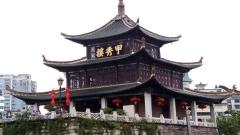
The soul of Qingyan Ancient Town resides in its neat and sturdy layout. Covering 3 square kilometers, the entire town is surrounded by a 3-kilometer-long stone wall built along the mountains, winding with the terrain. It features four city gates—East, South, West, and North—among which the South Gate (Dingguang Gate) is the most magnificent and iconic. Constructed from locally abundant shale, each stone was meticulously polished by craftsmen, remaining firm after centuries of wind and rain. The walls’ corners are deliberately designed as obtuse angles to reduce blind spots for arrow attacks, showcasing the military defense wisdom of the Ming Dynasty. Climbing the wall, you’ll step on weathered bricks, stand beside ancient battlements, and enjoy panoramic views: overlapping blue tiles and lush distant mountains from afar, and the intricate network of streets and alleys up close. Early mornings bring poetic mist-shrouded scenery that’s truly enchanting.
Inside the town, four main streets form the backbone, branching into 26 crisscrossing alleys—all paved with bluestone. The stones, polished smooth by countless passersby and horse hooves over the years, emit a crisp sound when stepped on. Beijie (Back Street) is the most representative alley: tall stone walls on both sides are covered with green vines, and sunlight filters through the gaps, casting dappled shadows—an unmissable spot for photos. The residences along the streets are quintessentially Qianzhong-style: stone walls, flower-and-wood doors, gabled and hip roofs, and exquisite carved window lattices, blending the thickness of a military town with the elegance of civilian dwellings. Old shops, small teahouses, and homestays scattered along the streets preserve the town’s most authentic charm. When tired, step in for a cup of tea and savor the unique leisure.
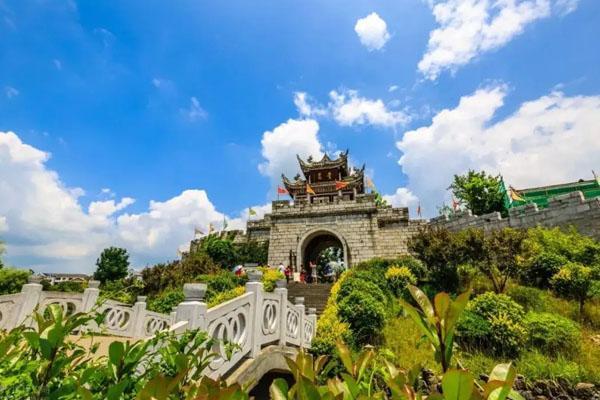
Qingyan Ancient Town
Cultural Landmarks: Millennia-old Imprints of Scholarship and Zen
Zhuangyuan Mansion: Hometown of Guizhou’s Only Imperial Scholar
As the core carrier of Qingyan’s emphasis on education, Zhuangyuan Mansion is located at the end of Zhuangyuan Street. It was the former residence of Zhao Yijiong, the only top imperial scholar (Zhuangyuan) in Guizhou during the Qing Dynasty. This three-courtyard complex adopts a Qing Dynasty column-and-tie wooden structure with layered gable roofs, whose ridges curl slightly at both ends. Above the main gate hangs the powerful “Wenkui” (Literary Leader) plaque, and the inscriptions “Qin He Pu Zhi” (Zither and Crane Symbolize Aspirations) beside the door exude scholarly elegance. Inside the courtyard, window lattices are carved with the “Four Gentlemen” (plum, orchid, bamboo, chrysanthemum), and column bases are adorned with interlocking lotus patterns—every detail carries auspicious meanings. The second courtyard’s Zhuangyuan Building was where Zhao Yijiong studied diligently; the wooden floor still creaks when stepped on, and the ink slabs and writing brushes on display seem to reveal the young man’s late-night study scenes. Guides recount his legendary story of breaking the prejudice that “no one from Guizhou could become a Zhuangyuan,” and Emperor Guangxu’s praise of his “extraordinary literary talent” adds to its depth. Many parents specifically bring their children here to absorb the “scholar’s aura.”
Wenchang Pavilion: A Scholar’s Sanctuary with Panoramic Views
Perched on Dongshan Top of the town, Wenchang Pavilion is both a symbol of enduring literary heritage and the best spot to overlook the entire ancient town. This three-story hexagonal building features a pyramid roof with six upturned corners; its top shimmers in the sun, and each floor has wooden railings for visitors to lean on and gaze into the distance. During the Ming and Qing dynasties, Qingyan’s scholars often came here to worship Emperor Wenchang, praying for academic success. The preserved Qing Dynasty stone carving of “Kuixing Dian Dou” (Kuixing, the God of Examinations, Pointing the Dou) inside the pavilion—with Kuixing holding a brush in one hand and a dou (a measuring tool) in the other—symbolizes being crowned Zhuangyuan. After recent renovations, Wenchang Pavilion has become even more simple and elegant. In the evening, the setting sun shines on the pavilion, contrasting beautifully with the town’s blue tiles, creating a stunning picture.
Ciyun Temple: An Ancient Temple of Zen and Warmth
Beyond scholarship, Qingyan hides serene Zen vibes, with Ciyun Temple at its core. Founded in the Ming Dynasty, the temple’s stone gate bears the bold and powerful inscription “Ciyun Temple.” The main hall uses a column-and-tie wooden structure, with pillars made of century-old nanmu—touching them still feels the warmth of the wood. Wind chimes hanging under the blue-gray tile roof ring crisply in the breeze, soothing the soul. The temple’s carvings are full of Zen meaning: the vivid two-dragon playing with a pearl stone carving above the main hall’s lintel, and the lotus carvings at the base of the Buddha statues symbolizing purity. When the Red Army passed through Qingyan in 1935, they temporarily stayed here, and the story of soldiers not disturbing the people and helping monks carry water and sweep the floor adds a warm human touch to the ancient temple. Today, the temple is surrounded by towering ancient cypresses and fragrant incense; visitors can burn incense to pray for blessings or sit quietly under the trees to enjoy peace.
Wanshou Palace: A Microcosm of Cultural Integration
Located on West Street, Wanshou Palace was built by Jiangxi merchants during the Ming and Qing dynasties as a guild hall, embodying the town’s cultural diversity—it retains the grandeur of Jiangxi guild halls while integrating local Guizhou architectural elements. The main structure uses a column-and-tie wooden frame, with a gabled and hip roof made more magnificent by gable walls on both sides. The wood carving of “Eight Immortals Crossing the Sea” above the main gate is a masterpiece: details like Tieguai Li’s crutch and He Xiangu’s lotus flower are clearly visible, said to have taken Qing Dynasty craftsmen half a year to carve. During the War of Resistance Against Japanese Aggression, teachers and students from Zhejiang University stayed here temporarily, leaving a strong scholarly mark. Today, the palace houses a small folk museum, displaying abacuses, account books of Jiangxi merchants, as well as traditional Qingyan silver jewelry and embroidery—allowing visitors to understand the town’s commercial history and folk culture.
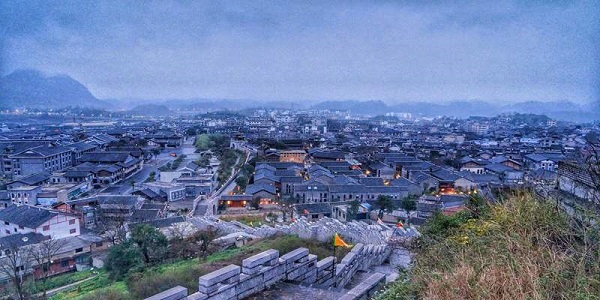
Qingyan Ancient Town
Culinary Delights: Centuries-old Local Flavors in the Streets
A trip to Qingyan Ancient Town is incomplete without tasting its specialty foods. These dishes carry the town’s local charm, with each bite being a centuries-old tradition.
Zhuangyuan Trotter (Braised Pork Trotters): The Town’s Iconic Flavor
Braised pork trotters are undoubtedly the star of Qingyan’s streets—almost every visitor enjoys this glossy delicacy under the ancient city gate. Its origin is closely linked to the town’s military history: during the Ming and Qing dynasties, soldiers braised pork trotters to carry with them, as they were filling and flavorful. Over time, it became a popular dish among locals. Authentic Qingyan braised pork trotters use hind legs of local free-range pigs. After blanching, they are simmered in a traditional old brine with more than a dozen spices for 3-4 hours—the older the brine, the richer the flavor. When served, they are brushed with secret red oil and sprinkled with chopped green onions, tender but not falling off the bone. Taking a hot bite, the briny aroma and oiliness burst in the mouth; pairing with sour radish or rice tofu cuts through the richness, creating a layered taste. Interestingly, it’s also tied to Zhao Yijiong’s story: legend has it that during his exam preparation, a vendor often brought him braised pork trotters, saying “trotter (ti) sounds like ‘exam question (ti)’—eating them will ensure you top the exam,” giving rise to the name “Zhuangyuan Trotter.”
Tofu Balls: Crispy on the Outside, Tender on the Inside
Tofu balls are a deep-rooted local flavor in Qingyan, originating in the Qing Dynasty and still made by traditional handcraft today. Local soybeans are ground into pulp and curdled to make firm tofu, which is then chopped repeatedly into a smooth paste. Mixed with Sichuan peppercorns, salt, and chopped green onions, the paste is kneaded into ping-pong-sized balls and fried in pure rapeseed oil. Controlling the oil temperature is crucial: first fry on low heat until fully cooked, then switch to high heat to crisp the surface. Breaking one open, the tender tofu filling releases a light soybean aroma—an amazing texture. The soul of this dish is Qingyan’s special chili dip: dried chili peppers are stir-fried until fragrant, then ground by hand, mixed with garlic, ginger, soy sauce, and vinegar. Spicy with a hint of numbness, fragrant but not overwhelming, it’s a perfect match for the crispy-on-the-outside, tender-on-the-inside tofu balls.
Gaoba Porridge: A Heartwarming Sweet Morning Treat
Gaoba Porridge is a morning ritual in Qingyan and a staple breakfast for locals. The key lies in slow cooking and pairing: glutinous rice is ground into flour, steamed, and kneaded into small square cakes (gaoba); rice is simmered on low heat into a thick, smooth porridge. To eat, place the gaoba into the porridge, then sprinkle with crushed peanuts, sesame seeds, walnut pieces, rose sugar, and other toppings—each bowl is packed with ingredients. Taking a bite, you’ll taste the chewy glutinous gaoba and the smooth porridge, sweet but not cloying, with hints of local rose fragrance. A warm bowl dispels the morning chill, leaving a comforting sweetness.
Lesser-Known Delights: Pleasant Surprises in the Alleys
Beyond the three signature dishes, the town’s alleys hide many hidden gems. Spicy Chicken Dices use fresh chicken diced and stir-fried quickly with dried chili peppers and Sichuan peppercorns—tender and chewy, spicy with umami, it’s perfect with rice or steamed buns, and a popular souvenir for visitors. Rose Jam is made by pickling local roses with white sugar, retaining the natural floral aroma—ideal for spreading on bread or making tea. Rice Tofu has a bouncy, smooth texture; paired with the chili dip, it’s refreshing and greasy, making it an excellent side dish for braised pork trotters.
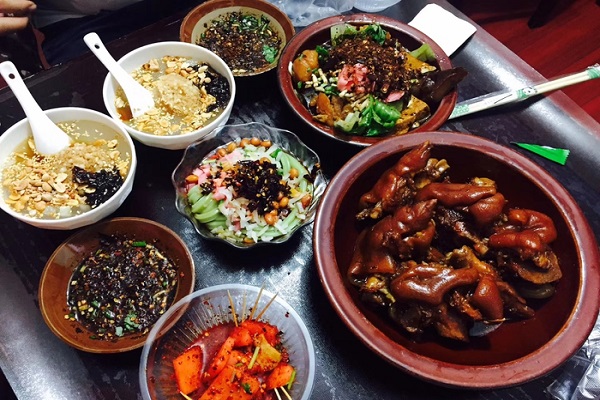
Qingyan Town Cuisine
The Best Way to Explore the Qingyan Town
Opening Hours & Ticket Information
Opening hours are divided into three categories for flexible planning: 1. Overall town opening hours: 08:10 to 22:00 daily, allowing free access to the core streets; 2. Cultural relics and scenic spots opening hours: ticketed attractions like Wenchang Pavilion and Zhuangyuan Mansion are open 08:10 to 17:40 daily, with ticket sales and entry stopping at 17:40—early arrival is recommended; 3. Night tour “Daming Zhi·Colorful Night Tour”: 16:00 to 22:00 daily, suitable for night scenery lovers.
Tickets are available in three tiers to meet different needs, with exclusive discounts: – Basic Ticket: RMB 10 per person, for accessing the core streets—ideal for those who only want to wander and eat; – Package Ticket: RMB 60 per person, including core ticketed attractions like Wenchang Pavilion, Zhuangyuan Mansion, and Ciyun Temple—best value for money; – Combined Ticket: RMB 100 per person, additionally covering Hidden Soldier Cave, Yangming Academy, etc.—perfect for in-depth travel enthusiasts. Discounts: Residents of Guizhou Province enjoy the Package Ticket for RMB 20; residents of Guiyang City for RMB 10; children under 6, seniors over 60, active military personnel, etc., are free with valid IDs; minors aged 6-18, full-time students, etc., get 50% off with valid IDs.
Transportation Guide: Convenient Arrival in Multiple Ways
Public Transportation: Buses or metro are convenient options. From Guiyang Railway Station, take Bus 203 directly to North Gate Parking Lot—first bus at 06:30, last at 21:00, fare RMB 3; from Huaguoyuan Central Park, take Bus 210—first bus at 06:20, last at 20:00, also arriving at North Gate Parking Lot. For metro users, take Line 3 to Tongmuling Station (Exit C), then transfer to Huaxi Bus 18 to North Gate.
Self-Driving: Navigate to Moutai Y099 Store (near North Gate), where there is an underground parking lot with relatively ample spaces. Parking at South Gate is limited—arrive early to avoid delays.
Recommended Itineraries: Efficiently Explore the Highlights
Classic South Gate Route (for first-time visitors): Arrive at South Gate (Dingguang Gate) before 8:00 to avoid crowds. The core route is: Dingguang Gate Wall → Beijie Bluestone Alley → Wenchang Pavilion → Wanshou Palace → Zhuangyuan Mansion. Along the way, experience the grandeur of the military wall, the quiet light and shadow of Beijie, the panoramic view from Wenchang Pavilion, the cultural integration of Wanshou Palace, and the scholarly heritage of Zhuangyuan Mansion. In the evening, enjoy the sunset over the town; walk to North Gate before 18:30 to take a direct bus back to the urban area.
Additional Check-in Spots (for extra time): If you have more time, visit Zhou Yuhuang’s Former Residence and the Catholic Church. The “Cheating Garden” at Zhou Yuhuang’s Former Residence hides literary romance, said to be a secret place for scholars to exchange ideas in the past; the Catholic Church cleverly blends Gothic style with Miao elements—stained glass depicting Miao girls offering flowers to the Virgin Mary showcases unique cultural integration.
Qingyan’s Beauty Lies in Time and Daily Life
The beauty of Qingyan Ancient Town resides in the millennium-old charm of its stone walls and blue tiles, the scholarly and Zen cultural heritage, and the authentic flavors of its streets. Here, every bluestone slab holds a story, and every wisp of fragrance carries a tradition. Whether traveling alone, with a partner, or with family, you’ll find your own peaceful moments. For a more hassle-free exploration of all the town’s wonders, choose China Dragon Travel. Their professional team knows every detail of the ancient town, can customize exclusive itineraries, help you avoid crowds, and guide you to deeply experience the unique charm of Guizhou’s Qingyan Ancient Town—making your trip more comfortable and unforgettable.