
For many travelers craving unique cultural experiences, China’s Miao culture is like a living epic – vibrant colors enshroud ancient rituals, embodying the survival wisdom of a mountain-dwelling ethnic group. This journey is not just a geographic one, but a trip back in time: step into the lush mountains of southwest China, visit rustic Miao villages, join their traditional festivals, and embrace their philosophy of harmonious coexistence with nature. This article serves as your practical guide, systematically curating the core highlights of Miao culture, major settlements, must-experience festivals, and thoughtful travel tips to help you plan an unforgettable, in-depth cultural exploration.
Getting to Know China’s Miao People: The Uniqueness of Their History and Culture
The Miao people are one of China’s oldest ethnic groups, boasting a long history and rich oral culture. Without a traditional writing system, their history, myths, ethics, and knowledge have been preserved and passed down through exquisite embroidery patterns, touching ancient ballads, grand festivals, and time-honored customs. Miao costumes are hailed as “history books worn on the body”—the dresses, silver ornaments, and hairstyles of different branches record the migration routes and ethnic memories of their ancestors. Understanding this background will elevate your trip from mere sightseeing to a profound cultural dialogue.
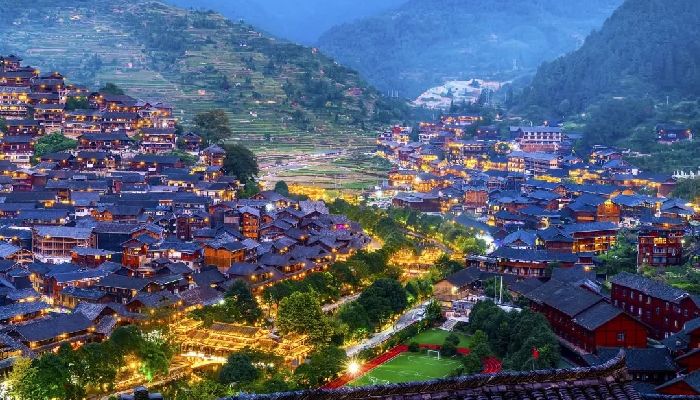
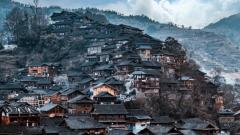
Xijiang Qianhu Miao Village in Guizhou
Major Settlements of China’s Miao People & Travel Focus
To embark on a journey in search of Miao culture, you first need to understand the geographical center of this cultural map. The Miao people in China exhibit a distribution pattern of “living in scattered communities overall but concentrated in small groups locally,” with their communities dotted like stars across the towering mountains and ridges of southwest China. Due to geographical isolation and differences in historical migration routes, each major settlement area has developed unique dialects, costume details, and festival customs, offering travelers a diverse range of exploration routes. From the dense thousand-household Miao villages in Guizhou to the remote mountain villages on Yunnan’s border, and the legendary border towns in western Hunan, choosing which region to start with will determine the tone and depth of your first encounter with the Miao people.
Guizhou Province: The Core and Soul of Miao Culture
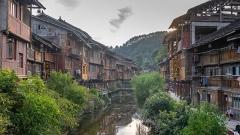
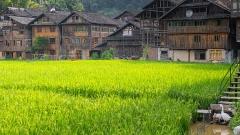
If one place were to define “Miaojiang” (the traditional homeland of the Miao people), it would undoubtedly be Guizhou, especially Qiandongnan Miao and Dong Autonomous Prefecture. Known as the “Land of a Hundred Festivals” and “Ocean of Song and Dance,” this area preserves the most complete and representative Miao culture in the world. When travelers enter Qiandongnan, they seem to step into a parallel world composed of terraced fields, mist-shrouded mountains, and cedar stilted buildings. Here, culture is not a display in a museum, but a living experience permeating the air—the morning cooking smoke, the sound of cloth-beating by the stream, and the folk songs echoing at night together weave the most vivid picture.
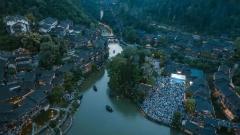
Xijiang Qianhu Miao Village is undoubtedly the most visually striking entry point. Thousands of traditional stilted buildings stretch along two mountain slopes, and when the lights turn on at night, it resembles a starry sky descending on earth. With complete infrastructure, it is suitable for first-time visitors hoping to experience Miao costumes, song and dance, and long-table feasts in one stop. However, if you want to escape the crowds, a short drive will take you to quieter ancient villages like Langde Shangzhai. The “Twelve Courses of Gate-Receiving Wine” ritual in Langde is more primitive and sincere, and the villagers live at a slow pace, allowing you to calm down and observe architectural details or chat with elderly people soaking up the sun. In addition, countless unknown villages scattered deep in Leigong Mountain and Moon Mountain, such as Jidao and Kongbai (the Silver Smith Village), are renowned for their handicrafts like embroidery and silver forging, waiting to be discovered by in-depth explorers willing to trek.
Yunnan Province: Diverse Branches and Border Customs
Miao culture in Yunnan presents a different style from that in Guizhou, characterized by a large number of branches and more obvious traces of cultural integration due to long-term interaction with neighboring ethnic groups such as the Yi, Zhuang, and Yao. Wenshan Zhuang and Miao Autonomous Prefecture is one of the important homelands of the Miao people in Yunnan, where Miao costumes are famous for their bold compositions, extremely vibrant colors, and intricate embroidery craftsmanship. In areas like Honghe Prefecture, different branches such as the “Flower Miao,” “White Miao,” and “Green Miao” reside, each with distinct costume color schemes and headdress designs, making it a treasure trove for ethnology enthusiasts and photographers.
Compared to the large-scale villages in Guizhou, Miao villages in Yunnan are often smaller and more secluded, hidden among red soil and karst peaks. Travel experiences here focus more on specific festivals and markets. For example, during the Miao Huashan Festival, you can witness tens of thousands of people gathering for traditional activities such as antiphonal singing, climbing flower poles, and bullfighting, creating a lively and unrestrained atmosphere. In addition, in the border areas of Yunnan adjacent to Vietnam, Miao culture incorporates cross-border exotic elements, offering another dimension for cultural observation.
Hunan Province: Shamanistic Culture in Western Hunan’s Secret Realm
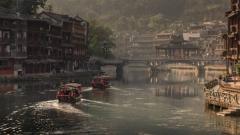
Miao culture in western Hunan is closely linked to the Yuan River described by Shen Congwen, the mysterious wushu (shamanistic) traditions, and the bizarre peaks of Zhangjiajie, forming a unique and charming temperament. While Fenghuang Ancient City is undoubtedly famous, its true Miao customs lie in the surrounding countryside. The regularly held “ganchang” (country fairs) are the best occasion to experience the daily life of the Miao people in western Hunan. At fairs in areas like Shanjiang and Lier Mountain, women wearing western Hunan-style Miao costumes with layers of headscarves trade mountain products, their silver ornaments tinkling, filling the air with a vivid sense of life.
Dehang Miao Village (Dehang Grand Canyon) offers an experience combining natural wonders with ethnic culture. Located at the bottom of a magnificent canyon with high waterfalls, the village allows you to enjoy Miao song and dance while hiking to appreciate the beauty of mountains and rivers. In the traditions of the Miao people in western Hunan, wushu culture is integrated with ancient Miao ballads and stunts (such as walking on knife blades and stepping on fire), adding a layer of mystery and antiquity, which forms an interesting contrast with the bright and joyful festival atmosphere of the Miao people in Guizhou.
Unmissable Experiences of Miao Traditional Festivals
The Miao festival calendar is a living social epic, key to understanding their spiritual world and community cohesion. These festivals are far more than simple “performances”; they are solemn rituals and collective celebrations rooted in the agricultural cycle, ancestor worship, and community interaction. By participating, you will no longer be a spectator, but part of this joyful energy, feeling a vitality and pure joy that transcends millennia. When planning your trip, centering it around festival dates will bring unparalleled depth and emotional impact to your Miao journey.
Miao New Year: The Grandest Annual Celebration and Family Reunion
Miao New Year is the most grand traditional festival of the Miao people, comparable to the Han Chinese Spring Festival. Its date varies by region, mostly held between the 10th and 11th lunar months after the autumn harvest, symbolizing celebration of a bumper harvest, ancestor worship, and bidding farewell to the old and welcoming the new. The entire festival lasts for several days or even more than ten days, consisting of a series of complex rituals and celebratory activities.
During the festival, every family prepares a lavish New Year feast, with the first priority being ancestor worship to express gratitude for their blessings. Subsequently, the whole village’s celebration kicks off: men, women, the elderly, and children dressed in festive attire gather at the Lusheng Square, forming circles to dance the primitive Lusheng Dance with neat steps and tinkling silver ornaments; intense bullfighting competitions showcase strength and glory; young men and women express their affection through “youfang” (courtship gatherings) and antiphonal singing. As night falls, long-table feasts spread out under the lights, with endless wine and songs, bringing hosts and guests together in joy. For travelers, experiencing Miao New Year is like opening the most brilliant door to the treasure trove of Miao culture—all costumes, music, dance, food, and human warmth are presented in their most vibrant form at this time.
Sisters’ Festival: A Romantic Poem Hidden in Five-Colored Glutinous Rice
The Sisters’ Festival, mainly popular in areas like Taijiang County in Guizhou, falls around the 15th day of the 3rd lunar month and is hailed as “the oldest Oriental Valentine’s Day.” This festival is filled with subtle and touching romance, centered on gatherings of unmarried women and expressing affection to men they admire.
On the festival day, women put on gorgeous costumes embroidered over several years, wearing complete sets of silver ornaments weighing several kilograms, showing off their beauty and craftsmanship like peacocks spreading their tails. They gather to steam “sisters’ rice”—colorful glutinous rice that is not only a delicacy but also a secret code of love: objects hidden in the rice (such as pine needles representing embroidery needles, symbolizing longing; chopsticks symbolizing being a pair) carry different implications. At night, young men and women gather by the river or on mountain slopes to sing love songs, exploring each other’s feelings through music, with the air filled with the sweetness and shyness of youth. For visitors, the Sisters’ Festival is an extreme visual feast and an excellent window to observe the unique marriage and love culture of the Miao people.
Lusheng Festival: A Celebration of Life with the Earth as the Stage and Endless Lusheng Melodies
The Lusheng is the iconic musical instrument of the Miao people, regarded as the voice of their ancestors and the soul of the nation. The Lusheng Festival is a large-scale folk gathering centered around this core instrument, with dates varying by region and grand scale. During the festival, dozens or even hundreds of Lusheng teams gather from all directions. Lusheng players (mostly male) play the Lusheng, which produces deep and resonant tones of varying pitches, creating a breathtaking harmony.
Women, dressed in festive attire, dance in large circles to the rhythm of the Lusheng, their simple yet rhythmic steps continuing from morning till night without tiring. In addition to song and dance, the Lusheng Festival often features competitive activities such as bullfighting, horse racing, and bird fighting, as well as markets for material exchange. In essence, it is a comprehensive celebration integrating religious sacrifice, entertainment and social interaction, and economic trade. Being part of it, you will be infected by the heartfelt collective joy, feeling how music and dance closely maintain the identity and emotions of an ethnic group.
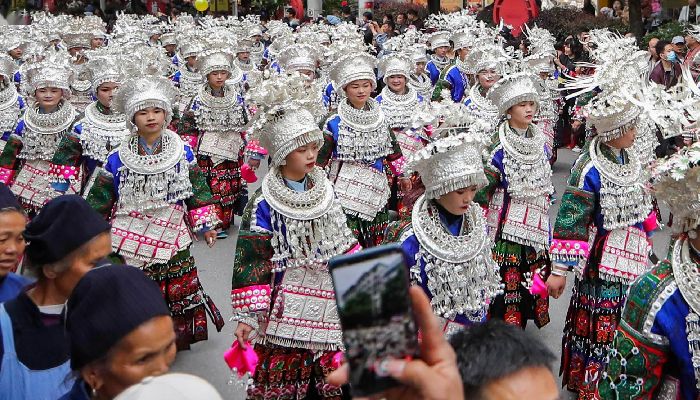
The Miao Sisters’ Festival
Ways to Deeply Experience China’s Miao Culture
Beyond visiting and participating in festivals, the following activities will take your experience to the next level:
- Learn a handicraft: Try experiencing basic Miao embroidery stitches for an hour under the guidance of local embroiderers, or understand how a piece of batik cloth transforms from plain white fabric into a work of art.
- Stay in a local homestay: Choose a traditional wooden stilted building homestay run by a Miao family, share dinner with the hosts, and listen to their ancient stories by the fire pit.
- Listen to a session of ancient ballads: Find an opportunity to listen to elderly Miao people singing ancient ballads. Even if you don’t understand the language, the desolate and distant tunes will convey the historical depth of this ethnic group.
- Participate in a market (ganchang): Visit the local township market on market days. This is a vivid window to observe the daily life of the Miao people, from the trade of traditional costumes to the sale of mountain products, full of life.
Practical Travel Advice and Pre-Trip Preparation
When planning a Miao cultural trip, consider the following points:
- Best travel time: Spring (March-May) and autumn (September-November) offer the most pleasant climate. If traveling for specific festivals (such as Miao New Year or Sisters’ Festival), check the exact dates in advance and make reservations.
- Transportation: Most major settlements are in mountainous areas, and public transportation can reach county seats or key attractions (such as Xijiang). However, to explore more primitive villages, chartered cars or joining small local in-depth tour groups are more flexible and efficient options. Choosing a service provider familiar with local road conditions and culture is crucial.
- Accommodation options: There is a wide range of choices, from modern guesthouses in Xijiang to traditional homestays in remote villages. For comfort, opt for hotels with complete facilities; for an immersive experience, recommend well-reviewed local homestays.
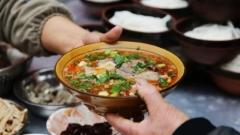
- Cuisine features: Miao specialties include sour soup fish, cured meat, glutinous rice, and various pickled vegetables (sour vegetables). The cuisine is generally sour and spicy—don’t hesitate to try it.
- Respect and etiquette: Avoid taking close-up photos of people, especially the elderly, without permission. When entering villages or participating in rituals, follow the guidance of local people. Drinking alcohol is an important social etiquette; if offered a toast, respond politely according to your drinking capacity.
- Itinerary planning advice: Due to the scattered nature of villages and time-consuming transportation, avoid arranging too many destinations in a short period. Exploring one or two regions in depth is far more rewarding than a hasty tour. If you find arranging transportation connections, booking characteristic accommodation, or confirming festival dates cumbersome, seeking assistance from professional travel consultants can save a lot of research time and ensure a smooth trip. For example, China Dragon Travel has rich experience in organizing in-depth cultural tours of China’s ethnic minorities and can help arrange customized routes that match your interests.
Experience the Miao Culture of China and Feel the Authentic Ethnic Customs
A journey through the Miao culture of Guizhou is not only a visual and gustatory exploration, but also an experience that delves into the ethnic memory and wisdom of life. From the layered stilted houses and the shimmering silver costumes, to the lively festivals and the simple and sincere hospitality, the Miao villages present a cultural vitality that still exists vividly. When you leave Guizhou, you will take away not only photos and souvenirs, but also an understanding and respect for Miao culture, and a journey through this ethnic culture that you will cherish and remember.
Guizhou Travel Recommendation:
5-Day Guizhou Explorer: Huangguoshu Waterfalls, Qingyan Ancient Towns & Minority Culture
6-Day Guizhou Cultural Journey: Huangguoshu Waterfalls, Xiaoqikong, Miao Village & Fanjingshan