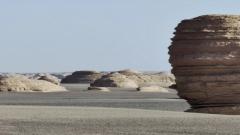

Most travelers know Dunhuang for the Mogao Caves and Mingsha Sand Dunes, but about 90 kilometers northwest of the city lies a completely different landscape—Yumen Pass and the Han Great Wall ruins. These sites once formed a crucial part of the Silk Road frontier defense system during the Han Dynasty. Today, only remnants of rammed-earth walls and desert ruins remain, yet standing here still evokes the movement of ancient caravans and the life of border soldiers guarding the western frontier.
Yumen Pass Ruins – a Key Pass on the Han Dynasty Silk Road
Small Square City – Core Ruins of Yumen Pass
Small Square City is the commonly referred Yumen Pass ruins, a square earthen castle standing alone in the gobi desert. Built of rammed loess, it has weathered two thousand years of wind and rain, with some walls collapsed, but the overall outline is clear. The castle is about 20 meters long on each side, and the highest existing part is about 10 meters, showing the military garrison layout of that year. In the 1940s, bamboo slips inscribed with “Yumen Commandant”were unearthed here, confirming that this was the location of Yumen Pass in the han dynasty (it was moved east to Guazhou after the tang dynasty). There are wooden plank roads around the castle, allowing you to walk around and view it from different angles. The visit takes about 20-30 minutes. If the weather is clear, you can overlook the snow-capped peaks of the qilian mountains. The interior of the castle is not open to the public.
Visiting Highlights:
- Rammed earth city walls: a physical witness to the construction technology 2,000 years ago
- Origin of Yumen Pass’s name: jade from the western regions was imported into the central plains through this pass
- The desolate mood of “spring breeze never blows here”: perfect for taking photos
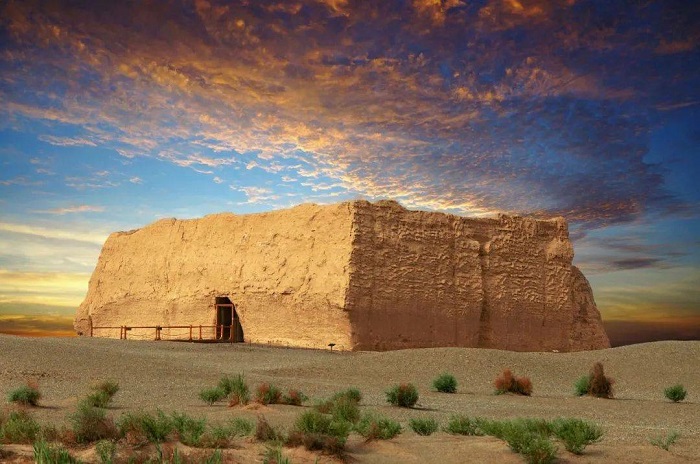
Small Square City Ruins of Yumen Pass
Large Square City – Han Dynasty Granary Ruins
About 10 kilometers northeast of Yumen Pass is Large Square City, also known as Hecang City. It is much larger than Small Square City, rectangular in shape, about 130 meters long from east to west and 15 meters wide from north to south, and was the granary for the border garrison troops in the han dynasty. The walls retain traces of warehouse partitions and ventilation holes. It was built beside the old course of the shule river, and grain was transported to the granary via the river in those years. Today the riverbed is dry, and the surrounding saline-alkali land is desolate and silent. Standing in front of the city, you can imagine the scene of sufficient grain and grass and stationed troops in ancient times. Compared with Small Square City, there are fewer tourists here and the atmosphere is stronger. The visit takes about 20-30 minutes.
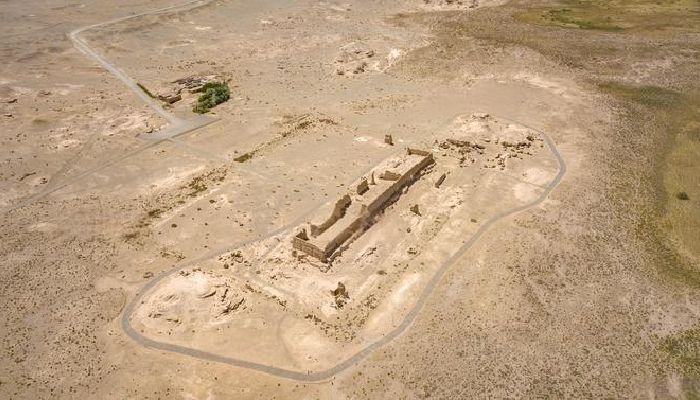
Aerial View of Hecang City (Large Square City) Ruins
Han Great Wall Ruins – Border Defense Great Wall of the Han Dynasty
History and Construction Technology of the Han Great Wall
The Han Great Wall in the Yumen Pass scenic area is part of the han dynasty great wall. Built by the han dynasty to defend against the xiongnu, it stretches more than 1,000 kilometers from Yongdeng in Gansu in the east to Lop Nur in Xinjiang in the west. The section at Yumen Pass is well preserved and is the best-preserved section of the han dynasty great wall in china. The section near Danggu Sui is particularly intact, 2.95 meters high, 3 meters wide at the base, 0.65 meters wide at the top, and about 300 meters long. The construction method is unique: craftsmen used local materials, alternating rammed layers of red willow, reed, poplar branches and sand and gravel – first laying a layer of plant stems, then covering with sand and gravel, and pouring alkaline water to condense them, stacking layer upon layer. This “reed wall”seems simple but extremely strong. Plant fibers act as natural “steel bars”, and alkaline water serves as a coagulant. Looking closely at the wall section, you can clearly see the layers of reed and loess, and the reeds have not completely rotted to this day.
Three Major Highlights:
- Reed interlayer structure: clear layers visible on the wall section, not rotted for 2,000 years
- Wisdom of adapting to local conditions: a model of using local materials in the gobi environment
- Well-preserved section at Danggu Sui: 5 kilometers west of Yumen Pass, the great wall is particularly well preserved
Firewood and Beacon Towers – Han Dynasty Alarm System
Along the great wall, there are “one large tower every ten li, one small tower every five li”. These yellowish square platforms are beacon towers. Garrison soldiers kept watch day and night. In case of enemy situation, they “lit torches and burned firewood”- smoking during the day and lighting fires at night, transmitting alarms layer by layer through beacon fires. Near Danggu Sui, 15 piles of “firewood”used for alarm are still preserved. The largest one is more than 2 meters long and 1.3 meters high, bound with reeds crisscross, and has condensed into fossils. This alarm method could transmit messages thousands of li a day. It took about two to three days to travel more than 4,000 li from Dunhuang to Chang’an. These firewood piles witnessed the daily life of border garrison soldiers – they not only watched for beacon fires, but also repaired cities and fortifications, dug canals and farmed, raised horses and wove shoes.
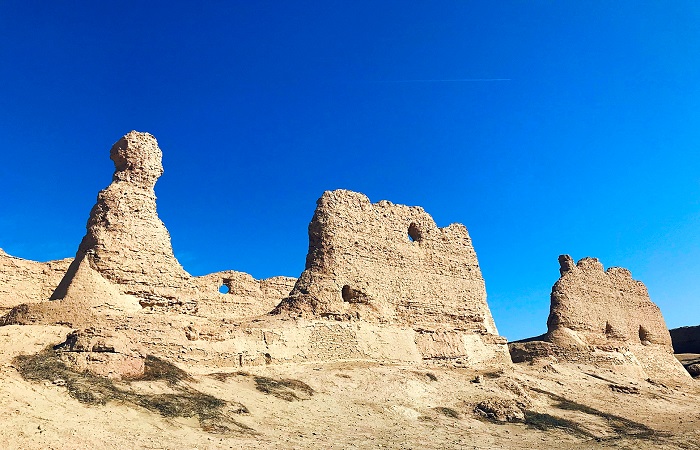
Han Great Wall Ruins
Practical Travel Information for Yumen Pass and Han Great Wall
How to Choose Transportation
Yumen Pass and Han Great Wall are about 90 kilometers northwest of Dunhuang urban area, with no public transportation. You need to charter a car or drive by yourself. Drive from the urban area along national highway G215 to yuya highway, with a full view of the gobi desert highway, and the journey takes about 1.5 hours. The scenic area has a free open-air parking lot with a new energy charging area.
Reference Charter Prices:
- 5-seater sedan: 500-700 CNY per day in off-peak season, 800-1000 CNY per day in peak season (suitable for 2-4 people)
- 7-seater business van: slightly higher price in off-peak season, suitable for families or 4-5 people traveling together
- Carpooling: about 150-200 CNY per person, including fare and driver service
Booking Tips: Be sure to book 7-15 days in advance during peak season (july-october), especially for holidays such as national day, and even one month in advance is not too much. Fill up the fuel tank before driving by yourself, as there are no gas stations along the way.
Internal Transportation in the Scenic Area
The three scenic spots in the area are far apart and require a vehicle to reach. You can choose to drive in by yourself or take a sightseeing bus:
- Sightseeing bus fare: 50 CNY per person, round trip about 34 kilometers
- Departure time: departs on the hour or half hour (e.g. 8:00, 8:30), last bus departs at 19:00
- Journey time: one-way about 25 minutes, stopping at Han Great Wall Ruins and Hecang City Ruins in sequence
- Special experience: camel cart tour, 30 CNY per person round trip, need to book in advance at the visitor center
Tickets and Opening Hours
- Tickets: full price 40 CNY, half price 20 CNY. The combined ticket includes Yumen Pass, Han Great Wall and Hecang City
- Opening hours: 8:00-19:00 all year round (reference time for april, 8:30-18:00 in winter)
- Ticket purchase: real-name reservation via wechat official account “Dunhuang Yumen Pass Ruins Scenic Area”, Ctrip and other platforms, enter with id card
Best Travel Seasons
Dunhuang has a continental arid climate with strong sunshine and large temperature difference. The characteristics of each season are as follows:
- May-june: temperature 15-25℃, fewer tourists, comfortable experience
- July-august: often over 35℃ during the day, no shade in the gobi desert, take sun protection measures and avoid the high temperature period from 12:00-15:00 at noon
- September-october: pleasant climate, golden period for tourism
- November-april: low temperature, windy and sandy. Prepare thick down jackets for winter visits
How Long Does the Visit Take
It is recommended to set aside 3.5 hours for an in-depth experience. It takes about 3-4 hours to visit all three sites carefully, plus the round trip from the urban area, a whole half day is needed. Recommended visiting order: visitor center – take sightseeing bus – Han Great Wall Ruins – Hecang City Ruins – return to visitor center – walk to Small Square City.
Best Time for Taking Photos
- Early morning (arrive before 9:00): soft light, few tourists, can take photos of Yumen Pass in the morning light
- Evening: the setting sun shines on the loess city walls with rich colors, the best time to take photos of the artistic conception of “a single wisp of smoke rises straight in the vast desert”
Practical Tips for Visiting Yumen Pass and Han Great Wall
Prepare for Sun and Sand Protection
There is no shade in the gobi desert, and the uv index is always 8-10 (extremely strong) all year round. The following is a list of essential items:
- Sun protection equipment: wide-brimmed sun hat, sunglasses, long-sleeved sun protection clothing, spf50+ sunscreen (reapply every 2 hours)
- Sand protection equipment: scarf or mask, Dunhuang has about 3-5 days of floating dust every month
- Clothing choice: recommended “onion-style”dressing – quick-drying breathable long sleeves + detachable fleece jacket to cope with a temperature difference of more than 15℃
- Photo tips: solid color cotton and linen robes (khaki/ochre), matching the desolate background of the ruins
Bring Enough Water and Food
There are no restaurants in the scenic area, only a small shop at the gate with limited choices. It is recommended to prepare enough from the urban area:
- Mineral water: at least 2-3 bottles per person, large water demand in the dry gobi desert
- Convenience food: bread, fruits, nang, self-heating rice, etc.
- Other essentials: power bank (no charging points throughout the journey), wet wipes
Wear Comfortable Shoes
The ground in the scenic area is gobi gravel. Although there are wooden plank roads, sneakers or hiking shoes are recommended. Avoid sandals or slippers, which are inconvenient for walking and easy to be pricked by small gobi stones.
Other Practical Tips
- Guided service: professional commentators can be reserved at the visitor center (paid), and electronic guides can also be rented
- Special activities: the scenic area has “Millennium Yumen Pass · Commandant Welcomes Guests”performance, pass experience, poetry competition and other activities
- Emergency contact: scenic area rescue phone 0937-6951018 (24 hours online)
- Civilized visit: climbing and carving on the ruins are prohibited. Keep a safe distance of more than 5 meters from the Han Great Wall
Frequently Asked Questions About Yumen Pass and Han Great Wall
Q: How long does it take to visit Yumen Pass and Han Great Wall?
A: It takes about 3-4 hours to visit all three sites carefully, plus a round trip, a half day is needed. It is recommended to set off early in the morning.
Q: Is there a guide service in the scenic area?
A: Commentators (paid) are available at the visitor center, and electronic guides can also be rented. If you want to learn about the history in depth, it is recommended to hire a guide.
Q: Is it convenient to bring the elderly and children?
A: The scenic area has flat roads and plank roads, which are accessible for the elderly and children. However, strong sunlight and wind and sand require proper protection, so it is not suitable for very young children and people with weak health.
Q: Can drones be flown?
A: It is a cultural relic protection unit, and flying drones is prohibited. Please abide by the scenic area regulations.
Q: Will it be too cold to go in winter?
A: The temperature in winter is often around zero degrees celsius, windy and dark early. If you want to experience the less crowded Yumen Pass in winter, prepare thick down jackets and snow boots.
Q: Which is more worth visiting, Yumen Pass or Yangguan Pass?
A: Each has its own characteristics. Yumen Pass is more desolate and original, and the Han Great Wall has a unique construction technology; Yangguan Pass has restored antique buildings with better facilities. It is recommended to visit both if time permits, and choose Yumen Pass first to see the original ruins.
Where Desert Silence Preserves the Memory of the Silk Road Frontier
The significance of Yumen Pass and the Han Great Wall lies not in intact structures, but in the powerful sense of history preserved within the landscape. The desert, broken walls, and ancient beacon towers together create a vivid picture of how frontier defense and Silk Road trade once operated.
For travelers planning the western route in Dunhuang, these sites are often combined with destinations such as Yadan landforms and Yangguan Pass. For smoother transportation and itinerary planning, China Dragon Travel can provide local support including private transfers and route arrangement to ensure a safer and more efficient journey through the Gobi Desert.