
How do you travel from Chengdu to the Sanxingdui Museum? What are the must-see artifacts, and when is the best time to visit? These are the most common questions travelers ask when planning their journey. Located just a short distance from Chengdu, the Sanxingdui Museum showcases one of the greatest archaeological discoveries of the 20th century. From the awe-inspiring Bronze Sacred Tree to the enigmatic Bronze Masks and the legendary Golden Scepter, each relic reveals the brilliance and imagination of the ancient Shu Kingdom.
Transportation from Chengdu to the Sanxingdui Museum
Getting from Chengdu to Sanxingdui Museum is straightforward, with several convenient options to suit different budgets, schedules, and travel preferences. No matter which method you choose, you’ll reach the museum in under two hours, making it an ideal day trip from Chengdu.
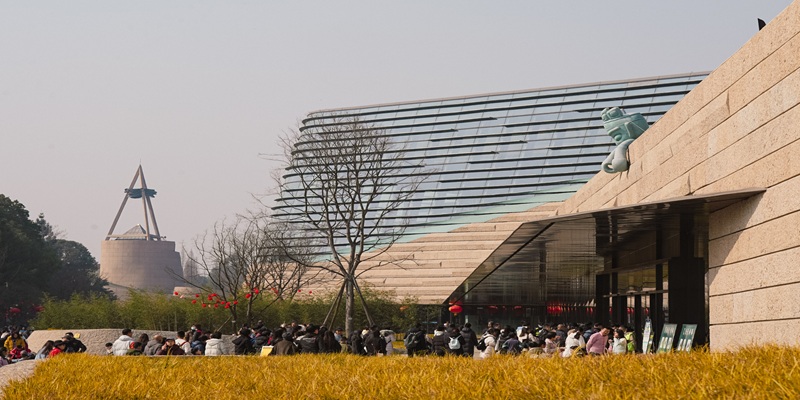
Sanxingdui Museum
High-Speed Rail (Top Recommendation)
For most travelers, taking the high-speed rail is the best choice—it’s fast, affordable, and reliable. Trains depart from Chengdu East Railway Station to Guanghan North Railway Station every 30 minutes from 7:00 AM to 9:00 PM, so you don’t need to plan your day around a strict schedule. The journey takes just 18 to 25 minutes, and a one-way ticket costs around 18 RMB, offering exceptional value for money.
Once you arrive at Guanghan North Station, you have two easy ways to get to the museum. The most budget-friendly option is to take Guanghan Bus Route 13, which drops you right at the museum entrance. The bus ride takes about 20 minutes and costs only 2 RMB, with frequent departures throughout the day. If you’re short on time or prefer more comfort, you can take a taxi or ride-hailing service, which costs approximately 15 RMB and takes just 10 minutes to reach the museum.
Direct Shuttle Buses
If you want to avoid the hassle of transferring between trains and buses, direct shuttle buses are a great alternative. These buses run from popular tourist spots in Chengdu, including Chunxi Road, Kuanzhai Alley, and Wuhou Temple, making them easy to find no matter where you’re staying in the city.
Shuttle buses typically depart between 8:00 AM and 9:00 AM and return to Chengdu between 3:00 PM and 4:00 PM, giving you plenty of time to explore the museum. Round-trip tickets cost between 60 RMB and 80 RMB, with slight variations depending on the departure point. The biggest advantage of this option is that it’s door-to-door—you won’t have to worry about navigating public transportation in an unfamiliar city, and the entire trip is organized for you.
Self-Driving
If you value flexibility and want to explore more of the surrounding area, self-driving is an excellent option. From downtown Chengdu, take the Beijing-Kunming Expressway or the Chengdu-Mianyang Expressway Bypass. The drive takes about 1 hour, with toll fees of around 20 RMB, and the roads are well-maintained and rarely congested.
Sanxingdui Museum has a large, spacious parking lot that charges just 10 RMB per day, so parking is never a problem. With your own car, you can set your own schedule—stay longer at the museum if you’re enjoying it, or stop by other attractions in Guanghan City or sample local delicacies on your way back to Chengdu.
Taxi/Ride-Hailing
For groups of travelers or those in a hurry, taking a taxi or ride-hailing service directly from Chengdu to Sanxingdui Museum is a convenient option. The journey takes about 1 hour, and the fare ranges from 150 RMB to 200 RMB. While this is the most expensive option, splitting the cost among a group makes it much more affordable. It’s also the fastest way to get there, as you won’t have to make any stops or transfers along the way.
Group Tour
This is the most hassle-free option, perfect for those who dislike planning or prefer company, especially solo or senior travelers. Local agencies offer one-day tours to Sanxingdui Museum for 150-260 RMB per person, including round-trip transport, entry tickets, and professional guides. Some include simple meals. The group departs Chengdu at 7-8 AM and returns by 4-5 PM. You’ll skip ticket worries, learn about ancient Shu culture, and enjoy the company of fellow travelers.
Ticket Booking and Opening Hours
Sanxingdui Museum operates on a fully real-name reservation system—all visitors must book their tickets online in advance, as no tickets are sold at the museum entrance. It’s crucial to book ahead to avoid disappointment, especially during peak times.
How to Book Tickets
You can book tickets through the official Sanxingdui Museum WeChat public account, the official website, or authorized third-party travel platforms.
Booking 1 to 3 days in advance for regular visits. If you’re planning to go on weekends, public holidays, or school vacations, book as early as possible—tickets often sell out quickly during these busy periods.
Ticket Prices
- Regular ticket: 72 RMB per person
- Student ticket: 36 RMB per person (valid for full-time undergraduate and below students with a valid student ID)
- Free admission: Available for seniors aged 60 and above, children under 6 years old or under 1.3 meters tall, people with disabilities, and active military personnel. Note that even free visitors must make an online reservation in advance and present valid ID upon entry.
Opening Hours
The museum is open daily from 8:30 AM to 6:00 PM, with last entry at 5:00 PM. Be sure to arrive before 5:00 PM to allow enough time to explore both exhibition halls thoroughly.
The museum is open every day of the year, except for special occasions such as equipment maintenance or cultural relic restoration, which will be announced in advance on the official website and WeChat account.
Important Notes
- You must present your original ID card to enter the museum—digital copies or photos of your ID will not be accepted.
- Students and free visitors must also present their valid student ID or other qualifying documents at the entrance for verification.
- Tickets are non-refundable and non-transferable, so make sure to book the correct date and time for your visit.
Must-See Relics and Exhibition Halls
Sanxingdui Museum currently has two main exhibition halls: the Comprehensive Hall and the Bronze Hall. A new exhibition hall is under construction and is scheduled to open in 2026, which will showcase even more precious relics from the site. Both existing halls are well worth visiting, each offering a unique perspective on the ancient Shu civilization.
Comprehensive Hall
The Comprehensive Hall focuses on the historical background of Sanxingdui, the types of artifacts unearthed, and the daily life of the ancient Shu people. As you walk through the hall, you’ll be immersed in the atmosphere of ancient Shu, gaining a deeper understanding of how this mysterious civilization lived, worked, and worshipped.
Golden Scepter
One of the crown jewels of the museum, this 143-centimeter-long scepter is made of pure gold wrapped around a wooden core. It is intricately carved with images of fish, birds, and human heads, which are believed to represent the power and authority of the ancient Shu kings. Standing in front of this magnificent artifact, you can almost feel the grandeur and solemnity of the ancient Shu kingdom.
Golden Mask
Although only half of the mask remains, it is still one of the most popular and awe-inspiring relics at Sanxingdui. Crafted from pure gold with a thickness of just 0.2 millimeters, the mask features a dignified expression and sharp, clear facial features. It is a testament to the advanced metallurgical skills of the ancient Shu people, who mastered goldworking techniques thousands of years ago.
Jade Zhang
Jade Zhang were important ritual objects in ancient Shu society. Sanxingdui has unearthed a large number of exquisitely carved jade Zhang, decorated with complex patterns that reflect the religious beliefs and sacrificial activities of the ancient Shu people. Each carving on these jade artifacts has a unique meaning, making them fascinating to study up close.
Pottery Pig
This charming artifact has become a fan favorite among visitors. With its round body, big ears, and cute expression, it looks almost identical to modern pigs. It’s a delightful reminder that even in ancient times, people had a sense of humor and appreciation for the natural world, and it makes for a perfect photo opportunity.
Bronze Hall
The Bronze Hall is the highlight of any visit to Sanxingdui Museum. It houses a stunning collection of bizarre and extraordinary bronze artifacts that have completely changed our understanding of ancient Chinese bronze civilization. Each piece is a masterpiece of craftsmanship and imagination, leaving visitors speechless.
Giant Bronze Standing Figure
Standing at 2.62 meters tall, this is the tallest bronze human figure ever discovered in the world. It wears a tall crown and a long robe, with its hands held in a grasping position and a solemn, authoritative expression. Scholars believe it may represent either an ancient Shu king or a high priest, and it exudes an air of sacredness and power that is impossible to ignore.
Bronze Sacred Tree
At 3.96 meters tall, this is the tallest bronze sacred tree in existence. It is divided into three layers, with three branches on each layer, and nine divine birds perched on the branches. A dragon coils around the base of the tree, adding to its mystical appearance. The tree reflects the ancient Shu people’s worship of the sun and trees, as well as their unique view of the universe.
Bronze Mask with Protruding Eyes
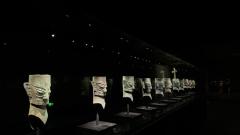
This is the most iconic and mysterious relic at Sanxingdui. Its eyes protrude outward in cylindrical shapes, and its ears are enormous, giving it an otherworldly appearance. To this day, scholars debate its purpose—some believe it was used to observe astronomical phenomena, while others think it was a ritual object used in sacrifices. Its enigmatic design continues to spark curiosity and imagination around the world.
Bronze Sun Wheel
With a diameter of about 85 centimeters, this artifact looks remarkably like a modern steering wheel, with five radiating rays extending from a central hub. Its purpose remains a mystery—some argue it is a symbol of the sun, representing the ancient Shu people’s sun worship, while others believe it was an astronomical instrument used to track the movements of the stars.
Bronze Figure Group
Sanxingdui has unearthed a large number of bronze human figures, each with unique hairstyles, clothing, and physical features. These figures represent people from different social classes in ancient Shu society, providing valuable insights into the social hierarchy and daily life of the time.
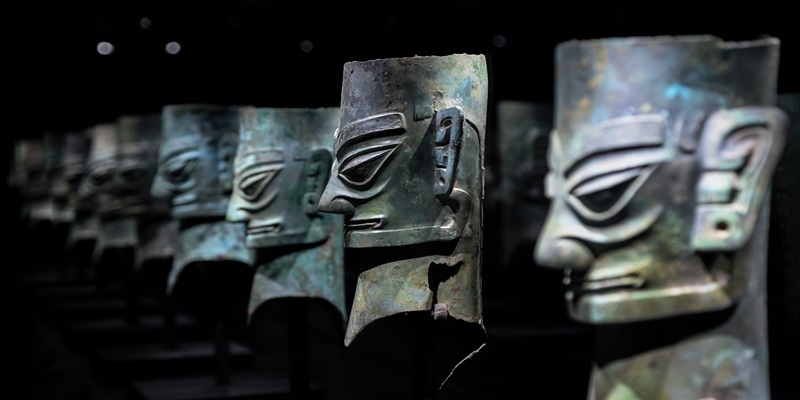
Bronze Mask with Protruding Eyes
Practical Tips about Sanxingdui Museum
To make the most of your visit to Sanxingdui Museum, here are some essential tips that will help you have a smooth and enjoyable experience.
Guided Tours
The relics at Sanxingdui are not only visually stunning but also rich in historical and cultural significance. Without a guide, you may miss out on the fascinating stories and meanings behind many of the artifacts. We highly recommend either renting an audio guide or hiring a human guide.
- Audio guide: Costs 20 RMB per device, with a 100 RMB deposit that is refunded when you return the guide.
- Human guide: Costs 100 RMB per tour for groups of up to 10 people. A professional guide will provide detailed explanations of each relic, bringing the ancient Shu civilization to life.
- Free audio guide: You can also access a free audio guide through the official Sanxingdui Museum WeChat public account. Simply scan the QR code next to each exhibit to listen to the commentary.
Luggage Storage
The museum has a free luggage storage area at the entrance, where you can leave large items such as suitcases and backpacks. This allows you to explore the museum hands-free and enjoy your visit without being weighed down by heavy bags. Be sure to keep your luggage receipt in a safe place so you can retrieve your belongings later.
Dining Options
There are several restaurants and cafes inside the museum that offer a variety of food and drinks, including rice dishes, noodles, sandwiches, coffee, and bottled water. The prices are reasonable, and the food is tasty, making it a convenient place to take a break and refuel during your visit. You can also bring your own food and drinks, but please only eat in the designated dining areas and do not bring food into the exhibition halls.
Photography Rules
Photography is allowed in most areas of the museum, so you can capture memories of your visit and the amazing artifacts. However, the use of flash and tripods is strictly prohibited, as flash can damage the delicate pigments and materials of the ancient relics. Some special exhibits may also have no-photography signs, so please be sure to follow all posted rules.
What to Wear
The museum is air-conditioned and can be quite cold, even on warm days. We recommend bringing a light jacket or sweater to stay comfortable during your visit. Additionally, you will be doing a lot of walking as you explore the large exhibition halls, so be sure to wear comfortable shoes such as sneakers or casual shoes to avoid sore feet.
Avoiding Crowds
If possible, visit the museum on a weekday to avoid the large crowds that come on weekends and public holidays. Weekday visits offer a much more peaceful and enjoyable experience, allowing you to take your time looking at the relics without having to jostle for space. If you can only visit on a weekend, try to arrive as soon as the museum opens at 8:30 AM to beat the rush and see the most popular exhibits before the crowds arrive.
Plan Your Chengdu to Sanxingdui Journey and Unveil a Lost Civilization
Traveling from Chengdu to the Sanxingdui Museum is more than a day trip—it is a fascinating journey through over 3,000 years of history. The museum’s extraordinary artifacts provide rare insights into one of the world’s most mysterious ancient civilizations, making it an essential destination for history enthusiasts, culture seekers, and curious travelers exploring Sichuan.
For a smooth and enriching experience, consider joining a professionally organized tour. China Dragon Travel offers expertly designed Chengdu-to-Sanxingdui tours, including transportation, ticket arrangements, and knowledgeable guides, ensuring an unforgettable and insightful cultural adventure.