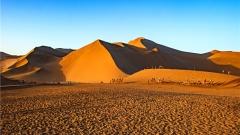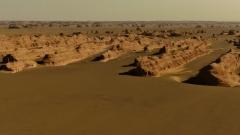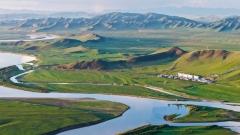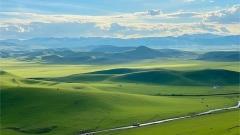

China has a vast territory and diverse landforms, from snow-capped high plateaus in the north to elegant southern water towns, from towering snow-capped peaks to beautiful clear lakes. The most beautiful places in China include stunning natural scenery, time-honored cultural treasures, as well as poetic habitats where humans and nature harmoniously coexist. This article carefully selects nine representative scenic spots in three categories to provide professional and detailed travel guidance for you, helping you plan an unforgettable journey, deeply experience the grandeur of China’s mountains and rivers, and feel the profound charm of its splendid civilization and unique natural landscapes.
Natural Wonders: The Shocking Beauty of the Chinese Land
Natural wonders are masterpieces crafted by nature over hundreds of millions of years, the most shocking chapter among the most beautiful places in China. These scenic spots are famous for their unique geological landforms and stunning ecological landscapes, each showing the magic and grandeur of the earth, allowing people to feel the majestic power and infinite charm of nature.
Zhangjiajie Wulingyuan: Peak Forest Secret Realm
Zhangjiajie Wulingyuan is located in Zhangjiajie City, Hunan Province. It is a world natural heritage and a world geopark, and also a classic representative of karst peak forest landforms among the most beautiful places in China. There are thousands of quartz sandstone peaks standing abruptly here, with various shapes and towering grandeur, like a fairy mountain suspended from the clouds, known as the stunning business card of Chinese landscapes.
- Core Areas: Tianzi Mountain, Yuanjiajie, Yangjiajie, each with its own characteristics. Among them, the Avatar Hallelujah Mountain in Yuanjiajie is world-famous because of the movie scene.
- Featured Landscapes: The clear Jinbian Stream winds through, with ancient trees towering on both banks, singing birds and fragrant flowers, offering an excellent experience of primitive ecology.
- Four-Season Features: Blooming flowers in spring, cool summer resort, dyed forests in autumn, and snow-covered scenery in winter, making it suitable for visiting in all seasons.
Jiuzhaigou: Water Scenery Paradise
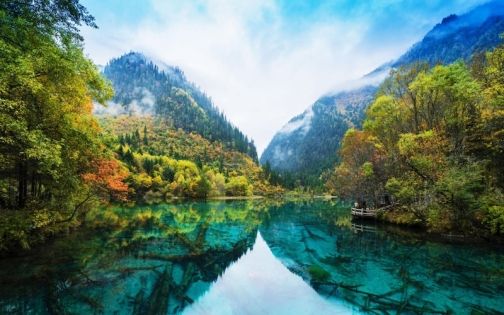
Jiuzhaigou is located in Aba Tibetan and Qiang Autonomous Prefecture, Sichuan Province. It is a world natural heritage and a national 5A-level scenic spot, famous for its stunning water scenery, and is known as the top representative of water scenery among the most beautiful places in China. There are 108 alpine lakes, locally called Haizi, with clear and bottomless water. Under the reflection of sunlight and surrounding vegetation, they show brilliant colors such as sapphire blue, emerald green and goose yellow, like a palette overturned by God.
- Core Scenic Spots: Wuhua Sea and Wucai Pool are the most famous. The water color changes unpredictably and is extremely beautiful.
- Waterfall Landscapes: Nuorilang Waterfall, Pearl Beach Waterfall and other waterfalls pour down, with a majestic momentum, combining grandeur and elegance.
- Best Viewing Period: Autumn, when the forests are dyed with colors, and the colorful forests and colorful lakes set off each other, forming a stunning landscape painting.
Jiuzhaigou
Zhangye Danxia: Painted Earth
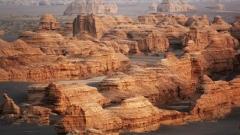
Zhangye Danxia is located in Zhangye City, Gansu Province. It is one of the seven most beautiful Danxia landforms in China and an outstanding representative of color landforms among the most beautiful places in China. It is famous for its distinct layers and gorgeous colors. Red, orange, yellow, green, blue, indigo and purple are interweaved, forming wavy lines with the ups and downs of the mountains, like a rainbow painted on the earth, known as the “Rainbow Mountain of China”.
- Core Areas: Qicai Gorge and Binggou Danxia. Qicai Gorge has more bright colors, especially stunning at sunrise and sunset.
- Featured Value: It not only has beautiful scenery, but also has unique geological scientific research value, a product of hundreds of millions of years of geological movement.
- Viewing Experience: Located in the northwest, it has a wide view. Standing on the viewing platform, you can see the boundless Danxia landform, which is magnificent.
Cultural Landmarks: The Profound Beauty of Chinese Civilization
Cultural landmarks are the crystallization of human civilization, carrying thousands of years of historical memories and cultural heritage of the Chinese nation. They are the most humanistic value chapter among the most beautiful places in China. These scenic spots have witnessed the rise and fall of dynasties and the inheritance of culture, full of a strong sense of history and artistic charm.
Beijing Forbidden City: Imperial City Legacy
Also known as the Forbidden City, the Beijing Forbidden City is located in the center of Beijing’s central axis. It is the imperial palace of the Ming and Qing dynasties, the largest and best-preserved ancient wooden structure complex in the world, and the top representative of ancient architecture among the most beautiful places in China. With red walls and yellow tiles, carved beams and painted buildings, it everywhere reflects the dignity of the imperial family and the exquisite craftsmanship of ancient craftsmen.
- Core Buildings: The three main halls – Taihe Hall, Zhonghe Hall and Baohe Hall, are magnificent and symbolize the imperial power of ancient times.
- Cultural Value: It houses more than 1.8 million precious cultural relics, covering ceramics, jade, calligraphy and painting, which are the essence of Chinese civilization for thousands of years.
- Four-Season Beauty: Flowers bloom on the palace walls in spring, ancient trees are lush in summer, red leaves dot in autumn, and snow covers in winter, each with a unique charm.
Great Wall: Xiongguan Aspiration
The Great Wall is a symbol of the Chinese nation and one of the seven wonders of the ancient world. It stretches for thousands of miles across the mountains in northern China, and is the most majestic humanistic building among the most beautiful places in China. First built in the Spring and Autumn Period and the Warring States Period, unified and built in the Qin Dynasty, and improved in the Ming Dynasty, it has gone through thousands of years of vicissitudes and become a great project in the history of human architecture.
- Essential Sections: Badaling Great Wall is the most well-preserved, with numerous tourists; Mutianyu Great Wall is covered with dense vegetation and beautiful scenery; Simatai Great Wall retains the original ruins and is steep and majestic.
- Spiritual Symbol: It not only is a military defense project, but also carries the wisdom and perseverance of the Chinese nation. Climbing the Great Wall, you can experience the pride of “He who has never been to the Great Wall is not a true man”.
Dunhuang Mogao Caves: Mural Buddhism
Located in Dunhuang City, Gansu Province, the Dunhuang Mogao Caves are a treasure of Buddhist art on the Silk Road, a world cultural heritage, and the peak of grotto art among the most beautiful places in China. Built in the Sixteen Kingdoms period, it has been constructed by generations, with 735 existing grottoes, 45,000 square meters of murals and 2,415 colored sculptures.
- Artistic Features: The murals cover Buddhist stories, myths and legends, and secular life, vivid and lifelike; the colored sculptures are of various shapes, with exquisite craftsmanship, showing the superb artistic level of ancient artists.
- Cultural Value: It is a witness to the cultural exchange on the Silk Road, integrating Chinese and Western cultural elements, with extremely high historical, artistic and scientific research value.
Humanities and Nature: The Harmonious Beauty of Poetic Dwelling
Scenic spots integrating humanities and nature are the most poetic and warm chapter among the most beautiful places in China. They combine beautiful natural scenery with profound humanistic heritage, showing the harmonious coexistence of man and nature and interpreting the Oriental aesthetic of poetic dwelling.
West Lake, Hangzhou: Poetic Dwelling
Located in Hangzhou City, Zhejiang Province, West Lake is a world cultural heritage, known as the “Paradise on Earth”, and a classic example of the integration of humanities and nature among the most beautiful places in China. Surrounded by mountains on three sides and facing the city on one side, the lake is clear and beautiful, with Su Causeway and Bai Causeway lying across the lake, and scenic spots such as Three Pools Mirroring the Moon, Leifeng Pagoda and Broken Bridge known all over the world.
- Cultural Heritage: Poets such as Su Dongpo and Bai Juyi left numerous poems here, and folk stories such as the Legend of the White Snake added a romantic color to it.
- Travel Experience: You can take a boat on the lake to enjoy the lake scenery, walk along the causeway to smell the flowers and listen to the birdsong, or visit Lingyin Temple to feel the Zen atmosphere.
- Ten Scenes of West Lake: Each scene has its own charm, with blooming flowers in spring, cool lotus in summer, clear moon in autumn and snow on the broken bridge in winter.
Huangshan, Anhui: Strange Pine Painting Scene
Huangshan is located in Huangshan City, Anhui Province. It is a world natural and cultural dual heritage, known as the “Most Fantastic Mountain in the World”, and a representative of the integration of humanities and nature among the most beautiful places in China. It is famous for its five wonders: strange pines, grotesque rocks, sea of clouds, hot springs and winter snow, which are breathtaking.
- Natural Wonders: Welcome Pine, Feilai Stone and Guangming Top are world-famous scenic spots. Standing on Guangming Top, you can watch the sunrise and the sea of clouds rolling.
- Cultural Heritage: Ancient literati and poets flocked here, leaving countless poems and ink paintings, and the temples, pavilions and cliff carvings in the mountains are integrated with the natural scenery.
- Four-Season Experience: Blooming flowers in spring, cool summer resort, red leaves like fire in autumn and snow like paintings in winter, suitable for visiting in all seasons.
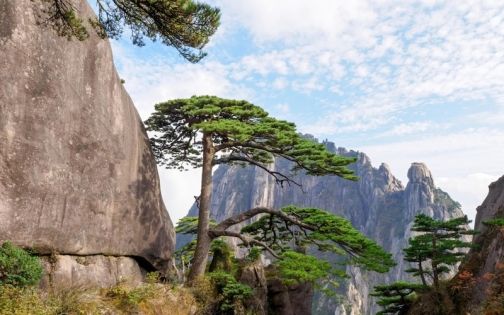
Huangshan, Anhui
Wuyi Mountain, Fujian: Blue Water and Tea Rhyme
Wuyi Mountain is located in Nanping City, Fujian Province. It is a world natural and cultural dual heritage, and a model of the integration of tea culture and natural landscape among the most beautiful places in China. With clear blue water and red cliffs, the Jiuqu Stream winds through the mountains, and you can feel the artistic conception of “boating on the blue waves, walking in the painting” by taking a bamboo raft.
- Cultural Features: It is one of the birthplaces of Chinese tea culture. Wuyi Rock Tea, especially Da Hong Pao, is world-famous. You can experience picking, making and tasting tea here.
- Humanistic Heritage: It is the birthplace of Zhu Xi’s Neo-Confucianism. Wufu Town and Wuyi Academy are full of humanistic atmosphere.
- Natural Scenery: The peaks stand tall, the streams are clear, and the combination of mountains and waters forms a beautiful picture of nature.
Travel Tips: Essential Guide for Travel
No matter which of the most beautiful places in China you travel to, reasonable planning of travel details can make the journey more worry-free and comfortable. The following sorts out general viewing and travel tips applicable to all scenic spots in the article to help you have a better travel experience.
- Best Travel Time: It is recommended to visit natural wonders in spring and autumn, when the climate is comfortable and the scenery is the best; cultural landmarks can be visited in all seasons, avoiding holiday peaks for a better experience.
- Traffic Tips: For remote scenic spots, you can first arrive at the local provincial capital or core city, then transfer to a passenger bus or scenic spot special line; some scenic spots require taking a sightseeing bus to save physical strength.
- Notes: Wear comfortable and non-slip shoes when visiting natural scenic spots with many mountain roads and plank roads; do not scribble in cultural landmarks to protect cultural relics.
Scenery Extension: More Chinese Beauty Recommendations
China has a vast territory. In addition to the nine selected scenic spots in the article, there are countless hidden beautiful sceneries worth exploring, which are also the most beautiful places in China, each with its own charm and no less stunning than the selected ones.
- Lijiang Ancient Town: With blue bricks and black tiles, the Naxi culture is hidden between the streets and alleys, and the flowing water passes through the town, full of ancient charm, which is another model of the integration of humanities and nature.
- Guilin Landscape: “Guilin’s landscape is the best in the world” is well-deserved. The clear water surrounds the green mountains, and the bamboo rafts float on the blue waves, which is one of the most poetic representatives of natural wonders.
Set Off Now: Embark on the Most Beautiful Journey in China
The significance of travel lies in walking through different scenery and meeting a different self. The most beautiful places in China are far more than those listed in the article. Every piece of land hides unknown surprises, and every departure will bring unique touches.
Whether traveling alone or with family and friends, you might as well pack your bags and walk into these scenic spots favored by time, measure the mountains and rivers of the motherland with your feet, record the collision between nature and humanity with your eyes, make every journey full of warmth and strength, and let the most beautiful places in China become the most precious travel memories in your heart.