
Gansu’s expansive Gobi deserts, where the soothing cadence of camel bells resonates in a rhythmic symphony, meld seamlessly with the enchanting Danxia formations, intertwining to forge a rich tapestry of cultural patrimony that stretches across its grand vistas. The fabled Jiayuguan Pass serves as an unyielding sentinel, the western bulwark of the Ming Dynasty’s Great Wall, preserving the hallowed murmurs of history within its inviolable ramparts.
Core Charms Of Jiayuguan: Two Unmissable Heritage Sites
Visiting Jiayuguan in Gansu, its soul lies in two world-renowned cultural heritage sites: the majestic pass and the winding Great Wall. Complementing each other, they form the unique historical picture of this land. Stepping into it, you will immediately understand the profound intention of the ancients to build a pass here. The narrow oasis corridor nourished by the melting snow of the Qilian Mountains stands in sharp contrast to the vast gobi and continuous mountain ranges in the north, where Jiayuguan, Gansu is located, guarding the important thoroughfare of east-west transportation. This geographical advantage endows it with spiritual value beyond the building itself.
The Most Majestic Pass Under Heaven: Jiayuguan Pass
This well-preserved ancient military castle is the iconic landmark of Jiayuguan, Gansu. Composed of the inner city, outer city, Luo City, Weng City, and numerous watchtowers and enemy towers, it has an exquisite structure and a rigorous defense system. Wandering around, three towering main city towers—Guanghua Tower, Rouyuan Tower, and Jiayuguan Tower—are arranged in sequence, imposing and magnificent. The stone slabs underfoot have been polished smooth by time, as if you can still hear the footsteps of garrison soldiers patrolling and the hustle and bustle of merchant caravans passing through the pass in the past. The Guerrilla General’s Mansion in the pass has restored the scenes of the former garrison commander handling military affairs and daily life, showing the rigor and routine of border life from another perspective. Standing on the 17-meter-high city wall and looking out, the Qilian snow-capped mountains in the south stretch endlessly, the Heishan Mountain Range in the north looms faintly, and the vast gobi lies under your feet. The heroism and desolation of “the most majestic pass under heaven” come rushing towards you, an experience that no picture can fully convey.
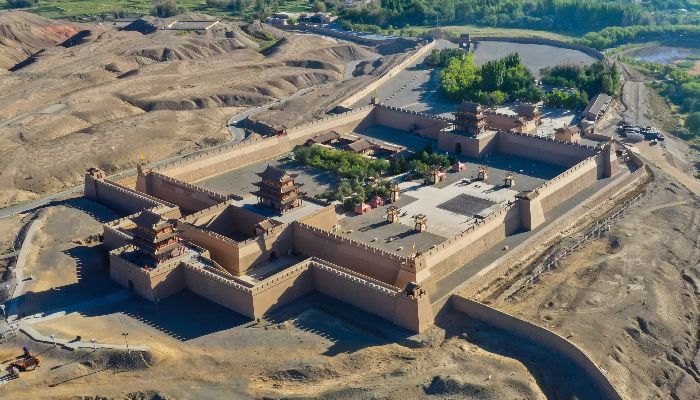
Jiayuguan Pass
Overhanging Great Wall: A Giant Dragon Climbing The Ridge
About 8 kilometers away from the pass is the famous Overhanging Great Wall. As an important extension of Jiayuguan Pass’s defense system, it is built on the steep ridge of Heishan Mountain with a slope of about 45 degrees, looking like it is hanging in the air, hence the name. Unlike many well-restored sections of the Great Wall, the Overhanging Great Wall retains more of its original and dangerous military features. The climbing process itself is an experience—using both hands and feet to climb up the ancient trails, each step makes you feel the difficulty of construction and the hardship of guarding the border. When you finally reach the top and look back at the city wall winding like a giant dragon’s spine on the jagged mountains, you can truly appreciate the outstanding wisdom of the ancients in “using local materials and building fortifications according to the terrain”. The strong mountain wind howls past, and the view stretches to the endless wilderness. At this moment, the loneliness and grandeur of history interweave, leaving people deeply shocked.
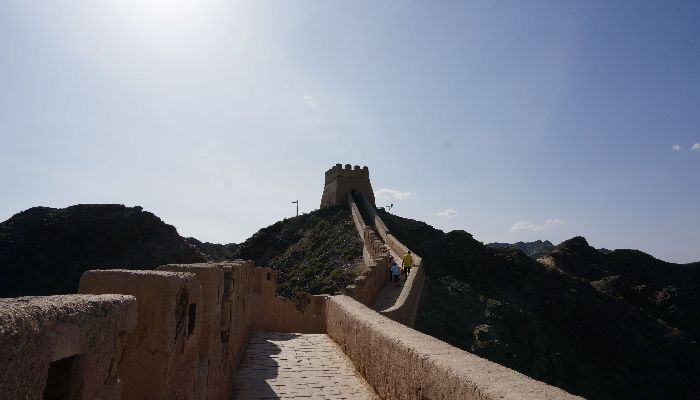
Overhanging Great Wall
Plan Your Jiayuguan Trip: Time, Transportation & Accommodation
To deeply experience the majesty and grandeur of Jiayuguan in Gansu, careful pre-trip planning is indispensable. It allows you to integrate more freely into the historical accumulation and natural scenery of this land. The travel rhythm here is closely related to the local climate and terrain. A detailed itinerary not only affects the comfort of the trip but also determines whether you can perceive the profound connotation of this land. Whether choosing which season to visit, which transportation method to use to connect various attractions, or where to stay to relieve the fatigue of the day, you should fully consider the unique conditions of the gobi desert.
Best Visiting Season
Spring (May to June) and autumn (September to October) are undoubtedly the golden periods to visit Jiayuguan, Gansu. At this time, the climate of the Hexi Corridor is the most pleasant, with warm sunshine during the day and temperatures usually between 15°C and 25°C. Although it is cool at night, it is not extremely cold. In spring, occasional spots of green can be seen on the gobi, the snow line of the Qilian Mountains is clear, and the sky is bright blue with extremely high visibility, making it perfect for taking magnificent photos of the pass and snow-capped mountains together. In autumn, the sky is high and the clouds are light, the air is transparent, and the poplar forests may turn golden yellow, adding warm colors to the desolate scenery. These two seasons have relatively little wind and sand, greatly improving the comfort of outdoor visits. In summer (July-August), the sunshine is intense, and the daytime temperature may exceed 30°C, but the advantage is that the sunset time is late, allowing ample visiting time. In winter (November to March of the following year), you can see the solemn and wonderful scene of the majestic pass covered in white snow, but the climate is cold, some remote scenic areas may have limited opening hours, and strict windproof and warm-keeping measures are required. Whenever you visit, it is essential to prepare for sun protection, moisturization, and coping with temperature differences and occasional wind and sand at any time.
How To Arrive & Local Transportation
Arriving in Jiayuguan, Gansu is already the beginning of traveling through the geographical picture of northwest China. Jiayuguan Airport and Jiayuguan South Railway Station (high-speed rail station) form convenient air and railway gateways. From major cities such as Beijing, Shanghai, and Xi’an, you can choose direct flights or connecting flights via Lanzhou. If you prefer land scenery, taking the high-speed rail from Lanzhou to Jiayuguan South Railway Station takes about 4-5 hours, and you can enjoy the changing western landforms along the way, which is a good transition for the trip. Once you arrive in the urban area, the key is how to efficiently visit the scattered attractions. The transportation from the urban area to Jiayuguan Pass is convenient, and it takes about 20 minutes by taxi or ride-hailing car. However, if you plan to visit Jiayuguan Pass, Overhanging Great Wall, First Pier of the Great Wall and other attractions in one day, chartered car is undoubtedly the most recommended way. This not only saves time spent transferring and waiting between different bus stops but also allows you to flexibly arrange the stay time at each attraction according to your physical strength and interests. Drivers are usually familiar with the roads and the best viewing spots. For travelers who want a more worry-free trip with professional explanations, booking a one-day tour or customized service including transportation through local service agencies like China Dragon Travel is also a common and reliable choice. They can properly handle ticket booking and route connection.
Accommodation Recommendations
Although Jiayuguan’s urban area is not very large, the accommodation industry is mature and can meet the needs of different travelers. Location is the primary consideration when choosing accommodation. It is recommended to prioritize hotels in the city center or near Xiongguan Square and Xinhua Road. Here, restaurants are concentrated, shopping is convenient, and transportation to the railway station, airport, or major attractions is more accessible. There are various options from budget chain hotels to four-star and above business hotels. International chain brand hotels offer standardized comfort and services; local high-end hotels may incorporate more Chinese-style design elements. If you have higher requirements for accommodation, you can choose newly built hotels in recent years, which usually have more novel facilities. It should be noted that during the peak tourist season (especially National Day holidays and summer weekends), rooms may be tight and prices will rise, so advance booking is advisable. Most hotels can assist guests in arranging transportation or providing simple travel consulting; you can take the initiative to ask when checking in.
In-Depth Exploration: Surrounding Related Attractions & Itinerary Ideas
The profound history of Jiayuguan, Gansu does not exist in isolation within the pass. If time permits, visiting several nearby highly relevant attractions can help you form a complete understanding of this border history. They are like scattered puzzle pieces, together depicting the complete picture of the ancient military defense system and the profound cultural accumulation of the local area. These attractions may not be as famous as the pass, but it is they that enrich the story of Jiayuguan, Gansu from different dimensions—some reveal the starting point and geographical foundation of the defense system, while others show the earlier, lively daily life on this land. Stepping into them, your journey will upgrade from simply “viewing the majestic pass” to an in-depth dialogue of “understanding the borderland”.
First Pier Of The Great Wall: The True Western Starting Point Of The Ming Dynasty Great Wall
Located about 7.5 kilometers south of Jiayuguan Pass, this seemingly inconspicuous earthen pier is the symbol of the western starting point of the Ming Dynasty Great Wall—Taolai River Pier. Standing on the edge of a cliff nearly 80 meters deep by the Taolai River, its strategic significance lies in guarding the natural danger of the river course. Today, standing on the glass observation platform next to it and looking down, you can see the deep canyon cut by the turbulent Taolai River under your feet, and the vast gobi on the opposite bank, making the dangerous terrain clear at a glance. There are no majestic city towers here, but with a nearly primitive, geographical shock, it tells you why the Great Wall started here. Together with Jiayuguan Pass and Overhanging Great Wall, it constitutes a complete three-dimensional defense display.
Wei-Jin Mural Tombs: Underground Art Galleries
If you want to understand the social life scene of Jiayuguan, Gansu before it became a military fortress, the Xincheng Wei-Jin Mural Tomb Group in the eastern suburbs of the urban area is an unmissable treasure. These ancient tombs, dating back about 1,700 years, have unearthed a large number of colored brick paintings. The murals cover a wide range of contents, depicting scenes such as farming, animal husbandry, mulberry picking, banquets, travel, and hunting, with concise and vivid brushwork and full of life. These “underground galleries” vividly record the prosperity and cultural exchange of the Hexi Corridor during the Wei-Jin period, adding a vivid and warm cultural color to this land famous for its majestic pass, allowing people to see a different daily life picture beyond the beacon fires and wars.
Practical Travel Tips & Cultural Respect
When traveling in Jiayuguan, Gansu, some small preparations can make the experience smoother.
- Climate and Equipment: The northwest region has strong sunshine and large temperature differences between day and night. Whenever you visit, high-multiplier sunscreen, sunglasses, sun hats, and lip balm are essential. A pair of comfortable and durable shoes is crucial. Prepare a windproof jacket for spring and autumn, and thick cold-proof clothing for winter.
- Ticket Purchase and Visiting: Tickets for core attractions can be purchased on-site or through officially recognized online platforms. Jiayuguan Pass Scenic Area is relatively large, so it is recommended to reserve at least 3 hours for visiting. Electric vehicles may be available for transportation in some scenic areas, which can be chosen according to physical strength.
- Cultural Respect: Jiayuguan is an important historical site. Please abide by the regulations during the visit, do not carve on the city bricks, and protect cultural relics and historic sites. The local people are simple and honest, and friendly communication is sufficient.
Echoes From The Majestic Pass To The Heart
Whether evoking the majestic panorama of ancient merchant caravans traversing the pass or caressing the weathered wall stones with one’s own hands, Jiayuguan in Gansu has the power to bestow upon every visitor an overwhelming spiritual resonance. It stands not merely as a geographical milestone but also as a palpable historical demarcation, quietly narrating tales of stewardship, interaction, and the relentless march of time. Plan your visit meticulously, and you will find yourself leisurely enveloped in an aura of grandeur that transcends time and space. For those intrepid travelers keen on delving deep into this epoch and seeking convenient passage through the Gobi, enlisting the expertise of seasoned institutions such as China Dragon Travel, with their intimate familiarity with the historical thoroughfares of the northwest, frequently enhances the journey’s depth. It affords you the opportunity to engage fully with this ancient terrain, ensuring a travel experience that exceeds anticipation and resonates with enduring memories.