
If you have watched the documentary Hexi Corridor, you probably understand why so many travelers become fascinated with this historic route.
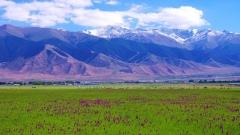
Stretching across the vast landscapes of Northwest China, the Hexi Corridor was once the lifeline of the ancient Silk Road. Snow-capped mountains, deserts, Buddhist caves, ancient passes, and oasis towns all come together here to tell a story that spans more than two thousand years.
Last summer, my family of three spent 10 days traveling along the Hexi Corridor. We visited more than 30 attractions from Lanzhou to Dunhuang, and the experience left a lasting impression. Even now, looking back at the photos still brings back the excitement of that journey.
This year, while planning another summer trip along the Qinghai–Gansu Grand Loop, I realized there were still a few places we missed last time—such as Jiuquan, Shandan Horse Ranch, and the ancient Xuanquan Posthouse. That inspired me to organize all the practical information from our previous trip into this detailed guide.
If you are planning to follow the route of the documentary and explore the Hexi Corridor yourself, this guide covers the route, attractions, transportation, costs, and travel tips.
Hexi Corridor
Best Time to Visit the Hexi Corridor
The Hexi Corridor can be visited year-round, but each season offers a different experience.
April – June (Best Season)
Comfortable weather, fewer tourists, and greener landscapes as spring arrives.
July – August (Summer Peak Season)
The scenery is at its most vibrant, but crowds are larger. Popular attractions such as Mogao Caves require advance reservations.
September – October (Autumn Golden Season)
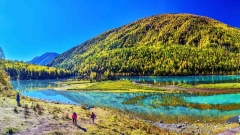
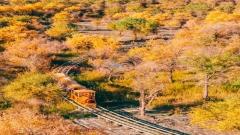
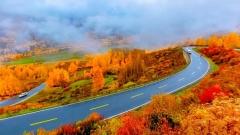
Stable weather and beautiful autumn colors, especially the famous poplar forests.
Winter
Very few tourists and lower prices, but some attractions may have limited access.
For a balance between scenery and crowd levels, May and September are ideal months to visit.
Classic 10-Day Itinerary
The core cities along the Hexi Corridor are:
Lanzhou → Wuwei → Zhangye → Jiayuguan → Dunhuang
Suggested itinerary:
Day 1 – Lanzhou
Day 2 – Lanzhou → Wuwei
Day 3 – Wuwei → Zhangye
Day 4 – Zhangye
Day 5 – Zhangye
Day 6 – Zhangye → Jiayuguan
Day 7 – Jiayuguan → Dunhuang
Day 8 – Dunhuang
Day 9 – Dunhuang
Day 10 – Departure
The entire route is roughly 1,000 km, making it perfect for either self-driving or hiring a private car.
Hexi Corridor
Top Attractions Along the Hexi Corridor
Pingshanhu Grand Canyon
Rating: ★★★★★
This canyon near Zhangye is one of the most underrated natural attractions in Gansu.
Its landscapes resemble a mix between the American Southwest and desert slot canyons, yet far fewer tourists visit here.
Activities include:
• Off-road vehicle tours
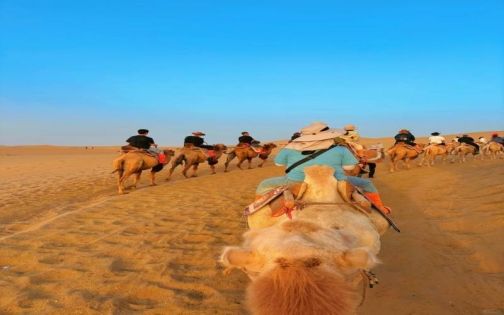
• Camel riding
• Camel cart rides
• Hiking through narrow canyons
• Sunset photography
At sunset, the canyon walls glow with warm orange and red tones. If you enjoy hiking, you can continue deeper into the canyon toward Lingzhi Valley for spectacular views.
Mati Temple Grottoes
Rating: ★★★★★
Located in the Qilian Mountains, Mati Temple is a scenic complex of temples and grottoes carved into cliffs.
The highlight is the Thirty-Three Heavenly Grottoes, which require climbing steep wooden ladders built along the cliff face.
If you manage to reserve access to Jinta Temple, the journey itself is said to offer even more breathtaking scenery.
Plan at least half a day to a full day here.
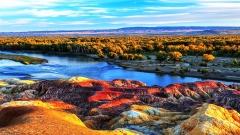
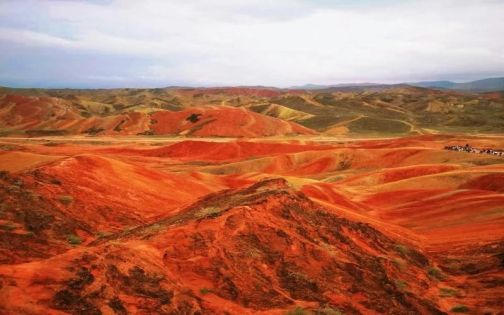
Zhangye Rainbow Danxia
Rating: ★★★★★
One of the most famous geological landscapes in China.
The colorful mountains resemble layered “rainbow stripes” and look especially impressive during sunrise or sunset.
For a unique perspective, you can take a helicopter tour to see the entire Danxia landform from above.
Yulin Caves
Rating: ★★★★★
Often overshadowed by the famous Mogao Caves, Yulin Caves are quieter but equally fascinating.
Must-see special caves include:
Cave 3 – Manjusri and Samantabhadra murals
Cave 2 – Water-Moon Avalokitesvara
Cave 25 – Amitabha Sutra murals
The famous Chinese artist Zhang Daqian once studied and copied murals here.
For travelers interested in Buddhist art and Silk Road history, this site is highly recommended.
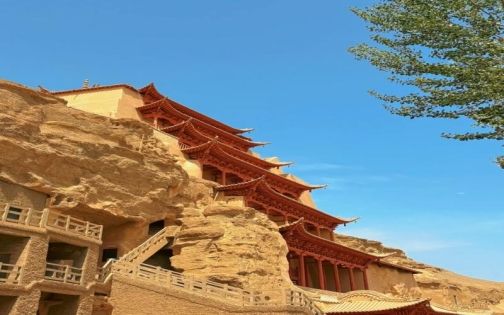
Mogao Caves
Rating: ★★★★★
The most important cultural heritage site along the Silk Road.
It is best to dedicate an entire day to exploring the complex.
Typical visiting process:
Digital theater introduction
Guided visit to regular caves
Optional visit to special caves
Besides the caves themselves, several nearby museums are worth visiting:
Dunhuang Library Cave Exhibition
Dunhuang Academy Art Museum
Replica Cave Exhibition Center
These provide deeper insight into the art and preservation of the caves.
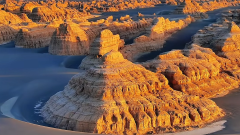
Yadan National Geopark (Devil City)
Rating: ★★★★★
A dramatic desert landscape shaped by wind erosion.
The rock formations resemble abandoned cities rising from the desert.
Suggested experience:
Shuttle bus tour
Transfer to off-road vehicle for deeper exploration
Sunset here is spectacular as the entire desert turns golden.
Mingsha Mountain and Crescent Lake
Rating: ★★★★☆
One of Dunhuang’s most iconic attractions.
Popular activities include:
Camel riding
Sand sliding
Climbing sand dunes
Sunset photography
Half a day is usually enough. Sunset views over the Crescent Lake are especially beautiful.
Jiayuguan Pass
Rating: ★★★★☆
The westernmost fortress of the Great Wall during the Ming Dynasty.
Standing on the ancient walls, you can see the vast desert stretching toward the Qilian Mountains.
This was once the final gateway between China and the Western Regions.
Yumenguan (Jade Gate Pass)
Rating: ★★★★☆
Immortalized in ancient poetry:
“Beyond the Jade Gate Pass, the spring wind never blows.”
Today only ruins remain, but standing in the vast desert gives a powerful sense of Silk Road history.
Leitai Han Tomb
Rating: ★★★★☆
Located in Wuwei, this site is famous as the discovery place of the legendary Flying Horse of Gansu, one of China’s most iconic bronze sculptures.
City Experiences
Lanzhou
Lanzhou is not very large, and two days are enough.
Recommended places:
Baita Mountain
Yellow River Iron Bridge
Zhengning Road Night Market
Local food highlights include:
Lanzhou Beef Noodles
Hand-pulled noodle dishes
Prices in Lanzhou are quite reasonable.
Zhangye
Food here tends to be oily and spicy.
Recommended restaurant:
Wandong Alley Hot Pot
Some places such as Ming-Qing Ancient Street and Ganquan Park are relatively small and less impressive compared with the main attractions.
Dunhuang
My favorite city on the entire route.
Although small, it is filled with Silk Road culture.
Recommended photo spots:
Dunhuang Bookstore
Dunhuang Printing House
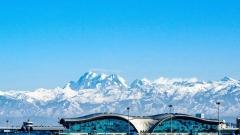
Dunhuang Airport is also very convenient—usually only about 30 minutes from hotel to boarding.
Hexi Corridor
Transportation Tips
The two best ways to explore the Hexi Corridor are:
Private car with driver – convenient for first-time visitors
Self-driving – ideal for flexible travel
Between cities you can also take:
High-speed trains
Regular trains
Domestic flights
During our trip we mostly used trains plus private car transfers.
Travel Cost Reference
For our family trip:
4 people
9 days
Total cost was approximately 16,000 RMB.
Main expenses included:
Flights
Hotels
Car rental
Entrance tickets
Prices can be significantly higher during the summer holiday season.
Hexi Corridor
Travel Tips
• The climate is very dry, bring moisturizer and lip balm.
• Sun protection is essential because UV levels are strong.
• Reserve Mogao Cave tickets in advance.
• Distances between attractions are large, so private transport is recommended.
• Watching the Hexi Corridor documentary beforehand greatly enhances the travel experience.
Places I Plan to Visit Next Time
Even after a 10-day trip, the Hexi Corridor still has more to explore.
On my next trip I plan to visit:
Jiuquan
Shandan Horse Ranch
Xuanquan Posthouse
The real charm of the Hexi Corridor is not just its landscapes, but its sense of history. When you stand among ancient fortresses, desert ruins, and Buddhist caves, it truly feels like walking through more than two thousand years of civilization.