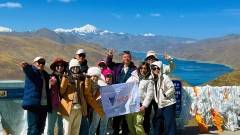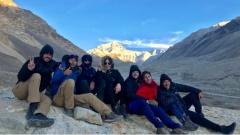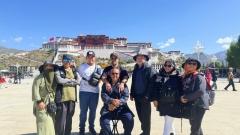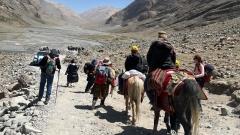

Some roads are built to connect cities.
Others exist to transform the people who travel them.
Highway 318 belongs firmly to the latter.
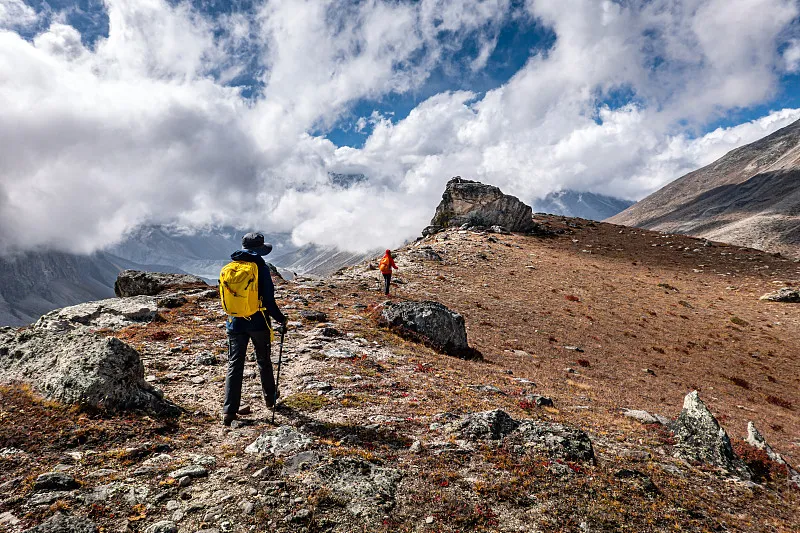
Stretching across China from the eastern lowlands to the Tibetan Plateau, Highway 318 is more than a transportation route. It is a gradual ascent — not only in altitude, but in perception. For those who follow it westward into Tibet, the road becomes a long conversation between land and traveler, movement and stillness, effort and meaning.
What Is Highway 318?
Highway 318 is one of the longest national highways in China, running over 5,400 kilometers from Shanghai to the Tibetan border town of Zhangmu. While its full length crosses multiple provinces and landscapes, the section that has captured the imagination of travelers worldwide is the Sichuan–Tibet segment, commonly known as the southern route into Tibet.
This stretch begins in Chengdu, crosses the mountains of western Sichuan, and winds its way through deep valleys, high passes, and remote plateaus before finally reaching Lhasa.
It is here — between the last plains and the high plateau — that Highway 318 reveals its true character.
Why Highway 318 Is Considered One of the World’s Great Road Trips
Few roads on Earth compress such extreme contrasts into a single journey.
Over the course of days or weeks, travelers experience:
-
Elevation changes from near sea level to over 5,000 meters
-
Shifts from subtropical valleys to alpine tundra
-
River gorges carved thousands of meters deep
-
Snow-capped peaks rising without warning beyond the next bend
This is not a road designed for speed. It demands patience, awareness, and respect. In return, it offers immersion — a rare quality in modern travel.
From Basin to Plateau:
A Gradual Ascent into Another World
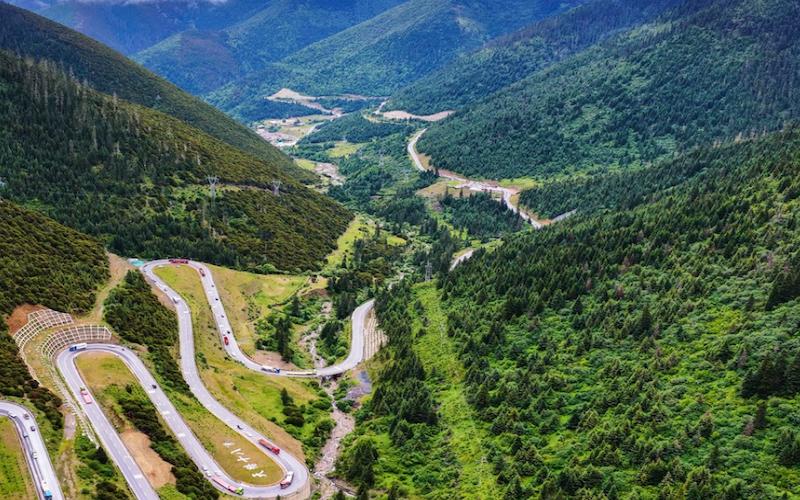
The journey typically begins in the fertile Sichuan Basin, where life feels familiar and accessible. As the road climbs westward, signs of the plateau begin to emerge: thinner air, broader skies, slower rhythms.
Passing through towns like Kangding, travelers encounter the threshold between worlds — culturally, geographically, and emotionally. From here, the road becomes less predictable. Weather changes abruptly. Distances stretch. Time loosens its grip.
By the time the plateau opens fully near Litang, often called one of the highest towns on Earth, travelers realize they are no longer simply going somewhere. They are undergoing something.
Landscapes That Resist Simplification
Highway 318 is not defined by a single iconic view. Its power lies in continuity.
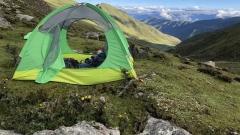
One moment, the road traces a roaring river deep in a canyon; the next, it emerges onto a vast grassland where the horizon dissolves into sky. Snow passes rise suddenly, only to descend into forests dense with moss and mist.
These transitions are not gentle. They are abrupt and uncompromising — reminders that the land here is not curated for comfort.
Human Life Along the Road
Despite its reputation for remoteness, Highway 318 is not empty.
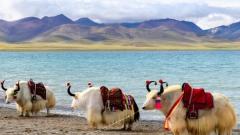
Along its course are Tibetan villages, monasteries, nomadic camps, and roadside tea houses. Prayer flags flutter above mountain passes. Pilgrims prostrate themselves along the roadside, measuring distance not in kilometers, but in devotion.
The road does not dominate these lives. It passes through them quietly.
For travelers willing to slow down, these encounters often leave deeper impressions than the landscapes themselves.
Different Ways to Travel Highway 318
There is no single “correct” way to experience this road.
-
Self-drive journeys offer independence but demand preparation and humility
-
Motorcycle and cycling expeditions turn the route into a test of endurance and discipline
-
Private vehicle or small-group travel allows deeper engagement without logistical strain
What matters most is not the method, but the mindset. Highway 318 does not reward haste.
The Psychological Landscape of the Journey
Long before reaching Tibet, many travelers notice a shift within themselves.
Days on the road reduce life to essentials: movement, rest, weather, light. Without constant stimulation, thoughts surface more clearly. Concerns that once felt urgent begin to lose weight.
At altitude, the body slows. Breathing becomes deliberate. Awareness sharpens.
This is where Highway 318 reveals its second nature — not as a road, but as a mirror.
Why This Road Feels Spiritual — Even Without Religion
Highway 318 does not require belief. It offers perspective.
Confronted with scale — mountains that dwarf imagination, distances that resist compression — the sense of personal centrality softens. What remains is presence.
Many describe this as a spiritual experience, not because it teaches doctrine, but because it reorders priorities.
Arrival in Lhasa:
The End of the Road, or the Beginning?
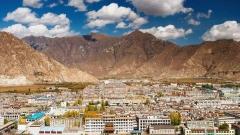
When travelers finally reach Lhasa, the sense of arrival is complex.
There is relief, certainly. Pride. Gratitude. But often, there is also a subtle loss — the realization that the journey’s intensity cannot be sustained forever.
Lhasa becomes meaningful not just as a destination, but as a culmination of everything that came before.
The road has done its work.
Highway 318 and the Meaning of Travel
In an era where travel is increasingly optimized, filtered, and abbreviated, Highway 318 stands as a counterargument.
It suggests that distance still matters.
That effort shapes experience.
That transformation requires time.
This road cannot be summarized in highlights or shortcuts. It insists on being lived sequentially, moment by moment.
A Road That Changes Those Who Follow It
Highway 318 does not promise comfort, efficiency, or ease. What it offers is rarer — authentic encounter.
With land.
With silence.
With oneself.
For those willing to accept its terms, this epic road trip becomes more than a passage into Tibet. It becomes a journey inward — one that continues long after the road ends.