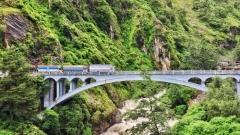

Traveling from Hong Kong to Lhasa, Tibet by train is a unique travel route connecting modern cities with the snow-capped plateau. The key to this journey lies in segmental transfers: you first need to reach a major mainland transportation hub, then transfer to the famous Qinghai-Tibet Railway train. The whole process involves multiple links such as ticket purchasing, long-distance travel, and plateau adaptation. Understanding these in advance can make your trip much smoother. This guide will explain the specific route choices, how to successfully buy tickets, what life on the train is like, what scenery you can see along the way, and all the preparations you need to make in advance step by step.
How to Choose Hong Kong to Lhasa Train Routes & Transfer Cities
Currently, there is no direct train from Hong Kong to Lhasa, so you need to plan a “high-speed rail + regular-speed train” intermodal scheme. The core is to first take the high-speed rail from Hong Kong to a major mainland city, then take a train to Lhasa from that city.
The two most common routes are as follows:
Route 1: Transfer via Guangzhou or Changsha
This is the most convenient choice for departures from South China.
- First Leg: Take the Guangzhou-Shenzhen-Hong Kong High-Speed Rail from Hong Kong West Kowloon Station, which takes about 1 hour to reach Guangzhou South Station. You can also choose to travel to Changsha South Station.
- Second Leg: Transfer to a direct express train to Lhasa in Guangzhou or Changsha. For example, Train Z264/Z265 departing from Guangzhou is the only direct sleeper train to Tibet in South China, which is very popular and tickets are relatively hard to buy.
Route 2: Transfer via Beijing or Shanghai
If you plan to visit northern or eastern cities along the way, you can choose this route.
- First Leg: Take the high-speed rail from Hong Kong West Kowloon Station to Beijing West Station or Shanghai Hongqiao Station, which takes most of a day.
- Second Leg: Take Train Z21 from Beijing West Station or Train Z164/Z165 from Shanghai Station to Lhasa. These trains are also popular, especially Train Z164, which is famous for its beautiful scenery along the way.
Regardless of which route you choose, the train travel time from mainland cities to Lhasa is about 40 to 55 hours. Be sure to leave sufficient transfer time between the two trips, preferably at least 3 to 4 hours, to cope with possible delays of the previous train and complete the transfer procedures.
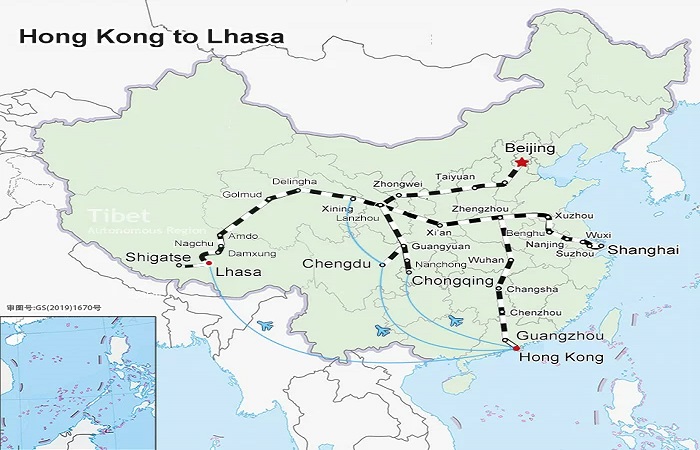
Multiple 0ptions to Travel from Hong Kong to Tibet
How to Buy Train Tickets: Time, Costs & Tips
Purchasing intermodal train tickets from Hong Kong to Lhasa is a key step in planning the trip, especially since tickets for the Tibet-bound section are often in short supply.
Ticketing Time and Channels
– Mainland Section Tickets (Qinghai-Tibet Railway): Must be purchased through official China Railway channels. The most recommended is the official “12306” APP (requires registration with a mainland mobile phone number or email). Tickets are usually available for purchase 15 days in advance (including the departure date), with specific ticket release times mostly at 1 PM or 2 PM daily. Be sure to set a reminder and buy tickets immediately when they go on sale.
– Hong Kong Section Tickets (Guangzhou-Shenzhen-Hong Kong High-Speed Rail): Can be purchased via the 12306 APP, China Travel Service (Hong Kong), MTR Corporation’s official website, or at the West Kowloon Station ticket counter. Ticket supply is relatively sufficient.
Approximate Costs (Prices are subject to fluctuation)
Costs vary greatly depending on seat class and season. Taking Train Z264 from “Guangzhou to Lhasa” as an example:
– Hard Seat: Approximately CNY 450. Not recommended, as the journey is long and the altitude is high, making sitting very tiring.
– Hard Sleeper: Approximately CNY 800 to 900. This is the most cost-effective and popular choice.
– Soft Sleeper: Approximately CNY 1,400 to 1,500. The compartments are more private and the berths are more comfortable, suitable for those with high requirements for sleeping environments.
– High-speed rail tickets from Hong Kong to Guangzhou are approximately CNY 200 to 250.
In total, the one-way train fare from Hong Kong to Lhasa usually ranges from CNY 1,000 to 1,800 (corresponding to Hard Sleeper to Soft Sleeper). Prices may be higher during the peak tourist season (May to October), and tickets are even harder to buy.
Practical Ticketing Tips
– Split Ticketing: If direct tickets are sold out, try buying them in segments. For example, first buy a ticket to Xining, then separately buy a ticket from Xining to Lhasa. Xining is the starting point of the Qinghai-Tibet Railway, and there may be remaining tickets sometimes.
– Use the Waitlist Function: On the 12306 APP, if tickets are sold out, you can submit a waitlist order. When someone cancels a ticket, the system will automatically purchase it for you in order.
– Pay Attention to Temporary Trains: During the peak season, the railway department may add temporary trains to Tibet. Pay more attention to relevant information.
– Consider Seeking Help from a Travel Agency: If you find it troublesome to operate by yourself, you can consult a reliable travel agency to help book intermodal tickets. For example, China Dragon Travel often handles such complex transportation connections and can provide feasible transfer plans and ticketing support.
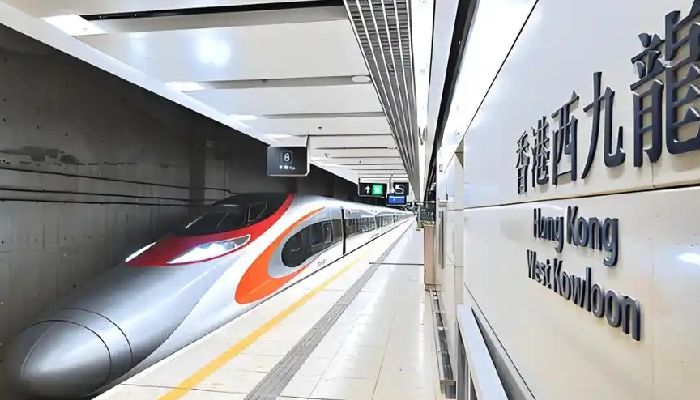
High-Speed Train Departure from Hong Kong West Kowloon Station
On-Train Facilities & Essential Items to Prepare
This train journey lasts for two days and two nights. Understanding the situation on the train and bringing the right items can significantly improve comfort.
Basic Carriage Information:
– Oxygen Supply System: Starting from Golmud Station, the train will activate the diffused oxygen supply for the entire carriage. Each sleeper berth also has an independent oxygen inhalation port, which can be used if you feel unwell. This is the most important function of Tibet-bound trains.
– Sleeper Types: Hard Sleepers are open-plan, with three berths (upper, middle, lower) on each side. Soft Sleepers are enclosed compartments with doors, each with four berths, offering better privacy.
– Catering and Hot Water: There is a dining car on the train where you can order stir-fries or buy bento boxes. Boiling water is provided at both ends of each carriage for making instant noodles or drinks. It is recommended to bring some snacks and your favorite beverages.
– Washing and Toilet Facilities: Each carriage has a hand wash basin and toilets (some older models have squat toilets, while new models have flush toilets). Paying attention to personal hygiene and replenishing water in the later stage of the journey is very important.
Recommended List of Items to Bring:
– Important Documents: Mainland Travel Permit for Hong Kong and Macao Residents (Home Return Permit) with valid visa, which is required throughout the trip.
– Suitable Clothing: The carriage is heated, but it may be cold when stopping at stations. Adopt the “layered dressing method” and prepare warm coats, comfortable pants, and slippers to wear on the train.
– Daily Necessities: Moisturizer and lip balm (the plateau is very dry), wet wipes, towels, toothbrushes and toothpaste, large-capacity power banks (there are sockets at the berths but they may be insufficient), eye masks and earplugs.
– Entertainment Items: Books, electronic devices with pre-downloaded movies and TV series, playing cards, etc., which help pass the time.
– Common Medications: Drugs to relieve altitude sickness (such as Rhodiola rosea, which needs to be taken before departure), painkillers, gastrointestinal medicines, and motion sickness pills.
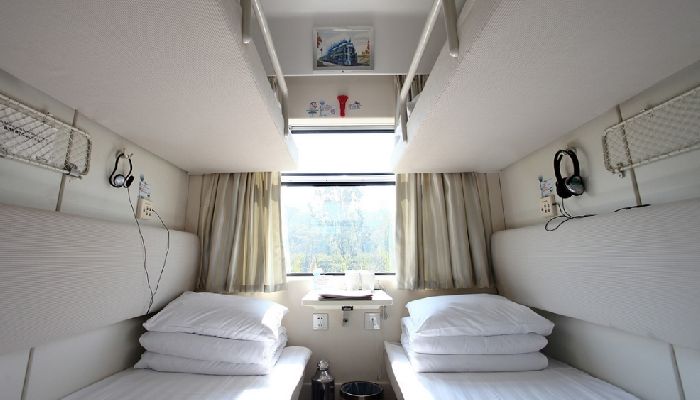
Soft Sleeper Compartment on the Qinghai-Tibet Railway
Major Scenery Along the Way & Best Viewing Times
The scenery outside the window of the Qinghai-Tibet Railway is magnificent and varied, known as the “Sky Road”. Understanding the following key locations and passing times can help you better arrange viewing and photography.
Xining to Golmud Section: The train passes Qinghai Lake at night. If it is summer and gets dark late, you may be able to see the lake surface. During the day, it passes through Jinyintan Grassland.
After Golmud (the most exciting part of the scenery): The train will change locomotives here, and the real plateau scenery journey begins.
– Jade Dragon Snow Mountain and Kunlun Mountains: Usually passed in the early morning, where you can see magnificent snow-capped mountains.
– Hoh Xil No-Man’s Land: Cross this vast area during the day, and you may have the chance to see wild animals such as Tibetan antelopes and Tibetan wild asses.
– Tuotuo River: This is the source of the Yangtze River, where you can see intertwined river networks.
– Tanggula Pass: The highest point of the railway, with an altitude of 5,072 meters. The display screen in the carriage will have a reminder.
– Qiangtang Grassland: After entering Tibet, it is boundless plateau grassland scenery, often with herds of cattle and sheep.
– Cuona Lake: One of the highest-altitude large freshwater lakes in the world, with railway tracks close to the lake shore, offering extremely beautiful scenery.
– Naqu to Lhasa Section: Gradually approaching Lhasa, the scenery along the way includes villages, grasslands, and distant mountains.
Viewing Suggestions: After boarding the train, pay attention to the electronic screens at both ends of the carriage displaying speed, next station name, and real-time altitude. Enjoying the scenery combined with altitude information will bring a more special experience.
Notes on Coping with Altitude Sickness
Traveling to Tibet by train allows the body to slowly adapt to the increasing altitude, but the possibility of altitude sickness still needs to be taken seriously.
Adaptation Period on the Train:
- Stay Calm: Do not be nervous or anxious, as this may aggravate physical discomfort.
- Drink Plenty of Water: The air on the plateau is dry, so you need to drink more water than usual. Try to avoid drinking alcohol and coffee.
- Slow Down Movements: Do not walk fast, run, or lift heavy objects in the carriage.
- Use Oxygen Correctly: If you feel obvious headache or difficulty breathing, you can use the oxygen tube at the berth. This is a normal and effective way to relieve discomfort.
- Get Adequate Rest: Do not stay up late to watch the scenery. Good sleep helps adapt to the plateau.
First Day After Arriving in Lhasa:
- Must Slow Down the Pace: After arriving at the hotel, focus on rest. Try not to take a bath or wash your hair on the same day to avoid catching a cold.
- Eat Lightly: Eat some easily digestible food and do not overeat.
- In Case of Severe Discomfort: If you experience severe headache, frequent vomiting, or worsening difficulty breathing, immediately inform your companions or hotel staff and go to the hospital in a timely manner. Hotels in Lhasa and experienced travel agencies usually know how to handle such situations.
Frequently Asked Questions about Hong Kong to Lhasa Train
Q: How long does the entire trip from Hong Kong to Lhasa by train take?
A: The total time depends on the transfer city you choose and the waiting time. Generally speaking, starting from Hong Kong West Kowloon Station to finally arriving at Lhasa Station, it takes 50 to 70 hours in total. This includes the high-speed rail section, transfer waiting time, and about two days of Qinghai-Tibet Railway travel. It is recommended that you reserve at least 3 days for the entire transportation itinerary.
Q: How to pass the time during such a long train ride?
A: In addition to watching the scenery, chatting with fellow passengers, reading, watching pre-downloaded movies, listening to music, and writing travel notes are all good choices. You can also go to the dining car, have a cup of tea, and look out the window. Time will pass faster.
Q: What should I pay attention to after arriving at Lhasa Railway Station?
A: Lhasa Railway Station is located at an altitude of about 3,640 meters. When getting off the train, be sure to walk slowly and exit the station in order with your luggage. There are taxis and buses at the square in front of the station to go to the urban area. You may feel a little dizzy or weak in the legs just after arriving, which is a normal adaptation process. Contacting the hotel’s pick-up service in advance or arranging for a transfer through a travel agency will save you a lot of trouble.
Q: If I really can’t buy a full-length train ticket, what other options are there?
A: You can consider the “flight + train” combination. That is, first take a flight from Hong Kong to Xining or Chengdu, then take a train from there to Tibet. This way, you can not only experience the most wonderful part of the Qinghai-Tibet Railway but also save the land travel time from Hong Kong to the mainland hub station. Institutions like China Dragon Travel can help you design and book such combined transportation plans.
Start Planning Your Train Journey to Tibet
Traveling from Hong Kong to Lhasa by train is a journey that requires careful advance preparation and a unique experience worth remembering. It is not just a simple transportation connection, but also allows you to witness the amazing changes in landforms with your own eyes and gradually adapt to the plateau environment during the slow ascent. When the train finally enters Lhasa Station and you step onto the platform, all the previous planning and waiting will become concrete and meaningful. It is hoped that this guide can help you better understand the entire process, make full preparations, and smoothly start your train journey to Tibet.