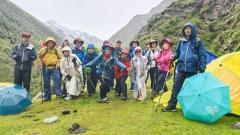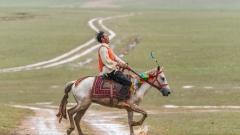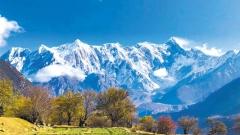

For travelers planning a trip to Tibet, traveling to Tibet by highway is the best way to enjoy the scenery along the way. At present, the main highways to Tibet include the Sichuan-Tibet South Line (G318), Sichuan-Tibet North Line (G317), Qinghai-Tibet Line (G109), Yunnan-Tibet Line (G214) and Xinjiang-Tibet Line (G219). Each route has different road conditions, altitude changes and supporting facilities along the way, and is suitable for different groups of people. This article will analyze the specific situation of each highway route to Tibet in detail, from vehicle preparation to supplies along the way, from the best travel season to common problems, helping you make full preparations before departure to ensure a smooth trip.
Sichuan-Tibet South Line (G318): The Highway Route to Tibet with the Most Diverse Scenery
Basic Route Information
The Sichuan-Tibet South Line starts in Chengdu and ends in Lhasa, with a total length of about 2,140 kilometers, and it usually takes 8 to 12 days to complete the journey. Known as “China’s Landscape Boulevard”, this road crosses more than ten mountains with an altitude of over 4,000 meters such as Zheduo Mountain, Jianziwan Mountain, Kazila Mountain, Dongda Mountain and Yela Mountain, and traverses the Jinsha River, Lancang River and Nu River. The scenery changes richly, from the idyllic scenery of the Sichuan Basin, to the alpine canyons of western Sichuan, and then to the grasslands and snow-capped mountains of Tibet. The famous photography paradise Xinduqiao, Litang the world’s highest city, the 72 Turns of Yela Mountain, Ranwu Lake and Lulang Forest Sea are all on this line.
Road Conditions and Suitable Vehicle Types
The Sichuan-Tibet South Line has the best road conditions and the most complete facilities among several Tibet access highways:
- Pavement condition: Most of the road is asphalt pavement, but it has many bends and steep slopes. Sections such as Jueba Mountain and Dongda Mountain are river-side winding mountain roads with many unguarded sections, requiring careful driving.
- Suitable vehicle types: Sedans are passable, but SUVs or off-road vehicles are recommended for better passability with higher chassis; hardcore four-wheel drive vehicles are more stable in the rainy season (July to August).
- Construction sections: Some sections of Batang County and Zheduo Mountain are still under construction with flying dust, and vehicles with low chassis need to avoid potholes.
- Travel suggestions: Counties and towns along the way are dense, making it convenient for accommodation, dining and refueling. The traffic flow has increased greatly in recent years, and traffic jams are common in peak seasons. It is best to avoid the rainy season from July to August and the National Day holiday.
Charging Pile Distribution (for New Energy Vehicles)
The charging network of the Sichuan-Tibet South Line is relatively complete, with the main stations as follows:
- Ya’an: Xpeng Super Charging Station (free of charge)
- Kangding: North City Gymnasium Charging Station
- Xinduqiao: Hotel Xpeng Charging Station (free fast and slow charging)
- Litang: Cangyang Jiacuo Love Song Hotel Charging Station (free fast and slow charging)
- Batang: Junyue Hotel Charging Station (free fast and slow charging)
- Markam: Jinshi Markam Impression International Hotel Xpeng Charging Station (free fast and slow charging)
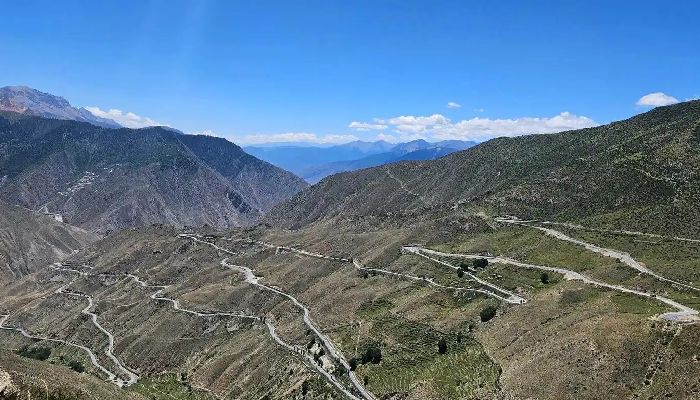
72 Turns of Yela Mountain
Sichuan-Tibet North Line (G317): The Highway Route to Tibet Focusing on Cultural Landscapes
Basic Route Information
The Sichuan-Tibet North Line starts in Chengdu and ends in Lhasa, with a total length of about 2,412 kilometers, and it usually takes 10 to 14 days to finish the trip. This line is further north than the south line, passing through Wenchuan, Barkam, Seda, Dege, Qamdo and Nagqu, and finally reaching Lhasa. It is rich in cultural landscapes along the way, including the famous Seda Wuming Buddhist College, Dege Scripture Printing House and Zizhu Monastery, with natural scenery dominated by alpine canyons and grassland pastures.
Road Conditions and Precautions
- Pavement condition: Most of the road is asphalt pavement, but some sections are narrow with many villages and few infrastructure facilities (canteens, toilets).
- Suitable vehicle types: SUVs or off-road vehicles are recommended.
- Altitude condition: The average altitude of Riwoqe County is 4,500 meters with limited accommodation conditions. Travelers with mild altitude sickness can choose hotels with diffused oxygen generators.
- Charging pile distribution: There are very few charging piles on National Highway 317, and there are no charging piles for 440 kilometers from Baqing to Qamdo, so new energy vehicle drivers should choose this route with caution.
Qinghai-Tibet Line (G109): The Highest Altitude Highway Route to Tibet
Basic Route Information
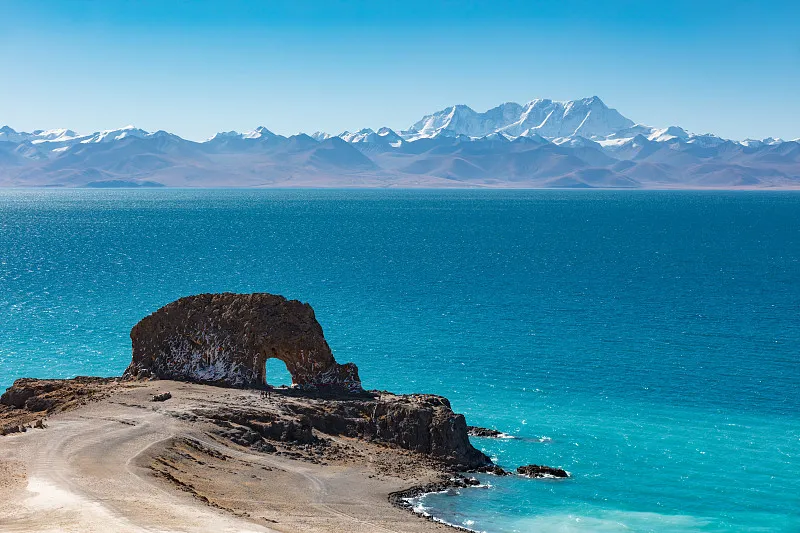
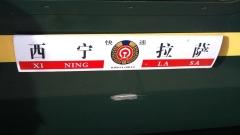
The Qinghai-Tibet Line starts in Xining and ends in Lhasa, with a total length of about 1,950 kilometers, and it usually takes 5 to 7 days to complete the journey. This road runs almost the entire course on the Qinghai-Tibet Plateau with an average altitude of over 4,000 meters, passing through the Hoh Xil No-Man’s Land, Tanggula Pass (altitude: 5,231 meters) and Qiangtang Grassland. The scenery is dominated by plateau landscapes – vast grasslands, flocks of Tibetan antelopes, continuous snow-capped mountains and pure lakes (Nam Co, Caka Salt Lake).
Road Conditions and Real Travel Experience
The road conditions of the Qinghai-Tibet Line seem flat, but the actual driving experience has unique challenges:
- Complex pavement types: Including “small washboard roads” (continuous potholes without flat roads), muddy and waterlogged roads and a small number of flat sections, and it takes 11 to 12 hours to drive 400 kilometers.
- Vehicle requirements: Off-road vehicles are strongly recommended, as sedans are prone to chassis collisions.
- Driving intensity: 2 to 3 people are required to take turns driving, and single-person driving is prone to fatigue; the windshield washer fluid should be filled up in advance (due to heavy dust and many large vehicles).
- Accommodation conditions: The facilities in Tanggula Town are simple. Do not have high expectations for the living environment, and prioritize accommodation that ensures rest.
- Weather characteristics: The weather is extremely unstable, and hail may be encountered on the way. The road surface is more difficult to drive on after rain, so sufficient warm clothes should be prepared.
The Qinghai-Tibet Line and the New Section from Nagqu to Lhasa
At present, the G6 Beijing-Tibet Expressway from Nagqu to Lhasa is open to traffic with excellent road conditions, covering 342 kilometers and taking about 4 hours for the whole journey. Departing from Nagqu, you can first go to Nam Co (182 kilometers, 2 hours and 10 minutes). The scenic area has two gates. After buying tickets at the outer gate, you still need to drive for 20 minutes to the tourist center parking lot and take the scenic area shuttle bus.
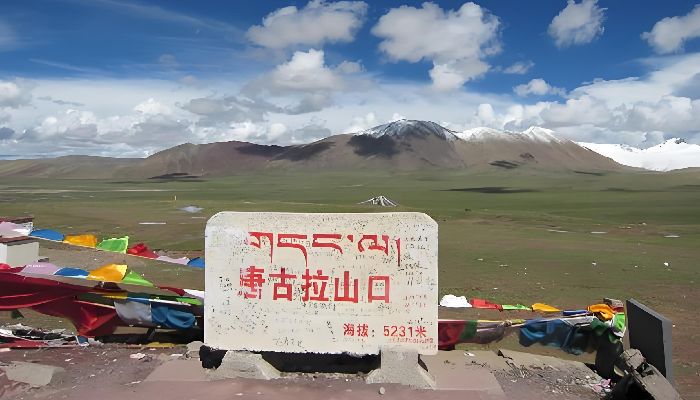
Tanggula Pass on the Qinghai-Tibet Highway, Altitude: 5231 Meters
Yunnan-Tibet Line (G214): The Highway Route to Tibet with Strong Ethnic Customs
Basic Route Information
The Yunnan-Tibet Line starts from Dali or Kunming in Yunnan, converges with the Sichuan-Tibet South Line in Markam, and then merges into G318 to enter Tibet. The section within Yunnan is about 800 kilometers, and the total mileage is similar to that of the Sichuan-Tibet South Line including the Tibet section, taking 8 to 12 days as well. The characteristic of this road is the huge altitude drop, from the subtropical climate of Yunnan to the plateau climate of Tibet, passing through Shangri-La, Meili Snow Mountain and Yanjing Ancient Salt Fields along the way.
Road Conditions and Suitable Vehicle Types
- Pavement condition: The section of National Highway 214 from Yushu to Riwoqe is in good condition and passable for sedans.
- Alternative route: The route from Yushu to Suoxian can take National Highway 345 and Township Highway 641, about 451 kilometers and taking 10 hours. It is a washboard road plus a section with no signal, which off-road vehicle drivers can try, but it is not recommended for people with altitude sickness.
- Charging pile distribution: There is a China Southern Power Grid Charging Station in Deqin County, and a Xpeng Super Charging Station at Shangri-La Moonlight International Hotel.
Xinjiang-Tibet Line (G219): The Most Challenging Highway Route to Tibet
Basic Route Information
The Xinjiang-Tibet Line starts in Yecheng of Xinjiang and ends in Lazi of Tibet, with a total length of about 2,140 kilometers, and you can continue to Lhasa along G318 afterwards. Known as the “Sky Road”, this road is one of the highest and most dangerous highways in the world, crossing 5 mountains with an altitude of over 5,000 meters and 16 snowy mountain passes along the way. The original and desolate scenery along the way features continuous snow-capped mountains, deserts and lakes, and you can see wild animals such as wild camels and Tibetan wild asses.
Safety Tips and Rescue Support
The harsh environment of the Xinjiang-Tibet Line makes this road full of uncertainties, but it is guarded by Border Management Detachments along the way:
- Rescue stations: Kudi Border Checkpoint and Kudi Border Police Station provide altitude sickness medicine, oxygen cylinders, first-aid medicine, rescue tools and common vehicle maintenance tools.
- Traffic efficiency: The checkpoints adopt a “three-level diversion mechanism”, with drones conducting cruise early warning 1 kilometer away and a “green channel” to ensure priority passage for travelers with altitude sickness, with a maximum of 4,257 vehicles inspected in a single day.
- Real cases: A truck driver once sought help at the police station with pale face and purple lips due to altitude sickness, and escaped danger after treatment by the resident doctor.
- Sharing service: The “Guard 219 Shared Staff Home” is equipped with food, altitude sickness medicine, first-aid medicine, rescue tools and vehicle maintenance tools.
Travel Suggestions
- Best season: June to September. The climate is harsh in other seasons, and the mountain pass is often closed by heavy snow.
- Supply points: Domar Township is the first township in Tibet that the Xinjiang-Tibet Highway passes through, known as the “First Post Station of the Xinjiang-Tibet Highway”, with hotels, restaurants, supermarkets and repair shops.
- Necessary supplies: Prepare oil barrels, food, water and oxygen by yourself, and it is best to travel in a group.
- Suitable groups: Only suitable for experienced off-road enthusiasts; beginners should not attempt it easily.
Vehicle Preparation List for Tibet Highway Travel (Practical Version)
Vehicle Inspection and Essential Equipment
A comprehensive inspection must be carried out before departure:
- Braking system: Check the brake pads and brake fluid to cope with long downhill sections.
- Tires: New tires or tires with deep tread are preferred, and snow chains are a must (essential in winter).
- Chassis: Protecting the chassis is the key; lift the chassis to the highest position when driving on bad roads.
- Essential tools: Tow rope, inflator, tire repair tools, jumper cables, strong flashlight, pliers, super sticky tape.
- For off-road routes (such as Bingchacha): The tire pressure can be reduced to 1.6-1.8bar to use tire elasticity to buffer bumps.
Fuel and Supplies
- Refueling documents: ID card and driver’s license are required for refueling in Tibetan areas, and some gas stations only accept cash.
- Diesel vehicles: Replace the fuel with -35 grade or lower grade diesel before entering Tibet.
- Spare oil barrels: Oil barrels are recommended for the Xinjiang-Tibet Line, and a certificate from the police station is required to refuel.
Altitude Sickness Response and Physical Preparation
Preparation Before Entering the Plateau
Before entering the plateau, you can consult people with plateau living experience for precautions, to know what to expect and avoid unnecessary tension. Pay special attention to the following points:
- Prohibit alcohol and tobacco, prevent upper respiratory tract infections, and avoid overwork.
- If you have an upper respiratory tract infection, you should be cured before entering the plateau.
- A good psychological quality is the key to overcoming altitude sickness; stay open-minded and optimistic.
- Patients with severe anemia or high blood pressure should not enter the plateau blindly.
Real Experience of Altitude Sickness
Altitude sickness varies from person to person. Some travelers suffered from altitude sickness when arriving in Xinduqiao on the first day, went to the hospital for oxygen inhalation in the middle of the night and returned, while others only felt better in the last two days of the trip. Generally, symptoms will appear at an altitude of over 3,600 meters; there is no discomfort when sitting still, and severe discomfort when walking or climbing stairs. Summarized experience from real travelers:
- Relief methods: Acetaminophen and aspirin powder + inhaling small cans of oxygen; take ibuprofen for headache.
- Increase sugar intake: Cola, Red Bull, glucose oral liquid.
- Do not jump or run around in the first few days, and do not take a bath or wash your hair.
- The most important thing: Get enough sleep.
Response Measures on the Way
Attention should be paid when entering the plateau:
- Prepare oxygen and medicines for preventing acute altitude sickness (Rhodiola rosea, Gaoyuanning, etc.).
- Prepare enough warm clothes to prevent colds.
- Immediate treatment should be given for severe altitude sickness symptoms: Take aminophylline in time or sublingually take 20 mg of nifedipine; inhale oxygen in severe cases.
- If severe chest tightness, severe cough, difficulty breathing, pink frothy sputum, or slow reaction, apathy, or even coma occur, rush to the nearest hospital for rescue as soon as possible, or transfer to a lower altitude area as soon as possible.
- Prepare water or drinks and delicious and easy-to-digest food on the way, and replenish water and calories in a timely manner.
Practical Information on Accommodation, Catering and Supplies for Tibet Highway Travel
Changes in Accommodation Conditions
The accommodation conditions in Tibet have been greatly improved in recent years. Some travelers compared the travel experience of entering Tibet in 2018 and 2026 and found that:
- Counties and towns are more beautifully built than before, and the water, electricity and network configuration of hotels and guesthouses are the same as those in inland China.
- The rooms are relatively spacious, clean and hygienic, with convenient bathing; there is no air conditioner but electric blankets are available.
- Remote areas (such as the Everest Base Camp, around Mount Kailash) still mainly have guest houses, with bed fees of about 450-900 New Taiwan Dollars per person and basic conditions.
Catering and Supply Suggestions
- There are markets or supermarkets in all counties along the way, where fresh vegetables and meat can be bought, but the prices are higher than those in inland China.
- It is not recommended to try Tibetan food at the beginning of entering Tibet, as acceptance varies from person to person, and it is not easy to digest, which may easily cause abdominal distension.
- You can carry an electric pressure cooker (the boiling point of water is low due to low air pressure on the plateau, and food cannot be cooked thoroughly with an ordinary pot).
- Bring more high-calorie snacks: chocolate, beef jerky, compressed biscuits, self-heating rice.
Driving Precautions for Tibet Highway Travel
Curve Driving Skills
- Be sure to drive in your own lane on winding mountain roads, especially when turning, do not intrude into the opposite lane.
- There are no guardrails on river-side sections such as Jueba Mountain and Dongda Mountain; honk to indicate when turning, and overtaking by occupying the opposite lane is strictly prohibited.
- Avoid large trucks in advance and keep a safe following distance.
Special Section Driving
For off-road routes such as Bingchacha:
- Cobblestone roads: Keep the speed at 20-30km/h, avoid high-speed driving that causes vehicle bouncing, and hold the steering wheel lightly and adjust slowly.
- Cliff branch roads: The narrowest part is only 3 meters; drive as close to the mountain side as possible and focus your sight 50 meters ahead.
- High-altitude steep slopes: Switch to low four-wheel drive in advance and maintain the engine speed at 2800-3000 rpm.
- Gravel steep slopes descending: Shift to 1st gear or L gear, use engine braking, and tap the brakes every 3-5 seconds.
Section Speed Measurement and Speed Limit
- The speed limit for cars on National Highways 318 and 317 is 60 kilometers per hour, and using mobile phones while driving will be captured.
- There are basically speed limits on all Tibet highways with many section speed measurements; be sure to drive according to the speed limit signs.
Frequently Asked Questions about Tibet Highway Travel
Q: Which highway route to Tibet is suitable for the first trip?
A: The Sichuan-Tibet South Line (G318) is recommended for the first trip to Tibet. This road has the most complete facilities, with convenient accommodation, dining and refueling along the way, and the most diverse scenery.
Q: Can sedans drive on the Sichuan-Tibet Line?
A: Yes, but SUVs are recommended. Most of the Sichuan-Tibet Line is asphalt pavement, but there are many bends and steep slopes, and there may be bad roads in the rainy season, so sedans with low chassis are prone to bottoming out.
Q: Are electric vehicles suitable for traveling to Tibet?
A: It is no problem to take National Highway 318, as the charging piles along the way are relatively complete. However, there are very few charging piles on National Highway 317, so this route is not recommended. The charging facilities on the Qinghai-Tibet Line and Xinjiang-Tibet Line are still insufficient, and fuel vehicles are more reliable.
Q: Is it troublesome to refuel on the way? Do I need to bring a spare oil barrel?
A: There is no need to bring a spare oil barrel when taking the Sichuan-Tibet, Qinghai-Tibet and Yunnan-Tibet Lines; as long as you fill up the oil in large counties, you can drive to the next gas station. Oil barrels are recommended for the Xinjiang-Tibet Line, and a certificate from the police station is required to refuel.
Q: Will altitude sickness be very severe?
A: Most people will have altitude sickness to varying degrees, with differences between mild and severe symptoms. The best way to adapt is to ascend gradually, do not exercise violently, and get enough sleep.
Q: How much does it cost to travel to Tibet by highway?
A: The fuel cost for an SUV is about CNY 2,000-3,000, the average accommodation cost is CNY 200-400 per night, and the dining cost is CNY 100-200 per day. Plus the scenic spot tickets, the cost for one person is about CNY 5,000-8,000 excluding vehicle wear and tear.
Q: When is the best time to enter Tibet?
A: The best seasons are May to June and September to October. It is warm with blooming flowers from May to June, and the autumn scenery is the most beautiful from September to October. Avoid the rainy season from July to August and the National Day holiday.
How to Plan Your Highway Route to Tibet
Planning a highway route to Tibet needs to comprehensively consider time, budget, driving skills and physical adaptability. First of all, clarify your own needs: whether you want to see diverse scenery, challenge high-difficulty routes, or enter Tibet quickly due to limited time. The Sichuan-Tibet South Line is suitable for most first-time Tibet travelers; the Qinghai-Tibet Line is suitable for people who are short on time and want to enter Tibet quickly; the Yunnan-Tibet Line is suitable for travelers who want to visit Yunnan and Tibet at the same time; the Xinjiang-Tibet Line is only suitable for experienced off-road enthusiasts. No matter which highway route to Tibet you choose, you must do a good job in vehicle inspection, material preparation and plateau adaptation before departure. If you are worried about the complicated procedures, you can ask an experienced travel agency to handle the Tibet entry permit and border pass for you. China Dragon Travel has been operating Tibet tourism routes for many years, from Sichuan-Tibet Line shared group tours to private customized chartered tours, it can help arrange the Tibet entry permit, accommodation, vehicles and drivers, allowing you to set off with peace of mind. The plateau scenery is worth looking forward to, but adequate preparation and careful driving are the greatest responsibility to yourself and your family.