
For travelers holding a German passport, planning a trip to Tibet involves a few additional steps compared with regular travel within China. Under the current policy, German citizens can enjoy visa-free entry to China for up to 30 days until December 31, 2026. However, Tibet has separate travel regulations for foreign visitors. All international travelers must apply for a Tibet Travel Permit through a licensed travel agency, and the trip must be arranged with an official guide accompanying the group throughout the journey. Because the Tibetan Plateau has an average altitude of over 4,000 meters and many destinations are located in remote areas, careful planning is essential before departure.
Application Process and Planning for the Tibet Travel Permit
For German passport holders, a trip to Tibet requires applying for the Tibet Travel Permit through a qualified travel agency, with a tour guide accompanying the entire journey. The application for the Tibet Travel Permit follows a fixed process and time requirements, which need to be planned in advance.
Key Points for Applying for the Tibet Travel Permit
- Application time planning: The application for the Tibet Travel Permit for a regular itinerary takes 10 to 14 working days. If planning to travel to border areas such as Ali, an additional military region approval is required, which will increase the processing time by more than 5 working days. It is recommended to start the application process 30 to 45 days in advance.
- Submission requirements for materials: Color scanned copy of the valid passport’s first page (with a resolution of over 300dpi), a qualified white background ID photo, and a complete travel itinerary in China.
- Entry advantage of German passports: German citizens currently enjoy a 30-day visa-free entry policy to China. If the Tibet itinerary is within 30 days, there is no need to apply for a separate Chinese visa, but the Tibet Travel Permit is still required.
Verification Notes for the Tibet Travel Permit
The Tibet Travel Permit is issued on a one-person-one-permit basis and is bound to the passport. It will be checked when boarding the train to Tibet, at checkpoints along the way and when entering various scenic spots, so it must be carried with you for the entire trip. For itineraries involving border areas such as the Everest Base Camp and Mount Kailash, an additional Foreign Travel Document and Military Region Approval Certificate are required.
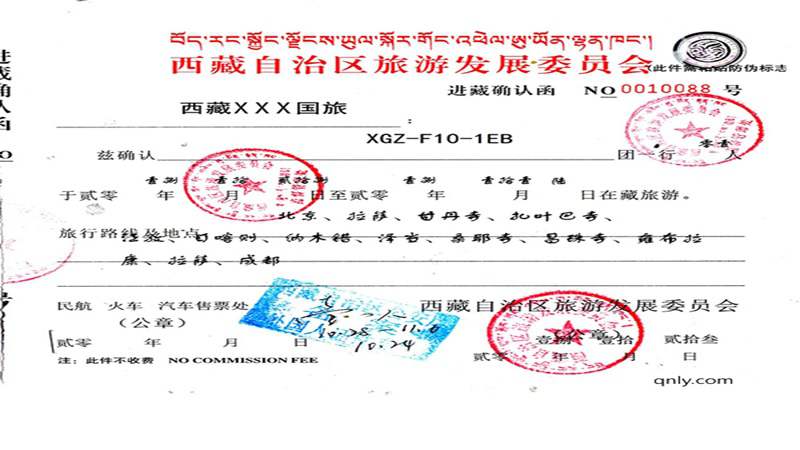
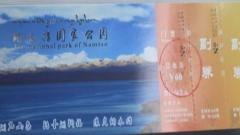
Tibet Travel Permit
Season Selection and Climate Conditions for Tibet Travel
Tibet is located on the Qinghai-Tibet Plateau, with a climate quite different from that of Germany. Choosing the right season to travel to Tibet directly affects the travel experience.
Climate Characteristics by Season
- April to May: The temperature rises gradually, with daytime temperatures ranging from 8 to 18 degrees Celsius. Peach blossoms bloom in the Nyingchi area, making it a great time for landscape photography. The number of tourists is small and accommodation prices are moderate.
- June to August: The warmest period of the year, with daytime temperatures ranging from 15 to 25 degrees Celsius. The oxygen content is relatively high, grasslands are green and lakes thaw. The downside is that air ticket and accommodation prices rise, and advance reservations are required for popular scenic spots such as the Potala Palace.
- September to October: The weather is stable, the sky is clear and visibility is excellent. Daytime temperatures range from 10 to 20 degrees Celsius, with a significant drop in temperature at night. It is suitable for shooting snow-capped mountains and lakes.
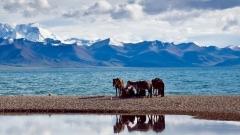
- November to March of the next year: The climate is cold in winter, with daytime temperatures in Lhasa ranging from 5 to 15 degrees Celsius and nighttime temperatures dropping to minus 10 degrees Celsius. Some high-altitude areas such as Nam Co may be closed due to heavy snow, and the tent camps at the Everest Base Camp are dismantled.
Notes on Temperature and Oxygen Content
The average altitude of Tibet is over 4,000 meters, and the oxygen content is about 60% to 70% of that in plain areas. The oxygen content is even lower in winter, requiring a higher physical adaptability. For German tourists traveling to Tibet for the first time, it is recommended to choose May or September, when the climate is relatively mild and the oxygen content is moderate.
Transportation Route Planning Between Germany and Tibet
There are no direct flights to Tibet from Germany, and transfers are required in European cities or mainland Chinese cities. Transportation planning is the basic link of the entire itinerary.
Air Route Options
- Transfer via mainland Chinese cities: Fly from Frankfurt, Munich or Berlin to Beijing, Shanghai or Chengdu, then transfer to Lhasa. Lufthansa Airlines and Air China operate flights from Germany to China, with round-trip air ticket prices usually ranging from 800 to 1,200 Euros. The flight from mainland Chinese cities to Lhasa takes about 2.5 to 3.5 hours.
- Enter Tibet via Kathmandu, Nepal: Fly from Germany to Kathmandu, with flights usually requiring transfers in the Middle East or India, and the ticket price is about 720 to 915 Euros. After arriving in Kathmandu, you can choose to enter Tibet by land via the Gyirong Port or take a direct flight to Lhasa with Himalaya Airlines.
Tibet Railway Travel Plan
The Qinghai-Tibet Railway is another option to travel to Tibet. Take the train from Xining to Tibet, with a journey of about 20 hours. The hard sleeper ticket price is about 500 CNY and the soft sleeper is about 800 CNY. The train is equipped with oxygen supply throughout the journey, allowing you to gradually adapt to the rising altitude on the way. The train passes through Qinghai Lake, Hoh Xil and Tanggula Pass, with unique scenery along the route.
Notes on Air Ticket Purchase
Air tickets to Tibet must be purchased by a travel agency on behalf of the tourist with the Tibet Travel Permit confirmation letter, and tourists cannot purchase them directly by themselves. When boarding the plane, you need to present the original Tibet Travel Permit, passport and valid Chinese visa or visa-free entry record.
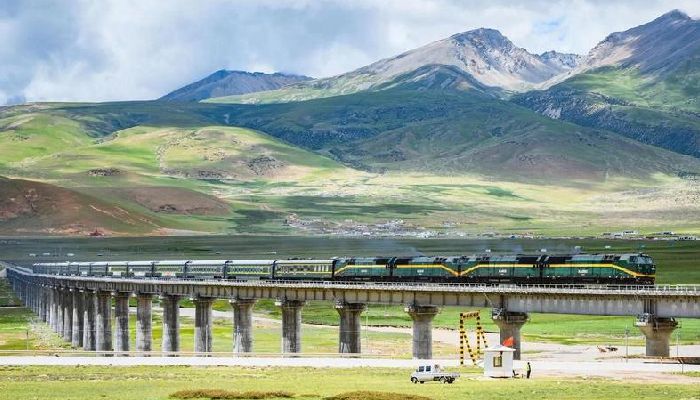
Qinghai-Tibet Railway Trains
Transportation and Travel Modes in Tibet
After arriving in Tibet, the internal transportation and travel modes need to be planned in advance. Tibet has a vast territory with long distances between scenic spots, and transportation arrangements directly affect the travel experience.
Comparison of Two Travel Modes
- Small group car-sharing tours: The travel agency arranges vehicles, drivers, tour guides and accommodation in a unified manner. Each group has 4 to 8 people, using off-road vehicles or business vehicles. The travel agency is responsible for planning the route and handling various procedures along the way, suitable for tourists traveling to Tibet for the first time. For a 12 to 15-day group tour, the per capita cost is about 1,960 to 2,100 Euros.
- Custom private chartered car tours: Adjust the itinerary and stay time according to personal needs. The chartered car price is calculated by vehicle type, a Toyota off-road vehicle costs about 1,500 to 2,000 CNY per day, and the tour guide service fee is calculated separately. It is suitable for teams of more than 4 people to share the cost.
Accommodation Conditions Notes
Accommodation conditions in Tibet vary by region:
- Cities such as Lhasa and Shigatse: There are 3-star to 5-star hotels with accommodation conditions equivalent to those in mainland cities.
- Remote areas such as the Everest Base Camp and Ali area: Mainly guesthouses and simple inns, most of which are shared rooms with public washrooms and basic conditions.
Plateau Acclimatization Arrangements
After arriving in Lhasa, it is recommended to rest in the hotel for 1 to 2 days, avoid strenuous activities, and let the body gradually adapt to the environment at an altitude of 3,650 meters. Professional travel agencies will set aside an acclimatization period in the itinerary design and will not arrange a trip to high-altitude areas on the first day.
Response to Altitude Sickness and Physical Preparation
The average altitude of Tibet is over 4,000 meters, and altitude sickness is a problem that every tourist needs to face. Understanding the symptoms and response measures of altitude sickness in advance helps with pre-trip preparations.
Classification of Altitude Sickness Symptoms
- Mild reaction: Mild headache, dizziness, fatigue, insomnia and loss of appetite. This is a normal process for the body to adapt to the plateau. With more rest, reduced activity and plenty of warm water, it usually relieves within 1 to 3 days.
- Moderate reaction: Severe headache, nausea and vomiting, and difficulty breathing at rest. You should stop the itinerary immediately, start oxygen inhalation, and consider descending to a lower altitude if there is no improvement.
- Severe reaction: Confusion, unsteady walking, and coughing up pink frothy sputum. These are signs of high altitude cerebral edema or high altitude pulmonary edema. You should inhale oxygen immediately, descend to a lower altitude as soon as possible and seek emergency medical treatment.
Pre-trip Physical Preparation
- 2 to 3 weeks before departure: Stop strenuous exercise and let the body enter a relatively energy-saving state.
- Medication preparation: Consult a doctor to see if it is necessary to prepare drugs such as Acetazolamide to prevent altitude sickness. It is recommended to prepare painkillers, gastrointestinal drugs and cold medicine as daily standby medicines.
- Notes after arrival: Do not take a bath, drink alcohol or walk fast on the first day. Drink plenty of warm water and ensure adequate sleep.
Emergency Handling
During the trip to Tibet, the tour guide is the main person to rely on. If you feel unwell, you should inform the tour guide immediately. Vehicles of regular travel agencies are equipped with emergency oxygen cylinders for emergencies.
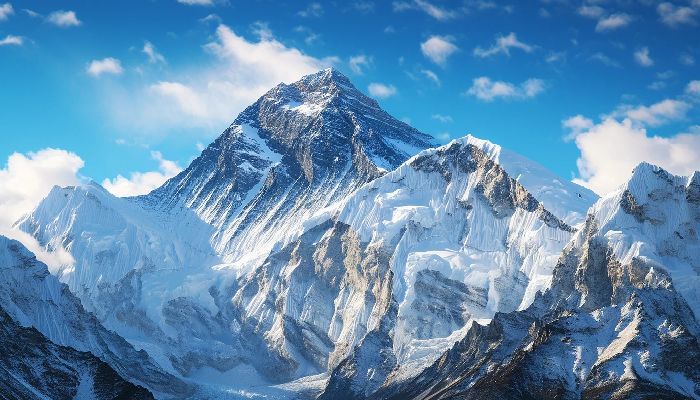
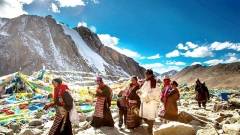
The Snow-capped Mount Qomolangma
Pre-departure Check List
Check all preparations against the list before departure to avoid omissions.
Documents
- Passport: Valid for more than 6 months.
- Tibet Travel Permit: Obtain the electronic or paper version from the travel agency and check the information for accuracy.
- Air ticket itinerary: Print a paper version for backup.
Clothing Preparation
- Adopt the layered dressing method: Quick-drying underwear, fleece jackets, down jackets, windproof and rainproof coats.
- Sun protection products: Wide-brimmed hats, sunglasses, high-protection sunscreen (SPF50+).
Medication Preparation
- Personal regular medicines.
- Altitude sickness relief drugs.
- Cold medicine, gastrointestinal drugs, painkillers.
- Lip balm, moisturizing products.
Cash and Payment
- Alipay and WeChat Pay are supported in downtown Lhasa.
- Only cash is accepted in remote areas, so it is recommended to prepare about 2,000 CNY in cash for backup.
Other Items
- Camera, spare batteries, memory cards.
- Wet wipes, insulated kettles.
- High-calorie snacks such as chocolate and nuts.
Important Tips for German Travelers Visiting Tibet
For many travelers from Germany, Tibet represents a destination that combines dramatic landscapes, unique Tibetan culture, and remarkable high-altitude experiences. After arriving in major Chinese cities such as Beijing, Shanghai, or Chengdu, visitors can continue to Lhasa and begin exploring the Tibetan Plateau. Iconic landmarks such as the Potala Palace and Jokhang Temple, along with natural wonders like Mount Everest Base Camp or Namtso Lake, make Tibet one of the most distinctive travel destinations in Asia.
Since foreign travelers must obtain a Tibet Travel Permit and arrange transportation and guides in advance, it is recommended that German visitors begin planning their trip at least one month before departure. Allowing time in Lhasa for altitude acclimatization and preparing appropriate clothing and medications can also help ensure a safer and more comfortable journey. With proper preparation, a trip from Germany to Tibet can become a memorable adventure filled with cultural discovery and breathtaking mountain scenery.
Five Criteria for Selecting a Travel Agency
- Qualification verification: Confirm that the travel agency has the officially recognized foreign reception qualification and Tibet tourism business license in China. You can request to see the Travel Agency Business Operation License, whose business scope must include inbound tourism business and tourism business in the Xizang Autonomous Region.
- Itinerary rationality: A reliable travel agency should clearly list the accommodation standards and hotel names for each place in the itinerary.
- Safety guarantee: Understand the travel agency’s plateau response plan, whether it is equipped with medical oxygen cylinders and whether the tour guides have received first aid training.
- Contract terms: Ensure that all promised service details are written into the contract, and understand the cancellation policy and insurance arrangements.
- Customer reviews: Check the previous customer reviews of the travel agency on international platforms to understand its service level.
Insurance Purchase Suggestions
It is recommended to purchase travel insurance that includes overseas medical care, inconvenience insurance for plateau travel and other protections. Medical expenses and evacuation costs in plateau areas are relatively high, so insurance is a necessary guarantee.
Planning a trip to Tibet from Germany requires thorough preparations in advance. Applying for the Tibet Travel Permit, selecting the travel season, planning transportation routes and acclimatizing to the plateau are the four core links, and each link needs to be arranged in advance. By implementing each step as described in this article, you can smoothly realize your Tibet trip. For professional assistance, China Dragon Travel provides services such as Tibet Travel Permit application and itinerary planning.