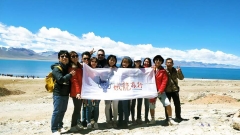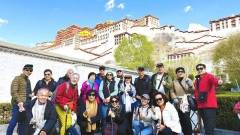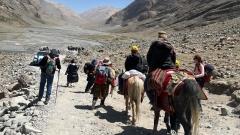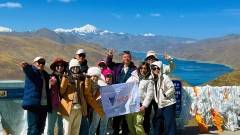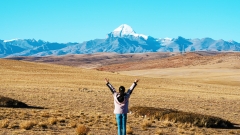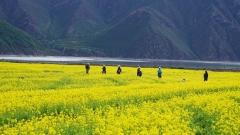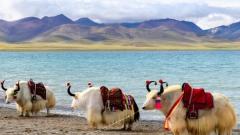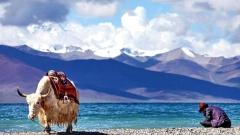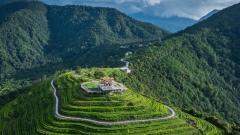

Tibet boasts rich cultural heritage and breathtaking natural scenery, drawing travelers from all over the globe. The sacred Potala Palace, the glittering golden roof of Jokhang Temple, the magnificent Everest Base Camp, and the romantic peach blossoms in Nyingchi are all dreams for countless travelers at home and abroad. When traveling from Australia to this sacred snowy land, careful itinerary planning is essential. This guide systematically sorts out all practical information for your Tibet trip, including document preparation, essential gear, major transportation options, gateway cities, and border pass application, guiding you to set off from Australia and step onto this faith-filled and legendary sacred snowy realm with ease.
Documents for Traveling from Australia to Tibet
Visa Free Conditions
Australian travelers visiting Tibet do not need to apply for a visa in advance under certain conditions. The Chinese government has extended the unilateral visa-free policy for Australia until 24:00 on December 31, 2026. However, this visa-free policy only applies to entry into mainland China and does not exempt travelers from the requirement to obtain a Tibet Travel Permit.
- Visa-Free Requirements: Holders of ordinary Australian passports are eligible for visa-free entry, provided the purpose of entry is clearly stated, such as business, tourism, visiting relatives or friends, exchange visits, or transit. Each entry allows a stay of no more than 30 days, during which travelers may stop over in gateway cities like Chengdu or Beijing before proceeding to Tibet.
- Entry Process: Before departure, please ensure that your Australian passport has a validity of at least six months. Be sure to apply for your Tibet Travel Permit through a travel agency 20 to 30 days in advance and obtain the original paper document. You may book your own flights from Australia to gateway cities in China, and coordinate with your travel agency regarding transfers, accommodation, and tour arrangements within Tibet.
The stay period for Australian travelers in China begins at midnight on the day following entry, and travelers may stay in mainland China (excluding Hong Kong and Macau) for up to 30 days. Please strictly adhere to the 30-day stay limit, as overstaying may affect your ability to re-enter China in the future.
Visa Application
The core of pre-trip preparation for a Tibet trip from Australia lies in visa application and flight planning, the foundation of a smooth journey. You need to plan in advance in accordance with Australian application rules and flight routes to ensure a worry-free trip.
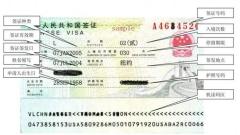
- Online Application: Starting from 2025, the Chinese Embassies and Consulates in Australia have officially launched the online Chinese visa application service. Australian travelers can enjoy the convenience of filling out forms and uploading application materials online, without the need to submit physical documents in person, greatly simplifying the application process.
- Document Preparation: A passport with a validity of at least 6 months is required. In addition, you need to fill out the visa application form online, and prepare a white-background passport photo, travel itinerary, hotel booking confirmation and other documents. If you plan to visit border areas such as Mount Everest and Ali, please state it in the visa remarks to facilitate the subsequent border pass application.
- Processing Time: A regular tourist visa takes about 5-7 working days to process. It is recommended to apply 1-2 months in advance to avoid travel delays caused by supplementary document requirements.
Border Pass Application
If you plan to visit border areas in Tibet such as Everest Base Camp, Ali Prefecture and Zhangmu Port, you need to apply for an additional People’s Republic of China Border Area Entry Permit. Australian travelers can apply through two methods:
- Domestic Application: Entrust relatives or friends in China to apply for free at the public security bureau of their household registration location, with a copy of your passport and travel itinerary required.
- Local Application: After arriving in Lhasa, apply through a formal travel agency at a cost of approximately CNY 200 per person. A passport and hotel booking confirmation are required, and the permit can be issued on the same day.
Tibet Travel Permit Application
The Tibet Travel Permit is a mandatory document for foreign travelers to enter the Xizang Autonomous Region, uniformly issued by the Tourism Development Department of the Xizang Autonomous Region. It consists of two A4 pages: the first page indicates the traveler’s entry and exit dates in Tibet, tourist attractions and receiving travel agency; the second page lists the full name, date of birth and passport number of all travelers, with official approval seals and anti-counterfeiting marks of various government departments affixed.
- Application Process: Individual applications for the Tibet Travel Permit are not accepted; it can only be applied for uniformly by local travel agencies in Tibet with foreign reception qualifications. Travelers need to confirm the itinerary with the travel agency first, and then the agency will submit the application to the relevant departments.
- Processing Time: It takes about 10 working days to process. It is recommended to submit materials at least 1 month in advance, and more than 2 months in advance during peak tourist seasons or special festivals.
The Tibet Travel Permit is the entry pass for foreign travelers to Tibet, and the border pass is the access permit to specific border areas in Tibet. Regardless of the application method chosen, the core principles are advance planning, truthful declaration, and application through formal channels.
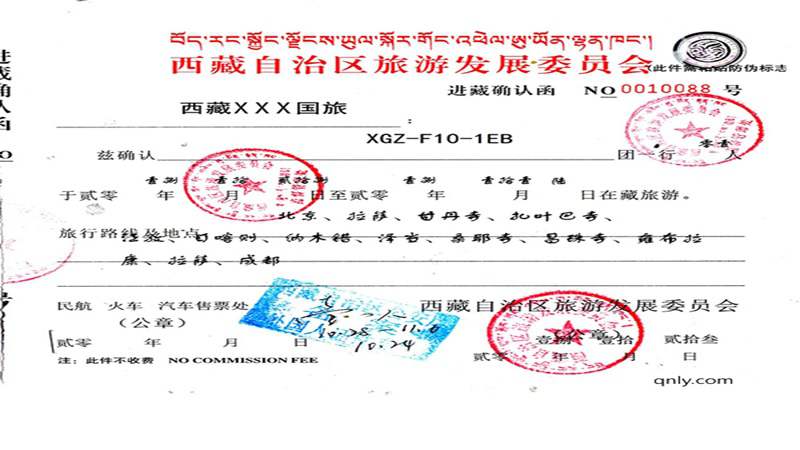
Tibet Travel Permit
Gears for Traveling for Traveling from Australia to Tibet
Thorough gear preparation is the key to a safe and comfortable journey. Tibet’s high-altitude environment features changeable weather, extreme temperature differences between day and night, and intense ultraviolet radiation, so targeted preparation is a must:
- Medication Preparation: Consult a doctor and bring altitude sickness prevention medications such as Acetazolamide, and carry your personal regular medicines with you.
- Physical Assessment: Kora (mountain circumambulation) is a 52-kilometer high-altitude hike, not a casual walk, requiring a regular exercise routine. Travelers with heart disease, high blood pressure or severe respiratory diseases are not recommended to travel to Tibet.
- Insurance Confirmation: Be sure to purchase travel insurance that covers high-altitude hiking and emergency medical evacuation.
- Walking Aids: Pack daily necessities in your backpack, such as an insulated thermos, water, food and warm clothing. Trekking poles (a pair is a must) are essential to greatly reduce knee pressure. Also bring UV-protective sunglasses to prevent snow blindness, and sun protection products such as sunscreen and lip balm.

Jokhang Temple in Tibet
Major Transportation for Traveling from Australia to Tibet
Flights
Currently, there are no direct flights between Australia and Tibet. Australian travelers need to depart from cities such as Melbourne, Sydney, Brisbane or Perth, transfer at major cities in mainland China, and then fly to Lhasa Gonggar International Airport. Mainstream transfer cities include Chengdu, Beijing and Chongqing:
- Cost-Effective Route: Depart from Melbourne, transfer via Chengdu to Lhasa (e.g., Flight 3U3886 connecting to 3U6631), with a total travel time of 13 hours and 15 minutes and a transfer time of only 3 hours and 10 minutes—this is the top choice for travelers departing from Australia.
- Regular Route: Depart from Melbourne, transfer via Beijing to Lhasa (e.g., Flight CA166 connecting to CA4125), with a total travel time of 16 hours and 30 minutes and a transfer time of 2 hours and 55 minutes, suitable for travelers who prefer a regular itinerary.
- Booking Tips: Air tickets are in short supply during Tibet’s peak tourist seasons (March-May and September-October); it is recommended to book 2-3 months in advance. Choose flights with a transfer time of 3-7 hours as much as possible to avoid missing the connecting flight due to too short a transfer time or wasting time with an overly long transfer.
Tibet’s peak tourist seasons are May to October, as well as festivals such as the Spring Festival and Tibetan New Year, during which air tickets are in high demand. It is recommended to confirm the itinerary and book tickets through a travel agency 2-3 months in advance. November to April of the following year is the off-season, with lower air ticket prices, but some flights may be reduced, please confirm in advance.
Trains
For Australian travelers who wish to acclimatize to the plateau environment gradually and enjoy the magnificent scenery along the way, the Qinghai-Tibet Railway is an extremely attractive choice, which is also the world’s highest-altitude railway.
- Main Routes: Trains to Lhasa are available from Xining, Lanzhou, Chengdu, Chongqing, Shanghai, Beijing and other cities.
- Travel Time: Approximately 36 hours from Chengdu or Chongqing, and about 40 hours from Beijing.
- Advantages: Enjoy breathtaking scenery along the way, such as the Hoh Xil No-Man’s Land, Tanggula Mountains and Qiangtang Grassland. Oxygen supply is available in the carriages, helping the body gradually adapt to the rising altitude.
- Notes: Foreign travelers can usually board the train to Tibet with a copy of the Tibet Travel Permit, but subject to the latest regulations of each railway station. If you have no experience of taking a sleeper train for a long time, flying to Tibet is a more comfortable option.
Train tickets also need to be processed by a travel agency with the Tibet Travel Permit. Train tickets to Tibet via the Qinghai-Tibet Railway are in short supply; it is recommended to confirm the booking with a travel agency 60 days in advance. You can board the train with a copy of the Tibet Travel Permit and must carry your original passport.
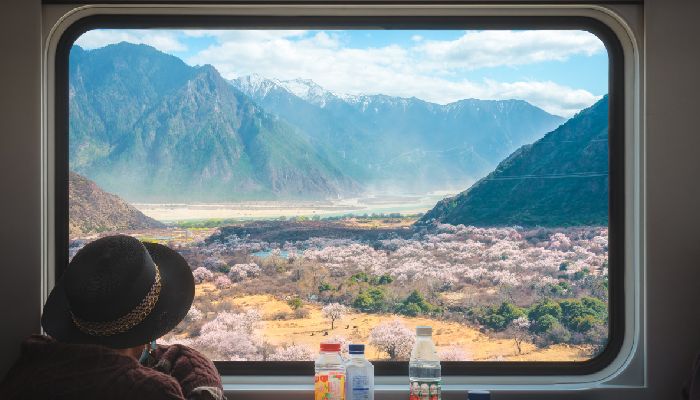
Scenery Outside the Window of the Qinghai-Tibet Railway Train
Gateway Cities from Australia to Tibet
For Australian travelers flying halfway across the globe to China, making the most of major Chinese cities as transfer points can maximize the richness of your journey. You can stay in one or more Chinese cities first according to your flight schedule and personal interests, and finally connect seamlessly to Tibet with the assistance of a travel agency. The most commonly used gateway cities for Australian travelers to enter Tibet are as follows:
- Chengdu: As the top choice gateway to Tibet, both Chengdu Shuangliu International Airport and Chengdu Tianfu International Airport operate Tibet routes with multiple airlines, offering the most flight options and flexibility, with multiple daily round-trip flights.
- Chongqing: Direct flights to Lhasa Gonggar Airport are available, with the number of flights second only to Chengdu. Chongqing Jiangbei International Airport operates multiple direct flights to Lhasa with a flight time of about 2-3 hours and convenient connections. The airport has easy transportation to the urban area, suitable for a short stay before heading to Tibet quickly.
- Beijing: You can take a direct flight to Lhasa Gonggar Airport or choose the Qinghai-Tibet Railway to Lhasa (a 40-hour train ride) to enjoy the magnificent scenery of Hoh Xil, Tanggula Mountains and other sights along the way. Both Beijing Capital International Airport and Beijing Daxing International Airport operate regular flights to Lhasa. Australian travelers can choose according to personal preferences and acclimatization needs.
- Shanghai: Direct flights to Lhasa Gonggar Airport are available at both Shanghai Pudong International Airport and Shanghai Hongqiao International Airport. There are frequent flights from major Australian cities to Shanghai with convenient connections.
Chengdu is the most popular gateway to Tibet for Australian travelers due to its highest flight frequency and the most natural cultural transition. If time permits, you can consider entering Tibet from Beijing via the Qinghai-Tibet Railway, or take the Chengdu-to-Nyingchi flight route to acclimatize to the plateau gradually from low-altitude Nyingchi and reduce the risk of altitude sickness.
How to Travel from Australia to Tibet: From Ocean to the Sacred Realm
From sunny Australia to the snowy plateau of Tibet, this is a journey halfway across the globe, and a profound experience crossing cultural and geographical boundaries. When you finish the long flight and finally stand on the Potala Palace Square looking up at this millennial palace, or gaze at the glittering golden roof of Jokhang Temple, the shock and touch at that moment will make all pre-trip planning and preparation worthwhile. For Australian travelers, a successful Tibet trip starts with three core links: documents, transportation and gear. Master these three key points and get assistance from a professional travel agency, and you can face the challenges of the plateau with ease and focus on experiencing the grandeur and sacredness of this land. May this detailed guide help you from the Southern Hemisphere arrive at this pure land on earth smoothly, and write your own unforgettable chapter on the Roof of the World.