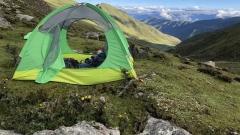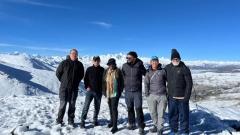

China’s peak travel season is the golden period of the year for deeply exploring both natural landscapes and cultural heritage. From late spring to early autumn, nature awakens, the climate stabilizes, snow melts on the plateaus, and grasslands turn green. Many destinations that are difficult to access at other times of the year reveal their most complete and stunning scenery during this season.
Tibet and Xinjiang, in particular, stand out during China’s peak travel season. Not only are their landscapes at their most magnificent, but transportation, accommodation, and itinerary arrangements are also more mature and reliable, making them ideal destinations for in-depth travel planning.
When Is China’s Peak Travel Season, and Why Is It Worth Traveling Then?
Generally speaking, China’s peak travel season runs from April to October. Spanning spring, summer, and autumn, this period is when China’s vast and diverse landscapes are at their most complete and accessible.
For plateau and northwestern regions, peak season means fully open roads, melting snow, re-emerging blue lakes, and breathtaking scenery that is only visible during specific months. At the same time, many ethnic festivals and local cultural events are scheduled during months with stable weather, allowing travelers not only to see landscapes but also to immerse themselves in local culture and daily life.
Although crowds are larger during peak season, thoughtful route planning and well-paced itineraries often result in a safer, more complete, and richer travel experience.
Tibet Peak Travel Season – Discovering the Plateau at Its Most Complete
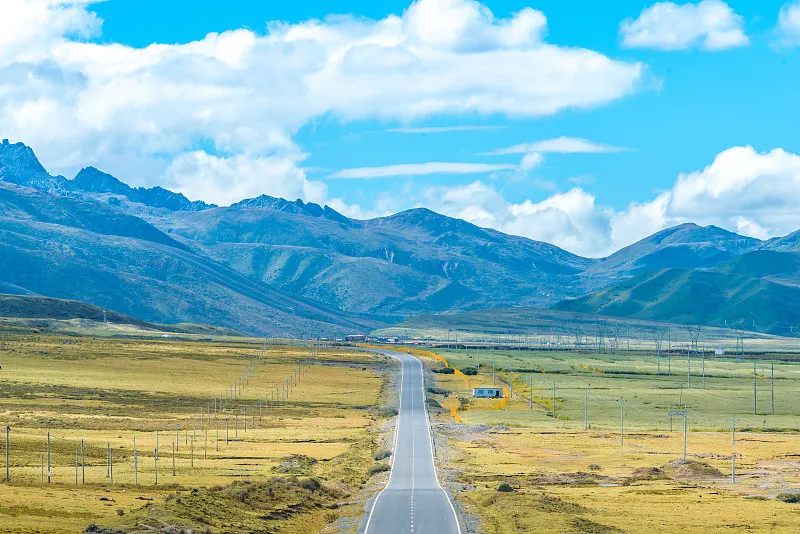
Tibet’s peak travel season mainly falls between May and October. During this period, the plateau climate is relatively mild, with abundant sunshine during the day and cool temperatures at night, making it the best time of the year to enter Tibet.
Compared to winter road closures and harsh cold, peak-season Tibet offers smoother transportation and better conditions for long-distance travel and deep exploration.
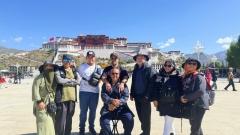
In Lhasa, the Potala Palace, Jokhang Temple, and Barkhor Street form the spiritual and daily-life core of Tibetan culture. During peak season, clear skies and high visibility allow the red-and-white palace to stand out magnificently against the blue sky, creating ideal photography conditions. In the early morning and evening, pilgrims and travelers circle the temples together, vividly reflecting the city’s spiritual rhythm.
After leaving Lhasa, Nyingchi enters its most enchanting season in late spring and early summer. Plateau peach blossoms, canyon rivers, and snow-capped peaks appear simultaneously, making Nyingchi the gentlest gateway to Tibet for many travelers.
For those seeking further adventure, Shigatse, Everest Base Camp, and the Ngari region enjoy optimal travel conditions during peak season, offering the perfect opportunity to fulfill a once-in-a-lifetime highland dream.
The key to traveling Tibet during peak season lies in pacing and professional planning. Slowing down appropriately, managing altitude changes carefully, and choosing travel teams familiar with local conditions ensure a safe and rewarding journey amid the grandeur.
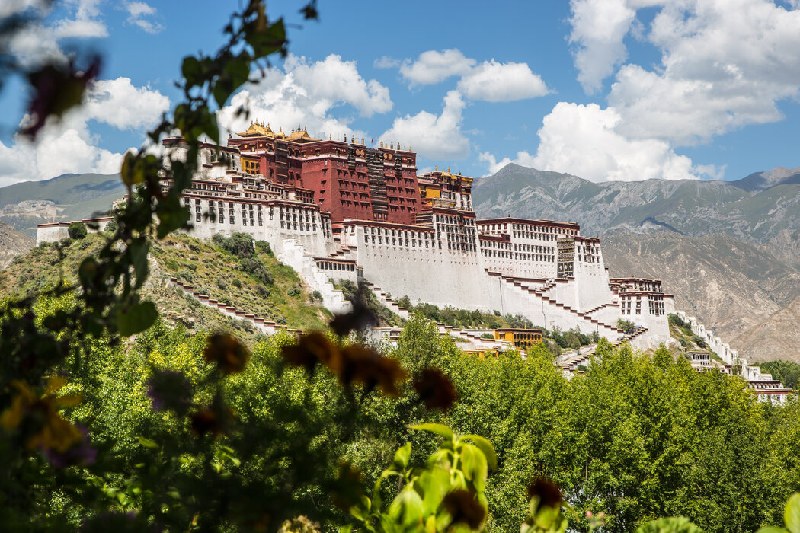
Potala Palace, Tibet
Xinjiang Peak Travel Season – Where Grasslands, Deserts, and Silk Road Culture Converge
Xinjiang’s peak travel season generally runs from June to September, when its natural landscapes are at their most abundant. Due to its vast territory, Xinjiang is commonly divided into Northern Xinjiang and Southern Xinjiang travel routes, both of which can be experienced during peak season.
Northern Xinjiang showcases breathtaking natural scenery. In early summer, the Ili River Valley turns lush green, with grasslands stretching to the horizon, complemented by lavender fields, wildflowers, and grazing herds. Nalati and Kalajun Grasslands are ideal for slow travel and photography, while Kanas Lake and Hemu Village gradually adopt warm hues from late summer to early autumn, resembling a fairytale world.
Southern Xinjiang, by contrast, emphasizes cultural and historical experiences. During peak season, Kashgar Old City is vibrant and authentic, with bazaars, mosques, and traditional handicrafts forming a complete living landscape. The Pamir Plateau’s snow peaks, lakes, and ethnic villages reveal Xinjiang in its purest form.
Xinjiang peak-season travel involves long distances and multiple destinations, making itinerary and transportation planning particularly important. Traveling in small groups or by private vehicle enhances comfort and allows for deeper exploration and photography, avoiding rushed sightseeing.
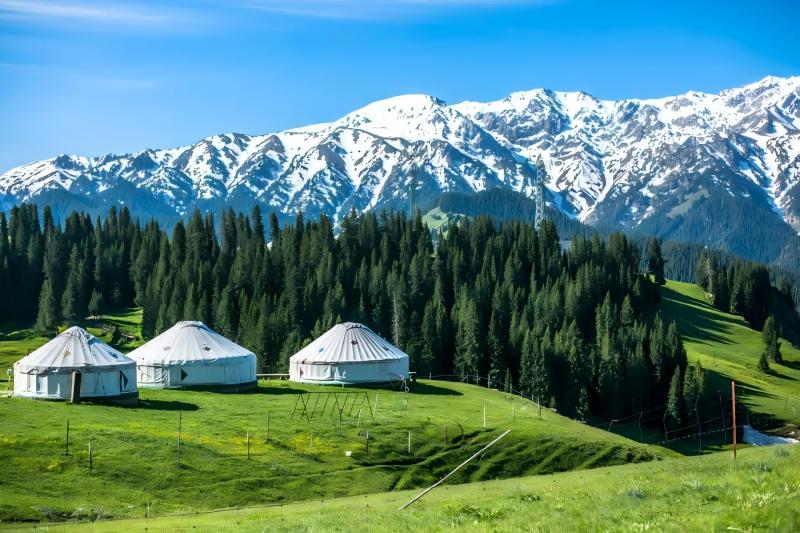
The picturesque Xinjiang, like something out of a poem or painting
Practical Itinerary Planning Tips for China’s Peak Travel Season
Early planning is essential when traveling during China’s peak season. Popular cities and scenic spots often require advance reservations, and flight and accommodation prices tend to rise closer to departure dates. It is recommended to begin planning at least one to two months in advance and clearly define travel priorities—whether focusing on natural scenery, cultural experiences, photography, or in-depth exploration.
Travelers should also select routes based on physical condition and travel experience. Plateau and desert regions require careful itinerary design and safety considerations. Professional travel teams can greatly reduce uncertainties, allowing travelers to focus fully on the experience itself.
Recommended Tibet Itinerary – Lhasa, Shigatse, Yamdrok Lake, Everest Base Camp & Namtso 10 Days / 9 Nights
- Day 1: Arrive in Chengdu Tianfu International Airport according to your flight schedule. After arrival, check in at Tianfu International Hotel.
- Day 2: Morning flight from Tianfu Airport to Xining Caojiabao Airport (reference flights depart around noon and arrive in the afternoon). Alternatively, take the Qinghai–Tibet Railway (reference trains Z9821, Z8991, Y971, departing between 9–11 PM).
- Day 3: Arrive at Lhasa Railway Station or Gonggar Airport. Your driver and guide will greet you and take you along the Lhasa River scenic route to the city. After hotel check-in, rest and avoid strenuous activities to acclimatize to the altitude.
- Day 4: Visit the Potala Palace in the morning, the iconic landmark and former residence of the Dalai Lamas. Inside are stupas, murals, thangkas, and Buddhist statues showcasing Tibetan cultural heritage. In the afternoon, visit Jokhang Temple, one of the earliest Tibetan Buddhist temples, housing the revered statue of Shakyamuni brought by Princess Wencheng. Later, walk clockwise around Barkhor Street with local pilgrims.
- Day 5: Travel to Yamdrok Lake, one of Tibet’s three sacred lakes, famed for its vivid turquoise colors. Continue to Karola Glacier, whose massive ice formations resemble frozen time. Pass through Gyantse County, view Dzong Fortress from afar, and cross the Gyantse Plain before reaching Shigatse.
- Day 6: Depart for Tingri via Gawula Pass (5,220 m). On clear days, Mount Everest gradually appears on the horizon. Enter the Everest Nature Reserve, visit Rongbuk Monastery—one of the world’s highest monasteries—and continue to Everest Base Camp.
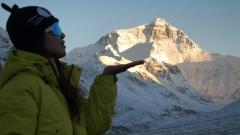
- Day 7: Watch sunrise over Mount Everest, with golden light illuminating the snow-covered peak. Return to Shigatse in the afternoon.
- Day 8: Visit Tashilhunpo Monastery, seat of the Panchen Lamas and one of the six major Gelug monasteries. See the 28-meter-high Maitreya Buddha statue. Drive back to Lhasa.
- Day 9: Visit Namtso Lake, one of Tibet’s three sacred lakes and the world’s highest saltwater lake. Travel through the Nagqu Valley and northern grasslands, cross Nagenla Pass, and enjoy the vast, tranquil scenery. Return to Lhasa in the afternoon.
- Day 10: The journey concludes as you return home.
Detailed itinerary reference:
https://www.chinadragontravel.com/tour/10-day-tibet-tour-autumn/
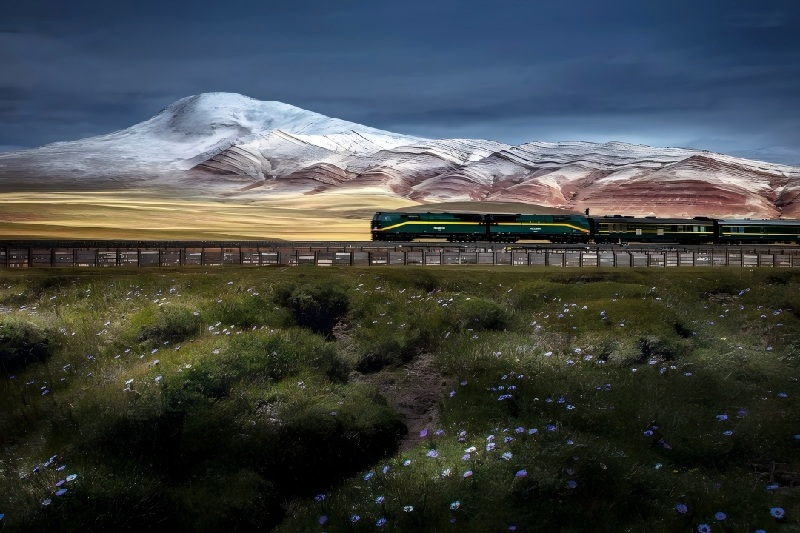
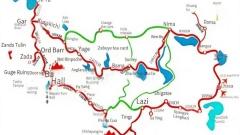
Train journey to Tibet
Recommended Xinjiang Itinerary – Sayram Lake, Nalati, Tuergen, Tuka Desert 8 Days / 7 Nights
- Day 1: Arrive in Chengdu independently. Transfer to Chengdu West Railway Station. Take the overnight train to Urumqi (soft sleeper).
- Day 2: Travel through the ancient Silk Road landscapes of Danxia landforms, Gobi, and desert. Arrive in Urumqi, meet local staff, and check in to the hotel.
- Day 3: Visit Sayram Lake, a national 5A scenic area. Lush grasslands, blooming flowers, crystal-clear blue waters, snow-capped peaks, yurts, and grazing livestock create a breathtaking panorama. Enjoy a photography session by the lake.
- Day 4: Capture sunrise at Sayram Lake, where morning light gently ripples across the water. Pass through the spectacular Guozigou Valley (viewed en route only) and continue to Nalati Grassland, known as the “Sky Grassland.”
- Day 5: Visit Tuergen Apricot Blossom Valley, home to one of the world’s largest ancient apricot forests. In the afternoon, explore Kazanqi Folk Village, a blue-toned town reminiscent of Chefchaouen, Morocco. Overnight in Yining.
- Day 6: Explore Tuka Desert, known for its unique vegetation coverage. Continue to Daxi Valley Fushou Mountain before heading to Dushanzi or Kuitun.
- Day 7: Visit Dushanzi Grand Canyon, carved over millions of years by snowmelt and rainwater. Then drive along the S101 Defense Highway, built in the 1960s for strategic defense.
- Day 8: Return to Chengdu. One complimentary night near Tianfu Airport may be arranged.
Detailed itinerary reference:
https://www.chinadragontravel.com/tour/8-day-xinjiang-tour-southern/
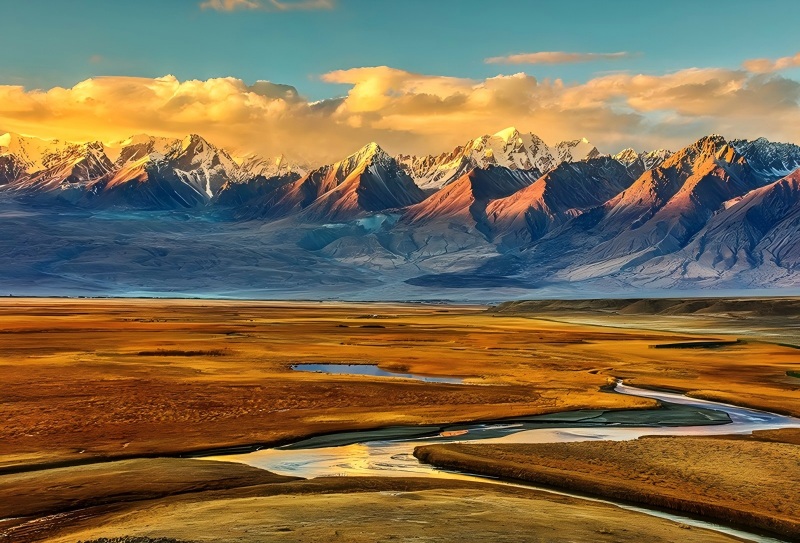
The vast grasslands of Xinjiang
Travel the Most Worthwhile Roads in the Most Beautiful Season
China’s peak travel season is not merely a synonym for crowds—it is the time of year when landscapes are most complete and cultures are most vibrant. Whether gazing upon sacred snow peaks and spiritual traditions in Tibet, or traversing grasslands and deserts in Xinjiang, these experiences become some of the most unforgettable journeys of a lifetime.
China Dragon Travel has long specialized in Tibet and Xinjiang routes, focusing on small-group in-depth travel and customized itinerary planning. With a strong emphasis on safety, pacing, and cultural respect, Yulong Travel Agency accompanies travelers in discovering their own authentic China. When you are ready to travel during China’s peak season, let China Dragon Travel be your most reliable travel companion.