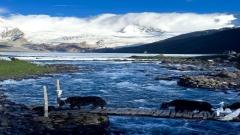

When people think of Tibet, they often picture snow-capped mountains, sacred lakes, and vast grasslands. However, Tibet is also home to lush forests, deep canyons, and spectacular waterfalls. One of the most underrated attractions is Kading Valley (Kadin Valley) Tianfo Waterfall, located in Nyingchi’s Bayi District.
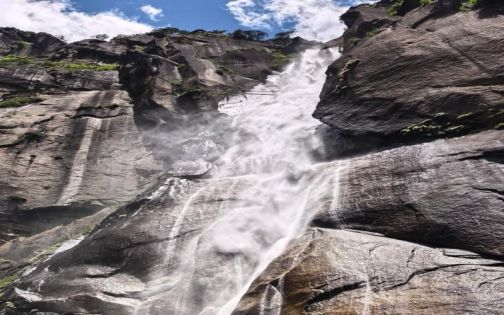
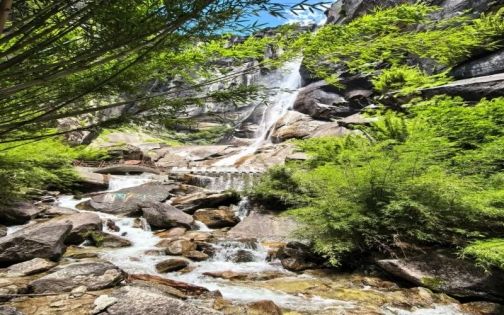
Unlike the grandeur of Mount Everest or Namcha Barwa, Kading Valley offers a completely different experience. Here you’ll find dense forests, crystal-clear streams, towering granite cliffs, and a breathtaking 200-meter waterfall. The valley is also famous for its naturally formed Buddha-shaped rock formations, making it both a scenic destination and a place of spiritual significance.
Situated just off the famous G318 Sichuan–Tibet Highway, Kading Valley is an ideal stop for travelers driving from Chengdu to Lhasa or exploring the Nyingchi region.
Kading Valley
Where Is Kading Valley Tianfo Waterfall?
Kading Valley is located approximately 24 km east of Bayi Town in Nyingchi, Tibet, directly beside the G318 National Highway. The drive from downtown Bayi takes around 40 minutes, making it one of the easiest natural attractions to visit in eastern Tibet.
Thanks to its convenient location and easy walking trails, it is suitable for travelers of all ages, including families with children and senior visitors.
Kading Valley is officially rated as a National AAAA Tourist Attraction.
Basic Information
- Attraction: Kading Valley Tianfo Waterfall
- Scenic Area Rating: National AAAA
- Elevation: Approximately 2,980 meters (9,777 ft)
- Tibetan Meaning of “Kading”: “Heaven on Earth”
- Recommended Visit Time: 1–1.5 hours
- Best Time to Visit: Year-round
- Suitable For: Families, photographers, road trip travelers, first-time visitors to Tibet
The Highlight of Kading Valley: Tianfo Waterfall
The centerpiece of the scenic area is the magnificent Tianfo Waterfall, which plunges nearly 200 meters down a massive granite cliff.
What makes the waterfall truly unique is the enormous natural Buddha image hidden within the rock face behind the cascading water.
With a little observation, visitors can clearly recognize the Buddha’s eyebrows, eyes, nose, and mouth. As the waterfall flows across the center of the rock formation, the Buddha appears and disappears through the mist, creating an almost mystical atmosphere.
This extraordinary natural phenomenon is why the waterfall is known as the “Tianfo” (Heavenly Buddha) Waterfall, attracting both tourists and Tibetan pilgrims.
Discover More Than Just the Waterfall
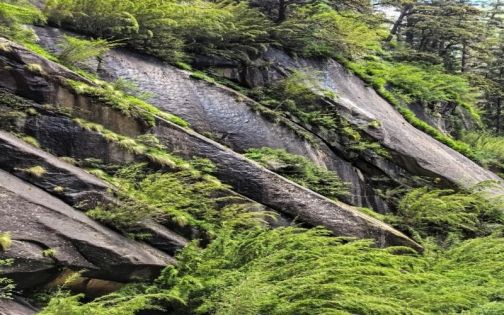
Many visitors come expecting only a waterfall, but the surrounding cliffs reveal far more fascinating natural formations.
With the help of a local guide, you’ll be able to identify more than a dozen naturally formed Buddhist and cultural symbols carved by nature over thousands of years.
The Goddess Palden Lhamo
On the right side of the waterfall stands a towering rock formation believed to resemble Palden Lhamo, one of Tibetan Buddhism’s most important protector deities.
Visitors often recognize the outline of her veil, prayer beads, and elegant silhouette.
Sacred Eagles, Divine Turtles, and Butter Lamps
Other famous rock formations include:
- Guardian Eagle
- Divine Turtle
- Butter Lamp
- Six-Syllable Mantra
- Auspicious Symbols
- Avalokiteshvara (Guanyin)
- Release Pond
- Bamboo Pool
- Four Auspicious Friends
Without a guide, many visitors overlook these remarkable formations, so joining a guided explanation greatly enhances the experience.
The Viral “Fairy Face”
In recent years, one of Kading Valley’s most talked-about attractions has become the mysterious “Fairy Face.”
Many travelers walk right past it without noticing until a guide points it out.
How to Find the Fairy Face
After entering the scenic area, follow the wooden boardwalk for about 10 minutes until you reach the waterfall.
Then:
- Face the waterfall.
- Slowly shift your gaze to the left cliff.
- Find a light-colored protruding rock that resembles a forehead.
From there, you’ll begin to notice:
- Dark indentations forming the eyes
- A naturally shaped nose bridge
- A gently smiling mouth
Once you see it, it’s almost impossible to unsee. It has become one of the most popular photography spots in the valley.
Kading Valley
Seasonal Differences at Tianfo Waterfall
June to September (Rainy Season)
This is when the waterfall is at its most spectacular.
The powerful flow crashes down the cliff, filling the canyon with mist and creating an impressive natural scene.
On sunny mornings, especially between 10:00 AM and noon, rainbows frequently appear in the spray, making it the best season for photography.
The surrounding forest is also at its greenest.
October to May (Dry Season)
During the dry season, the waterfall becomes much gentler.
Instead of a roaring cascade, the water resembles a thin silver ribbon flowing gracefully down the cliff.
Although the waterfall is less dramatic, the peaceful atmosphere and fewer visitors make it an excellent time for a quiet walk through the forest.
Some years, the scenic area even offers free admission during the winter off-season, making it one of the best-value attractions around Nyingchi.
A Natural Forest Oxygen Bar
While the waterfall draws visitors here, the forest itself is equally rewarding.
With over 95% forest coverage, Kading Valley is rich in:
- Fir forests
- Giant cypress trees
- Alpine rhododendrons
- Mountain streams
- Moss-covered rocks
In May, blooming rhododendrons add brilliant colors to the valley.
The wooden boardwalk is mostly flat and easy to walk, making the entire visit relaxing and accessible.
The scenic area also provides free oxygen stations, and thanks to its relatively low elevation of 2,980 meters, most travelers experience little or no altitude sickness.
How to Get to Kading Valley
By Car
Driving is the most convenient option.
From Bayi Town, simply follow the G318 National Highway for about 40 minutes.
Most self-drive travelers and organized tours between Lhasa and Nyingchi include Kading Valley as a scenic stop.
By Public Bus
Bus Route No. 7 connects downtown Bayi with Kading Valley.
- Distance: Approximately 31 km
- Travel Time: Around 1 hour
- One-way Fare: About RMB 10
- Payment: Cash or mobile payment
During the peak season (April–September), buses run frequently throughout the day.
During the off-season (October–March), buses operate on a fixed schedule, so checking departure times in advance is highly recommended. Returning before 4:00 PM is advisable to avoid missing the last bus.
Kading Valley
Entrance Fees
Ticket prices may vary depending on the season and local tourism policies.
Typical pricing includes:
- Peak Season: Approximately RMB 36–70
- Off-Season: Free admission during selected periods
- Students and seniors (60+) usually receive discounted tickets
- Some military veterans may enjoy free admission under applicable policies
It’s recommended to confirm the latest ticket information before your visit.
Best Time for Photography
For the best lighting conditions, visit:
- 9:00 AM – 11:00 AM
- 2:00 PM – 5:00 PM
During the rainy season, these hours often provide ideal sunlight for capturing rainbows over the waterfall.
The natural Buddha image and Fairy Face are also easier to distinguish under angled sunlight.
Is Kading Valley Worth Visiting?
If you’re expecting dramatic landscapes like Mount Everest or Yarlung Tsangpo Grand Canyon, Kading Valley may feel relatively modest.
However, as a convenient stop along the famous 318 National Highway, it offers excellent value.
Its advantages include:
- Easy access from Nyingchi
- Low elevation with minimal risk of altitude sickness
- Comfortable boardwalk suitable for all ages
- Rare natural Buddha-shaped rock formations
- Refreshing forest environment
- Short visit that fits easily into any itinerary
For travelers spending several days in Nyingchi or driving the Sichuan–Tibet Highway, Kading Valley is well worth adding to the schedule.
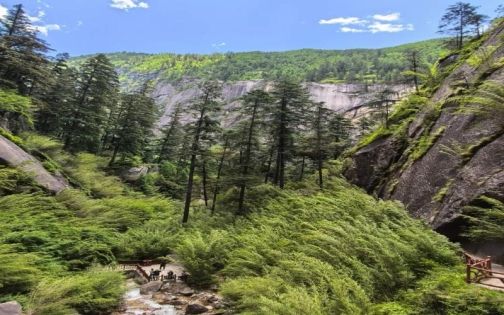
Kading Valley
Travel Tips
- Weather in Tibet changes quickly, so bring a light jacket and rain gear even in summer.
- During the rainy season, sections of the boardwalk may become slippery, so wear non-slip hiking or sports shoes.
- As this is a site with religious significance, please respect local customs and remain quiet while visiting.
- Joining a guided explanation helps visitors identify the Buddha image, Fairy Face, and other natural rock formations.
- Small shops inside the scenic area sell drinks and snacks, but carrying your own water is recommended.
- If traveling by bus, pay close attention to the return schedule to avoid missing the last departure.
- Most visitors complete the entire scenic area comfortably within 1 to 1.5 hours.
Although Kading Valley may not possess the overwhelming grandeur of Tibet’s highest mountains or largest lakes, its unique combination of lush forests, dramatic waterfalls, mysterious rock formations, and Tibetan Buddhist culture creates an unforgettable experience. For anyone exploring eastern Tibet or traveling along the legendary G318 Highway, this hidden canyon is a destination well worth discovering.
recommend route: