
Enveloped in the serene clasp of Xiahe County, nestled in the province of Gansu, Labrang Monastery emerges as a majestic testament to Tibetan culture and a cornerstone of the Gelugpa school. Its illustrious history is indelibly etched into the annals of time, accentuated by an awe-inspiring display of continuously turning prayer wheels. Annually, it beckons a stream of devotees seeking wisdom and spiritual edification. This meticulously crafted guide aims to furnish a comprehensive and pragmatic insight into travel arrangements, notable landmarks, and hallowed customs for those yearning to explore this consecrated retreat.
Transportation To Labrang Monastery
Labrang Monastery itself is located on the west side of Xiahe County, with transportation hubs mainly concentrated in Lanzhou. The first step in planning your trip is how to reach Xiahe from major cities.
Main Transfer Hub: Lanzhou
Whether you are coming from other cities in mainland China or entering via international flights, Lanzhou is usually the core transfer hub for traveling to Labrang Monastery. Lanzhou Zhongchuan International Airport and Lanzhou Railway Station/West Station are connected to the national network.
Options From Lanzhou To Xiahe County
- Long-distance Bus: This is the most common and economical way. Buses depart from Lanzhou South Bus Station, with a journey of about 4-5 hours, and you can enjoy the scenery of the transition from the Loess Plateau to the Qinghai-Tibet Plateau along the way. It is recommended to check the schedule in advance, especially during the tourist peak season.
- Chartered Car Or Shared Car: If you are traveling with companions or pursuing itinerary flexibility, chartering a car from Lanzhou to Xiahe is a good choice. The time is controllable, and you can stop at scenic spots along the way at any time, but the cost is significantly higher than that of buses.
- Group Tour: Many travel agencies offer multi-day tours departing from Lanzhou, covering Labrang Monastery and surrounding attractions. This way saves the trouble of arranging transportation and accommodation by yourself, and is suitable for tourists who want a worry-free trip.
Tips: Xiahe County is not large, and most accommodation and catering are concentrated in the county seat. After arriving at Xiahe Bus Station, you can walk to Labrang Monastery or take a convenient local taxi.
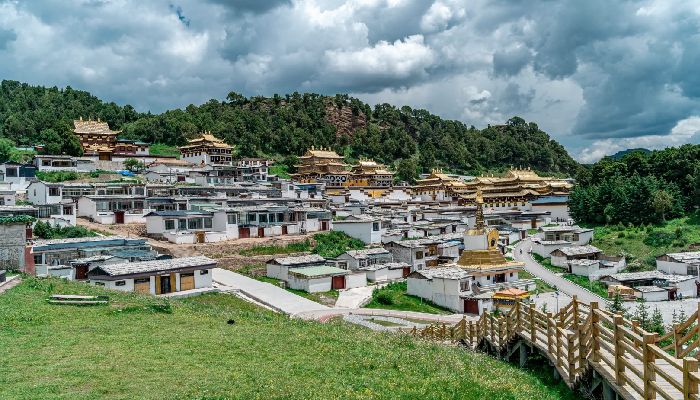
Labrang Monastery Panorama
Key Buildings & Visiting Highlights Inside Labrang Monastery
Stepping into Labrang Monastery is like entering a rigorously laid out and spiritually charged academic city. The entire complex is backed by Fenghuang Mountain, facing Longshan Mountain, with the Daxia River meandering in front, boasting excellent feng shui. Thousands of monks’ residences surround the six Zhacangs (colleges) and numerous Buddha halls like stars around the moon, and the main visiting routes are concentrated in the core area of the monastery. For first-time visitors, instead of rushing to visit every corner, it is better to focus on the following most representative and culturally valuable halls and experiences to deeply feel its essence.
Wenhua College: The Grand And Profound Core Of Wisdom
Wenhua College, commonly known as the Great Sutra Hall, is the soul of Labrang Monastery and the largest hall in the entire complex. It is the center where monks study Buddhism and debate scriptures every day. Its architecture is magnificent, with the interior supported by hundreds of giant pillars. The deep space is decorated with colorful thangkas and streamers, and light pours down from the skylights above, creating an extremely solemn atmosphere. The main hall enshrines the stupas of successive Jamyang Living Buddhas and numerous precious Buddha statues. During your visit, if you happen to encounter monks reciting scriptures collectively, the deep and rhythmic chanting echoing in the hall will bring a soul-stirring shock. Please be sure to keep quiet and walk slowly.
Shouxi Temple: The Hall Of The Future Buddha With Shining Golden Roofs
Shouxi Temple, also known as the Great Golden Tile Hall or Maitreya Buddha Hall, is the most dazzling landmark of Labrang Monastery with its brilliant gilded copper tile roof. The hall enshrines an 8-meter-high gilded standing statue of Maitreya Buddha, with a compassionate face overlooking all sentient beings. The architectural style of this hall integrates Han and Tibetan essence, and the sculptures of lions, flying dragons, etc. under the eaves are vivid. Under the sunlight, the entire golden roof shimmers, visible from a distance, and is a must-see for photography enthusiasts. It symbolizes good wishes for the future, and many believers pray piously here.
Prayer Wheel Corridor: Flowing Faith And Quiet Practice
This is perhaps the most touching experience at Labrang Monastery. The several-kilometer-long prayer wheel corridor surrounds the main buildings of the monastery, with thousands of ancient prayer wheels neatly arranged inside. From early morning to dusk, you can always see local Tibetans holding prayer beads, chanting mantras, and pushing the prayer wheels forward slowly clockwise. Each prayer wheel is filled with scriptures, and turning it once is equivalent to reciting them once. You can choose a section of the corridor, follow the crowd, touch the smooth wooden handles polished by time, and listen to the regular sound of the prayer wheels turning. This is not only a highly ritualistic participation but also an excellent way to calm your inner self.
Cultural Relics Exhibition Hall & Butter Sculpture Hall: Treasures Of Tibetan Art Aesthetics
If you want to deeply understand the historical depth and artistic achievements of Labrang Monastery, these two exhibition halls are crucial. The Cultural Relics Exhibition Hall collects ritual instruments of successive Jamyang Living Buddhas, seals and embroidered costumes granted by the imperial court, as well as countless precious Buddhist cultural relics and ancient books, which can be called a three-dimensional history of the monastery. The Butter Sculpture Hall displays the unique art of Tibetan Buddhism—butter sculptures. Monks create stunningly colorful and detailed Buddha statues, figures, flowers, birds and religious stories with butter as raw material mixed with mineral pigments at low temperatures, whose exquisiteness and beauty are breathtaking. These two places are key stops to enhance the depth of your cultural trip.
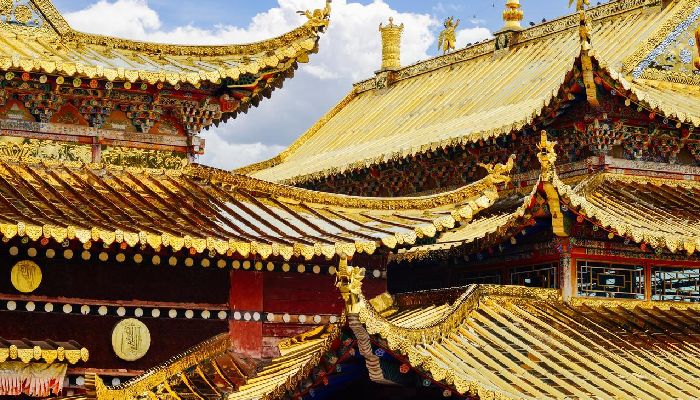
Golden Roof Architecture Of Labrang Monastery
Labrang Monastery Itineraries & Practical Visiting Suggestions
Planning a trip to Labrang Monastery, flexibly grasping the best time and abiding by local etiquette are the keys to a in-depth experience. Understanding the following practical information in advance can make your visit smoother and more rewarding.
Grasp The Best Visiting Time
Choosing the right time to visit directly affects the travel experience. May to October every year is the most pleasant season in terms of climate, when Xiahe is beautiful with green grasslands. Although July and August have stunning scenery, they coincide with the rainy season and tourist peak, so accommodation may need to be booked earlier. If you prefer tranquility, there are relatively fewer tourists in spring and autumn, with a unique quiet charm. As for visiting the monastery itself, it is recommended to reserve at least 3 to 4 hours to visit the main halls and prayer wheel corridor leisurely; if time permits, spend a whole day savoring it carefully to better feel its grandeur and daily rhythm.
Visiting Etiquette Must Be Observed
Labrang Monastery is an important religious practice site, and showing respect during the visit is crucial. Firstly, dress modestly and appropriately, avoid wearing sleeveless tops, shorts or overly bright and revealing clothes, and be sure to take off your hat when entering all halls. Secondly, be extra cautious when taking photos. Photography and video recording are strictly prohibited inside almost all Buddha halls, so please strictly follow the on-site signs; when taking photos of buildings or scenery outdoors, if you want to include local monks or believers in the frame, politely asking for their consent is the basic respect. Finally, please keep your voice low, do not run or touch Buddha statues, ritual instruments and other cultural relics in the halls, and follow the clockwise direction when circling the monastery or turning prayer wheels. These details are not only polite but also the starting point for in-depth understanding of local culture.
Labrang Monastery Surrounding Accommodation & Life In Xiahe County
The tourism supporting facilities in Xiahe County are relatively complete, which can meet the needs of tourists with different budgets.
Accommodation Options
There are various accommodation choices in the county seat, from budget hotels to more distinctive Tibetan-style hotels. Most accommodation locations are not far from Labrang Monastery and are within walking distance. It is recommended to book in advance, especially during the summer festivals.
Dining Experience
In Xiahe, you can taste authentic Tibetan food, such as zanba, butter tea, yak yogurt, and various noodles. There are also many Sichuan restaurants and halal restaurants on the main street of the county seat, with a variety of choices.
Budget Planning Reference
Costs vary from person to person, mainly including: round-trip transportation from Lanzhou to Xiahe, Labrang Monastery tickets, local accommodation and catering in Xiahe. Choosing a group tour usually includes these costs. Arranging by yourself is more flexible, and it is recommended to reserve sufficient cash, although some merchants in the county seat also support mobile payment.
Core Guidelines For In-depth Cultural Experience At Labrang Monastery
A seamless and enriching journey to Labrang Monastery hinges not solely on meticulous planning of the itinerary, but also on a prior understanding of its culture and genuine reverence during the actual visit. The monastery’s distinct allure is epitomized by its enduring role as a hub of scholarly research and spiritual devotion. The daily reverberation of soft incantations in the sutra chambers, the unceasing, rhythmic clacking of the prayer wheels, and the serene, devout visages of the faithful coalesce to create a lasting impression that transcends mere visual pleasure. It is advisable to allocate ample time and cultivate a tranquil disposition when preparing for this pilgrimage, to slow down and immerse oneself in the sacred tempo, thereby truly connecting with its spiritual essence. For those tourists who wish to delve deeper into the historical patrimony or wish to avoid the hassle of logistical arrangements, availing the services of seasoned organizations such as China Dragon Travel can afford a purer cultural engagement and absorption, thanks to their expert guided tours and itinerary facilitation. Whichever path you choose, the serenity and majesty of Labrang Monastery promise an unforgettable sojourn that justifies a purposeful journey.