
Many tourists visiting Beijing include Lama Temple on their itinerary. Built in 1694, it was a mansion granted by Emperor Kangxi to his fourth son Yinzhen. After Emperor Yongzheng ascended the throne, it became an imperial residence named “Yonghe Palace”. Emperor Qianlong later converted it into a Gelugpa temple of Tibetan Buddhism. As an imperial temple with nearly 300 years of religious history and marked by two emperors, it is the largest and best-preserved Tibetan Buddhist temple in Beijing. First-time visitors care about tickets, opening hours, visiting rules and main attractions. This article explains these practical details to help you plan a smooth visit.
Basic Information for Visiting Lama Temple in Beijing
Confirm the following basic information before departure to make your trip smoother.
- Ticket: Full price 25 CNY per person; half price 12 CNY for students and seniors over 60 with valid certificates; free for children under 6, military personnel and the disabled.
- Opening Hours: Peak season (April 1 – October 31) 9:00 – 17:00, ticket sales stop at 16:30; Off-peak season (November 1 – March 31) 9:00 – 16:30, ticket sales stop at 16:00. Closed on Mondays (except legal holidays).
- Visiting Duration: About 1.5 to 3 hours for a detailed visit, about 1 hour for a quick tour.
- Entry Tip: After reservation, enter by swiping your ID card or purchase voucher; no physical ticket needed. Arrive early before opening as queues are long on weekends and holidays.
- Incense Tip: Free incense sticks are provided on both sides of the Zhaotai Gate entrance, about 30 to 40 sticks per person, which is enough for the whole visit. No need to buy incense outside the temple.
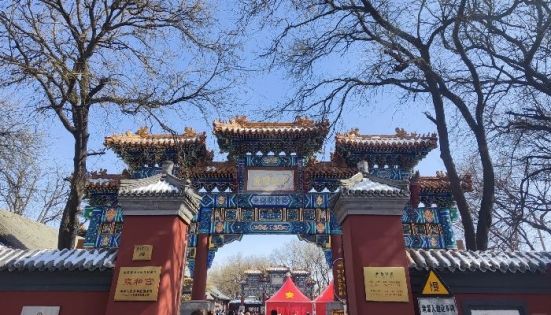
The Memorial Archway at the South Gate of Lama Temple
Historical Background of Lama Temple in Beijing
- Kangxi Period (1694): Emperor Kangxi built a mansion and granted it to his fourth son Yinzhen, named Prince Yong Mansion.
- Yongzheng Period (1725): After Emperor Yongzheng ascended the throne, it was converted into an imperial residence and named “Yonghe Palace”.
- Qianlong Period (1744): In the ninth year after Emperor Qianlong ascended the throne, he ordered it to be converted into a Gelugpa temple of Tibetan Buddhism.
Special Status: The coffin of Emperor Yongzheng was placed here, and the glazed tiles of the halls were changed from green to yellow, the exclusive color of the royal family. Emperor Qianlong was also born here, so Lama Temple in Beijing is also known as the “Land of Imperial Prosperity”. There is a four-sided stele of On Lamaism inscribed by Emperor Qianlong in the temple, carved in Manchu, Chinese, Mongolian and Tibetan languages.
Must-See Cultural Relics and Three Wooden Masterpieces in Lama Temple in Beijing
Among the precious cultural relics of Lama Temple, the most famous are the “Three Wooden Masterpieces”, which are must-see attractions during the visit.
First Masterpiece: White Sandalwood Maitreya Buddha (Wanfu Pavilion)
The treasure of the temple. Carved from a whole piece of white sandalwood, with a total height of 26 meters, 8 meters buried underground, 18 meters above ground, and a diameter of 8 meters, it is the world’s largest single-wood carved Buddha statue. Looking up at the foot of the giant Buddha, the visual effect is solemn and shocking.
Second Masterpiece: Red Sandalwood Five Hundred Arhats Mountain (Falun Hall)
The hall enshrines a bronze statue of Master Tsongkhapa. Behind the bronze statue is a huge red sandalwood “Five Hundred Arhats Mountain”. The five hundred arhats are cast from five metals: gold, silver, copper, iron and tin, with different postures.
Third Masterpiece: Golden Nanmu Buddhist Shrine (Zhaofo Building)
Exquisitely carved with relief, round carving, hollow carving and other techniques, the golden dragons have a stretched posture, and it is a representative work of royal craftsmanship.
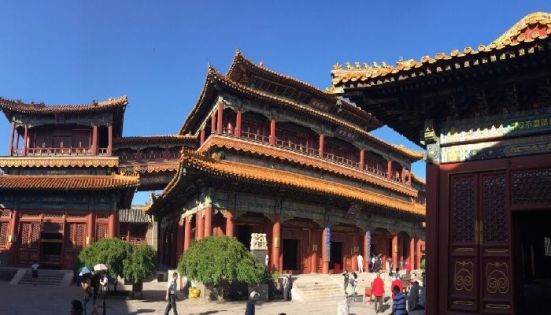
The Building of Wanfu Pavilion in Lama Temple
Prayer Guide and Introduction to Each Hall in Lama Temple in Beijing
Lama Temple in Beijing is famous for its effective prayers, and many tourists come here specially. The purposes of praying in each hall are as follows:
- Yonghemen Hall: Smooth life and peace.
- Yonghe Palace Hall: Wealth and good fortune.
- Yongyou Hall: Exorcise evil spirits and eliminate disasters.
- Falun Hall: Career development and promotion.
- Wanfu Pavilion: Good luck and happy marriage.
- Guanyin Pavilion: Happy marriage and having children.
- Yaoshi Hall: Good health and no illness.
- West Hall (Manjusri Hall): Academic progress and success in exams.
- East Hall (God of Wealth Hall): Great wealth and good fortune.
If time is limited, you can choose four key halls: Yonghemen Hall (peace), Yonghe Palace Hall (wealth), Falun Hall (career), and Wanfu Pavilion (marriage and good luck).
Precautions for Burning Incense and Worshiping in Lama Temple in Beijing
- Incense Collection: Free incense sticks are provided on both sides of the Zhaotai Gate entrance. Do not buy incense outside the temple. Incense supply may be suspended in extreme weather such as smog.
- Burning Incense: Use 3 incense sticks per hall. Do not blow out the flame; fan it gently by hand. Hold incense with left hand up, right hand down, raise it over your head and bow.
- Entering and Exiting the Hall Doors: Do not step on the thresholds; step over them directly.
- No Photography Inside Halls: Photography is prohibited in all halls.
- Dress Code: Do not wear overly revealing clothes. Take off your hat and sunglasses before entering the hall.
- Prayer Wheels: Only turn clockwise, not counterclockwise.
- Safety: If you encounter strangers begging or selling goods, refuse directly and inform the nearby staff.
Religious Goods Counters and Consecration in Lama Temple in Beijing
In recent years, the religious goods counters in Lama Temple in Beijing have attracted wide attention, and many people come here specially to buy bracelets, car hangings and other religious items.
Religious Goods Counters
There are three counters in total. The first one is on the west side outside the ticket gate, and you can buy religious items without entering the temple; the second one is on the east side outside Zhaotai Gate, next to the incense collection area; the third one is on the west side of Yongyou Hall, next to the consecration room, with the most complete styles but the longest queuing time.
Purchase Tips
Popular bracelets are often out of stock. It is recommended to arrive early or visit on weekdays. The passenger flow is extremely large on weekends.
Consecration
Send the purchased or own items to the consecration room, and monks will bless them for free. Consecration is held for dozens of people in groups each time. You can bring your own accessories (ID cards, driver’s licenses and other documents cannot be consecrated).
Buddhist Activities in Lama Temple in Beijing
Lama Temple in Beijing still maintains various traditional religious activities of the Gelugpa temple of Tibetan Buddhism.
Annual Major Activities
The Grand Prayer Festival and the Vajra Exorcism Dance (also known as Tiaobuzha) are held every year on the first lunar month. Monks wear masks, play the roles of gods, Buddhas, demons, etc., and dance with musical instruments accompanied by drums and cymbals, meaning to exorcise evil spirits and pray for peace. The Tiaobuzha Festival is held on the 29th and 30th of the first lunar month and the first day of the second lunar month.
Visiting Tips
If time permits, you can arrange a visit at this time to experience a strong religious and cultural atmosphere. There are many tourists during the event, please follow the guidance of on-site staff.
What to Do After Visiting Lama Temple in Beijing
After visiting Lama Temple in Beijing, if time permits, there are many places within walking distance worth visiting.
- Confucius Temple and Imperial College: Cross the road from the main gate to Confucius Temple and Imperial College. They were the imperial shrine and top academy of Yuan, Ming and Qing, connected and quiet.
- Wudaoying Hutong: A few minutes’ walk away. There are many characteristic cafes, designer shops and restaurants on both sides of the street, suitable for rest.
- Yonghegong Street and Guijie Street: There are many authentic Beijing-style restaurants on Yonghegong Street. Walk east for about 15 minutes to Guijie Street, a food hub. Huxiao Lobster is a well-known shop.
Frequently Asked Questions About Visiting Lama Temple in Beijing
Q: Can I bring a suitcase when visiting Lama Temple?
A: There is no luggage storage service in the temple at present. If you come with large luggage, it is recommended to store it in a nearby storage point before entering the park.
Q: Can I take photos inside Lama Temple?
A: It is okay to take photos of buildings and scenery in the outdoor yard. However, photography is prohibited in all main halls, which is a basic respect for religious sites and cultural relics.
Q: Is it suitable to visit with children?
A: Yes. The ground is flat and easy to walk, and children can also visit normally. You can briefly introduce the historical stories of Lama Temple in advance to make the tour more interesting.
Q: Does Lama Temple provide on-site explanations?
A: Automatic voice guides can be rented at the entrance, which will automatically sense and play explanations when arriving at important halls. Electronic guides are also available. It is not recommended to follow people who claim to be free tour guides at the gate, as most of them are for fortune-telling or high-priced incense sales.
Q: Are there catering facilities in Lama Temple?
A: There are no catering facilities in the temple. It is recommended to have meals before or after the visit. There are many restaurants and snack bars in Yonghegong Street, Wudaoying Hutong and other places.
Practical Tips for Visiting Lama Temple in Beijing
Whether you come to Beijing to experience the historical heritage or visit in a quiet environment, Lama Temple in Beijing is a place worth visiting carefully. It has gradually evolved from a prince’s mansion to an imperial temple with incense burning for nearly 300 years, and this transformation itself has unique historical value. The above practical information covers specific issues such as tickets, opening hours and visiting etiquette, which can help you complete the visit to Lama Temple smoothly. For a more worry-free travel experience, China Dragon Travel can provide cultural tour consultation and services in Beijing. Wish you a smooth trip in Beijing and a fulfilling and unforgettable visiting experience at Lama Temple in Beijing.