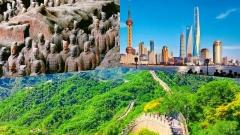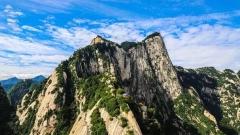

Xi’an is an ancient historical Chinese city, home to relics like the Terracotta Army and the Ancient City Wall. Tourists often struggle to choose among various attractions when planning self trips. Which spots are worth visiting? How to tour efficiently and ease tiredness? This article introduces Xi’an’s must-visit attractions one by one, with practical info including ticket prices, opening hours and visiting suggestions. It suits tourists who love historical sites or food. As a thirteen-dynasty capital, its attractions bear marks of ancient civilization. Proper planning raises travel efficiency and cuts extra costs. Learning about each site ahead makes your journey smoother.
Emperor Qinshihuang’s Mausoleum Site Museum Displays the Underground Military Formation of the Qin Dynasty
The Terracotta Army is the symbol of Xi’an. Standing in front of this “underground army”built more than 2,000 years ago, the endless military formation and the unique expressions of each terracotta warrior make people feel the momentum of the Qin Dynasty unifying the six states. The three pits cover a total area equivalent to 50 football fields, with more than 8,000 unearthed terracotta warriors. The site is known as the “Eighth Wonder of the World”.
- Pit 1: The largest area with the most terracotta warriors. More than 1,400 warriors are arranged in 38 columns, and the high platform on the right is the best spot for panoramic photos.
- Pit 2: A mixed formation of cavalry, crossbowmen and chariots, with rare green-faced warriors and kneeling archers unearthed. The kneeling archer is the treasure of the museum, with clear hair and sole patterns.
- Pit 3: The command headquarters of the entire formation, unburned by fire, with many remaining painted patterns, allowing visitors to imagine its original colors.
- Bronze Chariots and Horses Exhibition Hall: Two bronze chariots and horses cast precisely at half the size of real ones, with sophisticated craftsmanship, known as the “Crown of Bronze”.
- Ticket: 120 CNY (60 CNY for students), including Lishan Garden. Opening hours: 8:30—18:30 in peak season, 8:30—18:00 in off season. Online reservation is required in advance.
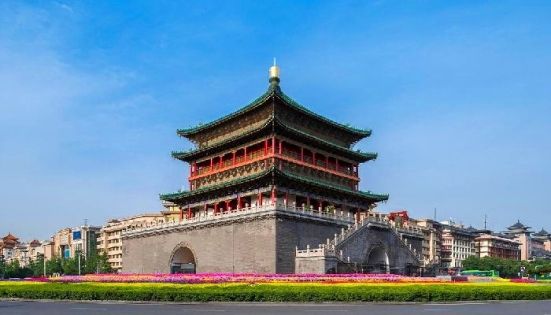
Xi’an Bell Tower
Xi’an City Wall Is the Best-Preserved Ancient City Wall in China
Xi’an City Wall is the largest and best-preserved ancient city wall in China, with a history of more than 650 years. Built during the Hongwu period of the Ming Dynasty, it was expanded on the basis of the imperial city of Chang’an in the Tang Dynasty. Its wall thickness is greater than its height, making the structure stable. It stretches about 13.7 kilometers long, 12 meters high, and 12 to 14 meters wide on the top. Standing on the wall, there is the ancient-style Shuyuan Gate on the inner side and modern streets on the outer side.
- City Gates: It originally had four main gates: East Changle, South Yongning, West Anding and North Anyuan, symbolizing Chang’an Yong’an (Eternal Peace in Chang’an). Now it has 18 gates in total.
- Visiting Ways: You can cycle, walk or take a battery car. A full loop takes about 1.5 to 2 hours. Thirteen watchtowers on the wall are now themed cultural halls showing its history, Chinese civilization and Guanzhong folk customs.
- Best Time: The light is suitable for photography in the evening, and you can watch both the sunset and the night view lighting.
- Ticket: 54 CNY (half price for students), 45 CNY for a single bicycle for 2 hours. Opening hours: 8:00—22:00 for the South Gate, 8:00—20:00 for other gates.
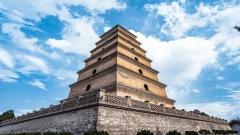
Giant Wild Goose Pagoda Is the Tang Dynasty Ancient Pagoda for Xuanzang to Store Buddhist Scriptures
Giant Wild Goose Pagoda is an important landmark of Xi’an, and the Great Tang All Day City on its south side recreates the prosperous night scene of the Tang Dynasty. It is recommended to visit the two places consecutively.
Giant Wild Goose Pagoda was first built in the 3rd year of Yonghui reign of the Tang Dynasty (652 AD). Master Xuanzang built it to enshrine the Buddhist scriptures and relics brought back from Tianzhu. It is 64.5 meters high with seven stories, the earliest existing square pavilion-style brick pagoda of the Tang Dynasty. On both sides of the south gate cave on the ground floor are the “Two Saints and Three Unique Treasures Stele”written by Chu Suiliang, a famous calligrapher of the Tang Dynasty. Climbing the pagoda offers a panoramic view of the whole city. There is the largest music fountain in Asia in the North Square, with the best effect at night.
Great Tang All Day City is a free pedestrian street about 2 kilometers long, the first immersive Tang culture-themed block in China.
- Statues of Great Tang Celebrities: Recreating the gathering of poets such as Li Bai and Du Fu.
- Interactive Performances: Glowing Taibai, Secret Box of the Prosperous Tang Dynasty, water sleeve dance, tumbler performance, etc. There is a shadow puppetry hall on the street.
- Hanfu Rental: 80 to 150 CNY per set including makeup and styling on the street, perfect for photos under night lights.
- Ticket: 30 CNY for Daci’en Temple, extra charge for climbing the pagoda. Free entry to Great Tang All Day City. Opening hours: 8:00—18:00 for Daci’en Temple; the lights turn on at 18:30 for the night city, and it is the busiest around 20:00.

Night View of Giant Wild Goose Pagoda
Shaanxi History Museum Houses Precious Cultural Relics of the Zhou, Qin, Han and Tang Dynasties
Shaanxi History Museum is known as the “Treasure House of China”, with a collection of fine cultural relics from the Zhou, Qin, Han and Tang dynasties. Many of its treasures are national-grade cultural relics.
- Gilded Agate Cup with Animal Head: The most magnificent jade ware of the Tang Dynasty, the only one in the world, prohibited from being exhibited overseas.
- Gilded Silver Pot with Dancing Horse Holding Cup Pattern: Confirming the historical fact that dancing horses were trained in the Tang court.
- Silver Sachet with Grape, Flower and Bird Pattern: Using the gyroscope principle, the inner spice bowl always stays balanced.
- Du Hu Tally: The token for mobilizing troops in the Qin Dynasty. The left and right halves must be combined to dispatch troops.
- Empress’s Jade Seal: The jade seal of Empress Lü of the Western Han Dynasty, the only existing jade seal of a Han Dynasty empress.
- Hejiacun Hoard: More than 1,000 pieces of Tang Dynasty gold and silver wares unearthed in 1970, with unknown owner and reason for hoarding.
- Ticket: Free for basic exhibitions but reservation is required in advance. Extra charge for special exhibitions. Opening hours: 9:00—17:30, closed on Mondays.
Muslim Quarter Gathers Special Local Snacks of Xi’an
Muslim Quarter is not a single street, but a block composed of North Courtyard Gate, North Guangji Street, West Yang Market, Grand Leather Courtyard, Sajinqiao and other streets. This area became a Hui community in the late Northern Song Dynasty, with a history of nearly a thousand years, and was once an important node on the Silk Road.
- Architectural Features: Buildings on both sides of the street combine Ming and Qing styles with Islamic features. There are many mosques in the block, among which Huajue Lane Great Mosque is the most famous.
- Food Suggestions: Try roujiamo, lamb paomo, cold noodles, persimmon cakes, steamed rice cake and sour plum soup. Don’t overeat at first shops; explore further. Grand Leather Courtyard and Sajinqiao are cheaper local picks.
- Recommended Food: Jia San Soup Dumplings, Huanggui Persimmon Cakes, red willow barbecue.
- Ticket: Free. Opening hours: All day, the busiest after 19:00 at night.
Bell Tower and Drum Tower Are the Central Landmarks of Xi’an
The Bell Tower and Drum Tower are located at the crossroads in the city center of Xi’an, about 300 meters apart. The idiom “morning bell and evening drum”originates here.
- Bell Tower: The 36-meter tower is China’s largest and best-preserved bell tower. It has a green-glazed triple-eave roof and once held the Tang Jingyun Bell. It was moved here in the 10th year of Ming Wanli.
- Drum Tower: The 34-meter-high Drum Tower was built 4 years earlier. It has two plaques and once held a large drum for timekeeping.
- Visiting Tips: Climb for day views and night photos. Visit the Drum Tower in the afternoon and the Bell Tower in the evening. A combined ticket is cheaper. A free 5th-floor deck in Kaiyuan Mall is perfect for night shots.
- Ticket: 30 CNY for Bell Tower, 30 CNY for Drum Tower, 50 CNY for combined ticket. Opening hours: 8:30—21:30 in peak season, 8:30—18:00 in off season.
Small Wild Goose Pagoda and Xi’an Museum Boast a Simple and Quiet Environment
Small Wild Goose Pagoda was built earlier than Giant Wild Goose Pagoda. It originally had 15 stories and now has 13 stories left, with a slightly inclined body showing a simple style. There is the “Morning Bell at Wild Goose Pagoda”, one of the Eight Sceneries of Guanzhong, and tourists can pay to ring the bell. The adjacent Xi’an Museum features Tang Dynasty pottery figurines and Buddhist statues, with elaborate exhibitions and fewer visitors than the Giant Wild Goose Pagoda area, suitable for slow walking and careful viewing.
- Ticket: Free, reservation required in advance.
- Opening hours: 9:00—18:00 in peak season, 9:00—17:30 in off season, closed on Tuesdays.
- Reservation Method: Official WeChat account of “Xi’an Museum”.
Xi’an Beilin Museum Collects Famous Ancient Steles
Xi’an Beilin Museum is built on the basis of Xi’an Confucius Temple and the Stone Forest, housing nearly 3,000 steles and epitaphs from the Han Dynasty to the Qing Dynasty. It is the earliest and largest museum of steles in China. Authentic stone inscriptions by famous calligraphers such as Yan Zhenqing, Liu Gongquan and Ouyang Xun can be viewed here. Even if you are not familiar with calligraphy, you can feel the profoundness of ancient Chinese culture.
- Ticket: 65 CNY in peak season, 50 CNY in off season.
- Opening hours: 8:00—18:00 (until 17:30 in off season).
- Tips: Hire a guide or rent an audio guide to understand the inscriptions. The museum offers stone rubbing shows. Nearby Shuyuan Gate Street sells calligraphy, paintings and stationery.
Huaqing Palace Is the Royal Hot Spring Palace of the Tang Dynasty
Located in Lintong District, Huaqing Palace is a royal resort and hot spring palace of the Tang Dynasty, famous for the love story of Emperor Xuanzong and Yang Guifei. The scenic area includes the Tang Dynasty Royal Hot Spring Relics (exclusive hot spring pools for emperors and concubines), Five Rooms Hall, Lishan Mountain and other sites. The large-scale live-action performance Song of Everlasting Sorrow is staged at night, with Lishan Mountain as the background and stunning sound, light and electric effects.
- Song of Everlasting Sorrow Performance: Based on Bai Juyi’s poem and integrated with real mountains and rivers, it is a representative performance of Shaanxi tourism.
- Ticket: 120 CNY (peak season), including Huaqing Pool and Lishan Mountain. Opening hours: 7:00—19:00 (ticket sales stop at 18:30).
- Tips: It is recommended to buy tickets online in advance for Song of Everlasting Sorrow. Climbing to the top of Lishan Mountain offers a panoramic view of Lintong.
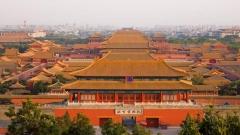
Daming Palace National Heritage Park Recreates the Grand Tang Dynasty Palace
Daming Palace was the most magnificent palace complex of the Tang Dynasty, covering an area about four times that of the Forbidden City in Beijing. Although the ground buildings no longer exist, the heritage park has a grand layout, allowing visitors to feel the majesty of the “Palace of Palaces”. The park houses Danfengmen Relics Museum, Daming Palace Relics Museum and miniature landscapes. The miniature model completely restores the layout of Daming Palace with a shocking visual effect.
- Ticket: Most areas are free; 60 CNY for charged areas (including museums and miniature landscapes).
- Opening hours: 8:30—19:00.
- Tips: The park is vast, so taking a battery car is recommended. It is better to visit in the afternoon, with oblique light shining on the relics in the evening, suitable for photography.
Main Expenses for Traveling in Xi’an
Ticket Budget: Terracotta Army 120 CNY, City Wall 54 CNY, Daci’en Temple 30 CNY, Bell Tower & Drum Tower 50 CNY, Beilin Museum 65 CNY, Huaqing Palace 120 CNY. Total for 5–6 main spots: 300–400 CNY.
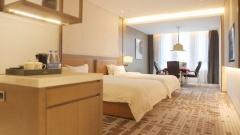
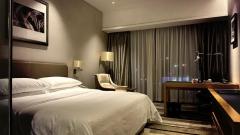
Accommodation Budget: Budget hotels: 150–250 CNY/night; comfortable ones: 300–500 CNY; high-end: over 600 CNY. Staying near the Bell Tower is convenient but costly; metro-line areas are cheaper.
Food Budget: Roadside stalls: over 10 CNY/meal; Muslim Quarter: 50–60 CNY/person; ordinary restaurants: 70–80 CNY/person. Daily food can be under 100 CNY, or 150–200 CNY for a better experience.
Ways to Save Money on Traveling in Xi’an
Travel in Off Season: Air tickets, accommodation and tickets are discounted from November to February of the next year, with fewer tourists.
Reserve Free Tickets in Advance: Shaanxi History Museum and Small Wild Goose Pagoda are free with advance booking. You can buy special exhibition tickets if needed, and students get discounts.
Package Booking: Many travel platforms offer “hotel + ticket”packages, usually cheaper than booking separately.
Join Group Tours: For solo travelers, joining a one-day small group tour is more economical than buying tickets and taking taxis alone.
Food Choices: The main street of Muslim Quarter is expensive, you can go to side alleys such as Grand Leather Courtyard and Sajinqiao, which are more popular among locals with affordable prices.
Important Tips for Traveling in Xi’an
Wear Comfortable Shoes: Most attractions require walking, the number of steps for visiting the Terracotta Army often exceeds 10,000, and cycling on the City Wall also consumes physical strength. Sneakers are the first choice.
Sun Protection: The sun is strong in summer, and ultraviolet rays are not weak in spring and autumn. Bring hats, sunglasses and sunscreen.
Refuse Roadside Solicitors: There are often people at attraction entrances claiming to sell “cheap tickets”, “fast tracks”or “guide services”, most of which are frauds. Only buy tickets and book guides through official channels.
Prepare Cash: Mobile payment is popular in urban areas, but a small amount of cash is more secure. Tourists can use mobile payment.
Things to Confirm Before Departing for Xi’an
There are many attractions in Xi’an. Tourists can combine the above attractions to form a complete itinerary. You don’t have to visit all places at once; it is more reasonable to choose the attractions you are interested in and visit them one by one. If you are worried about difficulty in ticket reservation or tight accommodation in peak season, it is recommended to complete ticket and accommodation booking for key attractions one to two weeks in advance. Check documents, charging devices and common medicines before departure, prepare sun protection products in summer and lip balm in winter. China Dragon Travel provides small group and private tour services, which can arrange tickets, accommodation and transportation uniformly.