
Traveling from Lhasa to Nyingchi by road ranks among the most immersive journeys in Tibet. Connecting two of the region’s premier tourist hubs, this route weaves through snow-capped mountains, deep canyons, glistening lakes, lush forests, and traditional Tibetan villages, boasting diverse and breathtaking scenery. Choosing the right road is pivotal to your travel experience. This guide puts three core highways at the forefront, detailing each route’s conditions, itinerary, ideal travelers, plus must-stop attractions, transport options, and practical tips to help you plan a flawless road trip.
Lhasa-Nyingchi Expressway (G4218): The Fastest & Most Comfortable Scenic Shortcut
As the top choice for traveling from Lhasa to Nyingchi by road, the Lhasa-Nyingchi Expressway is a massive-investment-built landscape expressway with no tolls for the entire journey. Blending speed and scenic beauty, it’s the go-to option for most time-constrained travelers. This route not only shortens the distance between the two cities but also significantly enhances the comfort of plateau road travel.
Route Core Info
Stretching approximately 409 kilometers, the expressway starts in Chengguan District, Lhasa, and ends in Bayi District, Nyingchi. Designed with a speed limit of 80km/h, the regular driving time is only 5-6 hours—currently the fastest road route from Lhasa to Nyingchi. Winding almost parallel to the Nyang River for the whole trip, it has an average altitude of around 3,000 meters, which greatly reduces the risk of altitude sickness compared to national highways, making it easily manageable even for travelers with elderly family members or children.
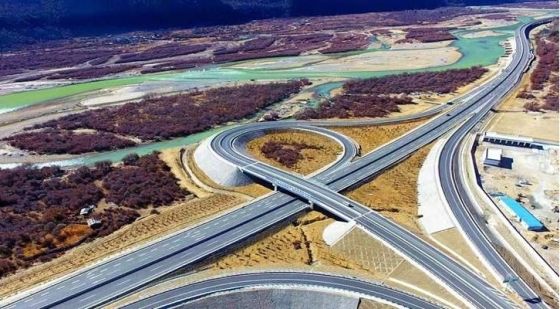
Lhasa-Nyingchi Expressway
The supporting facilities along the route are well-equipped. To date, 10 service areas and parking lots, including Ganden Monastery Service Area, Riduo Service Area, Bangjietang Service Area, and Jinda Service Area, are fully operational. They offer basic services such as refueling, hot water, restrooms, and temporary parking. Some service areas are built in spots with stunning views, allowing you to admire the magnificent Nyang River scenery while taking a break.
Suitable Travelers & Transport Options
Suitable Travelers: Time-constrained travelers, those traveling with the elderly or children, those seeking a comfortable experience, or anyone wanting to reach Nyingchi quickly.
Corresponding Transport: Self-driving and intercity buses are the main choices for this route. For self-driving, you can rent an SUV or a regular sedan—with smooth roads and relatively few curves, even regular models can handle it easily. Lhasa North Suburb Bus Station operates frequent intercity buses to Nyingchi, with fares ranging from 150 to 200 RMB. Luxury commercial coaches offer higher comfort, departing one after another early in the morning and traveling the entire length of the Lhasa-Nyingchi Expressway with short stops at service areas.
Must-Visit Attractions & Activities
Though renowned for speed, the Lhasa-Nyingchi Expressway still features numerous worthwhile stops, which you can arrange flexibly based on your itinerary:
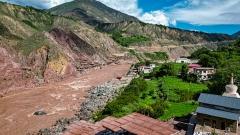
Nyang River Scenic Belt: The highway runs almost alongside the Nyang River throughout the journey. The crystal-clear river displays various hues such as light blue and deep green as light changes, with scattered Tibetan villages and farmland on both banks. There are multiple temporary viewing spots along the way, allowing you to stop and take photos anytime.
Basong Co: Located in Gongbu Jiangda County, approximately 300 kilometers from Lhasa. Exit the expressway at Gongbu Jiangda and drive about 30 kilometers to reach this destination. As one of Tibet’s first national 5A-level scenic areas, Basong Co is a crescent-shaped lake with bright blue water, surrounded by snow-capped mountains and forests. In spring, when peach blossoms bloom, it resembles a fairyland. Within the scenic area, you can take a boat tour on the lake or hike along its shores.
Xiuba Ancient Castles: Exit at Xiuba Parking Area on the Lhasa-Nyingchi Expressway and walk to reach this well-preserved thousand-year-old castle complex. Composed of several stone-built castles, it leans against green mountains and faces the Nyang River, exuding a simple and vicissitudes atmosphere—perfect for a short visit.
Notes
Temporary traffic controls may be implemented on some sections due to construction. For example, as of January 2026, the section from Gongbu Jiangda Interchange to Taizhao Interchange requires a detour via G318 (total length 33 kilometers). It’s advisable to check real-time road conditions via the Nyingchi Culture and Tourism WeChat official account before departure. Catering options at service areas along the expressway are limited, mostly simple meals, so it’s recommended to bring your own snacks and drinking water.
Reverse G318 National Highway (Lhasa-Nyingchi Section): Pristine Experience on China’s Most Beautiful Scenic Avenue
Known as China’s most beautiful scenic avenue, the Sichuan-Tibet Line G318 offers the most essential pristine scenery on its eastern section from Lhasa to Nyingchi (traveled in reverse). Though slightly more time-consuming, this route is full of surprises at every turn, making it a favorite among outdoor photography enthusiasts and self-driving fanatics.
Route Core Info
Covering about 470 kilometers, the route starts in Lhasa, passes through Maizhokunggar County and Gongbu Jiangda County, and ends in Bayi District, Nyingchi, with a regular driving time of 6-8 hours. Unlike the Lhasa-Nyingchi Expressway, this route requires crossing Mila Pass, which stands at an altitude of 5,013 meters—the highest point on any road from Lhasa to Nyingchi. Afterwards, it follows the Nyang River downstream, passing through forested canyons and plateau meadows, allowing you to deeply experience the diverse landforms of Southeast Tibet.
The road surface is generally smooth, but some sections have dense curves and significant altitude fluctuations. Particularly near Lulang Town, there are many winding mountain roads, which pose a certain test for driving skills. During the rainy season (June-August), falling rocks may occur on some sections, so night driving is not recommended.
Suitable Travelers & Transport Options
Suitable Travelers: Experienced self-drivers, outdoor photography lovers, those yearning for the classic Sichuan-Tibet Line scenery, and travelers willing to spend time on an in-depth road trip.
Corresponding Transport: Self-driving and private car charter are the best options. For self-driving, it’s advisable to rent an SUV or off-road vehicle to handle winding mountain roads and potential complex road conditions. For chartering, you can choose a local regular travel agency or car rental company, with prices ranging from 1,000 to 1,800 RMB per day (fluctuating based on vehicle type and season). Drivers are familiar with road conditions and attractions, enabling flexible itinerary adjustments.
Must-Visit Attractions & Activities
The charm of reverse G318 lies in the journey itself—every stop is worth a visit:
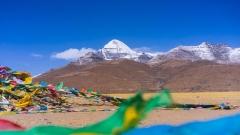
Mila Pass: At an altitude of 5,013 meters, it serves as the geographical boundary between Lhasa and Nyingchi and is a sacred mountain shrine for Tibetans. Here, huge prayer flag arrays flutter in the wind, creating a sacred atmosphere. Travelers can take
photos here, but stay time should be limited to avoid altitude sickness discomfort. It’s recommended to bring a thick coat to cope with the sudden drop in temperature.
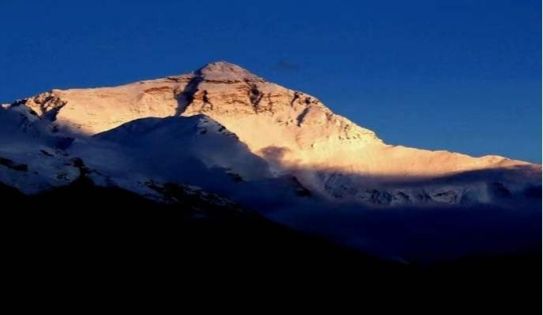
Mila Pass
Sejila Mountain Pass: Standing at 4,728 meters above sea level, it’s the highest point of G318 in the Nyingchi section and one of the best viewing platforms to admire Namcha Barwa, China’s most beautiful snow-capped mountain. With a wide view, you can gaze at the main peak of the snow-capped mountain. From May to June, you can also enjoy a sea of rhododendrons. However, Namcha Barwa is often shrouded in clouds and mist, with a visibility rate of less than 30%—encountering it is a matter of luck.
Lulang Forest Sea: Located near Lulang Town, it’s a thousands-of-mu forest of spruces and firs. Overlooking from the viewing platform, the green forest sea stretches in layers, forming a magnificent landscape with distant snow-capped mountains and white clouds. With fresh air, it’s known as a natural oxygen bar, perfect for a long stay to take deep breaths. After visiting, you can try the local specialty stone pot chicken in Lulang Town—with delicious mushrooms, it warms the body and relieves fatigue.
Giant Cypress Forest: Located along the highway from Bayi Town to Lulang, the cypresses here have a lifespan of hundreds of years, with trunks as thick as walls. As a rare tree species unique to Tibet, walking among them feels like stepping into a primeval forest.
Notes
The weather at Mila Pass and Sejila Mountain Pass is changeable with strong winds. It’s necessary to bring thick coats, windproof glasses, and sun protection products. Along the way, you will pass through several Tibetan villages, such as Cuogao Village and Zhaxigang Village. You can stop appropriately to experience the local customs, but you must respect local traditions and ask for permission before taking photos of residents. Drive cautiously during the rainy season and pay attention to falling rocks or water accumulation on the road.
Shannan G349 National Highway Detour: An Off-the-Beaten-Path Journey of Culture & Scenery
Compared to the previous two popular routes, the detour via Shannan G349 National Highway from Lhasa to Nyingchi is more off-the-beaten-path, yet it offers more pristine scenery and a deeper Tibetan cultural experience. This route connects Shannan, the birthplace of Tibetan civilization, making it ideal for travelers with ample time and a desire for unique experiences.
Route Core Info
Stretching approximately 600 kilometers, the driving time exceeds 10 hours, so it’s recommended to complete it in 2 days. The overall route is: Lhasa → Shannan City → Samye Monastery → Yumbulagang Palace → Middle Reaches of the Yarlung Zangbo River Valley → Nyingchi. This route not only allows you to admire the magnificent scenery of the Yalong Valley and Niwu Canyon but also takes you deep into the core birthplace of Tibetan culture, offering a pristine charm different from Lhasa and Nyingchi.
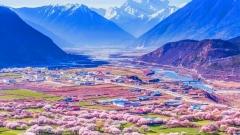
The road surface is mainly mountainous highways, with many curves in some sections, but generally smooth. The section from Shannan to Nyingchi passes through Niwu Canyon, where the highway runs closely alongside the Xiongqu River downstream. With dense forests on both banks and an altitude dropping to around 3,100 meters, it’s known as “Jiangnan of Northern Tibet” (the south of the Yangtze River in northern Tibet). Beyond Niwu Canyon lies a flat valley with clustered villages and beautiful scenery—you can see peach blossoms blooming all over the mountains in April.
Suitable Travelers & Transport Options
Suitable Travelers: Travelers with ample time (3-4 days recommended), those who prefer less-crowded routes, want to experience Tibetan culture in depth, and dislike crowds.
Corresponding Transport: Mainly private car charter or self-driving; public transport is not recommended (fewer scheduled buses along the way and inconvenient transfers). For chartering, you can communicate the itinerary with the driver in advance and make flexible stops at Shannan’s attractions and canyon viewing spots. For self-driving, you need to have rich experience in mountain road driving, download offline maps in advance, as mobile signals are weak in some sections.
Must-Visit Attractions & Activities
The highlight of this route is the dual experience of culture and scenery, with core attractions concentrated in Shannan and the canyon section:
Samye Monastery: The first monastery in Tibet, built in the 8th century. Its architecture integrates Tibetan, Han, and Indian styles with a unique layout, known as the “Thousand Buddha Temple.” The monastery preserves a large number of precious murals and Buddha statues, making it an important destination to learn about the history of Tibetan Buddhism.
Yumbulagang Palace: The first palace in Tibet, built on a hilltop in the Yalong Valley with a strategic location and magnificent scenery. Though not large in scale, it holds profound historical significance. Standing on the palace roof, you can overlook the pastoral scenery of the entire Yalong Valley.
Niwu Canyon: A hidden gem nestled in the mountains. The over 100-kilometer-long canyon features dense forests and clear rivers, with almost no tourists along the way. You can stop anytime to admire the pristine canyon scenery. In April, peach blossoms bloom here, contrasting beautifully with snow-capped mountains and forests—truly breathtaking.
Jinling Township Scenery: After exiting Niwu Canyon, you enter the territory of Jinling Township. Along the way, snow-capped mountains, grasslands, and rapeseed fields (July-August) unfold one after another. The winding mountain road with numerous curves offers magnificent scenery comparable to the “72 Turns,” making it a paradise for photography enthusiasts.
Notes
Attractions along the route are relatively scattered, so it’s necessary to plan daily itineraries reasonably to avoid fatigue driving. It’s recommended to stay in downtown Shannan on the first day and in Niwu Township or downtown Nyingchi on the second day. Small shops in some remote villages may not support mobile payments, so it’s essential to carry sufficient cash. Shannan is home to many monasteries—when entering, you must remove your hat, keep quiet, and not touch Buddha statues or prayer flags casually.
Universal Practical Guide (Including Transport & Pre-Trip Preparation)
Additional Transport Notes
Car Rental Reference: There are numerous car rental stores in downtown Lhasa. During the off-season (November-March next year), the daily rental price for a regular SUV is about 700-1,000 RMB; during the peak season (April-October), it rises to 1,000-1,500 RMB. The price includes vehicle rental and basic insurance, while fuel and parking fees are at your own expense. Charter fees include vehicle rental, fuel, tolls, and driver’s labor costs—you need to bear the driver’s accommodation and meals additionally.
Essential Pre-Trip Preparation
Clothing: The plateau climate is changeable with large temperature differences between day and night. It’s recommended to adopt a layered dressing method: inner layer of quick-drying clothes, middle layer of warm sweater or fleece, and outer layer of windproof and waterproof jacket. In winter, bring down jackets and snow boots; in summer, prepare a thin coat to cope with low temperatures in the mountains.
Medicines: Essential medications include altitude sickness medicine (such as Rhodiola rosea, Plateau An), painkillers, cold medicine, and gastrointestinal medicine. It’s advisable to take Rhodiola rosea 3-5 days in advance to prevent altitude sickness. Carry sunscreen (SPF50+), sun hat, and sunglasses to resist the strong plateau ultraviolet rays.
Others: Prepare a power bank and offline maps to deal with signal interruptions in some sections. Carry a small amount of cash for purchases in remote areas.
Each Route Has Its Charms—Enjoy a Worry-Free Lhasa-Nyingchi Road Trip
No matter which route you choose for traveling from Lhasa to Nyingchi by road, you’ll gain unique scenery and experiences. The speed of the Lhasa-Nyingchi Expressway, the classic beauty of G318, and the off-the-beaten-path charm of Shannan G349—each route has its own allure. If you don’t want to worry about itinerary planning and transportation details, the private car charter or shared ride service provided by China Dragon Travel is an excellent choice. Equipped with professional drivers familiar with local road conditions and attractions, it can customize the itinerary according to your needs, allowing you to enjoy a worry-free journey and focus on the stunning scenery. We hope this route-centered guide helps you find the perfect path for yourself, leaving unforgettable memories amid the mountains and rivers of Southeast Tibet.