
For many people visiting Tibet for the first time, Lhasa feels mysterious, sacred, and a little overwhelming. Most travelers only know about the Potala Palace before arriving, but once you actually step into the city, you realize the real charm of Lhasa lies in its unique mix of faith, history, and everyday local life.
Pilgrims circle temples with prayer wheels in hand, locals gather in sweet tea houses, and ancient monasteries stand quietly under the bright plateau sun. If you only have one day in Lhasa, planning your route properly is extremely important. Otherwise, it’s easy to waste time going back and forth between attractions.
This guide combines the most classic landmarks, photo spots, local food recommendations, temple reservation tips, and high-altitude travel advice into one practical itinerary. Perfect for first-time visitors who want to explore the highlights of Lhasa efficiently without missing the best experiences.
Lhasa
Best Lhasa One-Day Route (No Backtracking)
It’s highly recommended to stay near the Potala Palace area for convenient transportation.
Recommended Route
Jokhang Temple → Barkhor Street → Ramoche Temple → Potala Palace → Heavenly Tibet Post Office → Yaowang Mountain → Potala Palace Square → Sera Monastery → Lalu Wetland Park → Nanshan Park Sunset Viewpoint
If you are short on time, you can skip Drepung Monastery, Norbulingka, or the Tibet Museum.
Morning Stop 1: Jokhang Temple — The Spiritual Heart of Lhasa
Many people assume the Potala Palace is the center of Lhasa, but locals often say:
“First came Jokhang Temple, then came the city of Lhasa.”
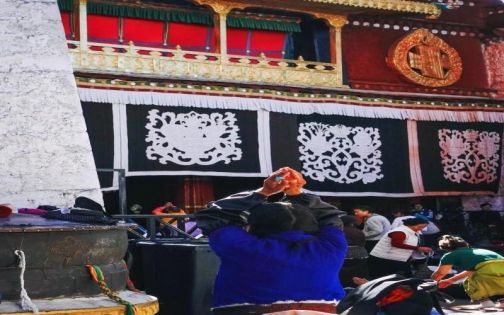
Jokhang Temple is considered the holiest temple in Tibet and remains the spiritual center of Tibetan Buddhism.
Highlights
- The 12-year-old Jowo Shakyamuni statue brought to Tibet by Princess Wencheng
- Endless yak butter lamps
- Pilgrims performing full-body prostrations
- Golden rooftop views
Standing inside the temple and watching pilgrims worship with complete devotion is an emotional experience for many travelers.
Visitor Information
- Ticket: Around 85 RMB
- Advance reservation required
- Official guided tour highly recommended
- Suggested visit time: 1.5–2 hours
Without a guide, many of the murals, statues, and stories behind the temple are easy to miss.
Barkhor Street — The Soul of Old Lhasa
Right outside Jokhang Temple is Barkhor Street, the most vibrant and traditional part of the city.
It serves both as:
- A pilgrimage circuit
- A local market street
Here you’ll see:
- Tibetan pilgrims walking clockwise around the temple
- Traditional white walls and red windows
- Shops selling incense, prayer beads, thangka paintings, and handicrafts
- Tibetan costume photography studios
- Local tea houses
Even if you don’t take photos, simply walking around Barkhor Street is an experience in itself.
Best Photo Spots in Barkhor Street
1. Red Wall Corners
Perfect during morning sunlight.
2. White Alleyways
Great for atmospheric portrait photos.
3. Pilgrimage Route Telephoto Shots
Ideal for capturing authentic Tibetan street scenes.
Ramoche Temple — A Quiet Hidden Gem
Located about 800 meters from Jokhang Temple.
Compared with the crowds at Jokhang, Ramoche Temple feels much quieter and more local.
Best For
- Travelers wanting a peaceful atmosphere
- Experiencing local temple life
- Resting in nearby tea houses
Many tea houses here are filled mostly with locals rather than tourists.
Sweet tea costs only a few RMB and offers a very authentic Lhasa experience.
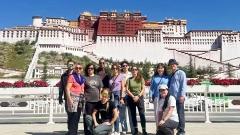
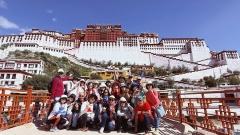
Potala Palace — The Icon of Tibet
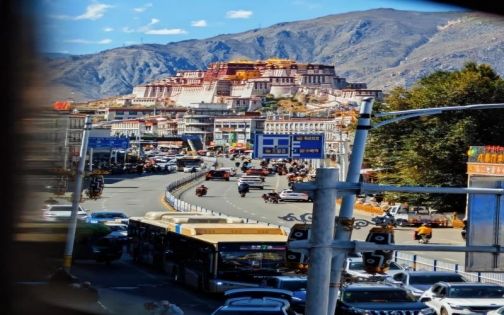
No trip to Lhasa is complete without visiting the Potala Palace.
The moment you stand beneath it, the scale and atmosphere are genuinely breathtaking.
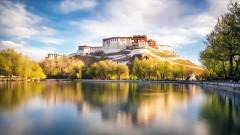
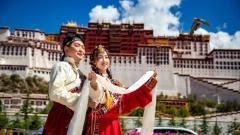
The massive red-and-white palace rises dramatically above Red Hill like a fortress in the sky.
Lhasa
Potala Palace Ticket Reservation Tips
Book Early During Peak Season
- Ticket price: Around 200 RMB
- Reservations open 7 days in advance
- Booking opens daily around 8:30 AM
- Route 1 is highly recommended for deeper exploration
- Suggested visit time: Around 3 hours
Last-minute bookings often only get limited-access routes.
The Potala Palace Is More Than Just Architecture
Many travelers realize quickly that without explanations, it’s difficult to truly understand the significance of what they’re seeing.
Historical Highlights
The original palace was built by Songtsen Gampo to welcome Princess Wencheng from the Tang Dynasty.
The current structure was largely rebuilt during the reign of the Fifth Dalai Lama.
Inside are countless stupas, murals, and chapels preserving Tibetan Buddhist history and the legacy of the Tibetan Empire.
Important Rules
- Photography inside is strictly forbidden
- Hats and sunglasses should be removed
- Shorts and short skirts may not be allowed
- There are many stairs, so walk slowly if experiencing altitude discomfort
Heavenly Tibet Post Office — The Post Office Closest to the Sky
Located beside the east gate of the Potala Palace.
Many travelers stop here to send postcards stamped with special “Heavenly Tibet” postmarks.
A fun and memorable stop for collecting travel souvenirs.
Yaowang Mountain — The Famous 50 RMB Photo Spot
One of the most iconic viewpoints in Lhasa.
This is the exact angle featured on the back of the Chinese 50 RMB banknote.
Best Time for Photos
Late afternoon between 4 PM and 6 PM.
The lighting on the Potala Palace becomes especially beautiful during golden hour.
Potala Palace Square — Best Place for Night Photography
Many visitors leave after seeing the palace during the day, but nighttime is actually when the Potala Palace becomes most magical.
Recommended Activities
- Capture palace reflections
- Use mirrors for creative photography
- Shoot long-exposure night scenes
- Enjoy the illuminated palace atmosphere
Once the lights come on, the entire palace feels dreamlike.
Hidden Telephoto Photo Spot in Lhasa
Search for:
“Xingyue Puti Tibetan Restaurant”
The pedestrian bridge above the restaurant offers an incredible telephoto compression view of the Potala Palace.
Perfect for:
- Long-lens photography
- Cityscape compositions
- Portrait photography
Many viral travel photos are actually taken here.
Lhasa
Afternoon Highlight: Sera Monastery Debate Sessions
If you only choose one place for authentic Tibetan culture, Sera Monastery is highly recommended.
Monk Debate Sessions
Daily around 3 PM.
Monks gather to debate Buddhist philosophy through dramatic hand gestures, clapping, and rapid discussions.
It’s lively, immersive, and incredibly unique.
Best Lighting Spot
Walk straight from the entrance, then turn near the blue sanitation box on the left side.
Around 3 PM, sunlight shines beautifully through the courtyard.
Drepung Monastery — The Largest Monastery in Tibet
If you have extra time, Drepung Monastery is worth visiting.
The enormous white monastery stretches across the mountainside and feels much quieter than central Lhasa attractions.
Best For
- Temple architecture lovers
- Travelers seeking fewer crowds
- Panoramic views over Lhasa
Zaki Temple — Tibet’s Famous Wealth Temple
The only 财神 temple in Tibet.
Popular with both locals and visitors praying for luck and prosperity.
Visitor Tips
- Free entry
- Offerings often include khata scarves and barley wine
- Mornings are the busiest
Norbulingka — The “Summer Palace” of Lhasa
Former summer residence of the Dalai Lamas.
A peaceful Tibetan-style royal garden with large trees and beautiful pathways.
Perfect for slow walks and relaxing after temple visits.
Tibet Museum — The Fastest Way to Understand Tibetan History
Free entry with reservation.
The museum contains valuable exhibits covering Tibetan history, religion, culture, and art.
Some sections can feel emotionally heavy due to historical themes.
Lalu Wetland Park — The Most Relaxing Spot in Lhasa
Search for:
“Lalu Wetland Park North Gate”
This high-altitude wetland offers peaceful scenery with distant snow mountains and open skies.
Excellent for:
- Relaxing walks
- Sunset photography
- Escaping crowds
Nanshan Park — Best Sunset Viewpoint of the Potala Palace
A favorite among local photographers.
Route
Enter the park and follow signs toward “Viewpoint No.1.”
The walk takes around 15–20 minutes uphill.
Best Time
Arrive before sunset.
Golden light on the Potala Palace creates one of the most beautiful views in Lhasa.
Must-Try Food in Lhasa
Jidi Zhimi Tibetan Restaurant
A popular Tibetan-style restaurant overlooking the Potala Palace.
Recommended dishes:
- Himalayan Tibetan dumplings
- Curry yak beef
- Tibetan sausage platter
Tian Cun Stone Pot Tibetan Chicken
One of Lhasa’s classic local restaurants.
The rich chicken soup is especially comforting in the cold plateau climate.
Cuomu Liangfen
A popular local cold noodle snack.
Refreshing and perfect after walking around the city.
Traditional Tibetan Snacks Worth Trying
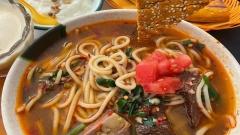
Tibetan Noodles
Simple but flavorful.
Yak Yogurt
Slightly sour and best with sugar.
Sweet Tea
A daily essential for locals.
Fried Potatoes
Common street snack and surprisingly addictive.
High Altitude Tips for First-Time Visitors
The biggest mistake in Lhasa is trying to do too much too quickly.
How to Avoid Altitude Sickness
- Avoid intense exercise on the first day
- Drink plenty of warm water
- Don’t shower for too long after arrival
- Walk slowly
- Carry glucose drinks or oxygen if needed
Many travelers push themselves too hard on day one and end up staying in bed the next day.
Lhasa Sun Protection Tips
Lhasa’s UV radiation is extremely strong.
Bring:
- Sunglasses
- High-SPF sunscreen
- Hats
- Lip balm
- Windproof jacket
Temperatures can change dramatically between day and night.
Lhasa
Tibetan Temple Etiquette
Respecting local culture is extremely important.
Remember
- Never step on temple thresholds
- Always walk clockwise around temples
- Avoid disturbing monks for photos
- Remove hats and sunglasses inside temples
- Keep your voice low
Respect for local beliefs makes the travel experience much more meaningful.