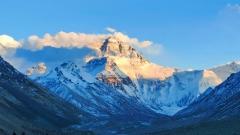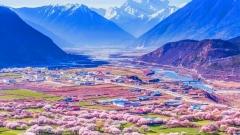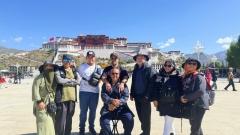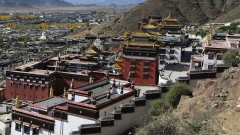

For travelers planning a trip from Malaysia to Tibet, sorting out transportation routes is a priority. Due to geographical and travel policy particularities, traveling to Lhasa from Kuala Lumpur and other places requires systematic planning. This guide comprehensively covers feasible transportation options (air routes, Qinghai-Tibet Railway) and essential documents. Whether you prioritize speed or seek in-depth experiences, the following information helps you arrange your trip based on time, budget and interests. The itinerary typically has two phases: first fly from Malaysia to a mainland China transfer city, then enter Tibet by plane or train. Additionally, all foreign travelers must apply for the Tibet Travel Permit in advance.
Preparations for Transportation from Malaysia to Tibet
Before choosing specific flights or train schedules, all holders of Malaysian passports must complete the following administrative procedures. This is different from traveling to other cities in China and requires special attention.
30-Day Visa-Free Policy
Malaysian citizens holding ordinary passports can enter China visa-free for tourism, family visits, business, or transit, with a single stay not exceeding 30 days and a cumulative stay not exceeding 90 days within 180 days.
Core Document: Tibet Travel Permit
To enter the Tibet Autonomous Region, the most crucial document is the “Tibet Travel Approval Letter”, commonly known as the Tibet Travel Permit. According to regulations, all non-Chinese citizens (including Malaysian citizens) must apply for this document through a travel agency registered in Tibet. Only with the Tibet Travel Permit can you legally purchase air tickets or train tickets to Tibet, and checkpoints during the trip will also inspect it. Individuals cannot apply for it independently.
Application Process and Practical Suggestions
You need to entrust a qualified Tibet travel agency to handle the Tibet Travel Permit. Usually, you need to provide clear scans of the passport information page, Chinese visa page and the approximate travel time. The approval process generally takes 10 to 15 working days, and may be longer during the peak tourist season (May to October). It is recommended to contact a reliable travel agency to start the application as soon as you confirm your travel intention. For example, experienced agencies like China Dragon Travel can efficiently assist in handling the application and provide clear guidance.
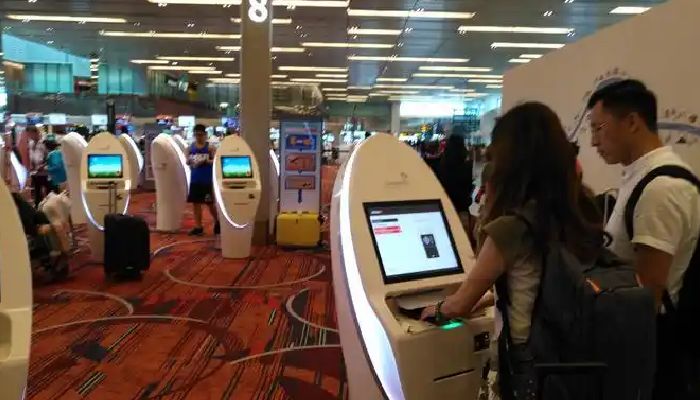
Passengers Checking in at Kuala Lumpur Airport
Air Routes to Tibet: The Fastest and Most Efficient Air Routes
For travelers with limited vacation time who hope to reach Lhasa as soon as possible, taking a plane is the most direct and time-saving transportation method. This air route is usually completed in two phases.
Phase 1: Fly from Malaysia to Major Mainland China Cities
Departing from Kuala Lumpur International Airport, multiple airlines operate direct flights to several major hub cities in mainland China. These cities are important gateways for connecting to flights to Tibet, and common choices include:
- Chengdu: The most popular transfer hub with the densest flights. There are many domestic flight options from Chengdu Shuangliu or Tianfu Airport to Lhasa.
- Kunming: Geographically close with a short flight time, it is also an efficient transfer choice.
- Guangzhou/Beijing/Shanghai: Large international air hubs, suitable for travelers departing from other regions in Malaysia or needing specific connecting flights.
It is recommended that when choosing the destination of the first phase of the journey, you simultaneously check the time and price of the second phase flight from that city to Lhasa to make overall arrangements.
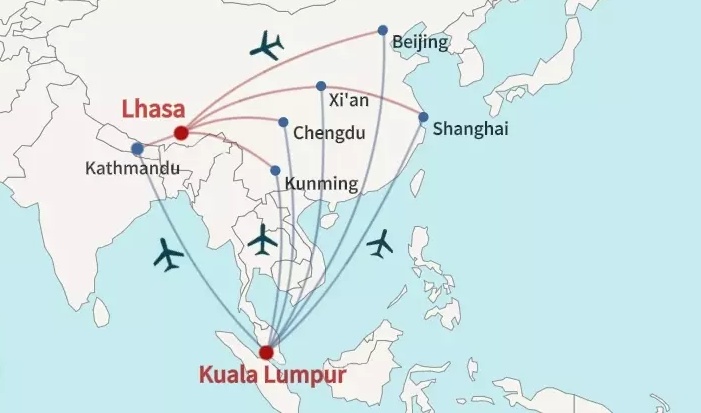
Flight Routes from Malaysia to Tibet
Phase 2: Fly from Major Mainland China Cities to Lhasa Gonggar Airport
From any of the above hub cities, there are multiple flights to Lhasa Gonggar Airport every day. Airlines operating this route mainly include Air China, Sichuan Airlines and Tibet Airlines. The unique feature of this section of the journey is that when the weather is good, you can overlook the magnificent snow-capped mountain ranges from the plane, especially the unforgettable scenery of flying over the Himalayas.
- Flight Time: The domestic section takes about 2.5 to 3.5 hours.
- Altitude Adaptation Tip: Lhasa is located at an altitude of approximately 3,650 meters. Direct arrival from low-altitude areas may cause altitude sickness in some travelers. A prudent suggestion is to arrange a 1 to 2-day stay in the transfer city (such as Chengdu or Kunming) to allow the body to initially adapt before flying to Lhasa. It is also advisable to consult a doctor and prepare common medicines to relieve altitude symptoms before departure.
Railway Routes to Tibet: Experience the Qinghai-Tibet Railway Journey
If you have ample time and hope to gradually adapt to the high altitude while enjoying the plateau scenery along the way, taking the Qinghai-Tibet Railway, known as the “Sky Road”, to enter Tibet will be an extremely valuable experience.
Classic Railway Route to Tibet: Xining to Lhasa Section
The most essential and commonly chosen section of the Qinghai-Tibet Railway starts from Xining City in Qinghai Province and ends in Lhasa, with a total length of approximately 1,956 kilometers and a train travel time of about 21 to 24 hours. Malaysian travelers need to arrange their own transportation to Xining first.
- How to Reach Xining: First fly from Malaysia to a city in China (such as Chengdu, Xi’an or Guangzhou), then transfer to Xining by domestic flight or train.
- Train Selection and Ticket Purchase: There are multiple train services from Xining Station to Lhasa (such as Z21, Z165, etc.), offering seating classes including hard seat, hard sleeper and soft sleeper. During the peak tourist season, train tickets to Tibet, especially sleeper tickets, are in high demand. This highlights the importance of booking tickets through a travel agency, as they can usually assist in securing tickets through specific channels.
- Scenery Along the Route: This journey will pass through Qinghai Lake, traverse the Hoh Xil No-Man’s Land, and cross the Tanggula Pass at an altitude of 5,072 meters. Along the way, you can enjoy snow-capped mountains, grasslands, wild animals (such as Tibetan antelopes) and unique plateau permafrost landforms, an experience that cannot be replaced by air travel.
Other Optional Railway Routes to Tibet
In addition to departing from Xining, there are currently direct trains to Lhasa from cities such as Beijing, Shanghai, Guangzhou and Chengdu. These routes usually take more than 40 hours, even over 50 hours, and are more suitable for in-depth travelers with very ample time who wish to experience ultra-long-distance railway travel.
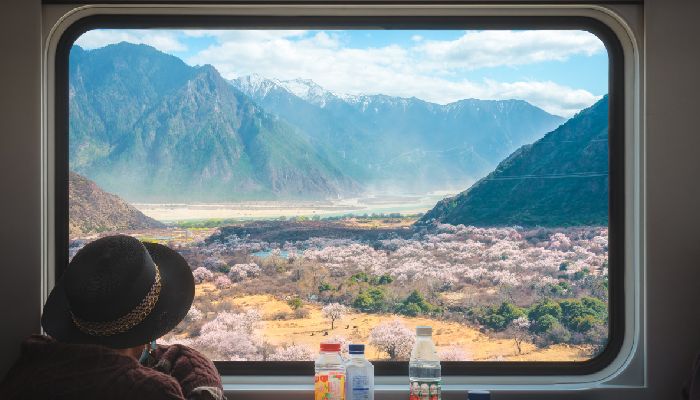
Scenery Outside the Window of the Qinghai-Tibet Railway Train
Combined Transportation Plans and Overland Route Options to Tibet
In addition to single air or railway methods, travelers can also combine the advantages of the two transportation tools to plan a combined plan that better meets their personal needs. In addition, there is theoretically a highly challenging overland route to Tibet.
“Flight + Train” Combined Plan
This is a balanced choice recommended by many travelers currently. The specific operation is: first fly from Malaysia to a city in China (such as Chengdu or Xining), then transfer to the Qinghai-Tibet Railway train to Lhasa. This combination avoids the fatigue of taking an ultra-long train from eastern Chinese cities to Xining, while allowing you to fully experience the most exciting section of the Qinghai-Tibet Railway. There are direct train services to Lhasa from cities such as Chengdu, Chongqing and Xi’an.
“Train + Flight” Combined Plan
This plan is the opposite of the above: first enter Tibet by train and choose to leave by plane on the return trip. This allows the body to gradually adapt to the rising altitude on the train, and save time by plane on the way back. It should be noted that altitude sickness may still occur when the train passes the highest point, Tanggula Pass.
Overland Route to Tibet (Only for Experienced Adventurers)
Theoretically, travelers with complete documents (valid Chinese visa, Tibet Travel Permit) can also enter Tibet from Kathmandu, Nepal through a land port (such as Jilong Port). However, this route involves cross-border long-distance buses, complex and variable road conditions, a long travel time, and is greatly affected by weather, road conditions and border policies. Therefore, it is only recommended for experienced backpackers with rich plateau travel experience and full preparations. Ordinary tourists are strongly advised not to attempt it.
Comparison of Transportation Methods from Malaysia to Tibet and Selection Suggestions
After fully understanding all options, you can choose the most suitable transportation method from Malaysia to Tibet based on the following comparisons and scenario descriptions:
- If you pursue efficiency, comfort and are worried about altitude sickness: It is recommended to choose the “air route to Tibet” plan. Consider staying in a transfer city such as Chengdu or Kunming for 1 to 2 days to adapt to the altitude before flying to Lhasa. This is the fastest way to travel.
- If you have ample time and value travel experience and the body’s gradual adaptation to altitude: Then the “flight + train” combined plan is the most ideal. First fly to Xining or Chengdu, then transfer to the Qinghai-Tibet Railway train. This allows you to enjoy the unique scenery of train travel while enabling the body to adapt smoothly.
- If you have a limited budget but very ample travel time: You can consider taking a full-length direct train to Lhasa from a city in China (such as Guangzhou). Although the journey time is long, the overall transportation cost is relatively low, and you can obtain a complete cross-border long-distance train travel experience.
- General Key Tip: Regardless of the final transportation method chosen, ensure that the Tibet Travel Permit has been successfully obtained before departure, and all air tickets or train tickets to enter Tibet should be purchased and confirmed through the travel agency you entrusted. Individuals usually cannot directly purchase tickets to Tibet on public ticketing platforms.
Planning Steps and Practical Tips for Transportation from Malaysia to Tibet
To help you arrange your trip more systematically, the following lists the specific steps for planning transportation from Malaysia to Tibet and some practical travel tips:
Step-by-Step Planning Process
- Determine the travel time frame: Try to avoid extreme peak seasons such as China’s National Day Golden Week (October 1 to 7) and Spring Festival Long Holiday, when transportation tickets are expensive and in short supply.
- Initially select the transportation plan: Decide whether to mainly adopt air, railway or combined plan to enter Tibet based on the total vacation duration and personal preferences.
- Contact and entrust a travel agency: Contact a qualified professional agency like China Dragon Travel as soon as possible to confirm the feasibility of the itinerary, and immediately submit materials to start the application for the Tibet Travel Permit. This is the most critical step in the entire plan.
- Book international flight tickets: During the processing of the Tibet Travel Permit or after obtaining confirmation, you can start booking international flights from Kuala Lumpur or other Malaysian cities to major hub cities in China.
- Entrust the travel agency to book domestic transportation: Entrust the travel agency to uniformly handle the selected air tickets or train tickets to Tibet to ensure correct ticketing and smooth itinerary connection.
- Carefully plan itinerary connections: Calculate the transfer time between each section of the trip in detail, and be sure to reserve sufficient buffer time for possible flight delays, customs clearance and urban transportation. Especially when needing to transfer to a train, it is recommended to reserve at least 6 to 8 hours between the two itineraries.
Practical Travel Tips
- Luggage Preparation Suggestion: Luggage storage space on trains to Tibet is limited. It is recommended to use soft luggage bags or backpacks instead of large hard-shell suitcases. Be sure to carry sufficient warm clothing (Tibet has a large temperature difference between day and night, even in summer), high-multiple sunscreen, lip balm, moisturizing skin care products and personal commonly used medicines.
- Communication and Internet: Before departure, you can consult your mobile operator to activate international roaming service, or purchase a local data SIM card after arriving in China to ensure smooth communication during the trip, especially in transfer cities, to facilitate contact with tour guides or service agencies.
- Currency and Payment Methods: Mobile payments (WeChat Pay, Alipay) are very popular in major Chinese cities and downtown Lhasa. Nevertheless, it is still recommended to carry a certain amount of RMB cash (for example, 1,000 to 2,000 RMB) for use in remote areas, some small shops or emergency situations.
Tibet Trip Checklist for Malaysian Travelers
Successfully planning a trip from Malaysia to Tibet lies in advance preparation and step-by-step implementation. Before finalizing all arrangements, you can use the following checklist for a final review to ensure no important matters are missed:
- Please check that your passport is valid for more than 6 months and confirm whether your Chinese tourist visa is valid for the 30-day visa-free period.
- Have you successfully entrusted a travel agency and started the application process for the Tibet Travel Permit?
- Is sufficient buffer time reserved between the international flight and the domestic transportation to Tibet (plane/train)?
- Have you prepared appropriate clothing and essential items (such as sunscreen, medicines, etc.) according to the climatic characteristics of Tibet and the needs of plateau travel?
The journey from Malaysia to Tibet is a unique experience connecting different regions and cultures. Whether flying over snow-capped peaks or taking the “Sky Road” train, making detailed transportation plans in advance will lay a smooth and reassuring foundation for your Tibet trip. It is hoped that this comprehensive Malaysia to Tibet transportation guide can effectively help you clarify your ideas and make full preparations, so that you can safely embark on your journey to explore the snow-capped plateau.