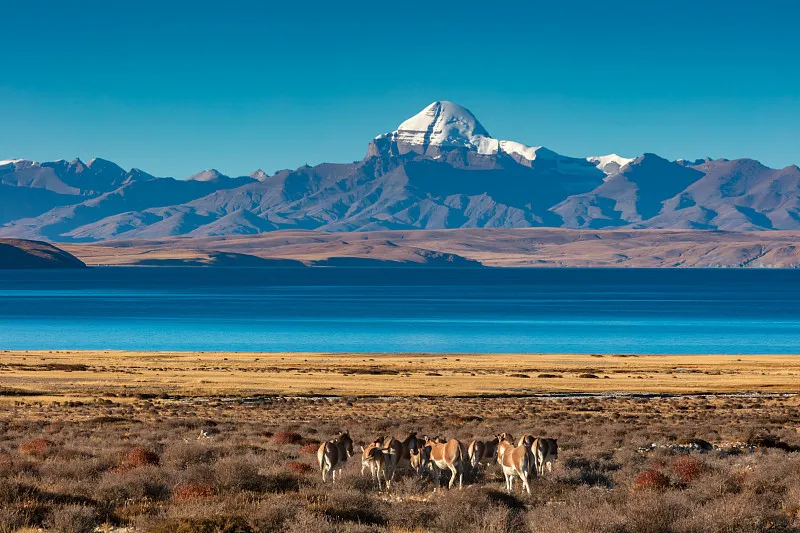

Manla Reservoir, akin to a precious and singular sapphire, lies tranquilly nestled amidst the towering Tibetan peaks, in close proximity to the scenic Yamdrok Lake. Initially conceived and designed with the primary purpose of serving agricultural irrigation and hydropower generation requirements, it now enchants onlookers with its ever-shifting, vibrant spectrum of hues. When viewed from the elevated vantage point of Simila Pass, the stark and striking contrast between the rugged, desolate mountain peaks and the glistening, serene water body serves as a testament to the harmonious and seamless blend of human ambition and the pristine, unadulterated allure of the natural world.
The Unique Charm and Highlights of Tibet Manla Reservoir
Why is Manla Reservoir worth a special stop? It is far more than just a “rest stop” on the road. Its core appeal lies in these irreplaceable highlights:
- Extreme Contrast of Colors: The lake’s color shifts between Tiffany blue, peacock green, and deep sapphire blue depending on sunlight intensity, cloud cover, and season. This clear, translucent color creates a dramatic visual impact against the barren, reddish-brown and yellowish dry mountains surrounding the reservoir, resembling an alien landscape and offering great potential for photography.
- Easy Access and Viewability: It is located right next to the main tourist artery – Provincial Highway S307, which runs from Lhasa via Yamdrok Lake to Gyantse or Shigatse. No long treks or strenuous hiking are needed; excellent views can be easily enjoyed from the well-facilitated viewing platform, making it friendly for travelers of all ages.
- Convergence of Culture and Nature: Prayer flags flutter on the hillside by the reservoir, often hung by local Tibetans for blessings. Standing here, one can not only admire the natural wonder but also feel the aura of faith on this land. Looking into the distance, villages faintly visible at the reservoir’s end add life to the scene.
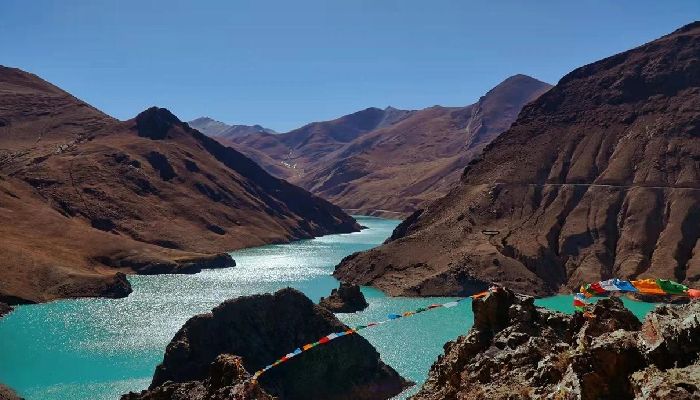
Panoramic View of Manla Reservoir
How to Plan Your Journey to Manla Reservoir
Including Manla Reservoir in your itinerary is, in itself, a microcosm of a classic Tibetan landscape tour. Located far from railway and aviation hubs, its beauty is unveiled through a road trip. The focus of planning lies not only in “getting there” but also in choosing a route that maximizes the experience while allowing comfortable acclimatization to the high altitude.
The most crucial decision is the mode of transportation, which directly affects your freedom, budget, and depth of experience. Regardless of the choice, Manla Reservoir is typically a highlight moment on the golden tourist route connecting Lhasa, Yamdrok Lake, and the cultural centers of rear Tibet – Gyantse or Shigatse – rather than an isolated destination. Choosing suitable transportation allows you to enjoy this moment more leisurely.
Common Transportation Options and Choices
For visitors heading to Manla Reservoir, there are three main transportation methods, each catering to different travel styles, budgets, and flexibility.
- Joining Small Group Tours: This is the most popular option, balancing cost-effectiveness and convenience. Fixed itineraries offered by professional travel agencies usually include Manla Reservoir as a standard stop. The advantages are obvious: no need to worry about routes, drivers, tickets, or accommodation logistics; the itinerary is optimized; costs are shared with fellow travelers; and it offers a social experience. However, this also means a relatively fixed schedule, with typically limited free time (about 40 minutes to 1 hour) at the Manla Reservoir viewing platform. It suits travelers who prefer a hassle-free, standardized itinerary.
- Private Customized Car Hire: If you seek complete control over your schedule, in-depth photography opportunities, or a private travel space for family and friends, hiring a private vehicle is undoubtedly the best option. You can freely decide how long to stay at Manla Reservoir, even coordinating with the driver to arrive during the most dramatic lighting conditions of the day or to explore less-frequented angles around the viewing platform. This method offers ultimate flexibility, allowing adjustments based on weather, physical condition, and interest, but it comes at the highest cost.
- Theme-Specific Group Tours: There are also specialized tours on the market focusing on themes like photography or deep cultural experiences. These products are planned with special consideration for the golden hour at spots like Manla Reservoir and may include guidance from professional leaders. Although still group travel in essence, their pace and focus better align with specific interests, making them an excellent choice for those pursuing high-quality work or deeper understanding.
Best Season and Time to Visit
- Season: Manla Reservoir is accessible year-round, but the scenery varies. May to October is the best period, with mild weather and the lake’s colors at their brightest and most saturated. In winter (November to March), parts of the lake may freeze, presenting a different kind of cold beauty, but be aware that mountain passes along the way may have poor road conditions due to snow.
- Time of Day: It is advisable to arrive between 10 AM and 4 PM. Sunlight is abundant during these hours, maximizing the lake’s dazzling colors. Light is softer in the late afternoon, but some mountains may block the sun, causing the lake’s color to deepen.
Things to Do at Manla Reservoir
Arriving at Manla Reservoir unfolds not just a picture but an experiential space engaging multiple senses. It transcends simply “looking” and allows for a deeper connection with the landscape through the lens, footsteps, and still moments. The pace of activities here is slow and immersive, focusing on observation, feeling, and recording.
The viewing platform is the center of activity, but your perspective shouldn’t be limited to the planks beneath your feet. Take a moment to scan the surroundings, and you’ll discover multiple small dimensions worth exploring. Brief interactions with locals or supporting roadside vendors can also add warm memories to your stop.
Photography and Creation
This is a paradise for photography enthusiasts. Beyond taking standard panoramic shots from the main platform, try these angles:
- Use Prayer Flags as Foreground: Fluttering colorful prayer flags can add dynamism and cultural color to the tranquil lake surface.
- Find Close-up Details: Focus your lens on the junction of the water and shoreline rocks to capture the clear texture of the water and the color bands formed by minerals.
- Capture Reflections: When the wind is calm, some shoreline areas can produce perfect reflections of the mountains.
- Aerial Perspective: If conditions allow, a drone can reveal the reservoir’s unique form, winding through the mountains, creating extremely awe-inspiring footage (be sure to understand local regulations before flying).
Small Interactions with Locals: There are often small stalls set up by local residents near the viewing platform, selling handicrafts or prayer flags. If interested, you can politely inquire and look. Purchasing a small souvenir is direct support for the local community.
Quiet Contemplation and Strolling
Beyond photography, be sure to leave a few minutes for yourself to do nothing but simply “be present.” The sound of the plateau wind, the warmth of the sun on your skin, the subtle shifts in the lake’s color – these are experiences a lens cannot fully capture. Take a slow walk along the viewing platform’s path, gazing at this blue gem from different angles; you’ll find subtle differences in hue and composition from each vantage point.
Important Safety Reminder: The soil at the reservoir’s edges may be soft, and the area is high-altitude and windy. Do not risk getting close to steep or unprotected edges for a photo. All activities should be conducted within safe viewing areas. Safety is always the prerequisite for enjoying the journey.
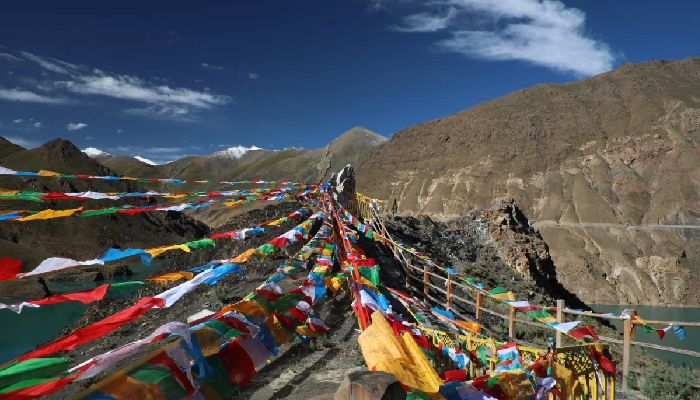
Prayer Flags by Manla Reservoir Shore
Suggested Itinerary Combining Nearby Attractions
Few people travel to Tibet solely for Manla Reservoir; it is always a brilliant chapter in a grander travel narrative. You can naturally combine it with these classic destinations:
- Yamdrok Lake: This is a must-pass on the way to Manla Reservoir. First, experience the vastness and sanctity of the holy Yamdrok Lake, then contrast it with the magnificent and rugged beauty of Manla Reservoir for a deeper appreciation of Tibet’s lake diversity.
- Gyantse Ancient Town: About an hour’s drive from the reservoir. Gyantse is home to the famous Gyantse Dzong (anti-British historical site) and the Pelkor Chode Monastery, a treasure trove of Tibetan Buddhist art. Its strong historical atmosphere makes it ideal for an overnight stay, adding rhythm to your itinerary.
- Shigatse: Tibet’s second-largest city and the location of Tashilhunpo Monastery. Continuing from Manla Reservoir, you can reach Shigatse on the same day, transitioning from natural landscapes to a religious and cultural center.
A smooth itinerary plan can double the richness of the Manla Reservoir experience. Professional travel planners often recommend staying in Gyantse instead of rushing through, effectively avoiding long travel fatigue and allowing more time for altitude acclimatization.
Practical Travel Tips and Precautions
To make your Manla Reservoir trip smoother, here are some key reminders:
- Altitude and Acclimatization: The Manla Reservoir viewing platform is at an altitude of approximately 4,300 meters, similar to the shore of Yamdrok Lake. There is significant elevation gain from Lhasa (3,650 meters) to here, so be mindful of altitude sickness. Move slowly, avoid excited running, and ensure you are well-acclimatized to Lhasa’s altitude before undertaking this trip.
- Clothing and Protection: The area is exposed, with strong winds and intense UV radiation. Must-pack items include a windproof jacket, fleece, hat, sunglasses, and SPF 50+ sunscreen. Even in summer, the temperature difference between day and night is significant.
- Facilities: The viewing platform has public toilets (basic conditions) and some souvenir vendors. It is advisable to carry sufficient drinking water and some energy snacks.
- Respect Local Culture: Areas with prayer flags are places of blessing for local people. Please be respectful when taking photos; do not touch or step over the prayer flags randomly.
For international visitors unfamiliar with Tibet’s road conditions, permit procedures (e.g., Tibet Travel Permit), and high-altitude travel planning, cooperating with an experienced travel agency can save a lot of research and coordination effort. For instance, China Dragon Travel considers altitude acclimatization rhythms when designing itineraries, schedules visits to the Manla Reservoir at optimal times, and provides drivers/guides familiar with the routes, ensuring a safe and comfortable journey.
When Turquoise Waters Become Memory – The True Meaning of a Manla Reservoir Journey
Manla Reservoir remains a clandestine treasure, a reward for the observant wanderers. Lacking the widespread acclaim of the sacred lakes that echo across the globe, it possesses a captivating allure that imprints upon the memory of all who lay eyes upon it. As you chart your course through Tibet, ensure this splendid jewel finds a place in your travel plans. This tranquil sheet of azure, nestled in the midst of a desolate landscape, reveals with its pristine hue that the charm of Tibet extends beyond its celebrated landmarks, deeply rooted in the concealed wonders and moments of enlightening revelation. As the journey concludes and the vibrant life of Lhasa, along with the sanctity of its temples, begins to recede into the past, the piercing cerulean of Manla Reservoir set against the stark emptiness will intensify in clarity, evolving into an indelible treasure within your heart. May you discover your own unique Tibetan hue by the tranquil banks of Manla Reservoir, holding close this serene yet potent revelation forever.