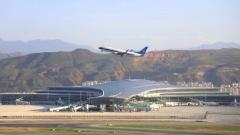

Day 1|Arrive in Dunhuang|Hotel Check-in & First Taste of Night-Market Life
The moment you arrive in Dunhuang, you’re officially stepping into the starting point of the ancient Silk Road.
Whether you fly or take the train, you’ll receive a message in advance and a private transfer will take you straight to your hotel—super convenient and worry-free.
How to Get to Dunhuang
✈️ Flights
Cities including Beijing, Shanghai, Guangzhou, Chengdu, Xi’an, Hangzhou, Lanzhou, Xining, and more offer direct flights to Dunhuang.
During the off-season, it’s common to find discounted tickets.
🚆 High-Speed Train / Train
Dunhuang is connected by high-speed rail to Lanzhou, Zhangye, Jiayuguan, and Jiuquan.
If you’re coming from Xinjiang, you can transfer at Liuyuan Station and take the high-speed train into Dunhuang.
After Check-in: Shazhou Night Market
Your first dinner in Dunhuang has to be here.
A cold beer, a bowl of donkey yellow noodles, grilled skewers, apricot peel juice, spicy lamb dishes… This is the best place to feel the lively northwest street-food culture.
Day 2|Yulin Caves – Suoyang City – Son of the Earth – Boundless (Wujie) Art Sculptures
A deep dive into desert canyons, ancient ruins, and iconic desert art.
🟫 Yulin Caves|The “Sister Caves” of Mogao
Nicknamed the “Valley of Ten Thousand Buddhas,” the caves spread across steep cliffs like a massive crack in the earth.
Though quieter than Mogao, it preserves 43 complete caves, filled with exceptional murals—many of them incredibly well preserved.
🟫 Suoyang City|Ruins of a Tang-Dynasty Frontier Town
Located in the vast Gobi desert, its ancient city layout is still visible today.
The Yuan-dynasty pagoda in the northeast corner is especially loved by photographers.
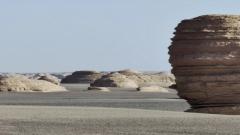
🟫 Son of the Earth & Boundless (Wujie)|Viral Gobi Sculptures
Huge, abstract installations standing alone in the desert—dramatic, stunning, and extremely photogenic. A must-visit for anyone who loves creative shots.
After returning to Dunhuang in the evening, enjoy free time—another night-market walk or a cup of warm apricot tea is perfect to unwind.
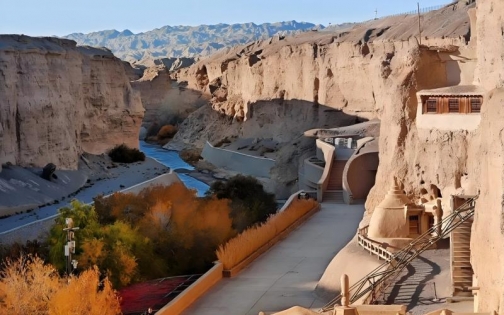
Yulin Grottoes
Day 3|Yumen Pass – Dafangpan City – Han Great Wall Ruins – Western Thousand-Buddha Caves – Desert Camping
A paradise for history lovers—and the best day to experience a true “Gobi sunset.”
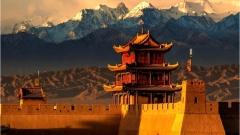
🟫 Yumen Pass|The Frontier Gate from the Famous Poem
Standing before Yumen Pass, it’s hard not to think of the line:
“The spring breeze never crosses Yumen Gate.”
This was one of the most important passes on the Silk Road during the Han dynasty.
🟫 Dafangpan City |Ancient Military Granary
Once used for storing food and supplies for soldiers stationed along the frontier, it’s a key site for understanding military history of ancient Northwest China.
🟫 Han Great Wall Ruins|A Millennium-Old Defense Line
Though only earthen walls remain, the sense of ancient borderlands still feels powerful.
🟫 Western Thousand-Buddha Caves|A Living Textbook of Northern Wei Art
Older than Mogao, the Western Thousand-Buddha Caves preserve vivid Northern Wei murals—another gem of Dunhuang art.
🟩 Night: Desert Camping & Bonfire Party
After reaching the desert campsite, you can enjoy:
✔ Sand sliding
✔ Off-road motorbikes
✔ Desert games
✔ Sunset & star-photography
Dinner includes BBQ + hotpot, followed by music and dancing around a bonfire—one of the most unforgettable memories for travelers.
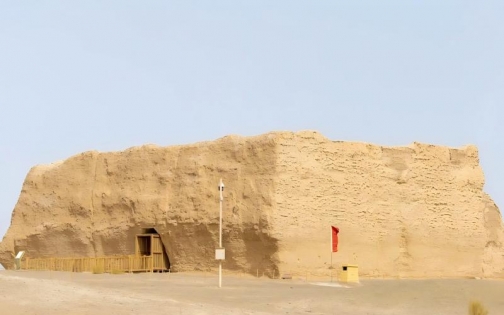
Yumen Pass
Day 4|Mogao Caves (Including Special-Grade Caves) + Dunhuang Academy
The cultural highlight of your entire trip.
🟫 Start with Two Films
Before entering the caves, you’ll watch:
-
A Thousand Years of Mogao
-
Dream of the Buddha Palace (Dome Projection Film)
These give you essential background on Dunhuang’s history, art evolution, and cave structures.
🟫 On-Site Visit: 8–12 Caves (Seasonal Selection)
A professional guide will lead you through iconic caves from different dynasties:
-
The Nine-Colored Deer mural
-
Evolution of mural styles from Northern Wei to Tang and Song
-
Peak examples of ancient Chinese clay sculptures
🟫 Afternoon: Dunhuang Academy
If you love culture, archaeology, or restoration, this is a must-see.
You’ll learn how murals are preserved and restored, and why Dunhuang is one of the world’s greatest cultural treasures.

Mogao Caves
Day 5|Mingsha Mountain & Crescent Lake – Dunhuang Museum – Dunhuang Resort Lunch
A relaxing day mixing desert scenery with city culture.
🟫 Mingsha Mountain & Crescent Lake
Walk along the dunes, climb the sand ridge, and capture spectacular desert scenes.
When sunlight hits the golden dunes, the curves are breathtaking.
Crescent Lake, like a blue gem set in the sand, is the symbol of Dunhuang.
🟫 Lunch & Rest at Dunhuang Resort (Dunhuang Shanzhuang)
A beautiful environment—perfect for photos and a mid-journey reset.
🟫 Dunhuang Museum
From Silk Road artifacts to ancient military and merchant culture, this museum completes your understanding of Dunhuang through time.
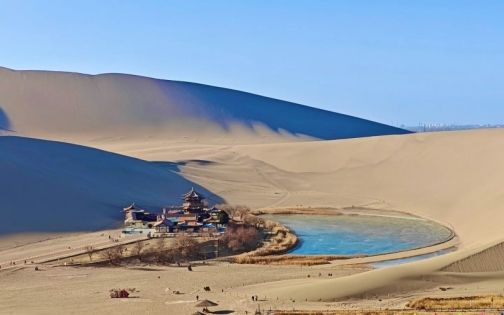
Crescent Lake
Day 6|Departure|End of an Unforgettable Dunhuang Journey
After breakfast, you’ll be transferred to the airport or train station.
You’ll leave with memories of starlit deserts, golden dunes, and ancient murals.
Tour Inclusions
-
4-star luxury hotels
-
All entrance tickets (including Mogao special-grade caves)
-
Transportation for the full itinerary
-
Driver-guide
-
Personal accident insurance
-
Hotel breakfasts
Northwest China Travel Tips (Must-Read)
Weather & Sun Protection
-
Large temperature difference between day & night
-
Strong UV
Prepare: sunscreen, sunglasses, hat, light jacket
Food & Hydration
-
Dry climate → drink more water
-
Diet includes lots of beef & lamb
-
Bring digestive medicine or herbal tea if needed
Photography Etiquette
-
No photos in Tibetan Buddhist temples
-
Always ask before photographing people
High-Altitude Tips (If connecting to Qinghai or Gansu later)
-
Avoid strenuous exercise
-
You may take Rhodiola in advance
-
Mild discomfort on arrival is normal
Muslim-Area Etiquette
-
Avoid pork, dog, horse meat
-
No alcohol in Hui Muslim restaurants
-
Follow temple/monastery rules
Desert Activities
-
Do not act alone
-
Bring protection: sunglasses, mask, plenty of water
-
Keep phone/camera sealed against sand