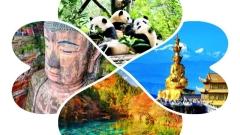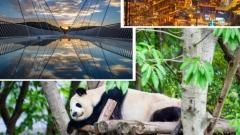

Nestled in Leshan, Sichuan, Mount Emei is a world-famous UNESCO World Heritage Site, celebrated for its stunning natural beauty and profound cultural heritage. Known as the “Fairy Mountain and Buddhist Kingdom”, this 100-kilometer range attracts millions of visitors yearly with four key features: natural scenery, Buddhist heritage, biodiversity and geological wonders, offering unique experiences for all travelers and ranking as a must-visit global destination.
Mount Emei: Florid Natural Scenery
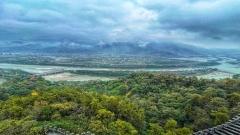
The natural beauty of Mount Emei is its most immediately striking and emotionally resonant feature. The entire mountain range is characterized by rolling peaks, ancient towering trees, and cascading waterfalls that create a living landscape painting. What makes Mount Emei truly special is its distinct four seasons, each offering a completely different and equally mesmerizing experience. From vibrant spring blooms to cool summer retreats, fiery autumn foliage to magical winter snowscapes, the mountain transforms itself throughout the year, ensuring that every visit brings new surprises. The natural scenery here is not just about majestic mountains but also includes crystal-clear streams, colorful wildflowers, and lush forests that showcase the full glory of nature’s artistry.
Four Distinct Seasons of Beauty
- Spring: Mount Emeiwakes up gently from its winter slumber, with fresh green slopes stretching from the foot to the summit, deepening gradually with increasing altitude. Wildflowers bloom in succession—pink peach blossoms, white pear blossoms and yellow winter jasmine dot the green landscape, filling the air with a refreshing mix of grass and flower scents. Wandering along the mountain paths, visitors can feel the vibrant energy of new life everywhere.
- Summer: As an ideal cool summer resort, Mount Emei’s average temperature is 5-8℃ lower than that of cities. The mountain is covered in a riot of blooming wildflowers, with clear streams rushing through valleys and cascading waterfalls pouring down cliffs, creating fine mist that brings coolness. It’s a perfect place to escape urban heat, wandering in the shade of ancient trees, listening to flowing water and bird songs.
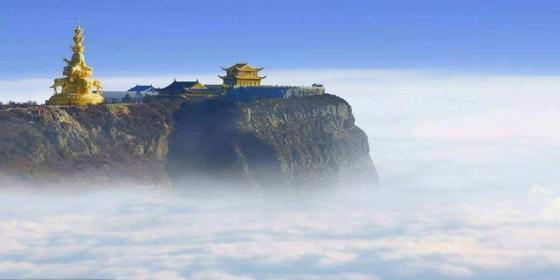
Mount Emei
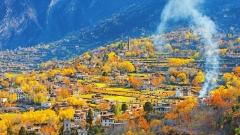
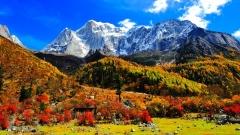
- Autumn: The most colorful season on Mount Emei, when the entire mountain turns into a stunning sea of red and gold. Red maple leaves, golden ginkgo leaves and green pine trees interweave to form a layered landscape. As autumn wind blows, leaves fall gently, covering the paths with a soft carpet, creating a warm and romantic atmosphere that makes visitors linger.
- Winter: Mount Emeibecomes a pristine snow-covered wonderland. Thick snow blankets peaks, trees and temples, especially the spectacular Golden Summit, where white snow contrasts beautifully with golden Buddha statues and temple buildings. Frost-covered branches and unique ice formations add a magical touch, offering a quiet and serene winter scenery full of Zen charm.
Must-Visit Natural Landmarks
- Qingyin Pavilion, known as Emei’s top scenic spot, is where two clear rivers (black and white) converge. The water crashes against the Ox Heart Stone, producing a clear, melodious sound like a guqin being played. Surrounded by ancient towering trees and elegant pavilions, it’s an ideal place to sit quietly, listen to the spring and relax completely.
- Golden Summit, the highest peak of Mount Emei, is the best spot to enjoy four natural wonders: sea of clouds, sunrise, Buddha’s halo and sacred lamps. Early in the morning, watching the sun rise from the rolling sea of clouds, with golden light spreading over the mountains, is a majestic and unforgettable sight. Lucky visitors may also see the magical Buddha’s halo, a circular light surrounding their shadow.
- Other notable landmarks include Ninety-Nine Turns, a steep and winding path that offers breathtaking views of deep valleys; One-Line Sky, a narrow gorge where only a thin line of sky is visible between two towering cliffs; and Longmen Cave, a beautiful cave with crystal-clear water and unique rock formations, each boasting its own unique charm.
Mount Emei: Profound Buddhist Cultural Heritage
The profound Buddhist cultural heritage is the most spiritually significant feature of Mount Emei. As one of China’s Four Great Buddhist Mountains, Mount Emei is the sacred dojo of Samantabhadra Bodhisattva. Since Buddhism was first introduced here in the 1st century BCE, it has developed over nearly two thousand years, leaving behind a wealth of precious Buddhist cultural relics and making Mount Emei one of the most influential Buddhist holy lands in China and the world. Buddhist culture permeates every corner of the mountain, from the ancient temples nestled in the forests to the sacred statues and scriptures, blending perfectly with the natural scenery and giving the mountain a soul that goes beyond its physical beauty.
Ancient Temples and Exquisite Buddhist Statues
Mount Emei is home to numerous ancient temples that are built harmoniously into the mountain landscape, creating a seamless blend of human architecture and natural beauty. Wannian Temple, one of the oldest temples on Mount Emei, was originally built during the Eastern Jin Dynasty. The temple houses a bronze statue of Samantabhadra Bodhisattva that was cast during the Northern Song Dynasty. Standing at 7.35 meters tall and weighing 62 tons, this exquisitely crafted statue is the most precious treasure of Mount Emei. Having survived thousands of years of wind and rain, the statue remains perfectly intact, bearing witness to the long and continuous history of Buddhism on Mount Emei.
In addition to Wannian Temple, there are many other famous temples worth visiting, each with its own unique characteristics. Baoguo Temple, the entrance temple to Mount Emei, features magnificent architecture and grand halls, making it the first stop for most visitors. Fuhu Temple, hidden deep in the dense forest, offers a peaceful and secluded atmosphere, and its Arhat Hall houses lifelike statues of the 500 Arhats that showcase the superb craftsmanship of ancient Chinese sculptors. Qingyin Pavilion and Huazang Temple are also must-visit sites, each offering a unique glimpse into Mount Emei’s rich Buddhist heritage.
The Buddhist statue art on Mount Emei is also highly renowned, with statues made from a variety of materials including clay, wood, jade, bronze, and porcelain. Each statue is meticulously carved with distinct expressions and postures, demonstrating the exceptional skill of ancient Chinese artisans. These statues are not only precious religious art treasures but also tangible representations of Mount Emei’s profound Buddhist culture, allowing visitors to experience the influence of thousands of years of Zen Buddhism as they explore the temples.
Emei Martial Arts and Immersive Zen Experiences
Mount Emei is not only a Buddhist holy land but also the birthplace of Emei Martial Arts, one of China’s three major martial arts schools. Alongside Shaolin and Wudang Martial Arts, Emei Martial Arts is famous worldwide for its unique style that combines softness and strength, using flexibility to overcome hardness. Originating from Buddhist meditation practices and infused with the spiritual energy of the mountain, Emei Martial Arts features elegant and practical moves that reflect the harmony between humans and nature.
Visitors to Mount Emei can watch exciting performances of Emei Martial Arts, experiencing the power and beauty of traditional Chinese martial arts. Many temples also offer immersive Zen experience programs, allowing visitors to stay for a few days, listen to the morning bells and evening drums, eat vegetarian meals, copy Buddhist scriptures, and experience the quiet and peaceful life of a Buddhist monk. This immersive Zen experience allows you to temporarily escape the noise and stress of modern city life, relax your mind and body, and find inner peace. It is this unique combination of martial arts culture and spiritual practice that makes Mount Emei’s Buddhist heritage even more appealing and memorable.
Mount Emei: Abundant Resources of Species
The rich and diverse biodiversity is the most vibrant and lively feature of Mount Emei. Known as the “Kingdom of Plants” and the “Paradise of Animals”, Mount Emei has a humid climate, abundant rainfall, complex terrain, and diverse soil types, providing an ideal natural environment for the growth and reproduction of a wide variety of plants and animals. This unique ecosystem has made Mount Emei a treasure trove of biodiversity, brimming with life and energy that adds a special charm to the mountain.
A Treasure Trove of Rare Plants
Mount Emei has an extremely high vegetation coverage rate, with greenery all year round. It is home to more than 5,000 species of plants, including many rare and endangered species. Among these are the dove tree (Davidia involucrata) and the tree fern (Alsophila spinulosa), which are known as “living fossils” of the plant world. There are also precious tree species such as nanmu (Phoebe zhennan) and the Chinese tulip tree (Liriodendron chinense). Every spring and summer, the dove trees bloom with beautiful white flowers that resemble flying doves, creating a unique and spectacular plant landscape that is exclusive to Mount Emei.
Mount Emei is also a famous production area for traditional Chinese medicinal herbs, producing many valuable herbs such as coptis, gastrodia elata, and eucommia ulmoides. These herbs not only have high medicinal value but also add a touch of mystery to the mountain. Walking through the forests of Mount Emei, you can see a wide variety of exotic flowers and rare trees, experiencing the magic and abundance of the plant kingdom. This unique ecological charm is one of the most distinctive features of Mount Emei that sets it apart from other famous mountains in China.
Lively Wildlife and the Famous Emei Monkeys
Mount Emei is also home to an incredibly rich variety of animals, with more than 2,300 species living in its forests. These include rare animals such as the red panda, mainland serow, and golden pheasant. Among all the animals on Mount Emei, the most popular with visitors are undoubtedly the Emei macaques. These intelligent and lively monkeys often appear along the mountain paths, interacting with visitors and adding endless fun to the travel experience.
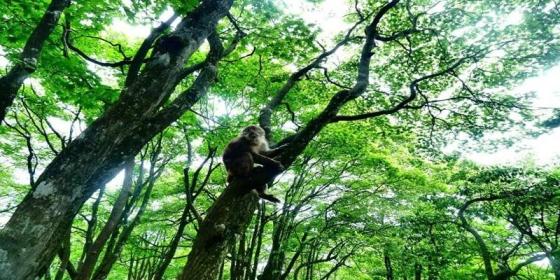
The Famous Emei Monkeys
However, it is important to remind visitors that Emei macaques are wild animals and can be aggressive. Do not feed them randomly, and keep your personal belongings safe to avoid being snatched by the monkeys. The ecological monkey area between Qingyin Pavilion and One-Line Sky is the best place to observe Emei macaques, as it is managed by professional staff and is relatively safe. Encountering these lively and curious monkeys is a unique and unforgettable experience that adds a special touch to any trip to Mount Emei.
Mount Emei: Mysterious Geological Museum
The unique geological wonders of Mount Emei are its most scientifically valuable feature. Known as a “natural geological museum”, Mount Emei was formed as a result of the Himalayan orogeny and the uplift of the Qinghai-Tibet Plateau. After hundreds of millions of years of geological evolution, it has developed into the magnificent and spectacular landscape we see today. This unique geological structure not only created the beautiful mountains and rivers of Mount Emei but also provided the foundation for the rich biodiversity that thrives here, making it the root of all the mountain’s other features.
Hundreds of Millions of Years of Geological Evolution
The geological history of Mount Emei can be traced back to the Cambrian Period, more than 500 million years ago. The mountain preserves complete strata and fossils from every geological period since the Cambrian, providing a detailed record of the geological evolution of southwestern China. On Mount Emei, you can see rocks, faults, and folds from different eras, all of which are precious geological relics left by nature.
For geology enthusiasts, Mount Emei is like a natural classroom where you can learn a wealth of geological knowledge and experience the vicissitudes of the earth over hundreds of millions of years. This unique scientific value means that Mount Emei is not only a popular tourist destination but also an important site for geological research. It combines aesthetic appeal with educational value, making it a truly unique travel destination that offers both visual pleasure and intellectual enrichment.
Unique Geological Landscapes
In addition to its rich geological relics, Mount Emei is also home to many unique geological landscapes. The One-Line Sky is one of the most famous geological attractions on Mount Emei. Here, two towering cliffs stand face to face, as if they were split by a giant axe, leaving only a narrow passage between them. Looking up, you can see only a thin line of sky between the cliffs, creating a spectacular and awe-inspiring sight. Walking through the One-Line Sky, you can feel the immense power of geological movements and experience the thrilling beauty of nature’s ruggedness.
Mount Emei also features many karst caves, canyons, and other geological landscapes, each with its own unique shape and formation. These natural wonders are the result of millions of years of erosion and geological activity, showcasing the incredible creativity of nature. Together, these unique geological landscapes form an important part of Mount Emei’s four defining features, adding depth and scientific significance to its already stunning natural scenery.
The Perfect Fusion of Four Charms
Mount Emei’s four defining features—natural scenery, Buddhist heritage, biodiversity and geological wonders—are interdependent and closely integrated, covering nature, culture, life and science, each with unique charm and worthy of visitors’ careful exploration. China Dragon Travel offers various high-quality travel routes, from convenient one-day tours to immersive multi-day in-depth tours, with professional guides providing detailed explanations to help visitors experience these features deeply, and the tours start from 299 RMB per person, bringing an unforgettable and valuable travel experience.