
No trip to Chengdu, Sichuan Province, is complete without a visit to see the giant pandas, China’s beloved national treasure. Among the many panda viewing destinations in the region, Dujiangyan Panda Valley has emerged as a top choice in recent years for its unrivaled natural setting and immersive experience. Unlike the crowded city-center Chengdu Research Base, this valley sits at Qingcheng Mountain’s foot, surrounded by lush bamboo and clear streams, perfectly replicating pandas’ wild habitat with minimal human interference. Here, you can get up close to these adorable creatures and unwind amid green mountains, escaping the city’s hustle to enjoy healing time with the national treasure.
Key Features and Highlights of Dujiangyan Panda Valley
Dujiangyan Panda Valley and the Chengdu Research Base of Giant Panda Breeding each have distinct identities and cater to different traveler preferences. If you crave a more authentic, peaceful, and intimate panda-watching experience far from the tourist throngs, Dujiangyan Panda Valley stands head and shoulders above the rest, boasting several compelling advantages that make it a must-visit destination.
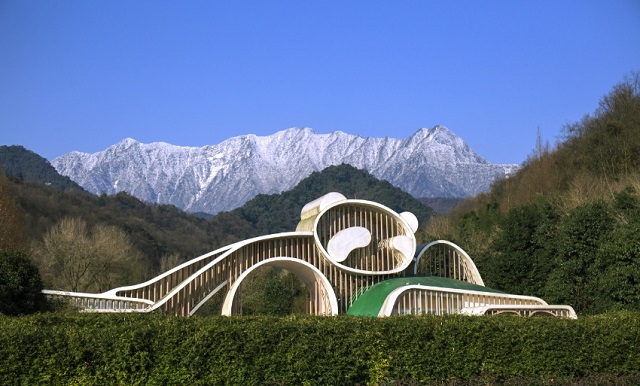
Dujiangyan Panda Valley
Authentic Wild Habitat
Spanning over 66 hectares (more than 1,000 mu), Dujiangyan Panda Valley is masterfully integrated into the natural terrain of Qingcheng Mountain, designed exclusively to mirror the giant pandas’ native wild ecosystem. Unlike the urban base, which relies heavily on concrete enclosures and purpose-built structures, this valley preserves untouched bamboo forests, crystal-clear mountain streams, undulating hillsides, and natural rock caves.
This thoughtful design allows pandas to roam, forage, rest, and play freely, living in conditions that are nearly indistinguishable from their wild counterparts. Here, you’ll witness pandas wandering gracefully through bamboo thickets, splashing playfully in shallow streams, and scaling trees with surprising agility—behaviors that are rarely observed in the more confined urban enclosures.
The absence of excessive artificial modifications means you’ll experience pandas in their most genuine environment, surrounded by the same landscapes they would inhabit in the remote mountains of Sichuan.
Unmatched Immersive Viewing Experience
One of the most significant benefits of visiting Dujiangyan Panda Valley is its dramatically lower visitor volume compared to the Chengdu city base. On weekdays, the park exudes a tranquil, almost meditative atmosphere, and you can often have entire sections of the valley entirely to yourself.
There’s no need to jostle through dense crowds or wait in snaking lines just to catch a fleeting glimpse of a panda. Instead, you can stroll at a leisurely pace, pausing for as long as you like to watch the pandas go about their daily lives, observing every tiny movement and endearing expression.
Whether they’re munching contentedly on bamboo stalks, climbing to dizzying heights in the trees, or rolling playfully on the soft grass, you’ll be able to capture every adorable moment with unobstructed views. Even on weekends, the number of visitors remains far lower than at the city base, ensuring you’ll never have to deal with the overwhelming crowds that can turn a magical experience into a frustrating one.
Pandas in Their Most Natural, Playful State
Thanks to the expansive, natural living spaces, the pandas at Dujiangyan Panda Valley exhibit a far richer repertoire of natural behaviors than those in urban enclosures. Free from the constant stress of loud noises and large crowds, they shed their shyness and reveal their true, playful personalities.
You might spot a panda expertly climbing to the very top of a tall bamboo stalk to sunbathe lazily, or a group of young pandas wrestling and splashing in a cool mountain stream on a sweltering summer day. Some pandas will even forage for fresh bamboo on their own in the forest, just as they would in the wild.
In stark contrast, pandas at the crowded city base often retreat to indoor enclosures to rest during the day, making it difficult to see them active and engaged. At Dujiangyan Panda Valley, you’ll get to witness pandas behaving exactly as they would in their natural habitat—a rare and deeply special experience that will stay with you long after your visit.
Natural Oxygen Bar Environment
Nestled at the foot of Qingcheng Mountain, a revered Taoist sacred site renowned for its pristine natural beauty, Dujiangyan Panda Valley is enveloped in lush greenery and boasts an exceptionally high vegetation coverage rate. The air here is saturated with negative oxygen ions, creating a natural oxygen bar that is far cleaner and more invigorating than the polluted air of Chengdu city.
As soon as you step through the park gates, you’ll be greeted by the fresh, earthy scent of bamboo and mountain air, instantly melting away the stress and fatigue of city life. In addition to watching pandas, you can take a leisurely hike along the winding mountain trails, drinking in the stunning natural scenery and allowing your mind and body to relax completely.
This makes the valley an ideal retreat for anyone looking to escape the chaos of urban life and reconnect with nature.
Wild Training Base with Educational Value
A truly unique feature of Dujiangyan Panda Valley is its role as a leading giant panda wild training base, playing a pivotal role in the global effort to conserve and reintroduce pandas into their natural habitat. Here, you can observe pandas undergoing intensive semi-wild training, learning essential survival skills such as locating their own food, building sturdy nests, and avoiding potential predators.
The park also features state-of-the-art educational exhibits that use interactive displays, high-definition videos, and informative panels to explain the complex process and vital importance of panda wild training and reintroduction.
This is an invaluable opportunity for visitors, especially families with children, to learn about giant panda conservation efforts and develop a deeper appreciation for wildlife protection. It’s not just a fun day out—it’s also an educational experience that helps raise awareness about the importance of preserving these magnificent animals and their fragile ecosystem.
Detailed Itinerary for Dujiangyan Panda Valley
Dujiangyan Panda Valley features a well-designed circular walking route that stretches approximately 3 to 4 kilometers, taking 2 to 3 hours to complete on foot. The route is carefully planned to avoid backtracking, and it passes through all the panda enclosures and key scenic spots, offering breathtaking views of the surrounding mountains and forests along the way.
We recommend following this itinerary to maximize your time and enjoy the best possible panda-watching experience, which is suitable for visitors of all ages and fitness levels.
First Stop: Panda Science Discovery Center
After entering the park through the main entrance, the first attraction you’ll encounter is the Panda Science Discovery Center. This is the perfect starting point for your visit, as it provides a comprehensive and engaging introduction to giant pandas, covering their biological characteristics, unique living habits, fascinating breeding process, and the inspiring history and current status of global panda conservation efforts.
The center features a wealth of high-quality photos, informative texts, captivating videos, and hands-on interactive exhibits that make learning about pandas fun and accessible for visitors of all ages. You can even use special interactive devices to experience what the world looks like from a panda’s perspective.
We recommend spending 20 to 30 minutes here to gain a deeper understanding of these amazing animals before moving on to see them in person. This is particularly valuable for families with children, as it provides a wonderful educational experience that will spark their curiosity about wildlife.
Second Stop: Giant Panda Cub Villas
After exploring the Panda Science Discovery Center, follow the clearly marked signs to the Giant Panda Cub Villas, one of the most popular and beloved attractions in the entire park. This is where the adorable baby pandas, aged from a few months to one or two years old, reside.
These tiny, fluffy bundles of energy are incredibly active and playful, spending their days climbing trees, rolling around on the ground, and chasing each other around their enclosures. They’re also not shy about showing off their cute side to visitors, often stopping to stare curiously at the crowds or wave their tiny paws.
The enclosures here have relatively low fences, allowing you to get extremely close to the cubs and observe their every move in exquisite detail. Just remember to keep your voice down and avoid making sudden movements, as the cubs are still very young and easily startled.
Third Stop: Giant Panda Villa No. 1
Leaving the cub villas behind, continue along the scenic path to Giant Panda Villa No. 1, which is home to several mature adult giant pandas. These pandas are significantly larger than the cubs and have a more calm and laid-back demeanor, but they’re still just as charming and endearing.
You’ll almost certainly see them sitting comfortably on the ground, munching on bamboo stalk after bamboo stalk with remarkable enthusiasm and focus. Some may be taking a leisurely stroll around their spacious enclosure, sunbathing on a warm rock, or stretching and yawning lazily after a long nap.
Each adult panda has its own dedicated territory, and they generally keep to themselves, allowing you to observe their individual personalities and idiosyncrasies at your own pace. Take your time here—watching a panda eat bamboo is surprisingly relaxing and endlessly entertaining!
Fourth Stop: Giant Panda Villas No. 2 and No. 3
Next up are Giant Panda Villas No. 2 and No. 3, which are similar in layout to Villa No. 1 but home to different adult pandas, each with their own unique personalities and quirks. Some pandas are passionate climbers and can often be seen perched high up in the bamboo trees, enjoying the warm sunshine and the panoramic views of the valley.
Others are water lovers and will spend hours splashing and playing in the mountain streams that run through their enclosures, especially during the hot summer months. Some pandas are more introverted and prefer to spend their time alone in the quiet depths of the bamboo forest, resting and eating bamboo away from the crowds.
Take the time to observe each panda carefully—you’ll be amazed by how different they are from one another, and you’ll likely develop a favorite by the end of your visit.
Fifth Stop: Wild Release Adaptation Zone
Pandas Undergo Rigorous Semi-Wild Training
After visiting all the panda villas, you’ll reach the Wild Release Adaptation Zone, the most unique and significant area of Dujiangyan Panda Valley. This is where pandas undergo rigorous semi-wild training in preparation for their eventual release into the wild, and it’s what sets this park apart from all other panda viewing destinations in China.
The environment here is virtually identical to the pandas’ natural wild habitat, with no man-made buildings or artificial enclosures—just dense, impenetrable bamboo forests, rolling green hills, and crystal-clear mountain streams. In this zone, pandas must learn to fend for themselves, finding their own food, building their own nests, and avoiding potential predators, all skills they’ll need to survive in the wild.
Because the zone covers such a vast area and the pandas are free to roam anywhere within it, you may need a pair of binoculars to spot them. However, the experience of seeing a panda living in a nearly wild environment is truly unforgettable and well worth the extra effort.
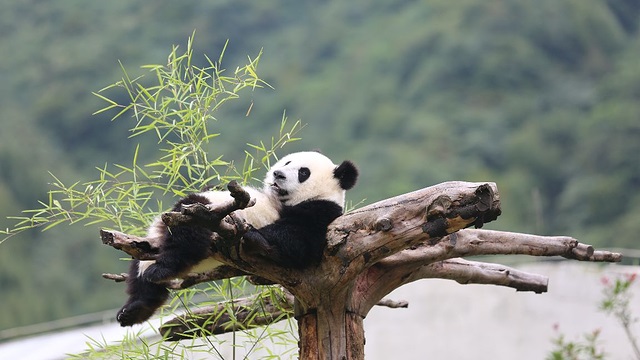
Giant Pandas at Panda Valley
Best Time to Visit Dujiangyan Panda Valley
- Best Seasons: Spring (March-May) and autumn (September-November) are ideal. Spring brings active pandas and lush vegetation; autumn offers cool weather and fewer visitors for a peaceful experience.
- Seasonal Considerations: Summer (March 16-October 31) is hot, so visit early or late; winter is cold with fewer pandas active but almost no crowds.
- Daily Golden Hours: 7:30-10:00 AM is when pandas are most active; arrive early to avoid crowds and catch their best state.
- Avoiding Crowds: Visit on weekdays; arrive earlier on holidays. Light rainy days are great for fewer visitors and more active pandas.
Tickets and Visitor Guidelines for Dujiangyan Panda Valley
- Opening Hours: Daily 7:30 AM-6:00 PM (last admission 5:00 PM). Summer (2026.3.16-10.31) has morning (7:30-12:00) and afternoon (12:00-17:00) tickets; arrive 2-3 hours before closing.
- Ticket Prices:
- Adult ticket: 55 RMB per person
- Student ticket (with valid ID): 27 RMB per person
- Free admission: Children under 6/1.3m, seniors over 60, disabled people, military personnel (with valid ID).
Ticket Purchase: Book via official WeChat or on-site; cash and mobile payment are accepted. Book in advance during peak seasons.
- Admission Rules:
- No pets, flammables or dangerous items.
- No smoking, fence-climbing, panda-feeding or loud noises.
- Do not damage park facilities or vegetation.
- Present valid ID for admission.
- Tickets are only valid for the booked date and time.
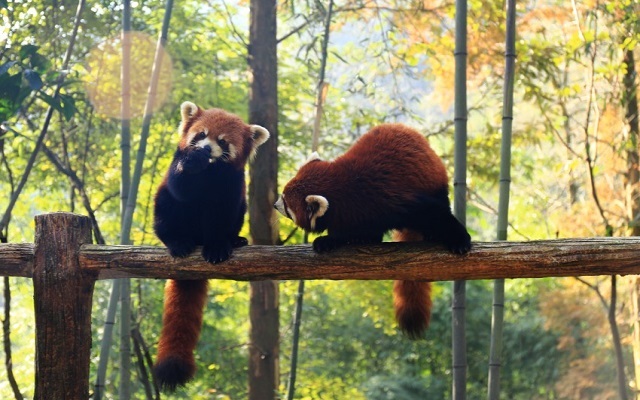
Red Pandas at Panda Valley
Practical Tips for Viewing Giant Pandas
To make your panda-watching experience at Dujiangyan Panda Valley as smooth, enjoyable, and rewarding as possible, here are some expert tips to keep in mind:
- Arrive Early: 7:30-10:00 AM is pandas’ golden hour; arrive early to avoid crowds.
- Bring Binoculars: Compact binoculars help see pandas clearly in the large Wild Release Adaptation Zone.
- Keep Quiet: Pandas are sensitive; keep your voice down to avoid startling them.
- Do Not Feed the Pandas: Human food harms their health; feeding is prohibited.
- Take Photos Responsibly: Turn off flash; use natural light and avoid glass for better photos.
- Wear Comfortable Clothing and Shoes: Wear supportive shoes and dress for the weather; prepare sunscreen, warm clothes or rain gear as needed.
- Plan Ahead: Check the weather and route; drive early on holidays. Bring snacks and water, and take away trash.
Transportation Options to Dujiangyan Panda Valley
Public Transportation
From Chengdu city center, take Metro Line 2 to Xipu Station, then transfer to the Chengdu-Dujiangyan High-Speed Railway to Dujiangyan Station (30 minutes, approximately 10 RMB). From Dujiangyan Station, you can take a taxi (15 minutes, approximately 20 RMB) or bus routes 14 or 102 (30 minutes, 2 RMB) to the park. There is also a dedicated tourist bus line that runs between Dujiangyan Scenic Area and Panda Valley, costing 10 RMB for a round trip, which is a convenient and affordable option for budget travelers.
Self-Driving
If you’re driving, navigate to “Dujiangyan Panda Valley (No. 408 Yutang Section)”. From Chengdu city center, take the Chengdu-Guanxian Expressway, which takes about 1 hour in normal traffic. The park has a dedicated parking lot with a parking fee of 10 RMB per visit. During peak seasons and holidays, we recommend arriving before 8:30 AM to secure a parking spot. If the park’s parking lot is full, you can park at the Sunac Cultural Tourism City parking lot and take a free shuttle bus or MTR to the park to avoid traffic congestion.
Group Tours
For visitors who prefer not to plan their own trip, there are many reputable one-day guided tours to Dujiangyan Panda Valley departing from Chengdu. These tours typically include round-trip transportation in a comfortable vehicle, entrance tickets, and a knowledgeable guide who will provide fascinating insights into the pandas and the park’s conservation efforts. Prices range from 100 RMB to 200 RMB per person, making them a convenient and hassle-free option.
See Giant Pandas in Their Most Authentic State at Dujiangyan Panda Valley
A visit to Dujiangyan Panda Valley feels less like a sightseeing stop and more like stepping into the pandas’ real home. Watching them climb trees, rest in bamboo forests, or play near streams without crowds or noise creates a rare sense of calm that city-based panda parks simply cannot replicate.
For travelers who want a smoother and more insightful experience in Chengdu, joining a guided tour can enhance the journey significantly. China Dragon Travel offers customized panda-themed tours with transportation and professional guidance, helping visitors understand not only where to see pandas—but how to truly appreciate their natural world.