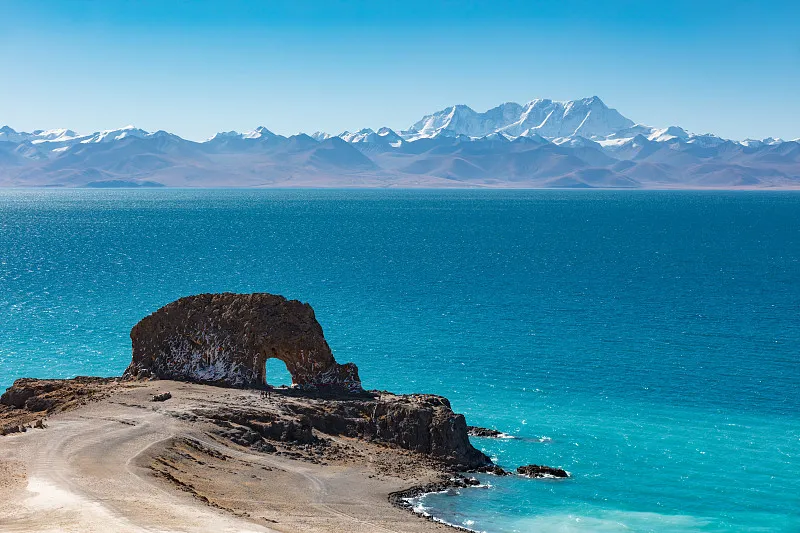

Namtso Welcome Stones are one of the main landmarks that visitors first see when arriving at the shores of Namtso Lake. These two huge rocks are located at the entrance area of Zhaxi Peninsula and serve as a clear stop on the itinerary. This guide aims to provide specific and practical information about the Welcome Stones, including how to get there, when to visit for the best experience, how to take photos, and how to incorporate them into your overall itinerary to make your trip smoother and more fulfilling.
Basic Information & Background of Namtso Welcome Stones
Namtso Welcome Stones specifically refer to two groups of giant rocks standing on the northern bank of Namtso Lake in Tibet, at the entrance of Zhaxi Peninsula. They are not randomly scattered stones but prominent natural landmarks with striking shapes, being the spectacular sight that visitors first encounter when arriving at the lake area via the main highway.
From a geographical and tourist perspective, the Welcome Stones form the gateway to Namtso’s core scenic area. Their main practical significances are as follows:
- Clear Arrival Marker: When the vehicle rounds the hills and the vast lake view suddenly unfolds, these two boulders come into sight. They provide a clear, visual “arrival signal” that lets visitors know they have entered the core viewing area of Namtso.
- Natural Spatial Coordinate: Due to their large size and prominent location, the Welcome Stones are easily identifiable throughout Zhaxi Peninsula. Visitors can use them as a directional reference when engaging in activities by the lake to avoid getting lost in the open area.
- Carrier of Culture and Beliefs: In the minds of local Tibetans, these two closely intertwined boulders are endowed with profound cultural connotations and are often regarded as symbols of the Namtso Goddess and the Nyainqêntanglha Mountain God, hence also known as the “Husband and Wife Stones”. Many travelers stop here briefly to experience the unique cultural atmosphere carried by this natural landscape.
Therefore, visiting Namtso Welcome Stones is not only about taking photos as souvenirs but also an intuitive starting point for understanding Namtso’s geographical layout and entering its cultural context. Understanding their dual attributes as a “gateway” and a “landmark” helps visitors more effectively plan their stay and activity routes in this area.
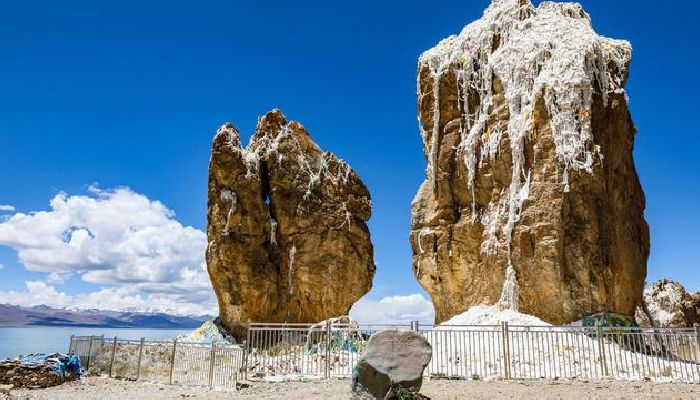
Namtso Welcome Stones
Transportation to the Welcome Stones & Best Viewing Times
Transportation to the Welcome Stones
The Welcome Stones are located near the entrance of Zhaxi Peninsula Scenic Area at Namtso. All tourist vehicles heading to Zhaxi Peninsula, Namtso will pass through here. Visitors usually depart from Lhasa, choosing to charter a car or join a tour group, with a driving time of about 4 to 5 hours. After passing Nagula Pass on the way, you can enjoy a panoramic view of Namtso in the distance, and then the vehicle descends to the lake and arrives at the area where the Welcome Stones are located.
Planning the Best Time to View the Welcome Stones
- Seasonal Choice: It is recommended to visit between early May and early October. During this period, the climate is relatively mild, road conditions are good, the lake is usually thawed, and the scenery is open. Winter scenery is unique, but the temperature is extremely low, requiring high standards for travel equipment and physical adaptability.
- Daily Time Slot: One hour after sunrise and one hour before sunset are ideal for viewing and photography. At this time, the light angle is appropriate and the tone is soft, which can better show the texture of the rocks and the color of the lake surface. At noon, the sun shines directly, resulting in strong light contrast, and the viewing and shooting effects are usually not as good as in the morning or evening.
Photography Methods & Tips for Namtso Welcome Stones
The following methods are for reference when taking photos of Namtso Welcome Stones.
Recommended Shooting Compositions
- Panoramic Shot: Choose a slightly distant location, use the Welcome Stones as the foreground, and the vast lake and distant mountains as the background to form a layered landscape photo.
- Detail and Close-up Shot: Get close to the rocks to photograph the textures, cracks on their surfaces, and the hanging prayer flags, showing the details of the combination of nature and humanity.
- Using Water Surfaces: On windless or breezy mornings, pay attention to the shoals or puddles by the lake, and try to capture the rocks and their reflections in the water to form a symmetrical composition.
Specific Operation Suggestions
- Equipment Preparation: Use a camera or mobile phone with a wide-angle function to facilitate shooting large scenes. If you have a telephoto lens, it can be used to capture the compressed landscape of rocks and distant snow-capped mountains in the same frame. Keep the equipment fully charged; the cold climate by the lake may accelerate battery consumption.
- Enriching Frame Elements: When shooting landscapes, you can include walking travelers, yaks by the lake, or flying birds in the composition to increase the vividness and storytelling of the picture.
- Notes: Do not climb the Welcome Stones when taking photos to protect the natural landscape and respect local customs.
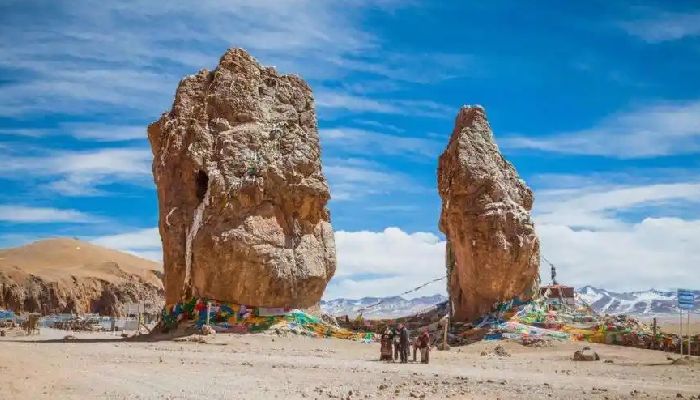
Namtso Welcome Stones
Attractions Around the Welcome Stones & Itinerary Planning
After viewing the Namtso Welcome Stones, you can continue to visit Zhaxi Peninsula and the surrounding areas of Namtso.
Main Attractions on Zhaxi Peninsula
- Zhaxi Monastery: A small-sized monastery located on the peninsula, where you can learn about the local religious atmosphere. Looking back from the hillside where the monastery is located, you can get a different perspective of the lake shore and the Welcome Stones.
- Prayer Flag Area and Caves: There are a large number of fluttering prayer flags and natural caves formed by weathering on the peninsula, which are suitable for short-distance hiking exploration.
- Lakeside Walk: Walk along the lake shore for a distance, away from the main parking lot area, to experience a quieter lake and mountain scenery.
Reasonable Itinerary Planning Suggestions
To avoid a hasty itinerary and fully adapt to the high-altitude environment, it is recommended to arrange one night’s accommodation by the shores of Namtso. A common itinerary mode is: depart from Lhasa on the first day, arrive at Namtso in the afternoon, visit the Welcome Stones and part of the peninsula, and stay at a lakeside inn that night; on the early morning of the second day, you can view the lake scenery again before returning to Lhasa or continuing with other itineraries. Zhaxi Peninsula offers simple accommodation, which needs to be understood and booked in advance.
Key Travel Notes
- High-Altitude Adaptation: The altitude of Namtso Lake is about 4,718 meters. Before arrival, you should stay in Lhasa (3,650 meters above sea level) for at least 2 to 3 days to adapt to the high-altitude environment. When engaging in activities by the lake, slow down your pace and avoid strenuous exercise.
- Clothing and Equipment: The area has strong sunlight, large temperature differences between day and night, and obvious winds. It is necessary to prepare windproof jackets, warm clothes, hats, sunglasses, and high-factor sunscreen.
- Code of Conduct: Please circumambulate religious relics such as mani stones in a clockwise direction. Keep the environment clean and take all waste with you.

Namtso Lake
Tour Summary & Pre-Trip Preparation Checklist
Namtso Welcome Stones are an important node in the Namtso trip. To ensure a smooth visit, it is recommended to prepare according to the following steps:
- Determine Travel Time: Prioritize the travel period from May to October and include lakeside accommodation in the itinerary plan to ensure sufficient time to visit under suitable light.
- Arrange Transportation: Contact and confirm the vehicles for round trips between Lhasa and Namtso in advance. For tourists unfamiliar with local road conditions, booking a chartered car or small-group service through a formal travel agency (such as China Dragon Travel) is a more reliable choice.
- Prepare Luggage: Pack luggage according to the climatic characteristics of the high-altitude area, focusing on cold-proof clothing, sun protection products, personal commonly used medicines, cameras, and spare batteries.
- On-Site Tour Key Points: First, allow your body to adapt to the environment after arrival. Please abide by the scenic area regulations and protect the natural environment during the visit.
Namtso Welcome Stones as the Starting Point of a Well-Planned Namtso Visit
As a natural gateway to the core area of Namtso Lake, the Namtso Welcome Stones play a practical and symbolic role in any visit to the region. From this landmark, travelers can better understand the layout of Tashi Peninsula and plan their movements along the lakeshore with greater clarity. Rather than being just a photo stop, the Welcome Stones provide a clear sense of arrival and orientation in this vast high-altitude landscape. For those seeking a smoother and more informed experience—especially in terms of timing, transportation, and altitude adaptation—consulting experienced local specialists such as China Dragon Travel can help ensure a more confident and well-prepared journey.