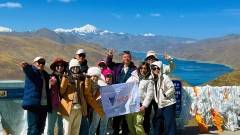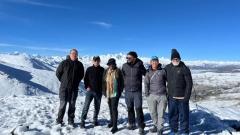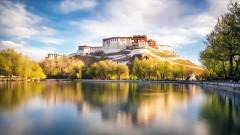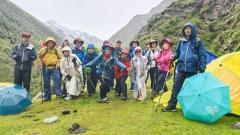

Revered as a sacred center by multiple religions, Mount Kailash holds a unique spiritual significance that draws travelers and pilgrims from around the world. Starting from Kathmandu, the journey across the Himalayas offers a striking transition—from lush valleys and terraced hillsides to the vast, high-altitude wilderness of western Tibet. This overland route is not just about reaching a destination; it is a gradual immersion into a landscape where nature and belief are deeply intertwined. With proper planning for permits, border procedures, and altitude adaptation, the journey can unfold smoothly and meaningfully.
Pre-Trip Documents and Border Crossing Guidelines for Kailash Travel
A smooth cross-border trip from Nepal to Mount Kailash hinges entirely on complete and valid documentation, with different requirements for travelers of different nationalities. Failing to prepare the right paperwork will result in being denied entry or border crossing, so advance preparation is non-negotiable.
Valid Documents
All international travelers must hold a valid passport with a minimum of 6 months remaining before expiration and at least 3 blank visa pages. Damaged or expired documents will lead to immediate border rejection.
For foreign nationals, you must obtain a Chinese visa prior to departure from your home country, alongside a mandatory Tibet Travel Permit and Ali Prefecture Border Pass. These two documents are mandatory for entry into the Ali region of Tibet. They cannot be obtained upon arrival at the port and must be applied for 3 to 5 working days in advance through a licensed and qualified travel agency.
Border Crossing Port Options
For overland travel from Nepal to Mount Kailash, Gyirong Port is the only recommended and reliable option. It is currently the most stable and well-equipped land port between China and Nepal, located approximately 130 kilometers from Nepal’s capital Kathmandu. After entering China, you can travel directly along the national highway to the Ali region, making it the smoothest overland route for this journey.
Zhangmu Port is currently only open for border trade and is not accessible to regular tourists, so please plan your route in advance to avoid traveling to the wrong port.
Border Crossing Hours & Procedures
Gyirong Port is open daily from 10:00 to 18:00 Beijing Time. We recommend arriving 1-2 hours early to queue, avoiding peak traffic on weekends, public holidays, and during large pilgrimage group departures to minimize waiting time.
The crossing process follows a strict “exit first, entry second” sequence. First, complete exit inspection and document verification on the Nepal side, then walk across the China-Nepal Friendship Bridge to the Chinese customs office to complete entry inspection and document registration. Cooperate fully with border staff inspections, and strictly prohibit carrying contraband, wildlife products, or excess cash to avoid delays to your trip.
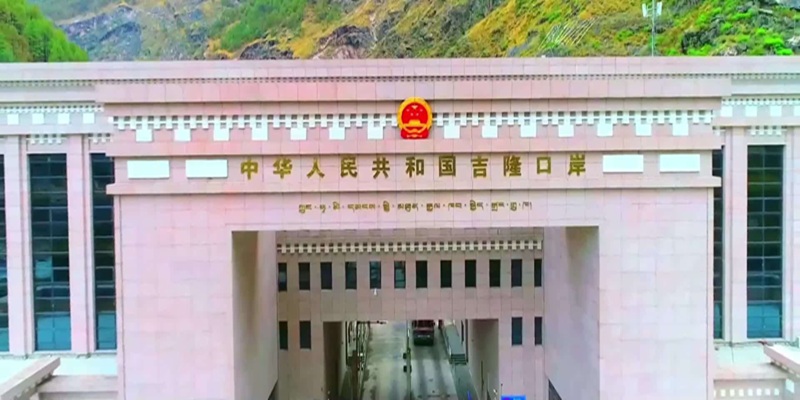
Gyirong Port
Popular Route Itineraries from Nepal to Mount Kailash
There are two main itinerary options for traveling from Nepal to Mount Kailash: a full overland route and a faster air alternative. You can choose flexibly based on your available time, physical fitness, and travel budget.
Classic Full Overland Route
This is the top choice for the vast majority of travelers making the journey from Nepal to Mount Kailash. It allows you to fully experience the dramatic landscape and cultural differences between the southern and northern slopes of the Himalayas, while also letting you adjust your travel pace flexibly to acclimatize gradually to the altitude, drastically reducing the risk of altitude sickness.
The full route itinerary is as follows: Kathmandu (Nepal) → Pokhara (optional stop) → Gyirong Town (Nepal side) → Gyirong Port border crossing → Gyirong County (China) → Saga County → Zhongba County → Darchen (the official starting point of the Mount Kailash Kora).
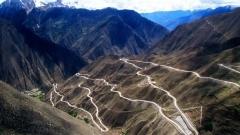
The total distance of this route is approximately 1000 kilometers, mostly paved asphalt roads with some high-altitude mountain sections. With normal driving, scenic stops, and altitude acclimatization breaks, the total travel time is around 4-5 days, with a relaxed pace that allows you to adjust the length of stops at any time based on your physical condition.
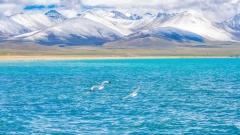
Along the way, you will pass world-class natural attractions including Mount Shishapangma, Peiku Tso, Lake Manasarovar, and Lake Rakshastal. You’ll take in breathtaking views of snow-capped mountains, sacred lakes, and rolling grasslands, while acclimatizing to the high-altitude environment at gradual elevation points. This makes it the perfect choice for first-time travelers on this route.
Fast Air Alternative Itinerary
If your travel time is limited, you can opt for the air route to complete the core journey from Nepal to Mount Kailash. Take an international flight directly from Kathmandu, Nepal to Lhasa, China, complete entry procedures on arrival, then travel along the Ali route from Lhasa to Mount Kailash.
This option significantly cuts down on travel time, but requires extra attention to altitude acclimatization. Lhasa sits at an elevation of 3650 meters, and you will need at least 1-2 days of acclimatization time after landing before traveling to the higher-altitude Ali region, to avoid severe altitude sickness caused by rapid elevation gain. Additionally, foreign nationals must still obtain a Tibet Travel Permit in advance to successfully board the flight and complete entry procedures.
Practical Tips for the Pilgrimage Trek from Nepal to Mount Kailash
The core experience of the journey from Nepal to Mount Kailash is the sacred Kora (circumambulation) around the holy mountain. Adequate preparation is essential to ensure a safe and smooth pilgrimage.
Altitude Acclimatization & Altitude Sickness Prevention
The biggest challenge of this journey is the dramatic change in elevation. Kathmandu, Nepal sits at just 1300 meters above sea level, a low-altitude area, while the highest point of the Mount Kailash Kora, Drolma La Pass, reaches 5648 meters above sea level, creating an enormous elevation difference. For this reason, gradual and systematic altitude acclimatization is critical.
After entering China, do not rush your journey. We recommend staying overnight at elevation checkpoints of 2800 meters, 3500 meters, and 4500 meters respectively, to give your body sufficient time to adjust. You can take anti-altitude sickness medication one week before departure for prevention, and carry anti-altitude sickness medicine, portable oxygen cans, and an insulated water bottle with you along the way.
During the trip, avoid strenuous exercise entirely, refrain from alcohol and smoking, drink plenty of water, and supplement your diet with electrolytes and high-calorie foods. If you experience severe symptoms of altitude sickness such as intense headaches, vomiting, or difficulty breathing, descend to a lower elevation immediately and seek medical attention nearby – do not push through the symptoms.
Pilgrimage Etiquette & Cultural Respect
Mount Kailash is a sacred mountain revered by multiple religions, so please strictly abide by local religious customs and etiquette when entering the area. The Kora must be completed in a clockwise direction – never travel counterclockwise. Do not take photos of local monks, pilgrims, or religious buildings without explicit permission. Do not litter, to protect the fragile ecological environment around the holy mountain. Never step on prayer flags or mani stone mounds, and do not move any mani stones, to respect the local faith and culture.
Accommodation, Dining & Packing Essentials
Towns along the route from Nepal to Mount Kailash, including Gyirong County, Saga County, Zhongba County, and Darchen, have hotels, homestays, and restaurants of various standards, with complete basic accommodation and dining facilities. You can choose budget homestays to save money or star-rated hotels for added comfort, meeting the diverse needs of travelers from around the world.
Along the Kora route, Zutrul Phuk Monastery and Drirapuk Monastery have basic guesthouses and tent accommodation, providing hot water, simple Tibetan meals, and hot food. There is no need to carry heavy camping equipment, and traveling light will make the Kora much easier.
For packing, we recommend purchasing all necessary supplies in advance in Kathmandu or Lhasa. Prepare high-SPF sunscreen, UV-protective sunglasses, windproof and warm waterproof jacket, non-slip waterproof hiking boots, headlamp, insulated water bottle, and high-calorie snacks. The UV radiation on the plateau is extremely strong, and the temperature difference between day and night can exceed 20 degrees Celsius. Proper sun protection, warmth, and windproofing are the core keys to completing the Kora smoothly.
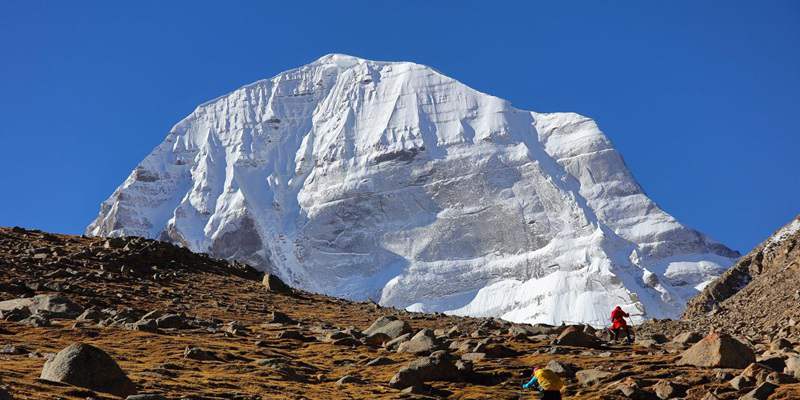
Mount Kailash
Best Travel Seasons & Common Pitfalls to Avoid
The season you choose for your journey from Nepal to Mount Kailash directly impacts your travel experience, and there are a number of common pitfalls to avoid with advance planning.
Best Travel Seasons
The best time to travel from Nepal to Mount Kailash is between May and October each year. Among these months, April to May and September to October are the peak golden seasons, with clear weather and high visibility, offering unobstructed views of the Mount Kailash main peak almost every day – the perfect time for pilgrimage and photography.
June to September is the monsoon season, with more rainfall in Nepal, but relatively little precipitation in the Ali region of Tibet, which generally does not affect the Kora itinerary. From November to March of the following year, heavy snowfall closes mountain passes in the Ali region, severely affecting port access and road travel, so travel during this period is not recommended.
Common Pitfalls to Avoid
Vehicles from China and Nepal cannot cross the border. Nepalese vehicles cannot drive into China, and Chinese vehicles cannot enter Nepal. For this reason, you must book connecting vehicles on both sides of Gyirong Port separately. We recommend booking vehicles with valid operation qualifications and experienced drivers in advance through formal channels. Never hire a vehicle temporarily at the port, as this carries a high risk of price fraud, unqualified vehicles, and safety hazards.
Due to local tourism policies, foreign nationals entering the Ali region of Tibet must travel with a dedicated vehicle and professional guide arranged by a qualified travel agency. Independent travel, self-drive charters, or travel via public transport are strictly prohibited. Please plan your itinerary well in advance and do not travel to the area without proper arrangements. In addition, we recommend confirming prices in advance for all consumption along the route, and carrying enough cash in RMB, as mobile payment is unavailable in some remote areas with poor network signal.
The Road to Mount Kailash: More Than Just a Destination
Traveling from Nepal to Mount Kailash is as much about the journey as it is about the destination. As you leave behind the greenery of Nepal and enter the stark beauty of the Tibetan plateau, the experience becomes quieter, slower, and more introspective. The vast landscapes, thin air, and sacred presence of the mountain reshape the way you perceive distance, time, and even yourself.
If you want to avoid the hassle of handling complicated documentation, vehicle bookings, and itinerary arrangements, and enjoy a stress-free journey along this classic route, you can choose China Dragon Travel. With years of operational experience in cross-border high-altitude travel from Nepal to Mount Kailash, the agency provides one-stop services including customized itineraries, document application assistance, full-journey vehicle arrangements, and comprehensive logistics support, allowing you to focus entirely on the beauty and spiritual fulfillment of your sacred pilgrimage, without being distracted by the trivial details of travel.