
For many travelers, northern Xinjiang’s charm extends far beyond Kanas Lake’s clear waters and Ili’s vast grasslands — the food aromas wafting through the streets and dazzling market handicrafts are just as enchanting. “Northern Xinjiang must-eat and must-buy” is a top pre-trip search; it’s not just a list, but a key to authentic experiences. Here, the culinary wisdom and craftsmanship of the Uyghur, Kazakh, Hui, Mongolian, and other ethnic groups come together. Every dish and item carries stories of oases and grasslands. This guide takes you into markets and dining tables to discover northern Xinjiang’s essence worth savoring and collecting, filling your journey with rich satisfaction for the eyes, heart, taste buds, and stomach.
Northern Xinjiang Flavor Journey: Unmissable Authentic Foods
Northern Xinjiang’s food culture is rooted in the integration of nomadic and agricultural lifestyles, featuring bold flavors and rich tastes. The following types of food form the cornerstone of your “must-eat” experience in northern Xinjiang.
Big Plate Chicken with Belt Noodles
The essence of this famous dish lies in “sharing.” In a huge porcelain plate, tender braised chicken pieces, soft potatoes and green and red peppers are coated in a thick, spicy sauce, with wide, belt-like handmade noodles laid on top. After stirring, the noodles soak up the sauce and become extremely chewy. This dish usually requires two or three people to finish, perfectly embodying the local culture of gathering for meals and warm, generous hospitality.
Grilled Lamb Skewers & Naan Pit Roasted Lamb
In Xinjiang, nothing whets the appetite more than the aroma of charcoal fire. Fatty and lean lamb skewers, seasoned with cumin and chili powder, exude primitive freshness. The more premium “Naan Pit Roasted Lamb” elevates the flavor to another level: large pieces of lamb are hung in a traditional clay naan pit and slowly roasted evenly with radiant heat. When taken out of the pit, the outer skin is crispy and fragrant, while the inside is juicy and tender, filling the mouth with rich flavor when chewed.
Polo (Uygur Rice Pilaf)
A pot of golden, oily polo is the pride of Uygur cuisine. The sweetness of carrots, the aroma of onions and the freshness of lamb are fully infused into every grain of rice through the blend of clear oil. The piece of tender braised lamb with bones on top of the rice is the finishing touch. Although tableware is mostly used nowadays, the character “zhua” (grab) retains its ancient dining tradition and fun.
Naren (Hand-Pulled Noodle with Lamb)
This is a gift from the grasslands, a home-style delicacy of the Kazakh and Kyrgyz peoples. Wide, chewy handmade noodles serve as the base, topped with large pieces of boiled lamb, drizzled with a spoonful of boiling clear lamb broth, and finally sprinkled with crispy raw onion shreds. There is a certain order to eating it: first eat the meat, then soak the noodles in the broth and mix well — the simple, pure flavor instantly fills the mouth.
Homemade Yogurt & Salted Milk Tea
Northern Xinjiang’s dairy products are simple yet deeply satisfying. Homemade yogurt is as thick as cheese, and may even form a layer of cream on the surface. It has a strong natural sour taste; paired with a spoonful of white sugar or honey, the balance of sweet and sour is impeccable. Salted milk tea is the lifeblood of daily life — brick tea is boiled with milk and salt. The first sip may feel unique, but on cold days or after a heavy meal, its warm and rich texture will make you instantly understand its indispensable status.
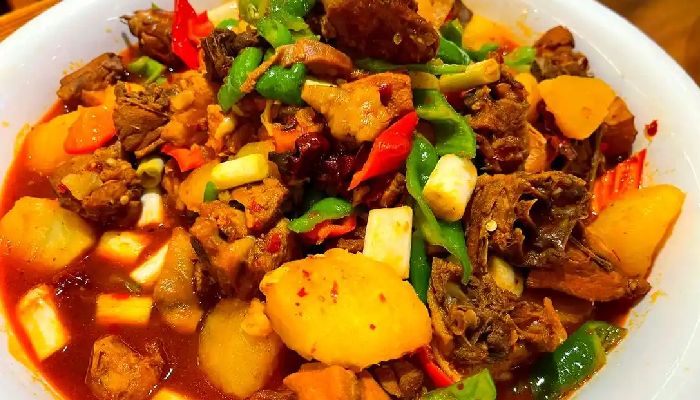
Xinjiang Big Plate Chicken
Market Treasure Hunt: Essential Souvenir List for Northern Xinjiang
Turning the sensory pleasures of the journey into portable souvenirs is a way to extend travel happiness. In the bazaars and markets of northern Xinjiang, you can find these treasures full of regional characteristics.
Natural Flavors: Dried Fruits & Nuts
Endowed with abundant light and heat resources, Xinjiang’s fruits have unparalleled sweetness. When dried, their flavors become even more concentrated.
- Red Dates, Walnuts & Raisins: These “Three Treasures of Xinjiang” live up to their reputation. Ruoqiang Gray Dates have small pits and thick flesh, sweet and moist; Aksu Walnuts have thin shells that are easy to peel, with plump and fragrant kernels; Turpan offers dozens of types of raisins, such as Seedless White, Xiangfei King and Black Currant, each with unique flavors.
- Almonds & Dried Figs: Almonds are crispy and nutritious; dried figs are soft and sweet, with a distinctive taste. When purchasing, it is recommended to visit large wholesale markets, personally compare colors and sizes, taste before deciding, and bulk weighing often offers better value for money.
Soul of Cuisine: Spices & Tea
If ingredients are the body, spices are the soul of northern Xinjiang’s cuisine, endowing dishes with unique personalities.
- Cumin: The cumin here has plump grains and a rich, pure aroma, being the soul of barbecue and many meat dishes.
- Anjihai Dried Chili Peppers: These dried red peppers are thick and wrinkled, with mild spiciness and a hint of sweetness. They are the key to making classic dishes such as Big Plate Chicken and Spicy Chicken. Bringing them home allows you to recreate Xinjiang flavors.
- Brick Tea: Especially Fuzhuan Brick Tea, which contains “golden flowers” (probiotics), is the foundation for boiling salted milk tea. Its compact brick shape is simple and easy to carry and preserve, suitable for personal use or as a gift.
Craft Heritage: Handicrafts
These items embody time and ethnic aesthetics, making them warmer souvenirs than any industrial products.
- Adras Silk: A traditional Uygur silk fabric made using ancient tie-dyeing techniques. It features abstract and vivid patterns with strong color contrasts, like a flowing rainbow. Scarves or fabrics made from it are extremely exotic.
- Handmade Carpets & Tapestries: Crafted from high-quality wool or silk, these are hand-knotted and woven by artisans over months or even years, with intricate and symmetrical patterns, being durable and long-lasting. If you are worried about carrying large carpets, small and exquisite tapestries or cushions are excellent alternatives.
- Ethnic Musical Instruments & Hats: Plucked instruments such as Rawap and Dutar have elegant shapes and unique tones, and are highly artistic even as wall decorations. The Uygur “Doppa” (square or round embroidered hat) features exquisite embroidery craftsmanship, being a lightweight and portable cultural symbol.

Xinjiang International Grand Bazaar
Practical Guide: Smart Tips for Tasting & Purchasing
Now that you know what to eat and buy in northern Xinjiang, mastering some practical tips can make your experience deeper and smoother.
- Dietary Adaptation & Ordering: The local diet is high in meat and oil. For first-time visitors, it is recommended to take it gradually to avoid gastrointestinal discomfort. Drinking hot brick tea helps with digestion. Many restaurants have physical models or picture menus — make good use of them when ordering.
- Shopping Philosophy & Bargaining: Bargaining is part of the cultural experience when shopping in lively bazaars. Keep a friendly smile and start negotiating from 30% to 50% off the seller’s asking price. For valuable goods such as carpets and jade, it is more reliable to choose reputable merchants with fixed stores, and you can ask for proof of materials and production craftsmanship.
- Carrying & Logistics: If you purchase a large quantity of dried fruit specialties, you can directly find logistics service points around the market to ship them home, avoiding the trouble of overweight luggage. When buying metal crafts such as Yingjisha Knives, be sure to confirm in advance whether they can be checked in, and ask the merchant for safe packaging.
- Ways to Explore In-Depth: If you want to avoid overly touristy spots and visit family restaurants favored by locals or hidden handicraft workshops in villages, consult a professional travel service agency familiar with the local network (such as China Dragon Travel). They can provide more in-depth customized suggestions based on your interests, allowing your “must-eat and must-buy” journey in northern Xinjiang to go beyond the surface and touch the core.
Let Northern Xinjiang Flavors Continue Your Journey Story
The lingering charm of a sojourn in northern Xinjiang is not solely encapsulated in the collection of photographs; it is more deeply etched in those serendipitous recollections post-journey—the automatic grin that surfaces as one reminisces about the robust taste of polo, or the vibrant market scene that springs to mind upon unfurling that artisanal carpet. The inventory of “must-purchase and must-savor” items in northern Xinjiang is akin to a series of fragrant and vivid signposts, guiding you to the authentic warmth and vibrancy of this region. The imprints left on the palate and fingertips are infinitely more poignant and enduring than any keepsake. In the planning of your excursion, it is imperative to allocate ample time to delve into these culinary delights and to wander the markets in search of treasures—they are bound to become the coziest and most humanizing episodes in your Xinjiang narrative.