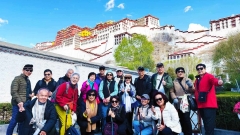

When most travelers think of Tibet, they imagine vast open plateaus, stark landscapes, and monasteries set against barren mountains. Nyingchi tells a very different story.
Located in southeastern Tibet, Nyingchi sits at a lower average altitude—around 3,000 meters—and receives far more rainfall than central and western Tibet. As a result, it is the most verdant region of the plateau, often referred to as “the Switzerland of Tibet” or “the Jiangnan of the Snowland.”
Here, snow-capped peaks rise above dense forests, rivers cut through fertile valleys, and Tibetan villages are woven gently into the landscape. For travelers seeking nature, comfort, and depth—rather than extremes—Nyingchi is one of Tibet’s most rewarding destinations.
Why Nyingchi Is Ideal for Nature & Slow Travel
Slow travel is about more than moving slowly. It is about staying longer, observing deeper, and understanding how people and landscapes coexist. Nyingchi naturally lends itself to this philosophy.
-
The altitude is more forgiving, allowing easier acclimatization
-
Distances between highlights are shorter and more scenic
-
Nature is accessible without extreme trekking or hardship
Rather than overwhelming visitors, Nyingchi invites them to breathe, walk, and linger.
The Natural Geography of Nyingchi
2.1 Mount Namcha Barwa: The Hidden Sacred Peak
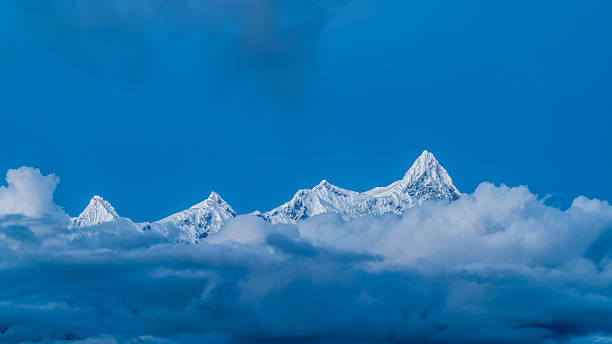
Mount Namcha Barwa (7,782 meters) is the spiritual and visual anchor of Nyingchi. Unlike Everest, it is rarely fully visible. Clouds, mist, and changing light often conceal it, revealing only fragments at dawn or after rain.
In Tibetan belief, seeing Namcha Barwa clearly is a matter of karma rather than luck. This unpredictability adds to its mystique and makes each glimpse deeply memorable.
2.2 One of Tibet’s Richest Forest Systems
Nyingchi contains the most intact forest ecosystem in Tibet. Alpine firs, spruces, rhododendrons, and broadleaf trees cover the slopes, creating dramatic vertical layers of green beneath snow peaks.
These forests regulate water systems, protect biodiversity, and shape the region’s gentler climate. For nature lovers, they offer an experience rarely associated with Tibet.
The Seasons of Nyingchi
Spring (March–April): Peach Blossoms and Snow Mountains
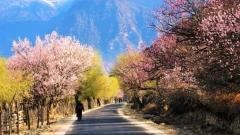
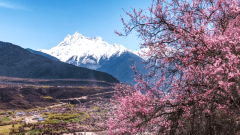
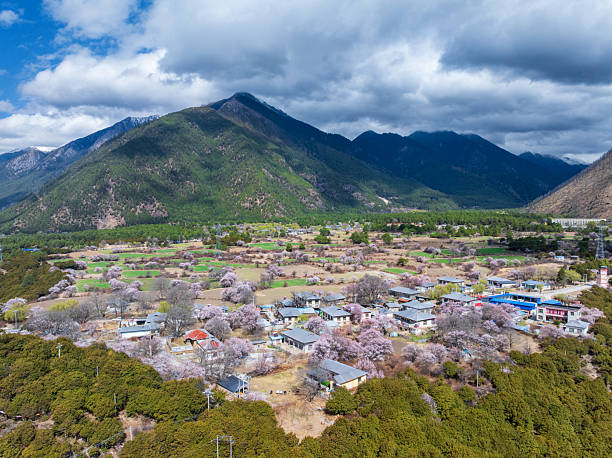
Nyingchi’s wild peach blossoms are legendary. Ancient peach trees line rivers and villages, blooming beneath snow-covered peaks. Unlike ornamental gardens, these blossoms grow naturally, untamed and expansive.
Spring is ideal for photography, cultural walks, and relaxed sightseeing.
Summer (June–August): Forests at Their Fullest
Summer brings lush vegetation, flowing rivers, and vibrant meadows. While rainfall increases, showers are often brief and enhance the region’s color and atmosphere.
This is the best time for forest walks, light trekking, and immersive nature stays.
Autumn (September–October): Golden Valleys and Clear Skies
Autumn transforms Nyingchi into a mosaic of gold, green, and deep blue. The air becomes crisp, visibility improves, and the landscape feels calm and settled.
For slow travelers, this is one of the most balanced seasons—comfortable, scenic, and contemplative.
Tibetan Villages and Local Life in Nyingchi
Nature in Nyingchi is inseparable from human presence. The region is home primarily to the Gongbo Tibetan people, whose lifestyle differs subtly from central Tibet.
4.1 Architecture and Settlement Patterns
Villages are built along river valleys, surrounded by farmland and forests. Stone-and-wood houses, prayer flags, and painted walls blend seamlessly into the landscape rather than dominating it.
4.2 A Life Shaped by the Land
Thanks to better climate conditions, agriculture plays a larger role here. Barley fields, fruit trees, and grazing land support a lifestyle that feels slower and more grounded.
For travelers, visiting these villages offers insight into a version of Tibetan life that is closely tied to seasonal rhythms.
Experiencing Nyingchi Slowly
5.1 Private and Small-Group Travel
Nyingchi’s highlights are spread across valleys and forested areas. Private or small-group travel allows flexibility—stopping where light, weather, or curiosity calls for it.
This approach aligns naturally with slow travel values.
5.2 Walking, Not Rushing
Many of Nyingchi’s most meaningful experiences happen on foot: forest paths, village trails, riverbanks. These walks require no technical skill, only time and attention.
Walking slows perception and deepens connection.
How Nyingchi Fits into a Broader Tibet Journey
Nyingchi can be experienced in several ways:
-
As a gentle introduction before traveling to Lhasa
-
As the nature-focused core of a Tibet itinerary
-
As a contrasting complement to cultural and spiritual routes
Its flexibility makes it suitable for both first-time and returning travelers.
Nyingchi: Tibet’s Quiet Invitation
If central Tibet speaks of devotion and endurance, Nyingchi speaks of harmony.
Here, forests soften the plateau, rivers guide daily life, and mountains reveal themselves only when they choose to. Nyingchi does not demand attention—it rewards patience.
For those who believe that travel is not about how much you see, but how deeply you see, Nyingchi is one of Tibet’s most profound journeys.