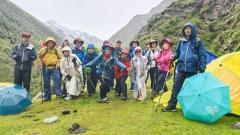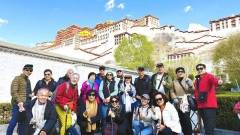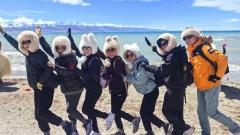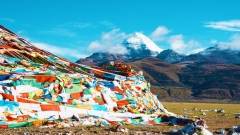

For many travelers, Tibet is more than a destination—it is a journey of endurance, self-discovery, and connection with nature. While classic sightseeing offers a glimpse of Tibetan culture and landscapes, trekking and cycling provide a far deeper and more immersive way to experience the vastness of the Tibetan Plateau.
Outdoor travel in Tibet is not about speed or comfort. It is about moving slowly through high-altitude terrain, crossing snow-covered passes, walking alongside glaciers, and pedaling across endless plateaus where human presence feels minimal. This guide introduces the most iconic trekking and cycling routes in Tibet, helping adventure travelers understand what makes each journey unique and who each route is best suited for.
Part I: Trekking in Tibet – Walking Into the Heart of the Snowy Land
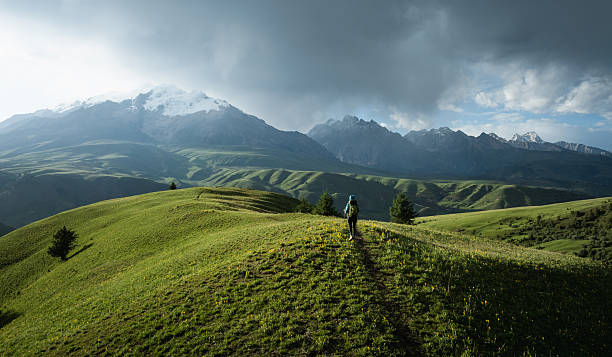
Trekking is one of the most authentic ways to explore Tibet. Step by step, hikers adapt to the altitude, observe subtle changes in landscape, and encounter remote communities rarely seen by conventional travelers.
1. Motuo Trek: Journey into Tibet’s Last Hidden Land
Motuo (Medog) lies on the southeastern edge of Tibet, hidden deep within the Yarlung Tsangpo Grand Canyon. For decades, it was known as the last county in China without road access, preserving its isolation and pristine environment.
Unlike the typical high-altitude Tibetan landscape, the Motuo trek takes hikers through dramatically changing ecosystems.
Key Highlights
-
Descent from snow-covered passes into lush subtropical rainforest
-
Dense forests, waterfalls, suspension bridges, and mist-filled valleys
-
Encounters with traditional Menba villages and distinctive local culture
Who Is It For
-
Experienced hikers with strong physical fitness
-
Travelers seeking remote, non-commercialized routes
-
Adventurers interested in biodiversity and cultural diversity
The Motuo trek is not just physically demanding—it is a journey through contrasting worlds, from icy mountain ridges to warm, humid jungle trails.
2. Everest East Face Trek: Walking Beneath the World’s Highest Peaks
While Everest Base Camp allows travelers to admire Mount Everest from a distance, the Everest East Face Trek brings trekkers directly into the presence of the Himalayas’ most powerful giants.
This route is widely regarded as one of the world’s premier high-altitude treks.
Key Highlights
-
Close-up views of Mount Everest, Lhotse, and Makalu
-
Vast alpine meadows, moraine fields, and glacial valleys
-
Remote Tibetan herding areas and dramatic mountain scenery
Important Considerations
-
Prolonged exposure to high altitude
-
Significant daily elevation gain and loss
-
Best organized with professional logistical support
This trek rewards those prepared for both physical challenge and mental resilience, offering some of the most breathtaking mountain scenery on Earth.
3. Gama Valley Traverse: A True Wilderness Crossing
The Gama Valley (Gama Gou) Traverse is a lesser-known but highly respected trekking route among seasoned outdoor enthusiasts. It is a full wilderness crossing, linking remote valleys and high passes with minimal infrastructure.
Route Characteristics
-
Highly varied terrain: forests, alpine grasslands, rocky slopes, snowfields
-
Very limited human presence
-
No commercial development along the route
Who Should Attempt It
-
Highly experienced trekkers
-
Those comfortable with self-supported or expedition-style trekking
-
Travelers seeking solitude and raw landscapes
This route is not recommended for first-time Tibet visitors, but for advanced trekkers, it represents one of the most rewarding wilderness experiences on the plateau.
Part II: Cycling in Tibet – Measuring the Plateau by Wheel
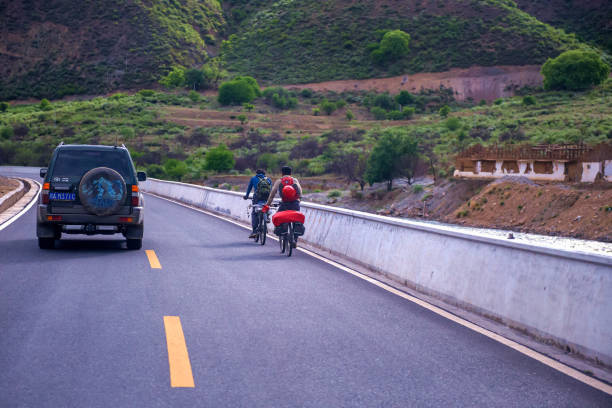
Cycling across Tibet is often described as a pilgrimage of endurance. The combination of thin air, long distances, and immense landscapes makes high-altitude cycling one of the ultimate adventure challenges.
1. Sichuan–Tibet Route: The Classic Gateway to the Plateau
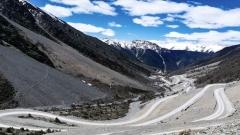
The Sichuan–Tibet route (G318) is the most famous and visually dramatic cycling route into Tibet. It is often considered the classic first Tibetan cycling journey.
Route Highlights
-
Gradual transition from lowlands to high plateau
-
Multiple high mountain passes and deep river gorges
-
Well-established infrastructure and support towns
Best For
-
First-time high-altitude cyclists
-
Riders seeking varied landscapes and cultural exposure
-
Those wanting challenge without extreme isolation
This route combines difficulty with accessibility, making it the most popular choice among cyclists entering Tibet.
2. Xinjiang–Tibet Route: The Ultimate Test of Endurance
The Xinjiang–Tibet route (G219) is widely considered the most demanding cycling route into Tibet. It crosses some of the highest and most remote regions in western China.
Key Features
-
Extreme altitude and long distances between settlements
-
Harsh weather conditions and strong winds
-
Sparse resupply points
This route is not about scenery alone—it is about mental strength, preparation, and survival in one of the most unforgiving landscapes on Earth.
3. Qinghai–Tibet Route: Straight Roads Across Endless Plateau
The Qinghai–Tibet route (G109) is the most technically accessible cycling route to Lhasa.
Route Characteristics
-
Relatively gentle gradients
-
Wide, well-maintained roads
-
Frequent encounters with wildlife such as Tibetan antelope
Recommended For
-
First-time long-distance cyclists
-
Riders prioritizing altitude adaptation over technical difficulty
The open roads and vast horizons make this route deceptively simple yet deeply humbling.
4. Yunnan–Tibet Route: The Most Scenic and Culturally Diverse Ride
The Yunnan–Tibet route offers the greatest variety in scenery and cultural encounters.
Highlights
-
Dramatic elevation changes
-
Rich ethnic diversity and cultural landscapes
-
Forests, snow mountains, river valleys, and high passes
Many cyclists consider this route the most visually rewarding, though it requires careful planning due to challenging road conditions.
Part III: Preparation and Safety for Outdoor Travel in Tibet
Outdoor adventures in Tibet demand respect for the environment and careful preparation.
Essential Recommendations
-
Allow sufficient time for altitude acclimatization
-
Travel at a steady pace—avoid rushing itineraries
-
Choose the right season (May to October is generally best)
-
Consider traveling with experienced local support teams
In Tibet, preparation is not optional—it is essential.
Trekking and cycling in Tibet are not simply physical activities. They are transformative journeys that challenge the body, sharpen the mind, and deepen one’s appreciation for nature and culture.
Whether you walk beneath towering Himalayan peaks or cycle across vast open plateaus, these experiences allow you to move beyond observation and into true participation in Tibet’s landscapes.
For travelers seeking more than sightseeing, Tibet’s outdoor adventures offer a path into the soul of the Snowy Land—measured not by distance alone, but by the depth of experience gained along the way.