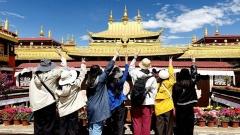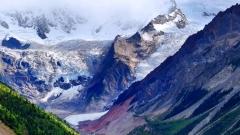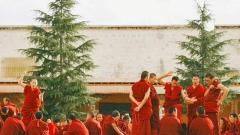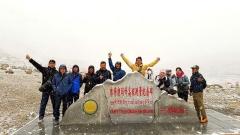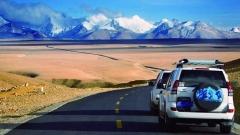

Revered as the “Center of the Universe” by Tibetan Buddhism, Bon, Hinduism and Jainism, Mount Kailash is a sacred destination for countless travelers and pilgrims. With an average altitude of over 5,000 meters, its unique plateau climate creates distinct landscapes and experiences across seasons. Choosing the best season for Mount Kailash travel directly impacts your trip’s comfort and safety. The scenic area opens on April 25 annually and closes from December to April next year, with the prime travel window from May to October—May-June offers minimal snow and fewer crowds, September-October boasts clear autumn skies, while July-August is lush but rainy. This guide breaks down seasonal comparisons, route planning, packing lists, budgets, altitude sickness prevention, helping you pinpoint the ideal time to explore this sacred snow-capped mountain.
Best Time to Visit Mount Kailash: Seasonal Overview
Located in the remote Ngari region of western Tibet, Mount Kailash sits at an extreme altitude and is subject to harsh plateau weather. Conditions vary significantly by month in terms of temperature, precipitation, trail accessibility and pilgrimage activity. Rather than a single “best” time, the ideal season depends on your priorities, including weather stability, trekking difficulty and cultural atmosphere. The following sections compare the main travel periods between May and October based on real travel conditions.
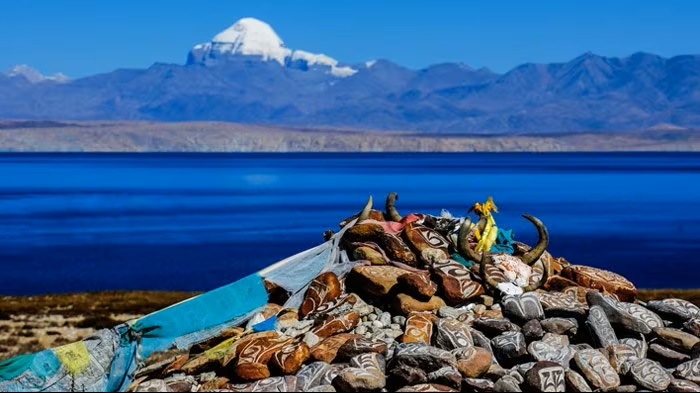
Mount Kailash
May–June | Fewer Crowds and Clearer Trails
May and June mark the first prime travel window after Mount Kailash officially reopens. Residual winter snow gradually melts away, and most trekking routes become fully accessible. Daytime temperatures typically range from 5–12°C, with low precipitation and relatively stable weather, although daily temperature differences remain noticeable.
Early summer brings fresh green tones to the plateau grasslands, while clear skies enhance visibility of the mountain’s distinctive form. With fewer pilgrims on the trail, travelers can complete the kora at a steady pace and enjoy a quieter atmosphere. Morning cloud seas and clear sunrise views are also more common during this period.
Best for: First-time visitors, photographers, and travelers seeking a calm trekking experience.
Notes: Nighttime temperatures can still drop below freezing; proper insulation is essential. Some remote lodges and supply points may have just reopened, so advance confirmation is recommended.
July–August | Peak Pilgrimage Season and Lush Landscapes
From July to August, Mount Kailash enters its busiest period of the year. Grasslands reach full bloom, alpine flowers appear throughout the valleys, and daytime temperatures range between 8–15°C. Large numbers of pilgrims gather from across the region, creating a powerful religious atmosphere along the kora route.
This season offers the most immersive cultural experience, with visible acts of devotion and occasional religious events at monasteries along the way.
Best for: Travelers interested in Tibetan religious culture and capable of handling longer, busier trekking days.
Notes: This period coincides with the plateau rainy season. Short afternoon showers or thunderstorms are possible, and accommodation and transport should be booked well in advance.
September–October | Clear Skies and Best Visibility
September and October are widely regarded as the best months for visibility around Mount Kailash. After the rainy season ends, skies become exceptionally clear, revealing sharp mountain contours. Daytime temperatures hover around 8–10°C, while nights can fall to around -5°C.
Golden grasslands contrast vividly with snow-covered peaks and deep blue skies, offering excellent photographic conditions. Visitor numbers decrease compared to summer, and trekking conditions are generally stable.
Best for: Landscape photographers and travelers seeking visual quality with moderate crowd levels.Notes: Light snowfall may occur from mid-October onward, particularly at higher passes. Warm clothing and traction gear are strongly recommended.
Not Recommended | December to April
From December through April, Mount Kailash is officially closed. Temperatures often drop below -15°C, with frequent snowstorms and frozen roads. Most accommodations and support facilities are unavailable, and the risk of severe altitude-related illness is high. This period is unsuitable for general travelers.
Season-Specific Route Planning for Mount Kailash Travel
Core Trekking Route: Classic 52km, 2-Day 1-Night Itinerary (Year-Round Except Closure Period)
Trekking should be done clockwise (counter-clockwise is only for Bon believers). The 52km route starts and ends in Darchen (4,670 meters above sea level), passing key attractions like Chugu Monastery, Zhire Monastery, Drolma La Pass and Zutrulphuk Monastery. The highest point, Drolma La Pass, stands at 5,630 meters, with an altitude difference of over 1,200 meters, making it physically demanding.
Section 1: Darchen → Prayer Flag Square → Chugu Monastery → Zhire Monastery (approx. 20km, 6-8 hours). The first 8km is a gentle slope, offering distant views of Mount Kailash’s western slope and Lake Manasarovar. The cliffside Chugu Monastery boasts breathtaking scenery. Zhire Monastery, the endpoint at 5,080 meters, should be reached before 17:00 to avoid nighttime temperature drops.
Section 2: Zhire Monastery → Drolma La Pass → Zutrulphuk Monastery → Darchen (approx. 32km, 10-12 hours). Depart at 5:00 a.m. and climb Drolma La Pass with a headlamp. The trail features gravel slopes and snow-covered sections (even in summer). After descending, follow the river valley back via Zutrulphuk Monastery—the latter half of the journey is physically taxing.
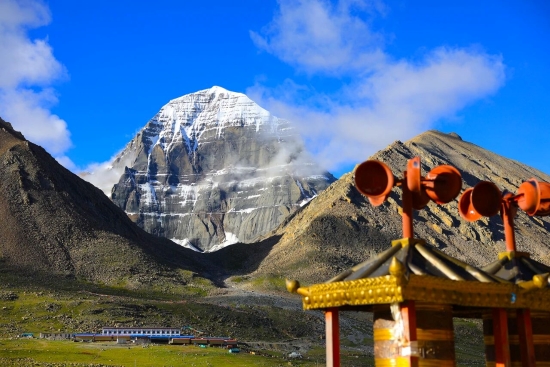
Zhire Monastery
Seasonal Route Adjustments
May-June: No significant snow on the route, but residual snow may linger at passes—watch for slippery surfaces. Follow the classic route without detours; start early daily to avoid strong afternoon winds.
July-August: Avoid low-lying areas during the rainy season. Seek shelter at nearby supply stations if rain hits. The Chugu Monastery-Zhire Monastery section may get muddy—stick to paved trails. Some sections may close temporarily due to rain; follow staff instructions.
September-October: Early snow may cover some trails in late autumn—proceed cautiously at Drolma La Pass and carry crampons for traction. Clear weather is ideal for extending your stay to photograph the starry sky around Zhire Monastery or Zutrulphuk Monastery.
Lightweight Sightseeing Route
If you have limited physical strength or only want sightseeing, take the Darchen → Prayer Flag Square → Viewing Platform route. Take a vehicle to Prayer Flag Square (60 CNY per person), then hike 1-2km to the viewing platform for distant views of Mount Kailash’s main peak. The entire trip takes 3-4 hours, requires no long-distance hiking, and is suitable for all ages from May to October.
Mount Kailash Travel Packing List
May-June Packing: Windproof and Warmth-Focused
Clothing: Quick-dry shirt (wool/polyester) + thick fleece jacket + lightweight down vest + waterproof windproof jacket and pants.
Accessories: Fleece-lined waterproof gloves, 3-4 pairs of thick hiking socks, warm hat, scarf, UV400+ sunglasses, high-top waterproof hiking boots.
Other Items: 2 trekking poles (to reduce knee strain), knee pads, headlamp, disposable bed sheets, wet wipes (limited washing facilities), insulated water bottle (refill hot water at teahouses along the way).
July-August Packing: Sun Protection and Rain Protection
Clothing: Quick-dry short/long-sleeve shirt + thin fleece jacket + lightweight breathable waterproof jacket and pants.
Accessories: Sun hat, sun protection gloves, quick-dry hiking socks, waterproof hiking boots, sun protection mask (strong plateau UV rays).
Other Items: Waterproof backpack cover, rain gear, insect repellent (mosquitoes in some river valleys), trekking poles, knee pads, portable garbage bags (no trash cans along the way).
September-October Packing: Enhanced Warmth
Clothing: Quick-dry long-sleeve shirt + thick fleece jacket/light down jacket + waterproof windproof jacket and pants.
Accessories: Fleece gloves, warm hat, thick hiking socks, non-slip hiking boots, crampons (essential in October).
Other Items: Trekking poles, knee pads, headlamp, insulated water bottle, heating pads (for nighttime warmth), spare camera batteries (batteries drain fast in low temperatures).
Altitude Sickness and Medical Supplies
Medications: Take Rhodiola rosea one week in advance; carry Gaoyuan’an, ibuprofen (for headache relief), cold medicine, gastrointestinal medicine, band-aids, glucose oral liquid (for quick energy boost).
Other Supplies: Portable oxygen cylinders (rentable at guesthouses, 50 CNY per can, for emergency use only—avoid over-reliance), oximeter (to monitor physical condition), wet wipes, quick-dry towel (avoid washing hair/bathing for 2 days after arriving in Darchen to prevent altitude sickness).
Documents and Electronic Equipment
Documents: ID card, border pass (free to apply at place of household registration; approx. 100 CNY to apply via agency in Lhasa; only ID card needed for application in Xigazê); foreign tourists need additional Tibet Travel Permit and Alien’s Travel Permit (must apply via travel agency).
Electronic Equipment: 20,000 mAh+ power bank, waterproof phone case, camera with spare batteries, offline maps (no signal in some sections), copy of entry ticket (valid for 3 days, checked along the way).

Kailash Kora
Mount Kailash Travel Budget Breakdown
Based on solo travel; prices in peak season (July-August) are about 30% higher than in off-peak season (May-June, September-October);
Core Expenses
Entry Ticket: 150 CNY per person (valid for 3 days); additional 150 CNY per person if visiting Lake Manasarovar.
Transportation: Lhasa → Baga Town (where Darchen is located): 600 CNY per person by coach (24 hours); 800-1,000 CNY per person by shared off-road vehicle (4 passengers); Baga Town → Scenic Area Prayer Flag Square: 60 CNY per person by vehicle.
Trekking Services: Porter service: 200 CNY per day (to carry luggage); horse/yak rental: 300-500 CNY per day (for those with limited physical strength).
Seasonal Accommodation and Catering Expenses
Accommodation: Off-peak season (May-June, September-October): Standard room at Darchen homestay: 150-200 CNY per night; dormitory at Zhire Monastery guesthouse: 100-150 CNY per person.
Peak season (July-August): Standard room at Darchen homestay: 300-400 CNY per night; dormitory at Zhire Monastery guesthouse: 200-250 CNY per person (book in advance).
Catering: Teahouses along the way offer simple meals like instant noodles, butter tea, sweet tea and zanba: 10-30 CNY per person per meal; Tibetan and Sichuan restaurants in Darchen: 50-80 CNY per person per meal; total catering budget: 300-400 CNY per person in off-peak season, 400-500 CNY per person in peak season.
Mount Kailash Travel Precaution
Core Altitude Sickness Prevention
Advance Acclimatization: Stay in Lhasa for 5-7 days, then proceed to Xigazê, and finally to Darchen for gradual altitude acclimatization; do not wash hair or bathe within 2 days of arriving in Darchen to avoid altitude sickness caused by colds.
Trip Taboos: Avoid strenuous exercise during trekking; maintain a steady pace and rest for 10 minutes every hour; drink 2-3 liters of warm water daily; avoid alcohol, smoking and overeating.
Emergency Handling: If experiencing persistent vomiting, difficulty breathing or coughing up pink frothy sputum (symptoms of pulmonary edema), stop the trip immediately and contact the scenic area transfer vehicle for evacuation (transfer hotline: 400-666-6712); Darchen has a medical station (emergency rescue hotline: 0897-2607026).
Seasonal Safety Focus
May-June: Guard against strong winds at mountain passes; avoid staying in open areas for long periods; watch for slippery surfaces on sections with residual snow and steer clear of loose gravel areas.
July-August: Monitor weather forecasts closely during the rainy season (weather hotline: 12121); seek shelter at nearby supply stations if encountering rainstorms or hail; avoid wading across rivers and stay away from low-lying river valleys to prevent flash floods.
September-October: Temperatures drop sharply in late autumn—add clothing promptly and avoid staying outdoors for long at night; some trail sections may freeze after October—carry snow chains for self-driving and wear non-slip shoes for trekking.
General Safety Guidelines
Physical Assessment: People with heart disease, hypertension, respiratory insufficiency, cerebrovascular disease and those with colds are strictly prohibited from trekking; seniors over 60 and minors under 16 are not recommended to trek.
Route Rules: Do not deviate from the main route or enter undeveloped areas; avoid sensitive areas like sky burial platforms; private vehicles are not allowed on trekking routes—take scenic area designated transfer vehicles.
Emergency Contacts: 4 supply stations in the scenic area have medical points (Zhire Monastery medical point: 0897-2605518; Danzhen Zhongkang medical point: 17708979287); emergency police hotline: 110 or 0897-2607017.
Frequently Asked Questions About Mount Kailash Travel
Is Mount Kailash suitable for non-believers? How to choose the best season?
Absolutely. Mount Kailash is not only a religious sacred site but also boasts stunning plateau scenery. Non-believers can choose the lightweight sightseeing route or experience part of the trekking trail. For first-time visitors, May-June or September-October are recommended—May-June offers fewer crowds and stable weather, while September-October is perfect for photography. Avoid July-August, the rainy and peak season.
Is trekking physically demanding? How to cope with limited physical strength?
Trekking is physically demanding—the 52km route takes 2 days to complete, with an altitude difference of over 1,200 meters, which may be challenging for those with limited exercise. You can extend the trip to 3 days, hiking 15-20km daily at a slower pace with more rest. You can also hire a porter (200 CNY per day) to carry luggage or rent a horse/yak (300-500 CNY per day) to assist with climbing passes. If exhausted midway, contact a vehicle at nearby supply stations to switch to vehicle travel for the remaining journey.
What documents do foreign tourists need to prepare? Is the application process complicated?
Foreign tourists need to prepare a passport, border pass, Tibet Travel Permit and Alien’s Travel Permit. The border pass can be applied via travel agency (approx. 100 CNY per person). The Tibet Travel Permit and Alien’s Travel Permit must be applied 1-2 months in advance via authorized travel agencies, with required materials including passport copy, visa copy and travel itinerary. The processing time is about 7-10 working days, with fees ranging from 500-1,000 CNY per person depending on the itinerary length. Foreign tourists must travel with agency-arranged vehicles and guides and cannot travel independently.
How difficult is it to book accommodation in different seasons? How far in advance should I book?
Off-peak season (May-June, September-October): Accommodation is relatively available—book 1-2 weeks in advance for plenty of choices at Darchen homestays and Zhire Monastery guesthouses at reasonable prices
Peak season (July-August): Accommodation is extremely tight—book 1-2 months in advance. Guesthouses along the way like Zhire Monastery may be fully booked; book via travel agencies or official scenic area channels to avoid being stranded
Accommodation Conditions: Darchen homestays have standard rooms with private bathrooms and relatively good facilities; guesthouses at attractions like Zhire Monastery mostly offer dormitories with basic bedding and hot water—bring disposable bed sheets and wet wipes for hygiene
How to Choose the Right Season for Your Mount Kailash Journey
There is no single “perfect” season for visiting Mount Kailash. The best time depends largely on your travel goals, physical condition and tolerance for high-altitude environments. May to June offers stable weather and fewer visitors, making it ideal for first-time travelers. July and August bring lush landscapes and strong pilgrimage activity, while September and October provide clear skies and excellent visibility for photography.
Regardless of the season, altitude adaptation and realistic planning remain essential. Weather changes, physical endurance and route conditions often have a greater impact on the experience than the calendar itself. Preparing properly can significantly reduce risks and improve comfort throughout the journey.
For travelers seeking reliable advice and well-balanced travel arrangements, China Dragon Travel offers professional guidance based on on-the-ground experience, helping you plan a Mount Kailash trip that is both safe and rewarding.