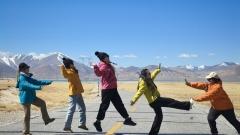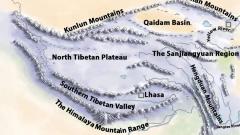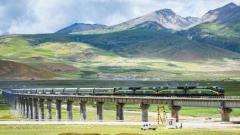

Qinghai-Tibet Highway G109 is one of the highest-altitude highways globally, connecting Xining in Qinghai and Lhasa in Tibet with a total length of about 1,937 kilometers, hailed as the “Heavenly Road” to the snow-capped plateau. Traversing grasslands, lakes, gobi deserts, and snow-capped mountains, it links countless natural and cultural landscapes—from the vast blue of Qinghai Lake to the pristine wilderness of Kekexili (Hoh Xil), and the sacred grandeur of Tanggula Pass. Whether self-driving, carpooling, or taking a coach, travelers can soak in the awe-inspiring vastness of nature and experience Tibet’s unique folk customs.
Scenery & Must-Visit Spots: Admire the Grandeur Along Qinghai-Tibet Highway G109
The essence of Qinghai-Tibet Highway G109 lies in its ever-changing breathtaking scenery. From Xining to Lhasa, the 1,937-kilometer journey is like a moving visual feast—every stretch offers unique surprises. No need to deliberately seek attractions; every tree, mountain, and lake outside the window reflects Tibet’s true charm. Praised by People’s Daily, this road carries the plateau’s grandeur and solitude. Driving along, you’ll be captivated by the boundless sky and earth, with every casual photo capturing an unretouched masterpiece that lingers in memory. The numerous natural and cultural landscapes along the way perfectly embody Tibet’s allure, each worthy of pausing to savor.
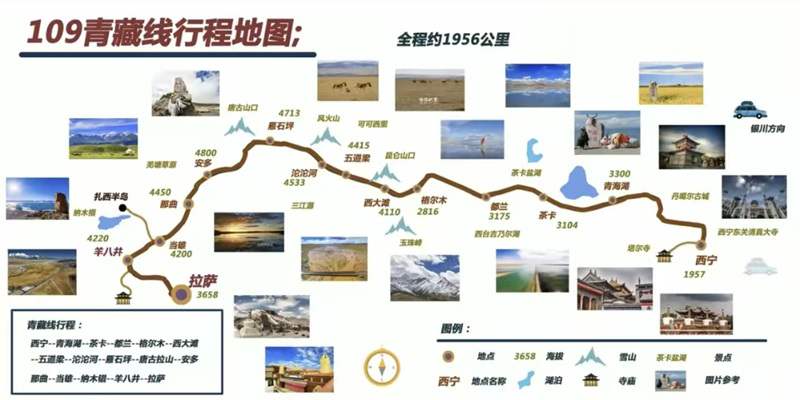
Qinghai-Tibet Highway G109
Depart from Xining: Encounter Qinghai Lake’s Blue Tenderness
Setting off from Xining, the first stunning sight along Qinghai-Tibet Highway G109 is Qinghai Lake, a landmark and must-visit spot. As China’s largest inland saltwater lake, it shimmers like a sapphire nestled between grasslands and snow-capped mountains, with an altitude of about 3,196 meters. The surrounding grasslands stretch endlessly, where yaks and sheep graze leisurely, dotted with nomadic tents emitting a faint scent of butter tea. In summer, rapeseed flowers bloom wildly for miles, creating a gorgeous picture with the blue lake, white clouds, and rolling snow-capped mountains. Even in autumn and winter, the lake remains blue, the grasslands turn pale yellow, and the snow-capped mountains stand more majestic, exuding a vast, serene charm. Travelers can stroll along the lakeside or cycle around the lake to feel its tranquility. At dusk, the setting sun casts sparkling light on the water, making it an ideal spot to capture the first impression of Qinghai-Tibet Highway G109.
Head West: Meet Chaka Salt Lake (“Sky Mirror Lake”)
Continuing westward, after bidding farewell to Qinghai Lake’s tenderness, you’ll encounter the dreamy clarity of Chaka Salt Lake (“Sky Mirror Lake”), a magical must-visit spot near a branch of Qinghai-Tibet Highway G109. With an altitude of about 3,059 meters and a vast area, the lake surface is as calm as a mirror, clearly reflecting the sky, clouds, and distant snow-capped mountains. Walking along the shore feels like stepping into a fairyland—blue water beneath your feet and a clear sky above, blurring the line between heaven and earth. On sunny days, sunlight shimmers on the lake, with salt grains reflecting tiny sparks like scattered stars. On cloudy days, the lake takes on a soft gray hue, serene and cool. Chaka Salt Lake has two scenic areas: “Sky Mirror” and “Chaka No.1”. On good weather days, “Sky Mirror” is recommended—take a small train to the lake’s hinterland for better photos. For families with kids, “Chaka No.1” is more suitable for hiking and offers a better experience. Note that the lake’s beauty is highly weather-dependent; cloudy days yield poor photo results, so plan to visit on a sunny day.
Enter the Main Line: Explore the Primitive Grandeur of Qarhan Salt Lake
Further west along the main line of Qinghai-Tibet Highway G109, you’ll reach Qarhan Salt Lake—China’s largest salt lake and one of the world’s most famous inland salt lakes. More vast and primitive than Chaka Salt Lake, it’s a hidden gem not to be missed. Located near Golmud City beside the highway, with an altitude of about 2,670 meters and a total area of 5,856 square kilometers, the lake surface is covered with a thick, hard salt crust forming unique salt bridges. Driving on these bridges feels like walking on clouds, with crystal-clear salt grains underfoot and endless salt flats in the distance—only pure white and blue exist, creating a serene and spectacular scene. Along the way, you’ll also see uniquely shaped salt flowers, naturally formed to resemble corals, pearls, or snow lotuses, showcasing nature’s craftsmanship. With fewer tourists, it allows visitors to fully immerse themselves in the primitive vastness and experience the charm of this off-the-beaten-path spot.
Pass Through Golmud: Cross Kunlun Pass’ Sacred Realm
After passing Golmud, Qinghai-Tibet Highway G109 enters its most awe-inspiring plateau wilderness section. Crossing Kunlun Pass, you officially step into the hinterland of the Qinghai-Tibet Plateau—a landmark node not to be missed. At an altitude of 4,767 meters, Kunlun Pass is the gateway to the plateau, featuring the Sonam Dargye Memorial honoring the hero who sacrificed his life to protect Kekexili’s wild animals. Surrounded by continuous snow-capped mountains and glaciers, with howling cold winds, it exudes a reverent and solemn beauty. Standing at the pass, you’ll marvel at the towering Kunlun Mountains piercing the sky, the vast gobi grasslands underfoot, and the endless horizon—truly feeling nature’s immense power and the plateau’s grandeur. It’s a must-visit to experience the plateau’s spirit along Qinghai-Tibet Highway G109.
Gallop Through the Uninhabited Area: Encounter Kekexili’s Wild Creatures
Continuing from Kunlun Pass along Qinghai-Tibet Highway G109, you’ll enter Kekexili (Hoh Xil) Uninhabited Area—one of China’s largest uninhabited regions and one of the world’s best-preserved primitive ecological environments. A stunning natural scenic belt and must-visit primitive attraction, it lies between Kunlun Pass and Tuotuo River along the highway, with an altitude above 4,500 meters. Characterized by cold, dry weather and large temperature differences between day and night, it boasts extreme primitive beauty. It’s a habitat for rare wild animals such as Tibetan antelopes, Tibetan wild asses, wild yaks, and snow leopards. Every May to June, Tibetan antelopes migrate to Zhuonai Lake to give birth, creating a spectacular scene. Travelers can stop in safe areas to observe wild animals but must not enter the deep uninhabited area or disturb them. Along the way, the Sonam Dargye Protection Station is worth a visit to learn about Kekexili’s conservation history and pay tribute to the heroes who dedicated their lives to wildlife protection.
Drive Past Kekexili: Touch Tuotuo River’s Serenity
Driving southwest from Kekexili along Qinghai-Tibet Highway G109, you’ll reach Tuotuo River—the source of the Yangtze River. A serene scenic spot combining nature and culture, it’s worth stopping to explore. The winding Tuotuo River flows through vast grasslands, with clear water reflecting the sky, clouds, and distant snow-capped mountains. The riverside grasslands are expansive, dotted with cattle, sheep, and nomadic tents. Occasionally, herdsmen ride horses past, singing melodious ballads, filled with Tibetan charm. Looking into the distance, the endless grasslands stretch to the horizon, and the Tuotuo River winds like a silver ribbon, with snow-capped mountains in the background. It’s a peaceful place to feel the plateau’s purity and the sacredness of the Yangtze River Source.
Reach Tanggula: Experience the Extreme Scenery of the “Forbidden Zone of Life”
Crossing Tanggula Pass, the highest point of Qinghai-Tibet Highway G109 and the boundary between Qinghai and Tibet, you’ll encounter the extreme plateau scenery. At an altitude of 5,231 meters, known as the “Forbidden Zone of Life,” it’s a must-visit check-in spot. The weather here is unpredictable, with frequent snowstorms year-round. A monument stands at the pass, inscribed with its altitude, surrounded by rolling snow-capped mountains and howling winds, creating a breathtakingly magnificent scene. Standing at the pass, you’ll see a vast white landscape where snow-capped mountains, glaciers, and grasslands blend into one, with the sky touching the mountain peaks—as if you can reach out and touch the sky. Note that the high altitude means thin air, with oxygen levels only about 60% of that on the plains. Visitors should limit their stay to 15 minutes, move slowly, and avoid strenuous exercise to prevent altitude sickness.
Enter Tibet: Immerse in Nagqu Grassland’s Folk Customs
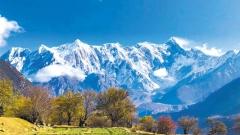
After crossing Tanggula Pass, you’ll enter Tibet. The scenery along Qinghai-Tibet Highway G109 remains stunning as you drive into Nagqu Grassland—a core scenic belt and ideal place to experience Tibetan folk customs. The vast grassland is covered with lush green grass, dotted with cattle, sheep, nomadic tents, and fluttering prayer flags, filled with a strong Tibetan atmosphere. Along the way, you’ll see Tibetan villages scattered across the grassland, where herdsmen in traditional costumes work and graze, with simple smiles on their faces. In the distance, the Nyenchen Tanglha Mountains stand tall, contrasting beautifully with the vast grassland, forming a stunning Tibetan landscape. It’s a must-pass to immerse yourself in Tibet’s charm and the warmth of its people.
Approach Lhasa: Encounter Namtso Lake’s Sacred Beauty
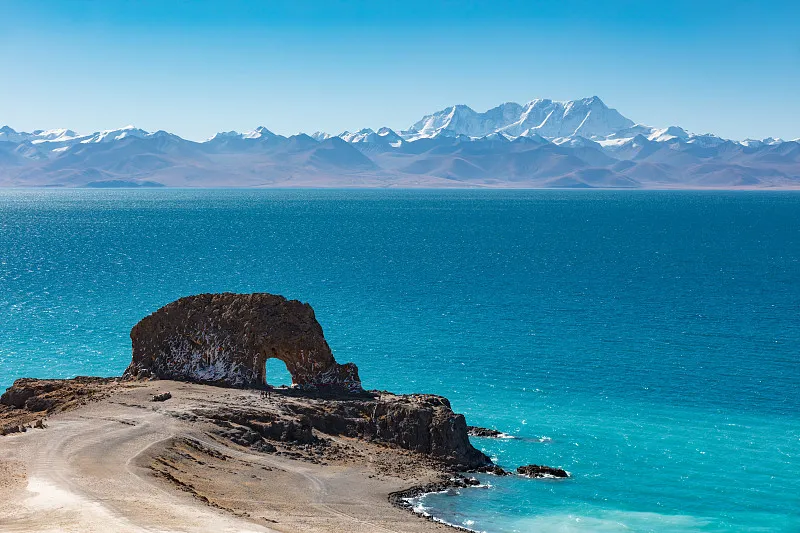
As you approach Lhasa, taking a branch of Qinghai-Tibet Highway G109 will lead you to Namtso Lake—one of Tibet’s three sacred lakes and China’s second-largest saltwater lake. A highlight scenic spot, it’s located beside the branch highway, with an altitude of about 4,718 meters. The lake’s clear blue water shimmers like a pure sapphire nestled between snow-capped mountains and grasslands, surrounded by snow-capped peaks, vast grasslands, cattle, sheep, and fluttering prayer flags. Namtso Lake’s beauty lies in its purity and vastness: in the morning, it’s shrouded in thin mist like a fairyland; at noon, the blue water reflects the sky and snow-capped mountains; at dusk, the setting sun casts golden light on the lake, creating a stunning scene. Travelers can stroll along the lakeside or take a sightseeing bus to Zhaxi Peninsula for a panoramic view. To avoid crowds, navigate to Mani Yangtang, where you can feed seagulls, take photos with Tibetan mastiffs, and ride yaks for a better experience.
Arrive at the Destination: Capture Potala Palace’s Sacred Grandeur
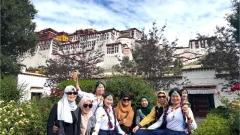
On the final stretch from Namtso Lake to Lhasa along Qinghai-Tibet Highway G109, the scenery remains charming—Tibetan villages, fluttering prayer flags, nomadic tents, and herds of cattle and sheep blend seamlessly with nature. The distant snow-capped mountains, lush grasslands, clear blue sky, and floating clouds create a picturesque journey. As the endpoint of the trip, the Potala Palace in downtown Lhasa is a must-visit cultural sacred site. Symbolizing Tibet, it’s the world’s highest palace complex at an altitude of about 3,700 meters, and a sacred place for the Gelugpa sect of Tibetan Buddhism. Built on a hill, it’s magnificent, consisting of the Red Palace (for religious activities) and the White Palace (residence of the Dalai Lama). The palace houses a large collection of murals, sculptures, scriptures, and treasures, each with great historical and artistic value. Visitors need to book tickets 7 days in advance and follow a guide to learn about Tibetan Buddhism’s history and culture, feeling the Potala Palace’s solemnity and sacredness to conclude the journey perfectly.
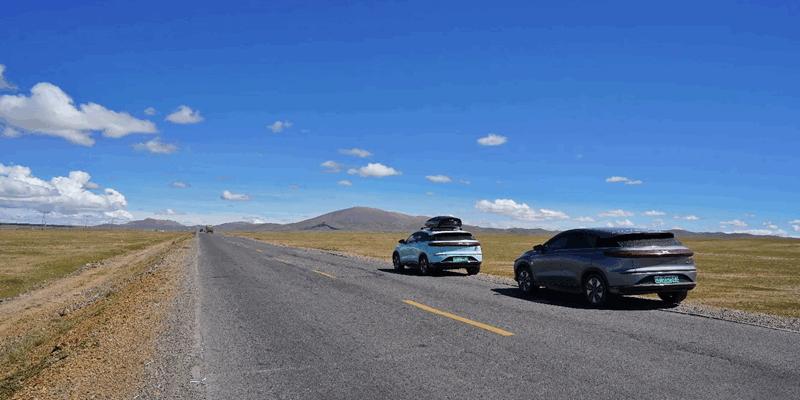
Qinghai-Tibet Highway G109
Food & Accommodation: Experience the Warmth Along Qinghai-Tibet Highway G109
The food and accommodation along Qinghai-Tibet Highway G109 offer both Tibetan characteristics and universal tastes, covering different price ranges to suit all travelers—allowing you to enjoy delicious food and comfortable stays while admiring the scenery.
Taste Tibetan Flavors: Try Local Specialties
The food along the way mainly features Tibetan and Northwest Chinese flavors—rich in taste and generous in portion, well worth trying.
Golmud Braised Lamb Ribs
A specialty of Golmud, fresh lamb ribs are braised with potatoes, onions, green peppers, and other ingredients. The ribs are tender and fall off the bone, fragrant and flavorful, costing about 60 RMB per person, perfect for sharing.
Amdo Tibetan Noodles & Beef Buns
Popular snacks in Amdo, Tibetan noodles are chewy, served with rich beef broth, sprinkled with green onions and coriander. Beef buns have thin skins and juicy fillings, priced at 3 RMB each—great value for replenishing energy.
Lhasa Tibetan Hot Pot
Featuring a rich broth simmered with yak bones and Tibetan pork bones for hours, it’s served with yak meat, Tibetan pork, vegetables, and tofu. Warm and nourishing, it pairs well with highland barley wine, costing about 80 RMB per person.
Other Recommended Dishes
Xining Hand-Pulled Lamb, Qinghai Lake Fish from Caka Town, Yaks Jerky from Tuotuo River, Nagqu Tibetan-Style Yogurt and the like are also worth a try. Note that butter tea at roadside stalls may be spoiled, and “plateau snow lotus” in scenic areas is often fake (ordinary dendrobium), so choose carefully.
Stay Comfortably: Top Accommodation Recommendations
Accommodation options are diverse, from budget hostels and express hotels to mid-to-high-end hotels and characteristic homestays. It’s advisable to book in advance, especially during the peak tourist season (June-September), to avoid no availability.
Around Qinghai Lake
Recommended is Yinlu Ranch, 23 kilometers along Huanhu West Road, with floor-to-ceiling windows offering Qinghai Lake views. Well-equipped and scenic, it costs about 400 RMB per night in the off-season (prices rise in peak season). For budget options, express hotels in Chaka Town are cost-effective at around 150 RMB per person per night.
Golmud City
Mid-to-high-end choices include Golmud Hotel and Golmud International Hotel, with complete facilities and attentive service, costing 300-500 RMB per person per night. Budget express hotels in the city center are about 180 RMB per person per night, conveniently located for visiting nearby attractions.
Around Kekexili
Sonam Dargye Protection Station Guesthouse offers simple beds at about 100 RMB per person. At night, wildlife protectors share conservation stories, ideal for adventure seekers. In Tuotuo River, accommodation is basic—hotels near Tuotuo River Garrison cost about 200 RMB per person per night for basic rest.
Amdo & Nagqu
Amdo Hotel and Nagqu International Hotel are well-equipped, costing about 300 RMB per person per night. Local Tibetan homestays (around 250 RMB per person per night) offer a taste of Tibetan-style accommodation and folk customs.
Lhasa City
Cidu Hotel near Barkhor Street is recommended, with a rooftop café offering Potala Palace night views. Conveniently located and well-equipped, it costs about 400 RMB per person per night (book 1 month in advance for peak season). Budget options include express hotels (around 200 RMB per person per night) and Tibetan homestays (around 280 RMB per person per night).
The Heavenly Road Journey: Embark on a Romantic Tibet Adventure
The beauty of Qinghai-Tibet Highway G109 lies in the awe-inspiring vastness of nature, the purity of snow-capped mountains and lakes, and the depth of Tibetan culture. This road carries countless travelers’ dreams, with surprises at every turn and scenery that lingers in memory. Whether self-driving for freedom or carpooling to meet like-minded companions, you’ll find your own Tibetan romance here. For a hassle-free trip without worrying about itineraries, road conditions, or altitude sickness, choose China Dragon Travel‘s exclusive Qinghai-Tibet Highway G109 tour. With a professional team to guide you and a customized itinerary, you can fully enjoy the road’s infinite beauty and complete an unforgettable Tibet journey.