
If Xinjiang’s food is a rugged hero, its beverages are the gentle soul of the land. In this vast region with abundant sunshine and dry air, drinks are more than just thirst-quenchers—they are cultural symbols, social bridges, and a form of ancient survival wisdom. From the savory depth of morning milk tea to the fizzy sweetness of street-side Kvass, every sip tells a story of the Silk Road. Are you ready to raise a glass to Xinjiang?
Morning Warmth & The Ultimate Digestive Aid — Milk Tea Culture
In Xinjiang, there is an old saying: “One day without tea leads to sluggishness; three days without tea leads to illness.” Here, “tea” almost always refers to Milk Tea.
1. Salty Milk Tea: A Surprising Twist
For most international travelers, the first sip of Xinjiang milk tea is a shock to the system.
-
The Profile: Unlike the sweet “bubble teas” found globally, this is savory. It is brewed from aged brick tea (dark tea), mixed with fresh cow or mare’s milk, and seasoned with a pinch of salt.
-
The Ritual: It is the soul of breakfast. Locals often dip pieces of freshly baked Nang bread into the tea, letting it soak up the rich, creamy flavor.
-
The Benefit: The salt helps replenish electrolytes lost through perspiration in the dry heat, while the tea aids in digesting high-fat breakfasts like baked buns or lamb.
2. Butter Tea: The High-Altitude Fuel
In high-elevation areas like the Pamir Plateau, the Tajik and Tibetan communities prefer Butter Tea.
-
The Secret: It adds yak or cow butter to the milk tea base, providing a massive energy boost and warmth against the biting mountain cold.
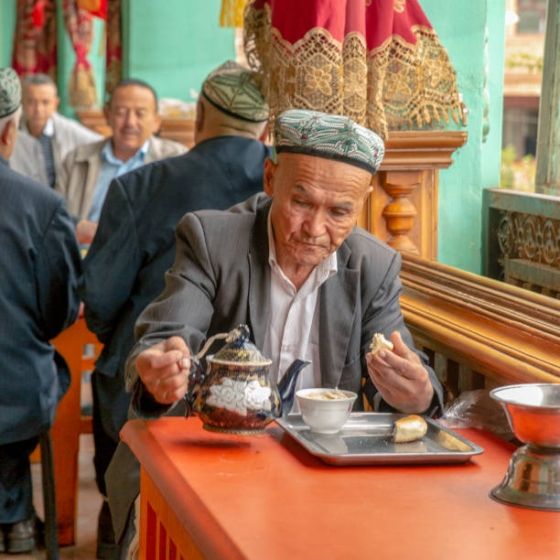
Kashgar, Xinjiang, China – September 5, 2018: Old man drinking tea in a traditional old tea house in Kashgar
Street Refreshments & The Soul of the Night Market
When the sun beats down on the desert, the focus shifts to cooling the body and igniting the night.
1. Kvass (Kavas): The “Liquid Bread” of the West
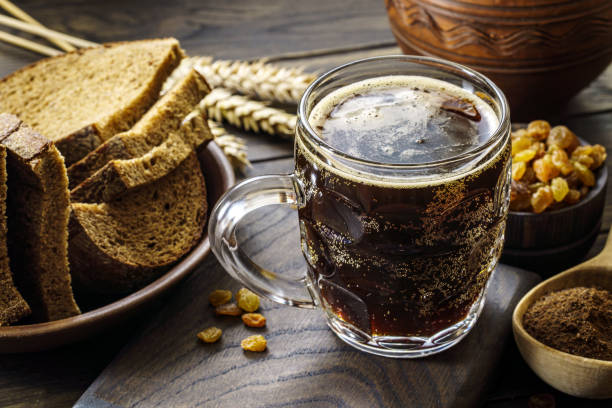
Originating from Russia but perfected in Xinjiang, this is a low-alcohol fermented beverage found in every bazaar.
-
The Profile: Fermented from bread, honey, and hops. It has an amber hue, a rich foam, and a sweet-and-sour taste with distinct notes of malt and wild honey.
-
The Experience: An ice-cold Kvass on a scorching afternoon is an instant “revival” drink. It is the undisputed king of the night markets.
2. “Death” Wusu Beer: The Spirit of the Night
You haven’t truly experienced a Xinjiang night market until you’ve had a Wusu.
-
The Legend: Red Wusu is nicknamed “Death Wusu” (Daming Da Wusu) due to its high malt concentration and a “kick” that catches up with you quickly.
-
The Experience: Holding a skewer of lamb in one hand and a cold Wusu in the other while toasting with friends is the pinnacle of the Xinjiang nightlife experience.
3. Museles: The 1,000-Year-Old “Living Fossil” Wine
A traditional Uyghur beverage with ancient roots.
-
The Profile: Fermented directly from grape juice without distillation. It has a reddish-brown color and a complex, herbal-sweet flavor profile.
-
The Heritage: It is often called the “living fossil” of wine, offering a taste of the Silk Road as it was centuries ago.
Pure Tartness & Natural Sweetness — Yogurt and Juices
The intense sun doesn’t just make the fruit sweet; it makes the dairy exceptionally rich.
1. Authentic Yogurt: The Ultimate Palate Cleanser
After a heavy meal of “Big Plate Chicken” or lamb chops, a bowl of handmade yogurt is the best remedy.
-
The Profile: Authentic Xinjiang yogurt is incredibly tart and thick. Most shops provide bowls of sugar or honey for you to add to your liking.
-
Must-Try: Yogurt Zongzi—where the sweetness of glutinous rice meets the sharp tang of fresh yogurt.
2. Pomegranate Juice: Liquid Rubies
In cities like Kashgar, pomegranates are legendary.
-
The Profile: Vendors press the fruit right before your eyes. The juice is a deep crimson, perfectly sweet-tart, and packed with vitamins.
3. Sea Buckthorn Juice: The Vitamin C King
Grown in the arid wild, this bright orange berry produces a juice that is intensely sour but incredibly healthy. It’s a local “superfood” drink.
Traveler’s Health Guide
To ensure your stomach stays as happy as your taste buds, keep these tips in mind:
1. Temperature Control
Despite the heat, avoid drinking excessive amounts of ice-cold drinks immediately after a heavy, oily meat meal. This is the most common cause of digestive upset for travelers.
2. The “Fruit & Tea” Taboo
Important: Never drink hot tea or hot milk tea immediately after eating melons (watermelon or Hami melon). In local wisdom, this combination is a guaranteed recipe for a stomach ache.
3. Pace Yourself with Wusu
While Wusu is delicious, its effects are stronger than standard lager. Start with “Yellow Wusu” (lower alcohol) if you aren’t a seasoned drinker, and never drink on an empty stomach.
Carry Your Cup to the West
Xinjiang’s drinks are like the land itself—bold, diverse, and full of hidden depths. Behind every cup lies a piece of history and a gesture of hospitality. China Dragon Travel invites you to bring an empty cup (and a strong spirit) to this vast region. Every drop you drink here is a taste of a legendary culture.