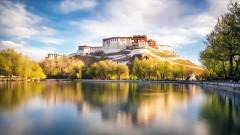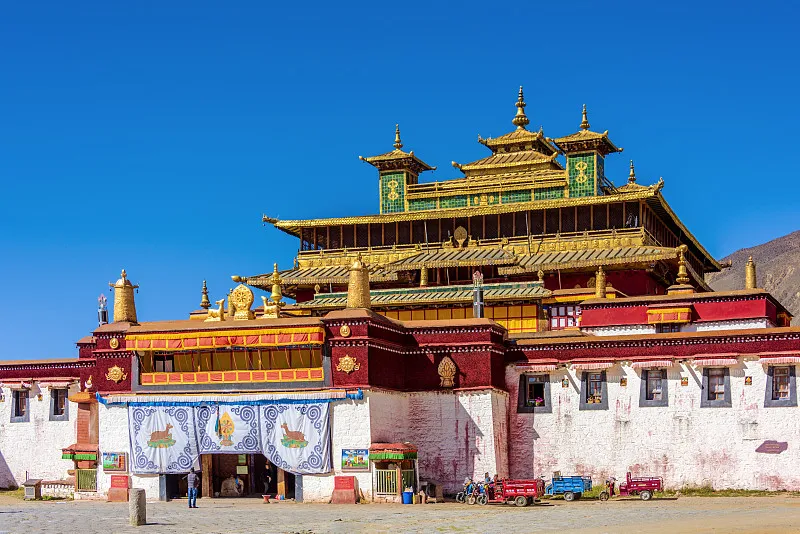

Tradruk Temple, the first Buddhist hall in Tibet’s history, was built in the 7th century during Songtsen Gampo’s reign. Its Tibetan name means “Kite Dragon Temple”, derived from the legend of Songtsen Gampo subduing a vicious dragon. It once served as the winter palace of Songtsen Gampo and Princess Wencheng, and is now a Major Historical and Cultural Site Protected at the National Level. Nestled on the southern foot of Mount Gongbu Ri on the east bank of the Yarlung Zangbo River in Shannan, it is merely 2 km from Zedang Town. Boasting a building complex combining Tubo and Tang architectural styles and housing numerous precious cultural relics, it is a key landmark to experience Tibetan Buddhism and understand the cultural integration of the Tang and Tubo dynasties.
Tradruk Temple Core Information Overview
Opening Hours: Regular 9:00-16:00; extended to 18:00 in summer (June-August); may close 30 minutes earlier in winter (November-February next year). It is recommended to arrive 1 hour in advance for sufficient visiting time.
Ticket Price: 70 CNY per adult; students can enjoy discounts with valid certificates. Cash and mobile payment are accepted; voluntary religious consumption in the temple only accepts cash, so it is advised to exchange small-denomination RMB in advance.
Geographical Location: Southern foot of Mount Gongbu Ri, Naidong District, Shannan City, with an altitude of about 3500 meters. Directly search “Tradruk Temple” for accurate positioning; the surrounding area has convenient supporting transportation, suitable for planning a separate visiting itinerary.
Recommended Visiting Duration: 1.5-2 hours for regular tour; 3 hours or more for in-depth experience, enough to appreciate the details of the temple’s architecture, murals and cultural relics.
Necessary Procedures: A relevant pass certificate is required to visit the scenic area, which cannot be applied for individually and needs to be processed through formal channels with a processing cycle of about 20-30 days. Please plan in advance and carry the certificate with you, as it may be inspected along the way and at the scenic area entrance.
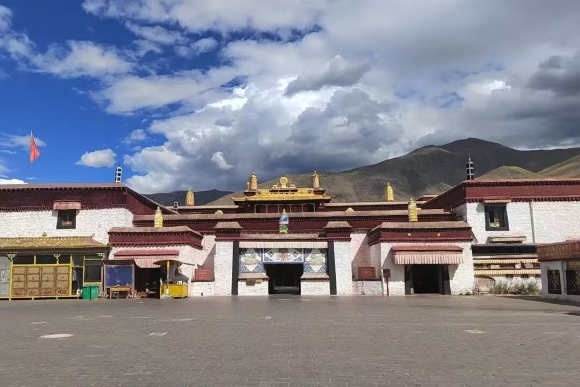
Tradruk Temple
Must-See Attractions at Tradruk Temple
Tradruk Temple has undergone centuries of renovations, yet still retains the architectural foundation and cultural heritage of the Tubo period. The temple features scattered halls and a rich collection of cultural relics, each part embodying the essence of Tibetan culture. Walking through it, you can both feel the unique aesthetics of ancient architecture and touch the profound traces of history.
Classic Hall Comple
The core halls of the temple are neatly laid out, combining Tubo and Tang architectural styles, mainly with stone and wood structures. Some early walls are built with “Bema” grass, a typical representative of early Tibetan architecture. The core halls include the Main Assembly Hall, Chöje Lhakhang, Tötra Lhakhang, Zula Lhakhang and so on. Each hall enshrines different Buddha statues and preserves a large number of simple and vivid sculptures. The walls of the halls are painted with murals of Buddha’s life stories and patriarch portraits of various sects, with delicate lines, simple colors and rich details, fully showing the charm of Tibetan Buddhist mural art. As the core of the temple, the Main Assembly Hall has its scripture hall supported by 64 carved wooden pillars with a patio ceiling, and the hall is divided into 12 Buddhist chapels, with a magnificent architectural momentum. The statues of Songtsen Gampo and Princess Wencheng in Chöje Lhakhang restore the historical features of the Tubo period, an important real carrier to understand the marriage alliance between the Tang and Tubo dynasties.
Precious Inherited Cultural Relic
The temple houses a number of precious inherited cultural relics, among which the most renowned is an artistic treasure of the late Yuan and early Ming dynasties, made of rare materials, inlaid with various gems and outlined with precious metal patterns. Well-preserved for hundreds of years and still bright in color, it is a rare treasure among the existing cultural relics of the same kind in Tibet and the treasure of Tradruk Temple. In addition, the temple also preserves a bronze bell cast in the Tubo period, with Tibetan inscriptions on its body, a direct physical witness of the cultural exchange between the Tang and Tubo dynasties. The Tötra Lhakhang also houses a basin-shaped pottery and an earthen stove once used by Princess Wencheng. Each artifact carries profound historical heritage and tells stories of a thousand years ago.
Characteristic Prayer Wheel Corridor
The temple is equipped with three layers of prayer wheel corridors—inner, middle and outer, a rare layout among Tibetan temples. The outer corridor is lined with large prayer wheels, exquisitely shaped and bright golden, one of the iconic landscapes of the temple. The middle corridor is built around the patio courtyard, with architectural components of different periods clearly visible. The technological changes of stone bases and wooden pillars allow you to intuitively feel the evolution of Tibetan architectural craftsmanship. The walls of the corridor are painted with rich murals of religious stories; while turning the prayer wheels, you can appreciate the mural art, feel the strong religious atmosphere and experience the Tibetan religious culture immersively.
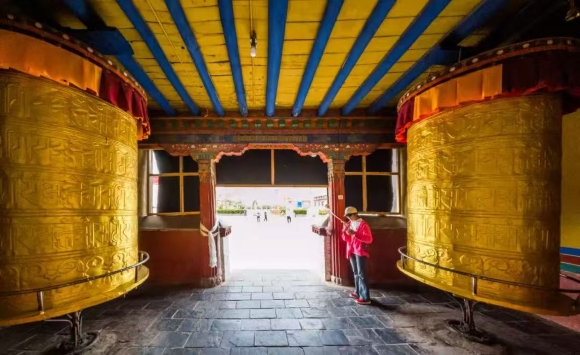
Gilded Prayer Wheels in Tradruk Temple
Characteristic Cultural Landscape
There stands a statue of Princess Wencheng right opposite the temple gate, solemn and grand, with Mount Gongbu Ri at its back and the Yarlung Zangbo River in front, a highly memorable check-in spot. Taking a photo with the statue can freeze this encounter with history. The temple also has many small cultural landscapes such as stupas and woodcarved Dharma protector statues, with unique shapes and their own characteristics. The woodcarved Dharma protector statues have simple and unsophisticated forms, fully showing the charm of handcraft art. The golden-roofed buildings of the temple shine brightly in the sun; the delicate design of Tibetan architectural details such as carvings and eaves highlights the unique aesthetic value everywhere. Walking in it, you can deeply feel the tranquility and solemnity of the ancient Tibetan temple.
Visiting Notes: Respect Customs + Pitfall Avoidance Guide
Dressing Etiquett: You need to take off your hat and sunglasses when entering the temple; it is forbidden to wear exposed clothes such as short skirts, shorts, camisoles and crop tops. It is recommended to wear long trousers and long sleeves with hemlines and trouser legs below the knees. If your clothes do not meet the requirements, Tibetan aprons can be rented at the temple gate for about 20 CNY each, simple and convenient.
Photography Taboo: Photographing and video recording of all Buddha statues, murals and precious cultural relics in the temple are strictly prohibited. Violators may be stopped by the staff and even required to delete relevant content, so do not take chances. If you want to take a photo with a monk, you must ask for their consent in advance and respect their wishes; if you promise to send the photos, you must keep your word.
Religious Customs: You need to take off your shoes or wear shoe covers before entering the Buddha hall; free shoe covers are provided in some Buddha halls. Do not touch religious items such as Buddha statues, ritual utensils and offerings. There are voluntary religious consumption activities in the temple such as lamp offering and gilding, which you can choose according to your own situation and no mandatory participation. Lamp offering costs 50 CNY or 100 CNY, gilding starts from 500 CNY, all only accepting cash. Turn prayer wheels and circumambulate the temple clockwise; do not step over religious facilities such as prayer wheels, prayer flags and mani piles, and respect the local religious beliefs and habits.
Altitude Sickness Response: Tradruk Temple is at an altitude of about 3500 meters, and some tourists may experience altitude sickness symptoms such as dizziness, shortness of breath, chest tightness and fatigue. It is recommended to prepare glucose oral liquid and anti-altitude sickness medicine in advance, walk slowly during the visit to avoid strenuous exercise, drink plenty of water and keep adequate rest. If severe altitude sickness occurs such as vomiting and difficulty breathing, you need to stop the visit immediately, contact the scenic area staff or go to Zedang Town Hospital for treatment, and do not force yourself to continue.
Other Notes: Keep quiet after entering the temple; no noise, chasing or frolicking, smoking or littering, and take good care of the temple’s environment and buildings. Be polite when communicating with local believers and monks, use civilized language and avoid asking private questions. Do not arbitrarily interrupt or crowd to watch religious ceremonies in the temple, keep an appropriate distance and respect religious activities. Some areas of the temple floor are slippery, so watch your step when walking to avoid falling.
Transportation Guide to Tradruk Temple
Pre-Trip Preparation: Pass Certificate Application
Application Requirements: Valid identity documents, round-trip transportation orders and accommodation confirmation forms are required. You need to clearly state that the itinerary includes “Naidong District, Shannan City” when applying, and a special pass procedure is also required with a fee of about 50 CNY per person.
Agency Channels: It is recommended to apply through formal qualified institutions or travel agencies with an overall processing cycle of about 20-30 days. Be sure to reserve sufficient time to avoid delaying the trip.
Transfer Routes After Arriving in Tibet
Main Route: Lhasa → Shannan
First arrive at Lhasa Gonggar International Airport, which is about 60 km from Lhasa urban area. You can take an airport bus (30 CNY per person, 1 hour drive) or a taxi (about 200 CNY) to the urban area. It is recommended to rest in Lhasa for 1-2 days to acclimatize to the altitude before departure. The whole journey from Lhasa urban area to Tradruk Temple is about 180 km with well-paved asphalt roads and a drive of about 3.5 hours. Chartering a car or joining a group tour is recommended; the chartered car fee is 800-1200 CNY per day (for 4 people), and the group tour costs 200-300 CNY per person. If you choose public transportation, you can take a long-distance bus from Lhasa Bus Station to Zedang Town for 80 CNY per person with a 4-hour drive, then transfer to short-distance transportation to the temple after arriving in Zedang Town.
Short-Distance Transportation from Zedang Town to Tradruk Temple
Public Transportation: There are direct minibuses from Naidong Road in Zedang Town to Tradruk Temple with the terminal right at the temple gate, 2 CNY per person, every 15 minutes and a 15-minute drive. You can enjoy the pastoral and landscape scenery of the Yarlung Zangbo River valley along the way.
Short-Distance Taxi: Taking a taxi from Zedang Town costs about 15 CNY per car, and a motor tricycle about 10 CNY per car, both with a 10-minute drive and can be directly sent to the temple gate, suitable for tourists with luggage, in a hurry or unwilling to wait for the bus.
Accommodation Options Around Tradruk Temple
The accommodation resources around Tradruk Temple are limited. As the transportation hub of Shannan, Zedang Town has complete and diverse accommodation facilities and is only 2 km from Tradruk Temple, making it the best accommodation place for visiting Tradruk Temple. You can find suitable accommodation for different budgets, with the core recommendation around Naidong Road, close to transportation stations for more convenient travel.
- Economy Accommodation: Mainly small inns and youth hostels, providing bunk beds and standard rooms. Bunk beds cost 10-15 CNY per person, standard rooms 80-150 CNY per room with complete basic facilities including 24-hour hot water and heating. Some stores also offer Tibetan food experience with extremely high cost performance, suitable for tourists with a limited budget.
- Comfort Accommodation: Mainly 3-star and above hotels with prices ranging from 300-600 CNY per room, including breakfast, free parking, 24-hour hot water and oxygen supply equipment. Some hotels are equipped with travel consultation desks, which can provide itinerary planning and ticket agency services with rich reception experience and better living experience, suitable for tourists who value accommodation quality.
- Accommodation Tips: There are many tourists during the peak travel season (June-August, October), so you need to book accommodation 1-2 weeks in advance to avoid no available rooms. The temperature difference between day and night in Shannan is large and the temperature is low in winter. You can confirm the heating situation of the accommodation when booking, and it is recommended to carry warm clothes and make good cold protection preparations.
Encounter Tradruk Temple in Shannan: A Timeless Appointment with the Ancient Tibetan Temple
Visiting Tradruk Temple is not only a visual feast but also a spiritual baptism. Every plant and tree, every Buddha and hall here carries the unique religious power of Tibet. Abide by the local customs, respect the culture here, slow down your pace and feel it with your heart, and you can truly understand the charm of this ancient temple. Whether you come alone to pursue history or travel with friends to explore Tibet, Tradruk Temple can give you a unique travel memory, allowing you to encounter an unforgettable timeless appointment among the mountains and rivers of Tibet. China Dragon Travel has been deeply engaged in Tibet tourism routes for many years, with rich experience in itinerary planning and detail control of various scenic spots in Shannan. We can customize exclusive itineraries according to your needs and control travel details throughout the whole journey, making your trip to Tradruk Temple smooth and comfortable, and fully enjoying the unique charm of the ancient Tibetan temple.