
In Tibet, art has never existed merely for decoration.
Among all Tibetan cultural expressions, Thangka painting stands apart as one of the most profound bridges between spirituality, philosophy, and visual beauty. To the untrained eye, a Thangka may appear as an exquisitely detailed religious painting. To those who understand its language, it is something far deeper: a map of the spiritual universe, a tool for meditation, and a living vessel of tradition.
For travelers interested in art, spirituality, and cultural meaning, understanding Thangka is essential to understanding Tibet itself.
The Origins of Thangka: Why Images Became Sacred
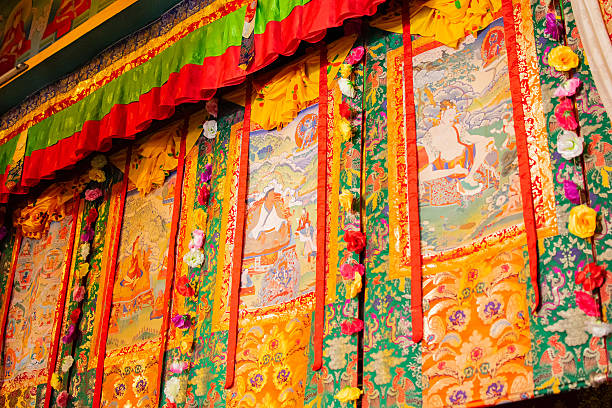
The word Thangka comes from Tibetan and refers to a painted scroll that can be rolled up for transport and displayed during rituals. This portability was not incidental—it reflected the realities of early Tibetan Buddhism, where monks traveled across vast, rugged landscapes carrying teachings from place to place.
In a society where literacy was limited, visual imagery became a powerful teaching tool. Thangkas translated complex philosophical ideas into accessible forms, allowing practitioners to contemplate Buddhist principles through sight as well as mind.
From the beginning, Thangkas were not created as independent artworks. They were designed to function within ritual, meditation, and transmission of knowledge.
Thangka Is Not Religious Decoration
One of the most common misunderstandings among Western viewers is the idea that Thangkas are decorative religious paintings.
In Tibetan Buddhism, a Thangka is considered active, not symbolic. It serves as a visual support for meditation, helping practitioners internalize the qualities of enlightened beings—compassion, wisdom, courage, clarity.
To “look” at a Thangka is not the same as to “use” it. Traditionally, practitioners engage with a Thangka repeatedly over time, allowing its imagery to guide inner transformation.
This functional role distinguishes Thangka from most forms of religious art familiar to Western audiences.
Types of Thangka: Function Defines Form
Thangkas exist in many forms, each serving a specific spiritual purpose.
Buddha Thangkas
Depicting historical or transcendent Buddhas such as Shakyamuni, Amitabha, or the Medicine Buddha, these Thangkas focus on serenity, balance, and awakening.
Deity and Bodhisattva Thangkas
Figures such as Avalokiteshvara (Chenrezig) and Manjushri embody compassion and wisdom. These Thangkas are commonly used in daily devotional practice.
Wrathful Deity Thangkas
Often misunderstood, wrathful figures represent the fierce destruction of ignorance and inner obstacles—not violence, but transformation.
Lineage Thangkas
These illustrate the transmission of teachings through generations of masters, emphasizing continuity and authenticity within Tibetan Buddhism.
Mandala Thangkas
The most philosophically complex type, mandalas present a symbolic universe designed for deep meditation and initiation practices.
The Creation of a Thangka: Discipline as Devotion
Traditional Thangka painting is governed by strict rules rooted in religious texts.
The Artist as Practitioner
A Thangka painter is not merely an artist but a trained practitioner. Years of apprenticeship are required, encompassing drawing, iconography, philosophy, and ethical discipline.
Sacred Proportions
Each deity is constructed according to precise proportional systems. These measurements are believed to reflect cosmic harmony, not aesthetic preference.
Natural Materials
Traditional pigments are derived from minerals, plants, and precious metals. Gold is frequently used—not as ornament, but as a symbol of enlightenment.
Painting as Spiritual Practice
The act of painting itself is considered a meditative process. Many artists engage in ritual preparation, prayers, and mental discipline before and during the work.
Deities in Thangka: Symbols of Inner States
The figures in Thangka art are not external gods demanding worship. They represent states of consciousness.
-
Peaceful deities embody clarity and compassion
-
Semi-wrathful deities symbolize disciplined energy
-
Wrathful deities represent the destruction of ignorance
Understanding this symbolic language transforms how one perceives Thangka—from mythological imagery to psychological and spiritual guidance.
Mandala: The Universe in Visual Form
In Tibetan Buddhism, the mandala is not merely a geometric design—it is a cosmological map.
A mandala represents the journey from confusion to enlightenment. The outer structures symbolize barriers and preparatory stages; the center represents awakened awareness.
Practitioners mentally enter the mandala during meditation, progressing inward step by step. This makes mandalas among the most intellectually demanding and spiritually powerful forms of Thangka art.
Thangka in Contemporary Tibet
Today, Thangkas exist at the intersection of faith, heritage, and global interest.
While many Thangkas are now produced for collectors and travelers, authentic Thangka traditions continue to thrive within monasteries and trained workshops. Understanding context is crucial: without knowledge of symbolism and process, a Thangka becomes merely an object.
For culturally conscious travelers, learning about Thangka before encountering it in Tibet enriches the experience immeasurably.
Thangka and Art & Spiritual Travel
For travelers drawn to Tibet not just for scenery but for meaning, Thangka offers a unique lens.
Visiting monasteries, observing painters at work, or studying iconography allows travelers to engage with Tibetan culture beyond surface impressions. Thangka invites patience, observation, and humility—qualities essential for meaningful travel.
Thangka as a Way of Seeing
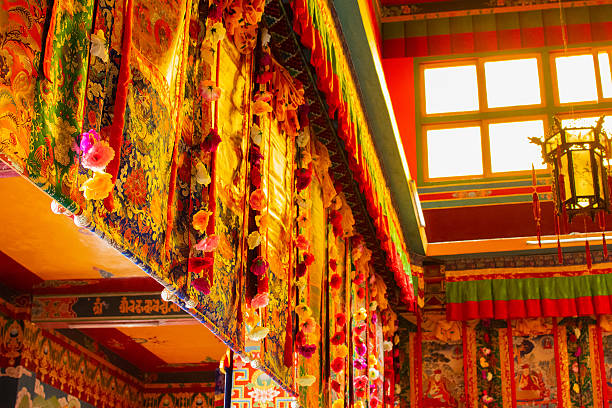
Thangka is not simply something to be seen.
It is something to be contemplated.
It teaches that art can be a method of transformation, that beauty can carry discipline, and that images can hold wisdom accumulated over centuries.
To understand Thangka is to glimpse how Tibetan culture understands the relationship between mind, form, and the sacred.
And for those who travel with intention, that understanding is the beginning of a deeper journey.