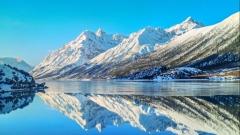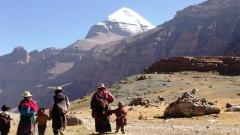

There are many ways to enter Tibet.
You can drive the dramatic bends of the Sichuan–Tibet Highway.
You can cross the remote wilderness of Western Tibet.
You can even fly directly into Lhasa in just a few hours.
But none of these compare to the experience of arriving by train across the vast Tibetan Plateau.
The Qinghai–Tibet Railway is not simply a mode of transportation.
It is a gradual ascent into another world — geographically, culturally, and spiritually.
Often referred to as “The Sky Train,” it is the highest railway on Earth and one of the most extraordinary rail journeys ever constructed.
1. What Is the Qinghai–Tibet Railway?
The Qinghai–Tibet Railway connects Xining (in Qinghai Province) to Lhasa, the capital of Tibet.
Stretching nearly 2,000 kilometers (1,200 miles), the railway crosses:
-
The Tibetan Plateau
-
Permafrost zones
-
Remote grasslands
-
High mountain passes above 5,000 meters
At its highest point — Tanggula Pass — the railway reaches 5,072 meters (16,640 feet) above sea level, making it the highest railway in the world.
For travelers, this is not just a statistic.
It means you are literally riding above the clouds.
2. Why Choose the Train to Tibet?
Flying into Lhasa is fast — but abrupt.
Arriving by train, however, allows your body to gradually adjust to the altitude. The journey becomes part of your acclimatization process.
More importantly, the train offers something flights never can: scale.
You watch the land transform in real time:
-
Urban plains give way to arid highlands
-
Highland lakes appear like mirrors in the desert
-
Snow peaks rise slowly on the horizon
-
Nomadic tents dot the grasslands
This is not a sudden arrival.
It is a cinematic unfolding.
3. An Engineering Marvel at Extreme Altitude
When the Qinghai–Tibet Railway opened in 2006, it was hailed as one of the greatest engineering achievements of the modern era.
Nearly half of the line sits above 4,000 meters.
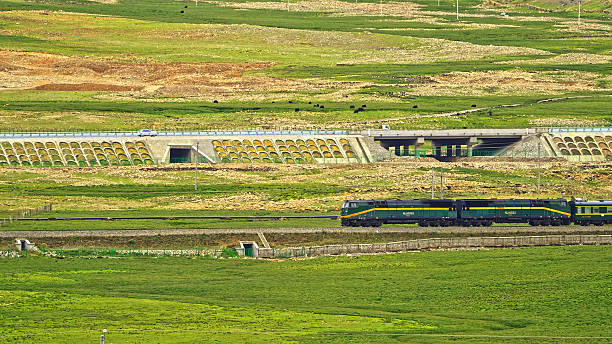
Large sections pass through permafrost — unstable frozen ground that required groundbreaking technology to stabilize.
Special design features include:
-
Oxygen-supplied carriages
-
UV-protected windows
-
Climate-controlled cabins
-
Elevated tracks across frozen terrain
Passengers can access individual oxygen outlets if needed, and the entire cabin maintains enriched oxygen levels to ease altitude discomfort.
Few train journeys in the world require this level of preparation.
4. Landscapes You Will Witness
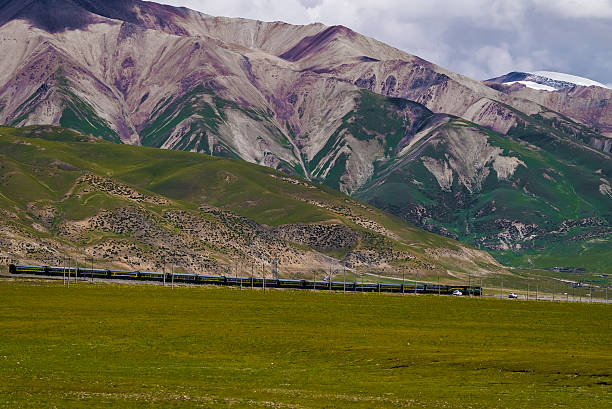
The true magic of the Qinghai–Tibet Railway lies outside the window.
Xining: The Gateway
The journey begins in Xining, at 2,200 meters — the perfect altitude to start adapting before heading higher.
Many travelers spend a night here to begin gradual acclimatization.
Golmud: The Edge of Civilization
Golmud marks the transition into true high plateau wilderness.
Beyond this point, settlements become sparse.
The sky expands.
The land grows quiet.
Hoh Xil Nature Reserve
Perhaps the most dramatic stretch of the journey.
Hoh Xil is a UNESCO World Heritage Site and one of the most remote and pristine ecosystems on Earth.
Here you may glimpse:
-
Tibetan antelope (Chiru)
-
Wild yaks
-
Tibetan wild asses
-
Migrating birds
The land feels untouched, almost primordial.
This is often described as “the last great wilderness of Asia.”
Tanggula Pass: The Roof of the Railway
At 5,072 meters, the train slows as it crosses the highest point.
Outside, the air is thin, the terrain stark and silent.
It is here that many passengers feel something beyond excitement — a quiet awareness that they are traveling through one of the planet’s most extreme environments.
Nagqu Grasslands
As the train descends slightly into northern Tibet, vast grasslands stretch endlessly across the plateau.
During summer, herds of yaks graze beneath immense skies.
Nomadic black tents stand against snow-dusted peaks.
This is the pastoral heart of Tibet.
Arrival in Lhasa
After nearly 22 hours (depending on departure city), the train finally enters the Lhasa River Valley.
And then — suddenly — you see it:
The Potala Palace rising in the distance.
Arriving in Lhasa by rail feels ceremonial.
You have not simply arrived.
You have crossed a continent of altitude to reach it.
5. The Psychological Impact of Vastness
Traveling across the Tibetan Plateau by train alters your perception of distance.
There are long stretches where:
-
No buildings appear
-
No highways intersect
-
No visible human presence interrupts the horizon
Time slows.
Conversations quiet.
The mind expands to match the landscape.
Many travelers describe the journey not as transport, but as meditation in motion.
6. Best Time to Take the Qinghai–Tibet Railway
The most comfortable travel season runs from May to October.
June to August:
-
Mild temperatures
-
Green grasslands
-
Wildlife visibility
September to October:
-
Crisp skies
-
Exceptional photography conditions
-
Fewer domestic crowds
Winter travel (November to March) offers:
-
Snow-covered landscapes
-
Fewer tourists
-
Stark, minimalist beauty
Each season transforms the plateau.
7. Is the Train Safe at High Altitude?
Yes — but preparation matters.
Although the train provides oxygen support, passengers should:
-
Avoid strenuous movement
-
Stay hydrated
-
Refrain from alcohol
-
Move slowly upon arrival
The gradual ascent makes altitude adaptation easier compared to flying directly to Lhasa (3,650 meters).
For first-time Tibet travelers, the train is often the most comfortable introduction.
8. Train Options and Departure Cities
While the core railway runs from Xining to Lhasa, many travelers begin further east:
-
Beijing to Lhasa
-
Shanghai to Lhasa
-
Chengdu to Lhasa
-
Xi’an to Lhasa
The longer routes allow for a multi-day crossing of China’s interior landscapes before entering the plateau.
For those prioritizing scenic intensity, the Xining–Lhasa segment is the most dramatic.
9. The Spiritual Dimension of Arrival
There is something profound about approaching Tibet slowly.
Unlike flying, which drops you abruptly into altitude, the railway feels like an initiation.
The gradual climb mirrors an inner ascent.
As the oxygen thins and the sky widens, many travelers report feeling:
-
More reflective
-
More aware
-
More present
By the time you reach Lhasa, you are not the same person who boarded the train.
10. Who Is This Journey For?
The Qinghai–Tibet Railway is ideal for:
-
First-time Tibet visitors
-
Slow travel enthusiasts
-
Photography lovers
-
Cultural travelers
-
Adventure seekers who prefer comfort
It offers the rare combination of:
Extreme geography
Engineering brilliance
And contemplative travel.
The Qinghai–Tibet Railway is not simply the highest railway on Earth.
It is one of the few journeys left in the modern world where distance still matters.
Where landscapes are larger than language.
Where arrival feels earned.
When the train glides into Lhasa and the Potala Palace emerges beyond the platform, you understand something quietly profound:
You did not just travel to Tibet.
You ascended to it.