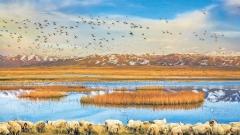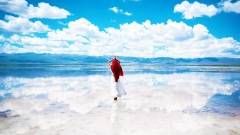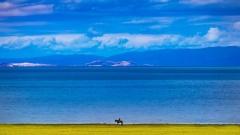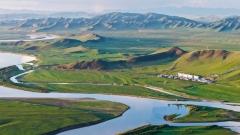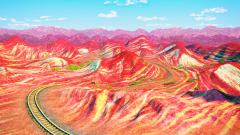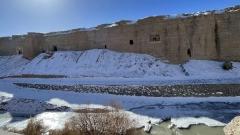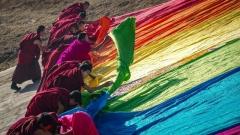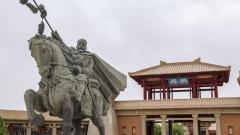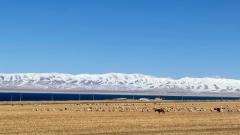

While the Qinghai section of the loop is defined by the purity of its nature, the Gansu section is the backbone of Chinese civilization. As you cross the Qilian Mountains and enter the Hexi Corridor, the landscape transforms dramatically—from sapphire lakes to vast Gobi deserts, crimson canyons, and golden dunes.
This was once the throat of the Silk Road, the battlefield for legendary generals, and the cradle of Buddhist art. In Gansu, every stone and every grain of sand carries the weight of empires. This guide will lead you through this living museum, where history isn’t just told—it is felt.
Dunhuang — An Artistic Oasis in the Desert
Dunhuang is the spiritual heart of the Silk Road. It is a place where the harshness of the desert meets the delicate beauty of ancient art.
1. The Mogao Caves: A “Time Capsule” of Human Civilization
More than just a Buddhist site, the Mogao Caves represent 1,600 years of global cultural exchange.
-
Deep Dive: With 492 caves and 45,000 square meters of murals, this site is a visual encyclopedia of history. From the minimalist aesthetics of the Northern Wei to the opulence of the Tang Dynasty, each cave tells a story of evolving faith and fashion.
-
The 2026 Booking Secret: * Category A Tickets: Include 8 caves and two digital films. Must be booked 30 days in advance with a real-name ID.
-
Category B Tickets: Emergency tickets released during peak season for a limited selection of caves.
-
-
Expert Tip: Visit in the “off-season” (late autumn or winter) for a more intimate experience. This is often the only time you can access the “Special Caves” (extra-fee caves), which contain the most pristine and exquisite art.
2. Echoing Sand Mountain & Crescent Lake: A Desert Romance
-
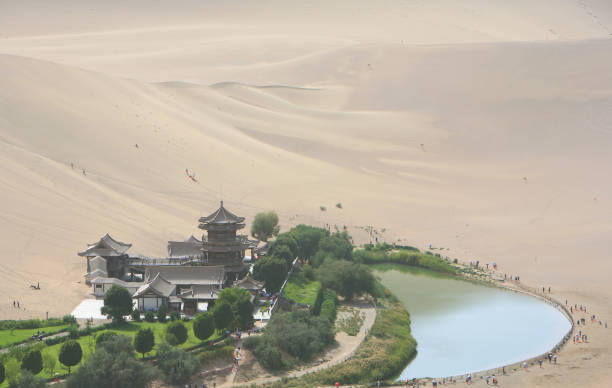
Visual Spectacle: The wind creates a symphony as it moves the sand, forming perfect, razor-sharp ridges. In the heart of these dunes lies the Crescent Lake, a spring that has survived for over a millennium without being buried by the shifting sands.
-
Escaping the Crowds: * The Side-Trail Route: Skip the main camel paths. Our guides lead you to the quieter flanks of the mountain for pristine, footprint-free photography.
-
Stargazing: If your schedule allows, a night of desert camping under the Milky Way is a soul-stirring experience far from the city lights.
-
-
Photography Tip: Flowing fabrics—Bohemian styles or traditional Hanfu—create a stunning contrast against the sand. Capture your shots during the Golden Hour (one hour before sunset) for deep shadows and warm highlights.
Zhangye — The Earth on Fire
Zhangye was the gateway to the West, and today it remains the most colorful stop on the loop.
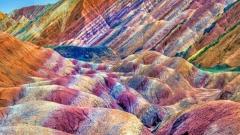
1. Zhangye Danxia: The Rainbow Mountains
-
Deep Dive: These surreal landscapes were formed by mineral deposits and tectonic shifts over millions of years. The layers of red, yellow, orange, and white are truly nature’s masterpiece.
-
The Best Vantage Points:
-
Platform No. 1: The largest platform, offering a grand, panoramic view of the “Sea of Clouds.”
-
Platform No. 4 (Red Cloud Site): This is where the colors are most vibrant and is the premier spot for sunset photography.
-
-
Pro Tip: Don’t fear a little rain. The colors of the Danxia are actually most vivid after rainfall, as the moisture saturates the minerals. On a clear day, the low-angle light of dawn and dusk is your best friend.
2. Pingshan Lake Grand Canyon: The “Grand Canyon of China”
While the Danxia is about color, Pingshan Lake is about scale. The deep red gorges and jagged rock formations rival the Grand Canyon of the US. Walking through the narrow ravines makes one feel truly small in the face of geological time.
Heroism in the Gobi — Fortresses & Art
1. Jiayuguan Pass: The “First and Greatest Pass Under Heaven”
-
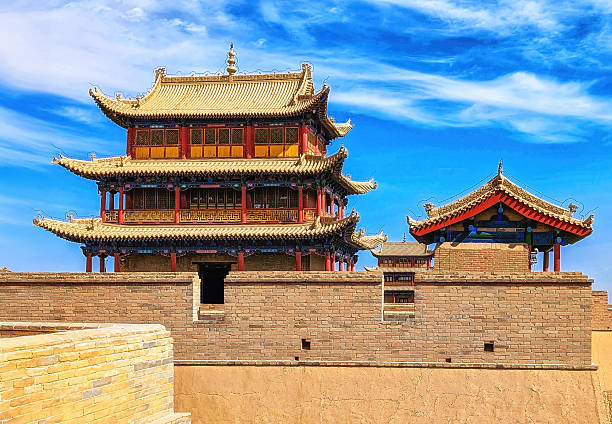
Historical Echoes: This was the western end of the Ming Dynasty Great Wall. Standing on the ramparts, you see the snow-capped Qilian Mountains to the south and the desolate Black Mountains to the north.
-
The Experience: Explore the sophisticated defense system of inner and outer walls. It was here that ancient travelers would say their final goodbyes before heading out into the “Great Unknown” of the Western regions.
2. “Son of the Earth” Sculpture: A Desert Echo
-
Visual Impact: In the middle of the boundless Gobi desert near Guazhou, a giant, sleeping infant sculpture lies peacefully. The contrast between the fragile form of a baby and the harshness of the desert is a powerful statement on the cycle of life and our relationship with nature.
Tips for the Gansu Section
-
Conquering the Dryness: Gansu’s air is extremely arid.
-
Advice: Carry lip balm and saline nasal spray. We recommend placing a bowl of water in your hotel room at night to add humidity. If you wear contact lenses, bring plenty of re-wetting drops.
-
-
UV & Wind Protection: The sun is fierce, and the Gobi winds can be abrasive.
-
Gear: Physical blocks are best. A wide-brimmed hat, high-quality sunglasses, and a breathable silk neck gaiter provide better protection than sunscreen alone.
-
-
Temperature Swings: In places like Dunhuang and Zhangye, the temperature can fluctuate by 20°C (36°F) between day and night.
-
The Layering Rule: Wear a light down jacket for sunrise, but be prepared to strip down to a single layer by noon.
-
-
Local Cuisine: Expect bold flavors—heavy on lamb, wheat noodles, and cumin.
-
Must-Try: Dunhuang Yellow Noodles, Jiayuguan BBQ Lamb, and Zhangye “Chaopao” (hand-torn noodles).
-
Finding Peace in the Hexi Corridor
The journey through Gansu is an inward exploration. Standing before a 1,000-year-old Buddha or walking across the silent Gobi, the noise of modern life fades away. Here, you find the weight of civilization and the raw beauty of the wilderness.