
Three Sacred Lakes of Tibet
In Tibet, lakes are never simply bodies of water.
They are living presences—repositories of memory, belief, and spiritual power. To the Tibetan mind, mountains are the bones of the earth, and lakes are its breath. They receive what the mountains give, reflect the sky above, and quietly sustain life below.
Among the countless lakes scattered across the Tibetan Plateau, three are revered above all others:
Namtso, Yamdrok, and Lake Manasarovar.
Together, they are known as the Three Sacred Lakes of Tibet. Each carries its own character, geography, and spiritual resonance. To visit them is not merely to travel across space, but to move through different states of awareness.
1.Why Lakes Are Sacred in Tibetan Spirituality
Water occupies a central place in Tibetan cosmology. In both Tibetan Buddhism and the ancient Bon tradition, lakes are understood as dwelling places of protective deities, feminine energies, and elemental spirits.
Unlike rivers, which move outward, lakes are inward-facing. They hold rather than flow. This stillness is why lakes are associated with reflection, purification, and inner clarity.
Pilgrimage to a sacred lake is therefore not about reaching a destination—it is about entering a relationship with place.
2. Namtso Lake
2.1 Geography and Natural Presence
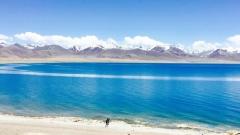
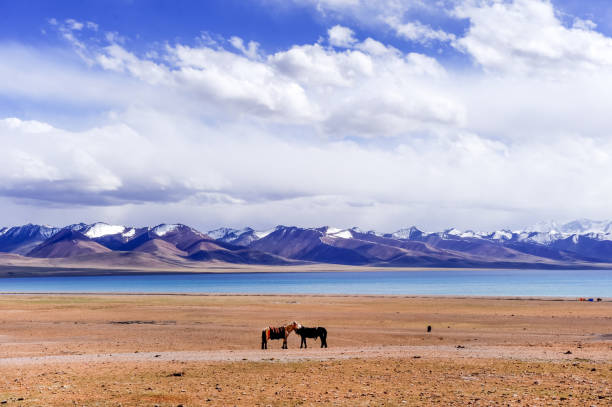
Namtso Lake lies north of Lhasa at an altitude of approximately 4,718 meters, making it one of the highest large saltwater lakes in the world. Its name means “Heavenly Lake”, and the title feels earned.
Surrounded by snow-covered peaks and endless open sky, Namtso appears vast, pure, and uncompromising. The lake’s color shifts throughout the day—from pale turquoise at dawn to deep cobalt under the midday sun.
Standing at its shore, one feels exposed, yet strangely held.
2.2 Spiritual Significance
In Tibetan belief, Namtso is associated with a female deity and regarded as a powerful site of purification. During the Year of the Sheep in the Tibetan calendar, tens of thousands of pilgrims perform a full circumambulation of the lake, believing that a single circuit can cleanse a lifetime of karma.
The Tashi Dor Peninsula serves as a focal point for meditation and retreat. Here, caves once used by yogis overlook the open water, reinforcing Namtso’s reputation as a place for solitary reflection.
2.3 Visiting Namtso as a Spiritual Traveler
Namtso is not a place to rush. Its altitude demands physical respect, and its atmosphere encourages silence. Many travelers find that the most meaningful moments come not from photographs, but from sitting still—watching clouds drift across the water.
3. Yamdrok Lake
3.1 A Lake of Movement and Form
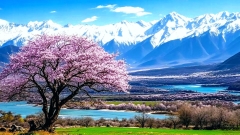
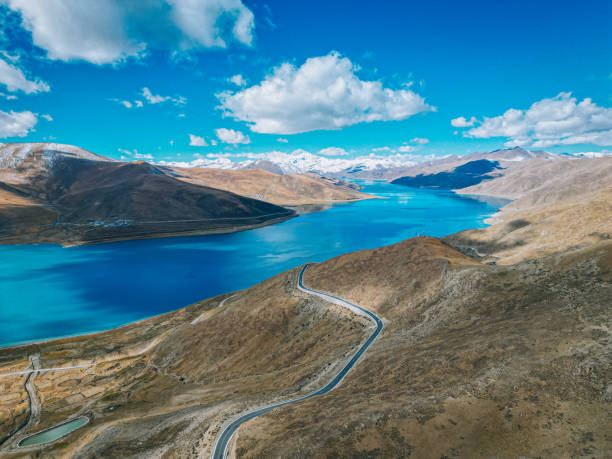
Yamdrok Lake lies between Lhasa and Shigatse, unfolding across the landscape in a series of winding arms and bays. Unlike the open expanse of Namtso, Yamdrok feels intimate, dynamic, and ever-changing.
From high mountain passes, the lake appears like a ribbon of turquoise silk woven through brown hills and green pastures.
3.2 Yamdrok’s Role in Tibetan Belief
Yamdrok is considered one of the guardian lakes of central Tibet. According to local belief, the lake’s water level is directly linked to the well-being of the region. A falling waterline is seen as an ominous sign, while abundance reflects harmony.
For local herders, Yamdrok is not distant or symbolic—it is part of everyday life. Yaks graze along its shores, and villages exist in quiet balance with the lake’s rhythms.
3.3 Yamdrok and Contemplative Travel
Yamdrok invites lingering rather than awe. Travelers often find its beauty unfolding gradually—through light, reflection, and repetition. Walking short sections of shoreline or pausing at different viewpoints reveals a lake that never looks the same twice.
4. Lake Manasarovar
4.1 A Lake Revered Across Religions
Located in the remote western region of Ngari, Lake Manasarovar occupies a unique position in global spirituality. It is revered not only in Tibetan Buddhism and Bon, but also in Hinduism and Jainism.
Nearby rises Mount Kailash, one of the most sacred mountains on Earth. Together, mountain and lake form a spiritual axis—a place where heaven and earth are believed to meet.
4.2 The Landscape of Stillness
Unlike Yamdrok’s curves or Namtso’s vast openness, Manasarovar is defined by order and calm. Its waters are remarkably clear and still, reflecting snow peaks with near-perfect symmetry.
The landscape here feels restrained, almost minimal. Beauty arises not from drama, but from balance.
4.3 Pilgrimage and Inner Discipline
Pilgrims travel thousands of kilometers to circumambulate Manasarovar, often before undertaking the sacred kora around Mount Kailash. The journey is physically demanding, yet pilgrims describe it as a process of mental purification.
For spiritual travelers, Manasarovar offers an encounter with discipline, humility, and silence.
5. Comparing the Three Sacred Lakes
| Lake | Character | Region | Spiritual Quality |
|---|---|---|---|
| Namtso | Vast, open | Northern Lhasa | Purification, sky energy |
| Yamdrok | Flowing, intimate | Central Tibet | Protection, balance |
| Manasarovar | Still, ordered | Western Tibet (Ngari) | Universality, spiritual center |
6. Sacred Lakes and Responsible Travel
To visit sacred lakes is to accept responsibility. These places are not attractions—they are living sites of devotion.
Respectful travel includes:
-
Not entering the water
-
Avoiding loud behavior
-
Yielding to pilgrims during circumambulation
-
Leaving no trace on fragile shorelines
The deepest experiences arise when one travels lightly, both physically and mentally.
What the Sacred Lakes Offer the Modern Traveler
The Three Sacred Lakes of Tibet do not promise answers. They offer space.
Space to reflect.
Space to slow down.
Space to recognize how small we are within a vast, living landscape.
In a world of constant motion, these lakes remain still.
And in their stillness, they invite us to listen—to the land, to belief, and to ourselves.