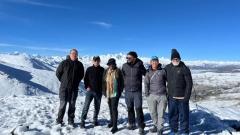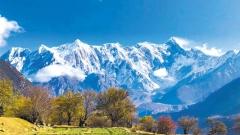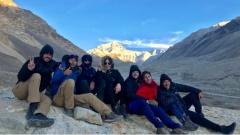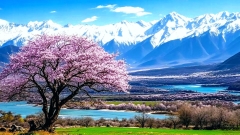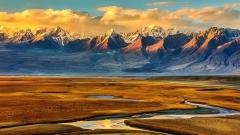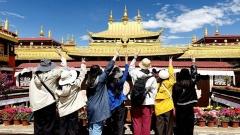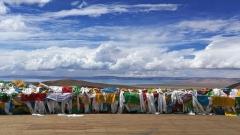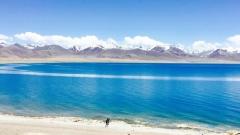

In September, Tibet escapes summer’s humidity and sweltering crowds, yet avoids winter’s piercing harsh cold. With cool, pleasant weather, the land boasting bright blue skies, snow-capped mountains against fluffy white clouds, and golden-turning grasslands dotted with grazing yaks, it offers unique autumn scenery ideal for leisure travel and soul-stirring exploration. However, Tibet’s vastness brings distinct regional weather variations and notable day-night temperature differences. Preparing with detailed, up-to-date weather info ensures a safer, more comfortable and incredibly smoother journey.
Overall Characteristics of Tibet’s Weather in September: Golden Period for Off-Peak Travel
In September, Tibet enters autumn, featuring cool, dry and less rainy weather. Free from summer’s heavy rains and July-August tourist crowds, it’s an ideal travel time. The average temperature ranges from 5℃ to 15℃, a natural summer resort compared to inland heat. Note that the plateau climate brings thin air and strong UV rays; daytime heat under sunlight contrasts sharply with night temperatures, which drop rapidly by over 10℃.
In terms of rainfall, the rainfall in Tibet decreases significantly in September. Most regions have less than 5 rainy days per month, mostly showers with short duration, which have little impact on travel. The dry weather is not only conducive to itinerary arrangements but also allows travelers to better enjoy Tibet’s lakes and mountains, avoiding the problem of blocked vision caused by rainy days. In addition, the wind force in Tibet is small in September, mostly light winds, which will not have a significant impact on outdoor activities, making it very suitable for carrying out hiking, self-driving and other tourist projects.
Important Reminder: Although Tibet’s weather in September is suitable for travel, altitude sickness and strong ultraviolet rays are still issues that need key prevention. It is recommended that travelers make relevant preparations in advance and not take it lightly.
Detailed Weather Guide for Various Regions in Tibet in September: Pay Attention to Regional Differences
Tibet is vast in area, with significant differences in altitude and terrain between different regions, leading to obvious differences in weather in September. The following are the detailed weather conditions of several popular tourist areas in Tibet in September for travelers’ reference:
Lhasa
Average Temperature: 8℃-16℃
Rainfall: Monthly rainfall around 15mm, 3-4 rainy days
Weather Features: Cool and dry, abundant sunshine, large day-night temperature difference; keep warm at night
Shigatse
Average Temperature: 6℃-14℃
Rainfall: Monthly rainfall around 10mm, 2-3 rainy days
Weather Features: Slightly lower temperature than Lhasa, moderate wind, dry air, strong UV rays
Nyingchi
Average Temperature: 10℃-18℃
Rainfall: Monthly rainfall around 20mm, 4-5 rainy days
Weather Features: Lower altitude, relatively mild temperature, lush vegetation, slightly higher air humidity
Nagqu
Average Temperature: 0℃-10℃
Rainfall: Monthly rainfall around 5mm, 1-2 rainy days
Weather Features: High altitude, low temperature, possible freezing at night, strong wind, dry and little rain
Ngari
Average Temperature: 2℃-12℃
Rainfall: Monthly rainfall around 3mm, almost no rain
Weather Features: Extremely dry, huge day-night temperature difference, intense UV radiation, strong wind
Lhasa: The Quiet Beauty of Autumn in the City of Sunshine
- Temperature Condition: The average temperature in September is 8℃-16℃, with abundant sunshine during the day and the temperature dropping below 10℃ at night, showing an obvious temperature difference between day and night.
- Rainfall Characteristics: Less rainfall, mostly showers concentrated in the evening or night, which hardly affects daytime travel.
- Travel Advantages: Good air quality, blue and transparent sky, suitable for visiting core attractions such as the Potala Palace and Jokhang Temple.
Nyingchi: The Warm Autumn in the Jiangnan of Eastern Tibet
- Temperature Advantage: With an altitude of about 2900 meters, the average temperature is 10℃-18℃, which is the area with relatively high temperature in Tibet in September and has a mild climate.
- Rainfall Condition: Rainfall is slightly more than other regions, but mostly short showers. After rain, the air is fresh and the scenery is more charming.
- Landscape Features: Some leaves turn yellow, setting off with green vegetation, forming a unique autumn landscape, suitable for travelers who prefer natural scenery.
Ngari: Extreme Dryness and Coolness Above the Wilderness
- Temperature and Temperature Difference: The average temperature is 2℃-12℃, with an extremely large temperature difference between day and night. The temperature can drop below 0℃ at night, so thick warm clothes are needed.
- Weather Characteristics: Extremely dry, almost no rainfall, strong wind, need to take windproof measures for outdoor activities.
- Precautions: Strong ultraviolet radiation, need to take strict sun protection measures; the weather conditions are relatively harsh, suitable for adventure enthusiasts.
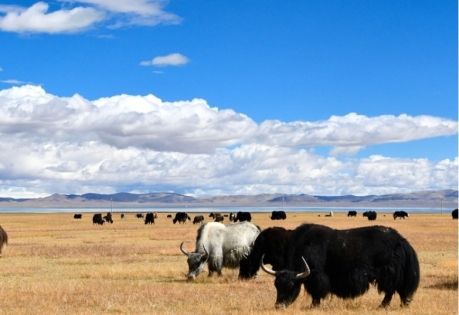
Yaks at the Ali pasture in Tibet
Shigatse: Cool Scenery in the Hinterland of Western Tibet
- Temperature Condition: The average temperature in September is 6℃-14℃, slightly lower than Lhasa, overall cool and comfortable.
- Rainfall Characteristics: Monthly rainfall about 10mm, 2-3 rainy days, mostly short showers, with little impact on the itinerary.
- Weather and Travel: Slightly stronger wind, dry air, strong ultraviolet rays; mostly sunny days, suitable for visiting Tashilhunpo Monastery and viewing Mount Everest from a distance.
Nagqu: Autumn Coolness on the Northern Tibetan Grassland
- Temperature Condition: The average temperature is 0℃-10℃, high altitude leads to low temperature, possible freezing point at night, need to take strong warm-keeping measures.
- Rainfall Characteristics: Extremely little rainfall, monthly rainfall about 5mm, 1-2 rainy days, almost no obvious impact of rainfall.
- Weather and Landscape: Strong wind, dry and less rainy; the grassland gradually turns yellow, with a vast autumn grassland landscape, suitable for travelers who love wilderness scenery.

Nagqu
Tibet September Travel Packing Guide: Cope with Day-Night Temperature Difference, Comfortable and Warm
Based on the characteristics of Tibet’s cool weather and large temperature difference between day and night in September, travelers need to follow the principle of “layered dressing and flexible adjustment” in dressing, which can not only cope with the warmth under the sun during the day but also resist the cold at night. The following are specific packing suggestions:
Upper Wear (Layered Dressing)
Inner layer: Breathable quick-dry top or cotton T-shirt (absorbs sweat to keep you dry)
Middle layer: Light down jacket or fleece (warm and portable; easy to put on/take off for day-night temperature swings)
Outer layer: Windproof and waterproof outdoor jacket (blocks wind and sudden showers)
Bottom Wear
Main choice: Thick casual pants or outdoor sports pants (cotton/quick-dry fabric for comfort and warmth)
Add-on (for cold areas like Nagqu, Ngari): Thermal underwear
Footwear & Accessories
Shoes: Comfortable, durable outdoor shoes or hiking boots (thick soles for varied terrain + warmth)
Essential accessories:
Sun hat
Thick cotton/wool scarf
Light gloves
Sunglasses (blocks UV rays and snow glare)
Tibet September Travel Precautions: Comply with the Weather, Travel at Ease
Sun Protection and Dryness Prevention: Cope with the Special Plateau Climate
- Sun Protection Measures: Carry high-factor sunscreen with SPF50+ and PA++++, and apply it every 2-3 hours during outdoor activities; match with sun hats, sunglasses, scarves and other accessories to avoid skin and eye damage from strong ultraviolet rays.
- Dryness Prevention Preparation: Carry moisturizing products such as moisturizer, lip balm and hand cream; drink plenty of warm water to replenish moisture and prevent problems such as dry and cracked skin and chapped lips.
Cope with Day-Night Temperature Difference: Adjust Clothes in Time
Tibet has a large temperature difference between day and night in September. Travelers need to get into the habit of carrying a thick jacket with them and adjust their clothes in time according to the temperature change. When engaging in outdoor activities during the day, you can wear inner wear and an outer jacket; at night or when entering the room, you need to put on a thin down jacket or fleece jacket in time to avoid catching cold. Especially in high-altitude areas, colds may cause severe altitude sickness, so travelers need to pay special attention.
Pay Attention to Weather Changes: Plan the Itinerary Reasonably
Although Tibet’s weather in September is generally stable, sudden showers or strong winds may occur in some local areas.
Before traveling, check the destination’s weather forecast in advance and plan the itinerary reasonably accordingly.
If encountering bad weather, temporarily adjust the itinerary and avoid dangerous areas like outdoors or mountainous regions.
In addition, transportation in some Tibetan areas is greatly affected by weather; make relevant preparations in advance to ensure a smooth trip.
Altitude Sickness Prevention: Make Adjustments According to the Weather
- Impact Reminder: Tibet’s low temperature and dry air in September may aggravate the symptoms of altitude sickness, which needs to be prevented in advance.
- Preparation Before Entering Tibet: Adjust your body well, avoid catching cold, and you can learn about relevant knowledge about altitude sickness in advance.
- Adaptation After Entering Tibet: Do not do strenuous exercise, keep adequate rest, and gradually adapt to the plateau environment.
- Symptom Coping: Mild reactions (such as headache, dizziness, etc.) can be relieved by rest and hydration; severe symptoms need to seek medical attention or oxygen in time.
- Medication Carry: It is recommended to prepare common anti-altitude sickness drugs such as Rhodiola rosea and Gaoyuan’an.
Must-Visit Attractions in Tibet: Encounter the Beauty of the Pure Land in Comfortable Weather
Thanks to the comfortable weather, there are many attractions worth visiting in Tibet in September.
In Lhasa, you can bathe in the autumn sun on the Potala Palace Square and feel the solemnity and sacredness of this palace with the highest altitude in the world; beside the Jokhang Temple, you can turn the prayer wheels with local believers and experience the strong religious atmosphere.
In Nyingchi, you can go to the Yarlung Zangbo Grand Canyon to enjoy the canyon scenery in autumn and overlook the majestic posture of Mount Namjagbarwa; you can also walk into the Lulang Forest Sea to feel the beautiful autumn scenery of layered forests dyed in red and gold.
In Shigatse, you can visit Tashilhunpo Monastery to appreciate the religious culture of Western Tibet; you can also go to the Everest Base Camp to enjoy the magnificent view of Mount Everest up close in sunny weather.
In Ngari, you can cross the Changtang Grassland to encounter wild animals such as Tibetan antelopes and Tibetan wild asses; you can also visit the ruins of the Guge Kingdom to feel the vicissitudes and mystery of this thousand-year-old kingdom.